

To support our research and detailed appliance reviews, we may earn a small commission from qualifying purchases made through our links, at no extra cost to you. As an Amazon Associate, I earn from qualifying purchases.
To support our research and detailed appliance reviews, we may earn a small commission from qualifying purchases made through our links, at no extra cost to you. As an Amazon Associate, I earn from qualifying purchases.
Your electric stove does more than heat dinner. It shapes your home’s comfort, indoor air, and even your long‑term health. When you use your electric stove wisely, you can reduce stress, cut injury risk, and support healthier eating every day. 💚
Many people focus only on recipes. Yet how you use your burners and how you clean your electric stove top matters just as much. The right habits help you avoid smoke, harsh fumes, and painful burns. They also keep your kitchen feeling calm and inviting.
Below are five smart, health‑focused solutions. They will help you use any model—whether a Whirlpool electric stove, a GE electric stove, or another brand—with more confidence and peace of mind.
1. Choose the Right Burners for Safer, Healthier Cooking 🔥
Not all burners work the same way. The type of electric stove burner you use can change:
- How much smoke forms
- How evenly your food cooks
- How likely you are to burn yourself
Understanding your surface is the first step toward healthier cooking.
Know Your Electric Stove Top Type
Most homes use one of three main electric surfaces:
- Exposed coil burners
- Smooth glass or ceramic electric stove top
- Induction cooktops (still a type of electric cooking)
Each has distinct health and safety considerations.
| Stove Type | Heat Control | Burn Risk | Cleaning Ease | Health‑Focused Benefits |
|---|---|---|---|---|
| Coil Electric Burners | Moderate control, slower response | High (metal coils stay hot) | Medium, crumbs can hide below pans | Affordable, durable, good for heavy pots |
| Smooth Glass/Ceramic Top | Good, more even heat | Moderate (hot glass looks cool) | Easy, flat surface; needs careful wiping | Fewer crevices, less trapped grease and dust |
| Induction (Electric) | Excellent, fast response | Lower (surface stays cooler) | Very easy, spills rarely bake on hard | Less ambient heat, less smoke when used well |
From a health perspective, smooth and induction cooktops are often easier to keep clean. Fewer crumbs and grease pockets mean fewer burnt residues and less lingering odor.
Brand Examples: Whirlpool and GE
Many modern brands focus on safety. A Whirlpool electric stove or GE electric stove often includes:
- Hot surface indicator lights
- Automatic shut‑off timers
- Child lock controls
These features support burn prevention and reduce fire risk. If your current electric stove is older, you may want to plan for a future upgrade. Added safety features can protect children, aging parents, and distracted cooks.
Burner Size Matters for Your Food and Your Body
Matching pan size to the right burner seems simple. It is also a health habit.
When the pan is too small for the burner:
- Heat climbs the sides
- Oil overheats and smokes
- You breathe more irritating fumes
When the pan is too large:
- Food cooks unevenly
- You may turn heat up too high
- Food can char or burn in spots
Aim for pans that closely match your electric stove burner size. This protects nutrients, reduces smoke, and lowers your risk of burns from splattering oil.
2. Master Heat Control to Protect Nutrients and Lungs 🌿
High heat is tempting when life feels busy. Yet constant high heat can damage nutrients and increase smoke. It can also release irritating compounds that affect your airways.
The Gentle‑Heat Approach
Use these simple rules:
- Preheat on medium, not high
- Only use high heat to boil water quickly
- For most cooking, stay at low to medium
This gentler approach:
- Preserves delicate nutrients in vegetables
- Reduces acrid smells and visible smoke
- Lowers your risk of overcooking and scorching
A healthier kitchen often smells mild, not smoky.
Avoid Overheated Oils
Every cooking oil has a smoke point. When oil smokes, it breaks down and creates irritating fumes. That can bother your lungs, especially if you have asthma or allergies.
Practical steps:
- Choose oils with higher smoke points for pan‑searing
- Avoid leaving an oiled pan empty on a hot burner
- If you see smoke, turn off the burner and step back
You do not need to cook with fear. You just need to treat oil like a gentle tool, not a torch. 😊
Use Lids and Ventilation
Lids do more than speed cooking. They:
- Trap steam, which softens food faster
- Reduce splatter and grease on your electric stove top
- Limit steam and fumes in your kitchen air
Pair lids with good ventilation:
- Turn on your range hood during every cooking session
- Open a window if your fan is weak
- Keep the fan running a few minutes after you finish
For more on protecting your breathing space, explore the EPA’s guidance on
indoor air quality.
3. Smart Cleaning Habits That Protect Your Lungs and Skin 🧽
A spotless surface looks lovely. However, the real goal is a clean stove that supports your health. That means:
- Less burned‑on grease
- Less smoke during cooking
- Fewer harsh chemical fumes from cleaners
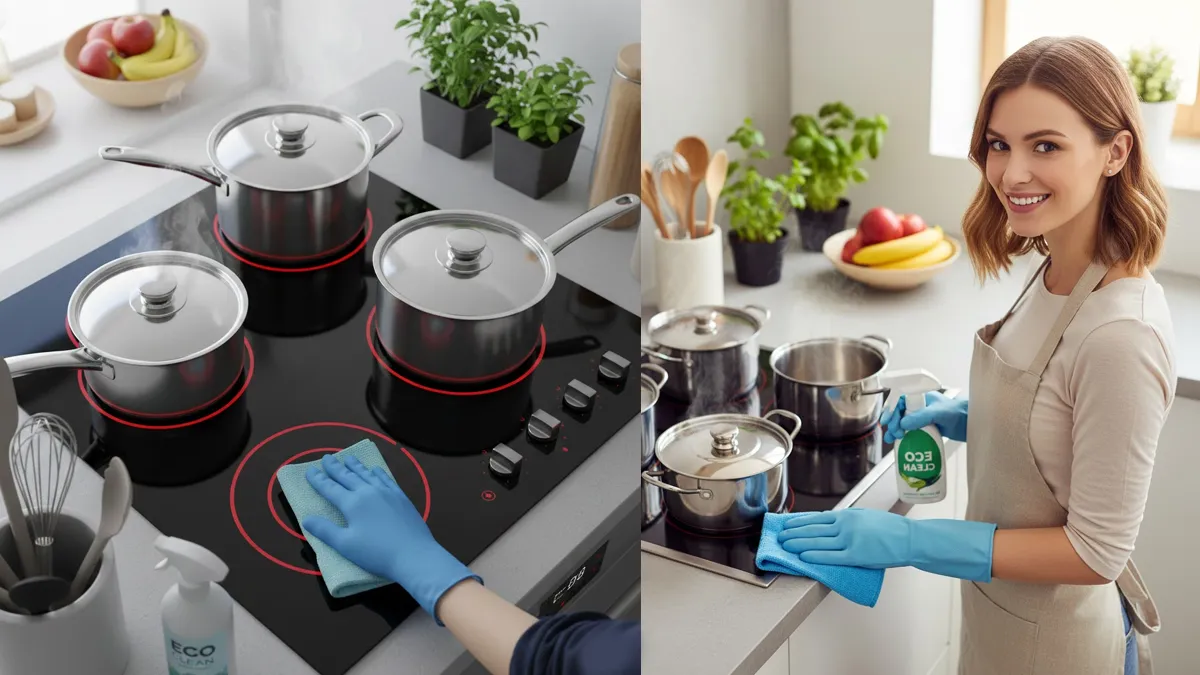
Knowing how to clean electric stove top surfaces gently and consistently is a life upgrade.
Daily 5‑Minute Reset Routine
Try this simple, realistic ritual after dinner:
- Turn off burners and wait until the surface is warm, not hot.
- Wipe loose crumbs with a dry paper towel or microfiber cloth.
- Spray a light mist of warm water with a tiny drop of dish soap.
- Wipe with a soft cloth in gentle circles.
- Dry with a clean towel to prevent streaks and mineral spots.
This habit reduces the need for heavy scrubbing later. It also lowers the chance of burnt residue, which can smoke and smell during your next meal.
How to Clean Electric Stove Top: Deep Weekly Routine
Once a week, plan a deeper clean. Always check your manual first, because each model is unique.
For coil burners:
- Unplug or turn off power at the control panel
- Remove coils carefully and set aside
- Lift the drip pans and soak them in hot soapy water
- Wipe the surface below with a damp cloth
- Dry everything fully before reassembling
For a smooth glass electric stove top:
- Wait until the surface is fully cool
- Use a scraper designed for glass if spills are burned on
- Apply a small amount of stove‑top cleaner or baking soda paste
- Gently rub with a soft sponge, then wipe clean
- Buff dry with a microfiber cloth
Avoid harsh abrasives that can scratch glass. Scratches can trap food and cleaning products. That creates more smoke and residue over time.
Use Health‑Conscious Cleaners
Many people react to strong chemical scents. You may notice:
- Coughing
- Headaches
- Eye or skin irritation
To reduce this risk:
- Choose fragrance‑free or low‑odor products
- Use vinegar and water for light daily cleaning, if your manufacturer allows
- Always ventilate while you clean
If you or a family member has asthma, discuss safe household cleaners with your clinician. You can also review
household cleaning products and asthma
for more guidance.
Protect Your Skin While You Clean
Hot surfaces and strong cleaners can irritate your skin. Simple precautions help:
- Wait until the stove is completely cool
- Wear thin kitchen gloves during heavy scrubbing
- Rinse your hands well afterward and apply hand cream
Your electric stove should not cost you cracked hands or small chemical burns.
4. Prevent Burns and Injuries Around Your Electric Stove 🚸
Kitchen burns can happen in seconds. Electric burners often stay red‑hot or quietly hot long after you turn them off. Many glass tops also look cool while still dangerously warm.
Building a few safety habits protects you and your family.
Burn‑Smart Rules for Every Household
Try these safety basics:
- Always assume a burner is hot unless you just tested it
- Turn pot handles inward, away from the edge
- Use the back burners when children are nearby
- Keep dish towels, paper, and plastic away from active burners
These small steps prevent many spills and painful accidents.
Teach Children Safe Kitchen Zones
If you have children, set clear, calm rules:
- Create a “no‑go line” on the floor near the stove
- Let children help with safe tasks at the table instead
- Explain that the electric stove can stay hot even when the light is off
Involving children in cleaning or setting the table gives them a role. It also keeps them away from the hottest area.
You can find more detailed
burn prevention tips
through trusted public health resources.
Prevent Trips and Falls While Cooking
Burns are not the only risk. Hot pots plus clutter can lead to falls.
Support safer movement by:
- Keeping cords for mixers and kettles away from burners
- Wiping small spills on the floor right away
- Using non‑slip kitchen mats, especially near the sink
If you care for an older adult, consider stoves with:
- Easy‑to‑read controls
- Large, simple knobs or touchpads
- Automatic shut‑off or timer limits
These features lower the risk if someone forgets a pot on the burner.
Know What to Do if a Burn Happens
If a minor burn occurs:
- Remove the person from the heat source
- Cool the area under cool running water for 10 to 20 minutes
- Avoid ice, butter, or home remedies
Seek medical care promptly for:
- Burns on the face, hands, feet, or genitals
- Large blisters or deep burns
- Any burn in a child, older adult, or person with chronic illness
Your response time matters. Calm, clear action can limit long‑term damage.
5. Design a Healthy Cooking Routine Around Your Electric Stove 🥦
How you use your stove shapes what you eat. What you eat shapes your energy, digestion, and long‑term health. Your electric stove can support a nourishing routine when used thoughtfully.
Shift Toward More Home‑Cooked Meals
Home cooking usually means:
- Less salt than restaurant food
- More control over added sugar and fats
- Better portion awareness
Your electric stove makes simmering soups, steaming vegetables, and braising lean meats easy. These methods use gentle heat and often less oil.
To keep food safer while you cook, review trusted
food safety guidelines
from public health agencies.
Favor Gentle Cooking Methods
Gentle methods can preserve vitamins and limit harmful compounds:
- Steaming vegetables with a small amount of water
- Simmering beans and lentils until soft
- Poaching fish in broth or seasoned water
Try to limit very dark charring and repeated deep‑frying. Occasional treats are fine. Consistent high‑heat frying may increase exposure to certain unwanted compounds in oils and starches.
Choose Cookware That Works Well With Electric Heat
Safe, compatible cookware makes everything easier. For many electric stove tops, the best choices include:
- Flat‑bottom stainless steel pans
- Heavy, flat‑bottom cast iron (if allowed by your surface)
- Quality nonstick pans, used on low to medium heat
If you rely on nonstick pans, avoid overheating. High heat can damage coatings and create fumes. For more background, explore
nonstick cookware safety
from a reliable expert source.
Plan for Stress‑Free Meal Times
Stress affects digestion and overall health. Your stove can support calmer evenings when you:
- Prep vegetables in advance on weekends
- Batch cook grains like rice or quinoa
- Reheat meals gently on low or medium heat
You may find you rely less on ultra‑processed takeout meals. That single shift can significantly support your long‑term well‑being.
Real‑Life Example
Imagine this small change.
Instead of fast‑food three nights a week, you simmer a pot of hearty vegetable soup on Sunday. During the week, you gently reheat individual portions on your electric stove. You pair soup with a simple salad or whole‑grain bread.
You reduce sodium, save money, and avoid the rush of last‑minute food choices. All with a calm, well‑used stove. 🥣
FAQs About Electric Stoves, Burners, and Cleaning
1. Is an electric stove healthier than gas?
Gas stoves release combustion byproducts directly into your kitchen air. Electric models do not produce these gases. With proper ventilation and cleaning, an electric stove can support cleaner indoor air. That matters for people with asthma, allergies, or sensitive lungs.
2. How often should I clean my electric stove top?
Aim for a quick wipe after every cooking session. Plan a more thorough cleaning once a week. If something boils over or spills, clean it as soon as the surface cools. This reduces smoke, smells, and grease buildup.
3. Which cookware works best on a smooth electric stove top?
Use flat‑bottom pans that sit evenly on the surface. Stainless steel and heavy aluminum pans often perform well. Cast iron is fine if the manufacturer allows it and you lift, not slide, the pan. Avoid warped or rounded pans that heat unevenly.
4. Are brands like Whirlpool electric stove and GE electric stove safer?
Many modern models from these brands include upgraded safety features. Examples include hot surface lights, auto shut‑off, and child locks. These can reduce burn and fire risk. However, safe habits still matter more than any single brand.
5. What should I do if a burner smokes a lot?
First, turn off the burner. Remove the pan if it is safe, and ventilate the kitchen. Once the surface cools, clean any spilled oil or food residue. If smoking continues without visible spills, the burner or wiring may need inspection by a professional.
6. Can I use harsh oven cleaners on my electric stove top?
Generally, no. Many strong oven cleaners are too harsh for glass or ceramic surfaces. They can scratch or discolor the surface and may release strong fumes. Always follow your stove’s manual and choose products labeled safe for your specific surface type.
Conclusion: Let Your Electric Stove Support a Healthier Home 🌈
Your electric stove is more than a convenient appliance. It is the center of your daily meals, your indoor air, and many family memories. When you choose the right burners, control heat, and clean mindfully, you protect both health and comfort.
To recap the five smart solutions:
- Understand your burner type and match pan size carefully.
- Use gentle, controlled heat to protect nutrients and limit smoke.
- Maintain a simple, consistent cleaning routine that avoids harsh fumes.
- Build strong safety habits to prevent burns and kitchen injuries.
- Design a calm, nourishing cooking routine around your electric stove.
You do not need perfection to see benefits. Start with one small change this week. Maybe you wipe the electric stove top every night. Or maybe you reduce high‑heat frying and steam vegetables more often.
Over time, these small habits add up. Your kitchen will feel cleaner, safer, and more peaceful. Your electric stove can become a true partner in supporting your family’s health. 💚


🌐 FOUNDER & DIGITAL PUBLISHER
Muhammad Ali
Founder | SEO Strategist & E-E-A-T Digital Publishing Specialist

📈 SEO Strategy
🛠️ Appliance Optimization
🛡️ E-E-A-T Standards
Muhammad Ali is a digital publisher, SEO strategist, and founder of Home Appliances Info. He specializes in home appliance optimization, structured schema networks, and advanced E-E-A-T digital publishing standards to ensure accurate, trustworthy content across the platform.
1 Comment
Pingback: Vacuum Cleaner Repair: 7 Powerful Fixes for Common Problems That Save You Money