

To support our research and detailed appliance reviews, we may earn a small commission from qualifying purchases made through our links, at no extra cost to you. As an Amazon Associate, I earn from qualifying purchases.
To support our research and detailed appliance reviews, we may earn a small commission from qualifying purchases made through our links, at no extra cost to you. As an Amazon Associate, I earn from qualifying purchases.
If you care about both convenience and wellness at home, drawer microwave ovens deserve your attention. These under-counter appliances can transform how you cook, reheat, and serve food every day.
Many people first notice the sleek design. Yet the real value lies in health, safety, and comfort benefits that support your daily life. Let’s explore how this modern appliance can make your kitchen feel safer, calmer, and more supportive of your well-being. 🌿
This guide is written in a clear, practical way and crafted with Rank Math SEO optimization in mind. You can focus on your health, not on technical details.
1. Easier, Safer Access for Your Whole Family 🧑🍳
Traditional microwaves often sit above the range or high on a shelf. That means hot dishes at face level, heavy plates lifted overhead, and steam near your eyes.
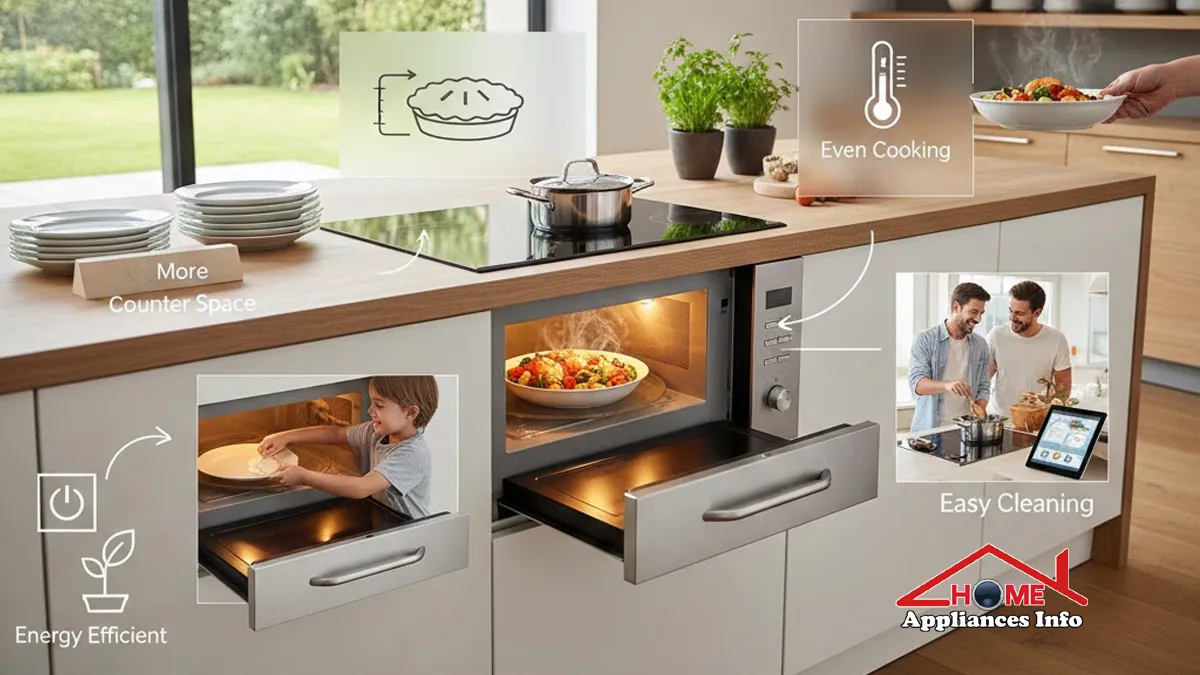
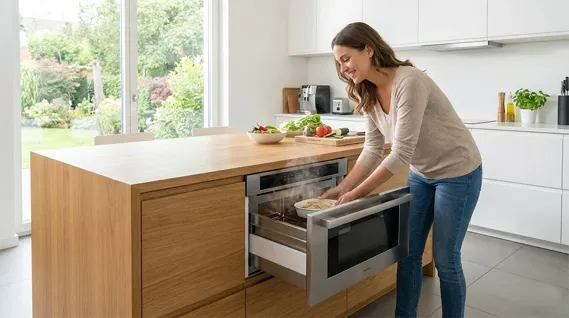
Drawer microwave ovens change that experience. They sit at waist or counter height, so you slide the drawer open and look directly down at your food.
This simple change offers important health and safety benefits:
- Less risk of hot liquids spilling toward your face or chest.
- Better visibility, which helps you check food doneness safely.
- Reduced chance of bumping a hot dish against the microwave frame.
This design especially benefits:
- Older adults with balance issues or weaker grip strength.
- People recovering from surgery who must avoid overhead lifting.
- Children learning simple reheating tasks with supervision.
Example: A parent can place oatmeal in the drawer, set the time, and let an older child open the drawer and stir safely. No reaching up. No hot bowls above shoulder level.
When appliances match your body’s natural movement, your kitchen becomes a safer, more comfortable space to prepare nourishing meals.
2. Less Lifting, Less Strain, Better Joint Health 💪
If you have back, shoulder, or neck pain, lifting heavy plates into an overhead microwave can feel exhausting. Repeated strain may worsen existing joint issues over time.
Drawer microwave ovens support safer body mechanics. You slide dishes horizontally instead of lifting them high. The motion is closer to how you load a dishwasher.
Health-related advantages include:
- Reduced stress on the lower back from overhead reaching.
- Less shoulder elevation, which may ease discomfort for people with arthritis.
- Smoother loading for people using walkers or wheelchairs.
For those managing chronic pain or conditions like osteoarthritis, ergonomic changes can be life-changing. Small adjustments lessen daily wear on joints and help you keep cooking at home longer.
To highlight the difference, consider this quick comparison.
| Feature | Drawer Microwave | Over-the-Range Microwave |
|---|---|---|
| Lifting height | Waist to chest level | Chest to above head level |
| Back strain risk | Lower, more neutral posture | Higher, frequent overhead reaching |
| Spill direction | Down toward the drawer cavity | Down toward torso and face |
| Accessibility | More accessible for reduced mobility | Challenging for shorter users or wheelchair users |
These design differences may seem small. Yet over months and years, reduced strain can support better joint comfort and safer daily routines.
3. Cleaner Kitchen, Lower Risk of Food Contamination 🧼
Food safety is a core part of a healthy kitchen. Grease splatters, spills, and crumbs can harbor bacteria if not cleaned regularly.
Microwave drawers can make hygiene easier to maintain:
- Flat, accessible interior for quick wipe-downs.
- Fewer overhead drips from lifting hot, messy dishes.
- Better view of spills, so they do not get ignored.
When spills are contained lower and inside an easy-to-reach cavity, you are more likely to clean them right away. That helps reduce the risk of cross-contamination between raw and cooked foods.
A cleaner microwave environment also means fewer baked-on residues and less smoke or odors. That can be particularly helpful for people sensitive to strong smells or with asthma.
4. Smarter Cooking That Protects Nutrients 🥦
You might wonder whether using a microwave is healthy at all. Research suggests that properly used microwaves can actually help preserve nutrients. This happens because cooking times are shorter and less water is often needed.
Built-in microwave drawers commonly offer:
- Sensor cooking that adjusts time and power automatically.
- Even heating, which can reduce overcooking at the edges.
- Gentle reheating options to avoid drying out food.
When food is not overcooked, heat-sensitive vitamins such as vitamin C and some B vitamins stay better preserved. Steaming vegetables in the microwave with minimal water, for example, can be an excellent nutrient-saving method.
Drawer microwave ovens do not change the science of microwaves. However, their easy access and modern features may encourage you to cook more whole foods at home. You might steam frozen vegetables, reheat homemade soup, or warm leftovers instead of ordering takeout.
Those small choices support better blood sugar control, sodium intake, and weight management over time. 🌱
5. Stress-Free Mealtimes and Healthier Habits for Busy Lives 🕒
Health is not only about nutrients. It is also about stress, sleep, and daily rhythms. If mealtime feels chaotic, you might rely more on fast food or skip balanced meals.
Drawer microwave ovens can reduce friction in your routine by:
- Letting several family members access reheated meals without crowding the stove.
- Freeing up counter and upper-wall space for better lighting and ventilation.
- Making it easier to batch-cook and reheat healthy meals safely.
Example: You prepare a large pot of vegetable chili on Sunday. During the week, family members gently reheat portions in the drawer microwave as schedules allow. Everyone still enjoys a warm, nourishing meal, even at different times.
This flexibility supports:
- More regular meal patterns, which help stabilize energy and mood.
- Healthier late-night snacks, like warmed leftovers instead of ultra-processed snacks.
- Less temptation to rely on ultra-fast, less nutritious options.
A calmer, more organized kitchen can also support mindful eating. When your cooking space feels safe and non-stressful, it becomes easier to slow down, sit, and enjoy your food.
Drawer Microwave Ovens vs Traditional Microwaves: Health-Focused Overview
To summarize the wellness angle, here is a quick snapshot.
| Aspect | Drawer Microwave Ovens | Traditional Counter / Over-Range |
|---|---|---|
| Ergonomics | Waist-level loading, less overhead lifting | Often above shoulder height or far back on counters |
| Burn risk | Lower, spills stay inside drawer | Spills can fall toward body or floor |
| Cleaning ease | Simple wipe-down, good visibility | Harder-to-see back wall and ceiling |
| Support for mobility limits | Better access for wheelchairs, shorter users | May be hard to reach safely |
These differences reinforce why many health-conscious homeowners now consider a microwave drawer when remodeling.
Drawer Microwave Ovens: Frequently Asked Questions ❓
1. Are drawer microwave ovens safe for children to use?
They can be, with proper supervision and safety settings. The lower height may actually reduce the risk of spills from overhead lifting.
Many models offer child locks, which prevent young children from operating the microwave alone. Parents should still teach careful handling, including using oven mitts and testing food temperature.
2. Do microwave drawers affect the nutritional value of food?
The drawer design does not change how microwaves cook food. Nutrient retention depends on cooking time, temperature, and water use.
Shorter cooking times and minimal water usually help preserve vitamins. That is why steaming vegetables in the microwave is often recommended.
3. Can drawer microwaves cause radiation exposure concerns?
Microwave ovens, including drawer models, are designed to keep microwave energy inside the appliance. When properly maintained, they do not cause harmful radiation exposure.
4. How do I clean a drawer microwave to keep it hygienic?
Allow the interior to cool, then wipe surfaces with warm, soapy water. For dried spills, heat a bowl of water with lemon slices for a few minutes.
Steam softens residues, making them easier to remove. Regular cleaning helps reduce odors and prevents bacteria from building up on food splatters.
5. Are drawer microwaves suitable for people with mobility issues?
Yes, many people with mobility challenges find them more accessible than overhead units. The lower height can be reached from a seated position.
However, individual needs vary. It is helpful to test the height and drawer motion in a showroom or model home when possible.
6. Do drawer microwaves cook as evenly as regular models?
Modern drawer models are designed to cook as evenly as standard countertop units. Many include sensor cooking and turntable-like technology.
For best results, follow manufacturer instructions, use microwave-safe containers, and stir or rotate food when recommended. This helps ensure even heating and safe serving temperatures.
Conclusion: Is a Drawer Microwave Oven Right for Your Health-Focused Home? 🌿
Drawer microwave ovens offer much more than a stylish look. They bring together safer access, reduced strain, easier cleaning, and flexible cooking that encourages home-prepared meals.
If you or your loved ones live with back pain, joint issues, mobility challenges, or simply a busy schedule, a microwave drawer can gently support healthier daily habits. You get a tool that makes warm, nourishing food easier to prepare and enjoy.
As you plan your kitchen, consider how each appliance affects your body, stress level, and ability to cook wholesome meals. Choosing a layout that includes a thoughtfully placed microwave drawer can be a meaningful investment in long-term comfort and well-being. 💚
With the right habits and attention to food safety, drawer microwave ovens can become a trusted partner in your health-focused kitchen.

🌐 FOUNDER & DIGITAL PUBLISHER
Muhammad Ali
Founder | SEO Strategist & E-E-A-T Digital Publishing Specialist

📈 SEO Strategy
🛠️ Appliance Optimization
🛡️ E-E-A-T Standards
Muhammad Ali is a digital publisher, SEO strategist, and founder of Home Appliances Info. He specializes in home appliance optimization, structured schema networks, and advanced E-E-A-T digital publishing standards to ensure accurate, trustworthy content across the platform.
1 Comment
Pingback: Haier TV – 10 Amazing Reasons Why It’s the Ultimate Choice