

To support our research and detailed appliance reviews, we may earn a small commission from qualifying purchases made through our links, at no extra cost to you. As an Amazon Associate, I earn from qualifying purchases.
To support our research and detailed appliance reviews, we may earn a small commission from qualifying purchases made through our links, at no extra cost to you. As an Amazon Associate, I earn from qualifying purchases.
You want to cook nourishing meals without worrying about what might be leaching into your food. That is exactly why choosing the right ceramic cookware set can feel so important. You are not just buying pots and pans. You are investing in your long-term health and peace of mind.
Many people switch from traditional nonstick pans after hearing about PFAS, PFOA, and other chemicals. These substances can persist in the body and environment. That can feel scary when you are simply trying to make dinner. Ceramic-coated cookware and fully ceramic pots offer a safer direction, especially when chosen carefully.
In this guide, you will find seven amazing, well-regarded options. Each one supports a more non-toxic kitchen, with different styles, budgets, and needs. You will also learn what “non-toxic” really means, how to care for your pans, and how to choose the best fit for your home. 🌿
Before we dive into the specific sets, it helps to understand what makes cookware safer in the first place.
1. What Makes a Ceramic Cookware Set Non-Toxic?
Not every “ceramic” pan is created equal. Some are ceramic-coated over metal. Others are solid ceramic or ceramic-like materials.
When choosing a ceramic cookware set non toxic, consider these key points:
• Coating ingredients
• Heavy metal testing
• Heat tolerance
• Manufacturer transparency
Here are the main health factors to watch.
Less reliance on traditional nonstick chemicals
Classic nonstick coatings often use PTFE. Historically, PFOA was used in production. Some newer coatings involve other PFAS chemicals. These substances have raised health concerns over time.
Ceramic coatings are typically PTFE- and PFOA-free. That means no classic Teflon-style surface. For many families, this is the first and most important health step.
Low risk of heavy metal contamination
Some older or low-quality glazes contained lead or cadmium. These can leach into food, especially with acidic recipes.
Higher quality makers test for these metals. Many advertise that their glazes are lead-free and cadmium-free. Look for brands that publish safety information and independent testing. A little research can help you avoid unnecessary risk. Reputable health sources discussing ceramic cookware health concerns, like this overview from Healthline on nonstick cookware safety, can add context:
https://www.healthline.com/nutrition/nonstick-cookware-safety
Heat stability and off-gassing
Very high heat can damage some coatings. It may cause fumes or speed up wear. Using medium to medium-high heat with ceramic surfaces is usually safer.
A ceramic cookware set non toxic will usually be rated for clear temperature limits. Respecting these limits protects both your health and your pans.
Now let’s look at seven specific sets that help create a safer, more relaxing kitchen.
2. Caraway Nonstick Ceramic Cookware Set – Modern Design, Lower Toxin Worry 🥘
The caraway nonstick ceramic cookware set has become a favorite for health-conscious home cooks. It combines style, performance, and a strong focus on safer materials.
Why it stands out
• PTFE-free, PFOA-free, and free from many common PFAS
• Aluminum core for even heating, with a ceramic nonstick layer
• Comes with smart storage organizers and pan racks
• Eye-catching color choices that fit modern kitchens
The caraway ceramic cookware set emphasizes being free of lead, cadmium, and heavy metals in its coatings. That offers extra reassurance if you are cooking for children or sensitive family members.
Best for
• People who want a sleek, coordinated set they can leave on display
• Families cooking daily on medium or medium-low heat
• Anyone switching away from older nonstick pans
Health-focused tips when using Caraway
• Preheat on low for a few minutes, then increase to medium.
• Avoid metal utensils to protect the ceramic coating.
• Hand wash when possible to extend the life of the nonstick layer.
Real-life example:
A busy parent might use the skillet for quick veggie stir-fries and the Dutch oven for soup. With food sliding off easily, they can use less oil and still clean up fast, even after a long workday.
3. GreenPan Ceramic Sets – A Pioneer In Ceramic Nonstick
GreenPan was one of the first widely known ceramic nonstick brands. They use a proprietary ceramic coating, usually called Thermolon. It is designed without PTFE or PFOA.
Why it stands out
• Wide range of collections and price points
• Many sets work on induction cooktops
• Oven-safe to varying temperatures, depending on handles and lids
• Focus on being PFAS-free and cadmium- and lead-free in the coating
Health and safety notes
GreenPan markets its coating as made from sand-derived materials. It avoids classic Teflon-style chemicals. The company also emphasizes that the coating does not release toxic fumes at recommended cooking temperatures.
Best for
• People who want many size and handle options
• Cooks who use induction, gas, or electric stoves
• Those who need both frying pans and deeper pots in one set
Use and care tips
• Keep heat at low to medium for most tasks.
• Allow pans to cool before washing to avoid warping.
• If food sticks, soak in warm soapy water instead of scrubbing aggressively.
Real-life example:
Someone who meal preps on Sundays could use a large GreenPan sauté pan for browning chicken, then a medium pot for simmering grains. The ceramic surface offers an easy-release layer that simplifies batch cooking.
4. Xtrema or Fully Ceramic Sets – For Those Who Want Zero Metal Contact
Most ceramic cookware sets are metal pans with a ceramic coating. Fully ceramic cookware, like Xtrema, is different. It is made of ceramic through and through, with no metal base.
Why it stands out
• No metal at all, which appeals to very cautious users
• No separate coating to chip in the same way as thin layers
• Excellent for slow cooking and simmering
• Often oven-safe and sometimes safe for broilers
Health perspective
These pans are typically advertised as free of lead, cadmium, and heavy metals. They are fired at very high temperatures. That helps stabilize the glaze and body.
Some people choose fully ceramic when they want to avoid any contact with aluminum or stainless steel. It can feel especially reassuring if you have metal allergies or strong sensitivities.
Best for
• Slow-cooked stews, soups, and braises
• People who do not mind heavier cookware
• Cooks who already love using Dutch ovens and casserole dishes
Care considerations
• Avoid sudden temperature changes to reduce risk of cracking.
• Use silicone, wood, or bamboo utensils.
• Store with care to prevent chips if pieces bump each other.
Real-life example:
A home cook might use a fully ceramic pot for tomato-based soups. They enjoy peace of mind knowing there is no metal contact with the acidic ingredients.
5. White Ceramic Cookware Set Options – Clean Look, Clean Cooking 🤍
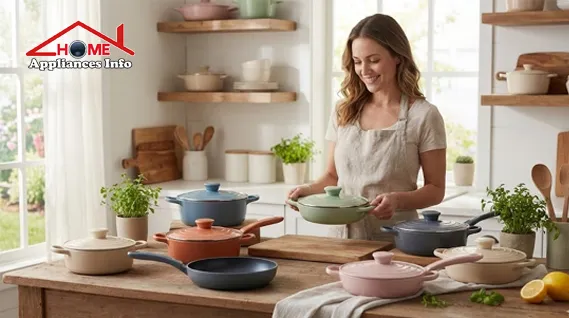
Many people are drawn to a white ceramic cookware set. It looks bright, clean, and calming on the stovetop. Seeing food clearly against a white surface can also help you gauge browning and doneness.
Why white ceramic can be a smart choice
• Easy to see if pan is truly clean
• Helps notice any scratches or wear quickly
• Pairs well with almost any kitchen style
You can find white ceramic cookware in several brands, including budget-friendly lines and premium sets. Caraway, GreenPan, and GreenLife often include white or off-white interiors in some collections.
Health and safety notes
The color itself does not determine safety. The important factors are still:
• Absence of PFAS, PTFE, and PFOA
• Lead-free and cadmium-free claims with credible testing
• Clear oven and stovetop safety limits
If you see staining on a white ceramic surface, that usually reflects normal use. Gentle cleaning with baking soda paste often helps. Scrubbing too harshly, though, can shorten the coating’s life.
Best for
• People who love a minimalist or “spa-like” kitchen look
• Visual learners who watch color changes as food cooks
• Those who value spotting dirt or residue right away
Real-life example:
Someone trying to cook more vegetables may feel more inspired when they see bright green beans and orange carrots pop against a white pan. The visual contrast can make meals feel more appealing.
6. GreenLife or Cuisinart Ceramic Sets – Budget-Friendly Safer Upgrades
You do not need a premium price tag to move toward a safer kitchen. Brands like GreenLife and Cuisinart offer ceramic-coated sets at more accessible prices.
GreenLife highlights
• Colorful exteriors and interiors, often very cheerful
• PTFE-free and PFOA-free ceramic coating
• Lightweight construction, easy to lift and handle
Cuisinart ceramic collections (such as Ceramica) highlight
• Known brand with wide availability
• Ceramic interior over aluminum or stainless steel
• Solid balance between price and performance
Health considerations
These lines usually avoid classic Teflon-style chemicals. However, budget sets can have thinner coatings. They may wear faster if used with high heat or metal utensils.
Best for
• College students or first apartments
• Families replacing old scratched nonstick pans on a tight budget
• People experimenting with ceramic cookware before investing in a premium set
Care tips to protect your health investment
• Use a little more oil if sticking starts. Avoid scraping hard.
• Lower the heat. Many sticking problems come from cooking too hot.
• Replace pieces once the coating is heavily scratched or chipped.
Real-life example:
A young couple might start with a simple GreenLife set. They cook weekend breakfasts, stir-fries, and simple soups. When they are ready, they can later upgrade a few key pieces while still using safer practices learned from this starter set.
7. Our Place and Similar Multi-Use Pans – Minimalist, Non-Toxic Mindset 🍳
The Always Pan from Our Place became famous on social media. It is a multi-use ceramic-coated pan that aims to replace several pieces of cookware.
Why it stands out
• Designed to sauté, steam, fry, and braise
• PTFE-free and PFOA-free ceramic coating
• Comes in modern colors and compact storage-friendly shapes
• Often sold with accessories like steamer inserts and spatulas
Health and lifestyle benefits
A pan like this supports minimalism. Owning fewer items can reduce clutter and decision fatigue. That can make cooking feel calmer. It also means you have fewer pans to research for safety.
Most of these pans are marketed as PFAS-free and heavy metal safe. They suit small apartments, tiny homes, or anyone who likes a streamlined kitchen.
Best for
• People in small spaces
• Cooks who usually prepare one-pot meals
• Those who value design and function equally
Care considerations
• Avoid high-heat searing or dry preheating.
• Hand wash to protect the coating.
• Replace if the interior becomes rough or deeply scratched.
Real-life example:
A city dweller with one small cabinet might rely on an Always Pan. They use it to cook eggs, steam dumplings, and simmer curries. One pan, many safer meals.
8. Zwilling, Scanpan, and Hybrid Sets – For Serious Home Cooks
If you cook often and care about both performance and health, hybrid options stand out. Brands like Zwilling and Scanpan offer sets that blend ceramic-like or alternative nonstick technologies with durable bases.
Examples
• Zwilling Spirit or Forte lines often feature ceramic nonstick surfaces over steel or aluminum.
• Some Scanpan collections use pressure-bonded coatings that are PTFE-free or reduced in traditional PFAS.
Health and performance highlights
• Many are induction compatible.
• Several lines are oven-safe to higher temperatures.
• Focus on durability can reduce how often you replace pans.
While some of these lines are not strictly ceramic, they often share similar safety goals. They reduce or avoid PFAS and heavy metals and focus on robust surfaces.
Best for
• Heavy home use, including batch cooking and meal prep
• Cooks who want strong browning and good heat retention
• People willing to care well for a smaller number of high-quality pieces
Real-life example:
A serious home cook might use a Zwilling ceramic sauté pan for searing fish, then finish in the oven. They enjoy nonstick benefits without the worry linked to older coatings.
9. Comparison Table: Choosing the Best Set for Your Home
Here is a simple overview to help you compare some of these popular options.
| Brand / Type | Best For | Oven Safe? | Induction Compatible? | Notable Health Features |
|---|---|---|---|---|
| Caraway ceramic cookware set | Stylish everyday use, organized storage | Yes, up to set limit | Some sets, check model | PTFE-, PFOA-, PFAS-free coating; heavy metal testing |
| GreenPan ceramic sets | Wide range of needs, many budgets | Yes, varies by line | Several lines | PFAS-free Thermolon coating; lead- and cadmium-free claim |
| Fully ceramic (e.g., Xtrema) | Slow cooking, zero metal contact | Usually yes, high temps | Often not, check label | 100% ceramic body and glaze, no metal core |
| White ceramic cookware set (various brands) | Clean look, easy visual checks | Usually yes | Varies | PFAS-free ceramic finishes, easy to inspect for wear |
| GreenLife / Cuisinart ceramic | Budget-conscious safer upgrade | Often yes, lower temps | Some models | PTFE- and PFOA-free ceramic interior |
| Our Place Always Pan | Small spaces, minimal setups | Usually limited, check manual | Specific models only | PFAS-free ceramic coating, multipurpose design |
| Zwilling / Scanpan hybrids | Enthusiastic home cooks | Often high temp safe | Many lines | Advanced nonstick or ceramic-like surfaces, reduced toxins |
10. How to Use Your Ceramic Cookware Safely and Make It Last
Owning a safer set is only half the journey. How you cook and clean matters too.
Use gentle to moderate heat
Ceramic coatings do not need high heat. Moderate temperatures reduce:
• Risk of food sticking
• Potential off-gassing from overheated oils
• Long-term wear on the coating
If you are used to cranking burners to high, this may be a shift. Many professional sources discussing is nonstick cookware safe stress moderate heat for best safety:
https://health.clevelandclinic.org/is-nonstick-cookware-safe
Choose safe utensils
Use these instead of sharp metal tools:
• Silicone spatulas
• Wooden spoons
• Bamboo utensils
These options protect the ceramic surface from scratches. This keeps the barrier between your food and the base material intact.
Avoid aerosol cooking sprays
Many manufacturers warn against aerosol sprays on ceramic surfaces. They can leave sticky residues. These build up over time and cause more sticking. Use a small amount of regular oil or butter instead.
Clean with care
• Let pans cool before washing.
• Soak stuck-on bits in warm soapy water.
• Use soft sponges, not steel wool.
• For stains, try a baking soda paste and gentle scrubbing.
Store thoughtfully
• Use pan protectors or a soft cloth between stacked pans.
• Hang pans if possible to avoid scratching.
• Check surfaces regularly for significant wear or chips.
If a pan’s interior is heavily worn or cracked, it is safer to replace it. Even a high-quality ceramic cookware set will not last forever under heavy use. Planning to replace surface-dependent pans every few years is part of a realistic non-toxic strategy.
11. How Ceramic Cookware Fits Into a Holistic Non-Toxic Kitchen 🌿
Cookware is one piece of your overall health puzzle. A safer pan will not erase every exposure. Yet it can feel empowering to reduce risks where you can.
Combine your new ceramic cookware set with these habits:
• Use glass or stainless containers for hot leftovers.
• Avoid microwaving food in old plastic.
• Choose unbleached parchment instead of nonstick foil when possible.
• Filter your drinking water if local reports raise concerns.
This is not about fear. It is about stacking small protective choices in your favor. Over years, these habits can gently lower the burden of avoidable chemicals.
External organizations like the Environmental Working Group have resources on PFAS and cookware-related issues. Their research on nonstick cookware safety and PFAS contamination can provide deeper background:
https://www.ewg.org
12. FAQs About Ceramic Cookware and Non-Toxic Kitchens
1. Is ceramic cookware really safer than traditional nonstick?
Ceramic cookware usually avoids PTFE, PFOA, and many PFAS chemicals. That reduces certain concerns linked to older nonstick pans. You still need to choose reputable brands and care for them properly.
2. Can ceramic coatings contain lead or cadmium?
High-quality modern sets are typically advertised as lead-free and cadmium-free. However, not every product is equal. Check brand testing information, certifications, and independent reviews whenever possible.
3. Is a white ceramic cookware set harder to keep clean?
White ceramic shows stains more easily, but that can help. You see residue that darker surfaces might hide. With gentle cleaning and avoiding burnt-on food, most stains can be minimized or removed.
4. Do ceramic pans work on induction cooktops?
Ceramic coatings themselves do not affect induction. The metal base does. Some ceramic-coated pans include a magnetic base for induction, while others do not. Always check product labels for induction compatibility.
5. How long does a ceramic cookware set usually last?
Lifespan varies with brand, usage, and care. With moderate heat, gentle utensils, and hand washing, many sets last several years. Heavy use, high heat, or frequent dishwasher cycles will shorten that lifespan.
6. Are fully ceramic pots better than ceramic-coated metal?
“Better” depends on your needs. Fully ceramic offers zero metal contact and excellent slow-cooking performance. Ceramic-coated metal heats faster and is often lighter. Both can be part of a non-toxic kitchen when chosen well.
13. Conclusion: Building a Calmer, Safer Kitchen With the Right Ceramic Cookware Set
Creating a non-toxic kitchen is not about perfection. It is about thoughtful choices that support your health and values. The right ceramic cookware set can help you move away from older nonstick chemicals while still enjoying easy, everyday cooking.
You have seen seven strong options, from the stylish caraway nonstick ceramic cookware set to fully ceramic pots, budget-friendly lines, and multi-use pans. Each offers its own blend of safety, convenience, and design.
As you decide, consider:
• Your cooking style and most common recipes
• Your stove type and oven needs
• Your budget and willingness to replace pieces over time
• How much you value aesthetics and storage solutions
Start with one or two key pieces if a full set feels overwhelming. A healthier skillet and a versatile pot can transform your daily routine. Over time, you can replace older items and build the safer kitchen you imagine. 🥗
Your meals deserve cookware that respects both flavor and health. Choose with care, treat your pans gently, and let your kitchen become a place of calm nourishment for you and the people you love.

🌐 FOUNDER & DIGITAL PUBLISHER
Muhammad Ali
Founder | SEO Strategist & E-E-A-T Digital Publishing Specialist

📈 SEO Strategy
🛠️ Appliance Optimization
🛡️ E-E-A-T Standards
Muhammad Ali is a digital publisher, SEO strategist, and founder of Home Appliances Info. He specializes in home appliance optimization, structured schema networks, and advanced E-E-A-T digital publishing standards to ensure accurate, trustworthy content across the platform.
1 Comment
Pingback: Dry Grinder: 7 Amazing Options for Effortless Home Cooking