

To support our research and detailed appliance reviews, we may earn a small commission from qualifying purchases made through our links, at no extra cost to you. As an Amazon Associate, I earn from qualifying purchases.
To support our research and detailed appliance reviews, we may earn a small commission from qualifying purchases made through our links, at no extra cost to you. As an Amazon Associate, I earn from qualifying purchases.
Busy schedules, constant screens, and endless takeout can quietly erode healthy habits. Many families want to eat better, but struggle to make it happen day after day.
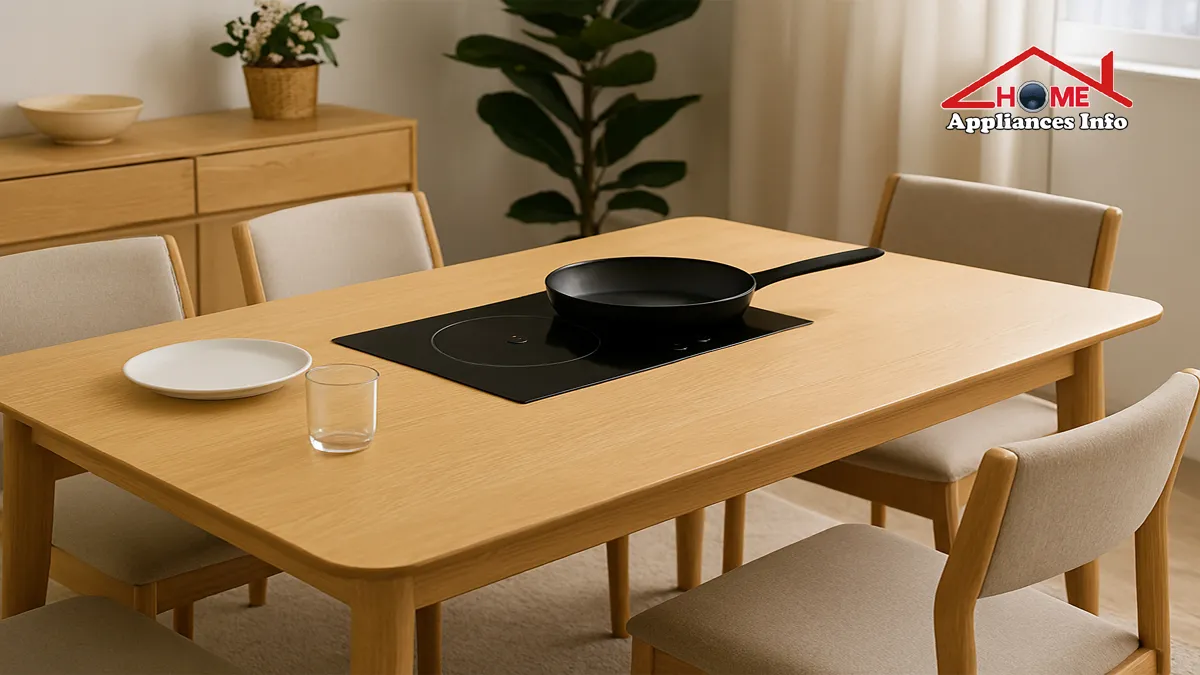
A dining table with induction cooker brings cooking and eating together in one calm, shared space. Instead of running between the kitchen and dining room, you cook, serve, and enjoy meals right where everyone gathers.
This simple layout change can support your physical and emotional health in surprising ways. Below are 10 evidence-informed benefits that show how an induction dining table can reshape your daily routine for the better.
1. Brings Healthy Cooking to the Center of Family Life
When cooking happens where you eat, healthy choices feel more natural. You see ingredients, smell the food, and feel involved in the process.
An induction cooktop table helps:
- Make vegetables and whole foods more visible and inviting.
- Turn cooking into a shared activity, not a solo chore.
- Reduce mindless snacking away from the table.
Example: Instead of grabbing packaged snacks, your family gathers while you quickly sauté vegetables and tofu in front of them. Curiosity replaces resistance, especially for kids.
2. Makes Nutritious Choices the Easy Default 🥦
A built-in induction hob at the table makes simple, healthy meals far easier. You can:
- Simmer soups full of beans and vegetables.
- Prepare one-pot dishes with whole grains.
- Steam fish or vegetables with minimal added fat.
Because induction offers precise temperature control, you avoid burning food and damaging nutrients as easily. You stay in the safe cooking zone, where:
- Delicate vitamins are better preserved.
- Oils are less likely to overheat and oxidize.
Over time, this “easy default” of quick, home-cooked meals reduces reliance on ultra-processed foods. That means less excess sodium, sugar, and saturated fat.
3. Encourages Mindful Eating and Better Portion Control
When you share the experience of cooking at the table, you tend to eat more slowly and mindfully. This supports:
- Better recognition of hunger and fullness cues.
- Less overeating from distraction.
- More appreciation of flavor and texture.
You can:
- Cook smaller batches right at the table.
- Refill only if someone is truly still hungry.
- Pause between cooking stages to chat and connect.
This approach aligns with mindful eating practices shown to support weight management and reduce emotional eating. An induction dining table acts like a gentle reminder to slow down and truly notice your meal.
4. Reduces Unhealthy Takeout and Ultra-Processed Meals
One of the biggest health wins is simple: you cook at home more often. A dining table with built-in induction hob removes common barriers:
- You do not need a big, separate kitchen.
- Cleanup is easier thanks to the smooth glass surface.
- One pot or pan can handle many different recipes.
When cooking feels simple and social, takeout loses some appeal. Even a quick meal of:
- Stir-fried vegetables
- Pre-cooked whole grains
- A lean protein
…can be on the table faster than waiting for delivery. Long term, this shift can mean:
- Lower intake of unhealthy fats and excess calories.
- Better control over ingredients and portion size.
- More stable energy and mood throughout the day.
5. Cleaner Indoor Air Than Gas Cooking 🌬️
A key health benefit of induction technology is improved indoor air quality. Traditional gas stoves can release nitrogen dioxide and other pollutants into your home.
According to the U.S. Environmental Protection Agency, poor indoor air quality can aggravate asthma and other respiratory conditions. Induction cooktops:
- Do not burn fuel or emit combustion gases.
- Produce less heat in the room overall.
- Often reduce the need for strong ventilation.
Comparison of Health-Related Features
| Feature | Gas Stove | Dining Table + Induction | Health Impact |
|---|---|---|---|
| Combustion gases | Yes | No | Induction avoids gas-related irritants |
| Heat released into room | High | Lower | More comfortable, less stuffy air |
| Surface temperature | Very hot after cooking | Cools relatively faster | Lower burn risk, especially for children |
| Need for strong ventilation | Often essential | Still helpful, but less | Easier to maintain cleaner indoor air |
By shifting to a dining table with induction cooker, you may support better respiratory comfort, especially for children, older adults, or anyone with asthma.
6. Safer Cooking Surface for Families with Kids 👨👩👧
Safety is a vital health concern. Induction cooktops are generally safer than many traditional options because they:
- Heat the pan, not the air around it.
- Stay cooler at the surface after cooking.
- Often include automatic shut-off features.
For families with young children, this matters. Curious hands are less likely to get serious burns. Combined with good habits—like turning pot handles inward and supervising children—you create a safer cooking environment.
You can also follow official food safety guidelines to reduce the risk of foodborne illness. Safe temperatures and rapid, even heating support proper cooking of meat, eggs, and poultry.
7. Better Posture and Comfort While Cooking and Eating
Standing for long periods in a separate kitchen can strain your back, knees, and feet. A dining table with an induction cooktop allows more flexible postures:
- You can sit while stirring or monitoring food.
- Family members can share tasks without crowding.
- Everyone remains at a comfortable height and distance.
This can be especially helpful if you:
- Are pregnant.
- Live with joint pain or arthritis.
- Are supporting an older family member who enjoys cooking.
A more ergonomic setup may reduce discomfort and fatigue, making it easier to cook at home regularly.
8. Ideal for Special Diets and Food Sensitivities
If you manage food allergies, intolerances, or chronic conditions, control over your cooking environment is priceless. A dining table with induction cooker can help you:
- Prepare gluten-free, low-sodium, or heart-healthy meals with care.
- Avoid cross-contamination by using dedicated cookware.
- Keep allergen-containing foods away from shared pots and pans.
Because cooking happens right at the table, communication is easier. Family members or guests can:
- Ask what ingredients you used.
- See how food is prepared.
- Offer feedback or requests in real time.
This transparency reduces anxiety and helps everyone feel safer and more included.
9. Strengthens Family Bonds and Emotional Wellbeing 💛
Health is not only about nutrients and calories. Emotional connection, stress levels, and sense of belonging all shape your wellbeing.
Cooking and eating at the same table can:
- Encourage conversation instead of screen time.
- Create shared rituals, like “soup night” or “hot pot Friday.”
- Give children a role in meal preparation and decisions.
Studies consistently link shared family meals with:
- Better dietary patterns in children.
- Lower risk of disordered eating.
- Greater emotional resilience and connection.
An induction cooktop table becomes a small “hearth” for modern families. It offers warmth, nutrition, and a regular place to check in with each other.
10. Supports Long-Term Healthy Habits and Routine
Healthy living is about consistency more than perfection. An induction dining table helps you build sustainable routines by:
- Reducing the friction of cooking from scratch.
- Making cleanup simpler after busy days.
- Keeping meal prep visible and approachable.
Over time, these small advantages can:
- Stabilize your eating schedule.
- Improve sleep, thanks to more regular meals.
- Support healthier weight and blood sugar patterns.
Instead of a dramatic lifestyle overhaul, you gain subtle daily nudges toward home-cooked, shared meals. Those nudges add up.
FAQs About Health and a Dining Table with Induction Cooker
1. Is a dining table with induction cooker safe for children?
Yes, it is generally safer than many traditional stoves. The surface stays cooler, and there is no open flame. You still need supervision and good safety habits, but overall burn risk is usually lower.
2. Can induction cooking help me lose weight?
Induction itself does not cause weight loss. However, it makes home cooking easier and faster. That can reduce reliance on high-calorie takeout and processed foods, which may support weight management.
3. Are there health concerns with electromagnetic fields (EMFs)?
Current research has not found clear evidence of harm from household induction cooktops when used as directed. If you are concerned, you can:
- Stand a bit farther from the hob.
- Use proper cookware.
- Follow manufacturer instructions carefully.
4. Will a dining table with induction cooker help with my special diet?
It can support special diets by improving control over ingredients and preparation. You can prepare low-sodium, diabetic-friendly, or allergy-safe meals with less stress. Always follow your healthcare provider’s advice for your specific condition.
5. Does induction cooking preserve more nutrients?
Induction offers precise temperature control and quick heating. This can help avoid overcooking, which preserves more vitamins in many foods. However, overall nutrient retention still depends on cooking method, time, and ingredients.
6. Is it hygienic to cook and eat on the same table?
Yes, as long as you clean the surface before and after cooking and serving. Induction units have smooth glass, which is easy to wipe. Using placemats, boards, and separate serving dishes also supports good hygiene.
Conclusion: A Smart Choice for a Healthier, Happier Home 🌱
A dining table with induction cooker is more than a design trend. It is a practical tool for healthier living. By bringing cooking and eating together, it:
- Makes home-cooked meals easier and more appealing.
- Supports mindful eating, safer cooking, and cleaner air.
- Strengthens family connection and emotional wellbeing.
If you want to cook more, rely less on takeout, and create a calmer mealtime routine, an induction cooktop table is worth considering. Explore models that fit your space, think about your family’s needs, and picture how this setup could transform your daily meals.
With the right habits, your dining table can become the heart of a healthier life—one thoughtful meal at a time. 🥗


🌐 FOUNDER & DIGITAL PUBLISHER
Muhammad Ali
Founder | SEO Strategist & E-E-A-T Digital Publishing Specialist

📈 SEO Strategy
🛠️ Appliance Optimization
🛡️ E-E-A-T Standards
Muhammad Ali is a digital publisher, SEO strategist, and founder of Home Appliances Info. He specializes in home appliance optimization, structured schema networks, and advanced E-E-A-T digital publishing standards to ensure accurate, trustworthy content across the platform.