

To support our research and detailed appliance reviews, we may earn a small commission from qualifying purchases made through our links, at no extra cost to you. As an Amazon Associate, I earn from qualifying purchases.
To support our research and detailed appliance reviews, we may earn a small commission from qualifying purchases made through our links, at no extra cost to you. As an Amazon Associate, I earn from qualifying purchases.
Creating a calm, beautiful home should not leave your body aching or your nerves frayed.
If you have ever searched how to hang a picture and ended up overwhelmed, you are not alone.
Many people worry about:
- Damaging walls
- Triggering back or neck pain
- Climbing ladders
- Crooked frames that drive them crazy 😅
This guide treats hanging pictures as both a home task and a health habit.
Your walls, your body, and your mind all matter here.
You will learn simple, step‑by‑step ways to protect:
- Your posture and joints
- Your breathing and indoor air
- Your sense of calm and safety
Let’s walk through ten practical methods so you can hang artwork with confidence, comfort, and less stress. 🖼️
1. Rethink How to Hang a Picture: Start With Your Body
Before any tools, think about your body first.
Hanging art often involves:
- Reaching above shoulder level
- Bending and twisting
- Lifting heavier frames
These movements can strain your neck, shoulders, and lower back.
Protect your posture from the start
Stand naturally and notice:
- Are your shoulders tense or lifted?
- Are you leaning to one side?
- Are your knees locked?
Soften your knees slightly.
Keep both feet flat and shoulder‑width apart.
This stable stance protects your spine.
When planning where the picture will go, avoid long reaches.
If you must reach, move your whole body closer instead.
Do not stretch your arm to the limit.
Use your breath to reduce tension
Body tension can build while you focus on straight lines.
Try this simple pattern:
- Inhale through your nose for four counts.
- Exhale through your mouth for six counts.
Use this before lifting the frame or climbing a stool.
It supports calm focus and reduces muscle tightness. 😌
2. Choose Health‑Friendly Hanging Methods and Materials
Different hanging methods affect both safety and wall health.
Some even influence indoor air quality.
Strong chemical glues can release fumes.
These may irritate sensitive lungs or trigger headaches.
Consider gentler options whenever possible.
Common hanging methods and their health notes
Below is a quick comparison to guide your choice.
| Method | Best For | Wall Type | Health & Safety Notes |
|---|---|---|---|
| Adhesive strips | Light frames, rentals | Smooth painted | Low effort, no drilling; ventilate during use. |
| Small picture nails | Medium frames | Drywall, plaster | Minimal dust; avoid hammering near wiring. |
| Wall anchors + screws | Heavy frames, mirrors | Drywall | Very secure; create some dust when drilling. |
| Rail or gallery system | Many frames, tall walls | Most wall types | Reduces ladder use; up‑front installation effort. |
| Standing picture ledges | Rotating displays | Anchored into studs | Great for frequent changes; ensure stable mounting. |
When to choose which method
- Use adhesive strips for light frames and low‑risk areas.
- Use anchors and screws for heavy pieces or over beds and seating.
- Use rails or ledges if you like to refresh artwork often.
This thoughtful choice protects your walls and reduces stress later.
3. Go Lightweight When Possible to Protect Joints
Heavy frames may look luxurious.
They also increase strain on your wrists, shoulders, and back.
When you can, choose:
- Lightweight frames made from aluminum or thin wood
- Acrylic instead of glass, especially in kids’ rooms
- Smaller sizes for narrow halls or above doors
Lighter pieces are easier to position and hold steady.
They also fall with less force if a hook fails.
Test the weight before you commit
Hold the frame at chest height for 15–20 seconds.
Notice:
- Do your arms shake?
- Does your shoulder feel tight or painful?
If yes, consider a lighter frame or ask for help.
Your body is giving important feedback.
Extra safety in high‑traffic spaces
In hallways, children’s rooms, and near doors, prefer:
- Acrylic fronts instead of glass
- Lightweight frames with two hooks instead of one
This reduces injury risk if something gets bumped.
4. Measure With Calm, Not Pressure
Precise measuring can feel stressful.
Yet rushing often leads to multiple holes and more frustration.
A calm, step‑by‑step approach saves both your wall and your mood.
Simple measuring method
- Decide the center point on the wall.
- Mark that spot lightly with painter’s tape, not pencil.
- Measure the frame width.
- Mark the hook positions on the frame back.
- Transfer those measurements to the tape on the wall.
Painter’s tape is kinder to your walls.
It is easier to adjust and leaves fewer marks.
Use tools that support your body
Consider these supports:
- A laser level to avoid long periods of holding a bubble level
- A pencil with a grippy surface to reduce hand strain
- A folding rule or flexible tape measure for easier handling
Take short breaks if your neck or eyes feel tired.
Look away from the wall and refocus your eyes on something farther.
This reduces eye strain and supports overall comfort. 👀
5. Follow Eye‑Level Height to Reduce Neck and Eye Strain
Hanging art at the right height is not only a design choice.
It strongly affects comfort for your neck and eyes.
Most experts suggest the center of the artwork sits around 57–60 inches from the floor.
This matches average eye level for many adults.
Health‑friendly height rules
- Avoid placing pictures so high you must tilt your head often.
- In seating areas, align the center closer to seated eye level.
- In children’s rooms, lower the height for kids’ eye level.
Continuous neck tilting can trigger:
- Muscle fatigue
- Tension headaches
- Shoulder stiffness
By choosing a natural eye level, you protect your neck and your comfort.
Before you decide how to hang a picture in any room
Ask yourself:
- Will I view this mainly while standing or sitting?
- Do children or older adults use this space often?
Adjust height to match the people who use the room most.
This small change supports daily health more than most realize.
6. Learn How to Hang a Picture at Back‑Friendly Heights
Back pain is one of the most common complaints in home projects.
But many aches are avoidable with small posture shifts.
Lift with your legs, not your back
When picking up a frame from the floor:
- Bend at your hips and knees, not your waist.
- Keep the picture close to your body.
- Avoid twisting while you stand up.
Turn your feet instead of twisting your spine.
This simple habit reduces disc and muscle strain.
Use a stable surface instead of the floor
If you tend to crouch a lot, use:
- A sturdy table
- A countertop
- The top of a wide dresser
Place the frame there while you measure and attach hardware.
This keeps you from bending over repeatedly.
Listen to discomfort early
If you feel even mild pulling in your lower back, pause.
Stretch gently:
- Place hands on hips.
- Lean back slightly for 5–10 seconds.
Do not push into pain.
Gentle movement helps blood flow and reduces tightness.

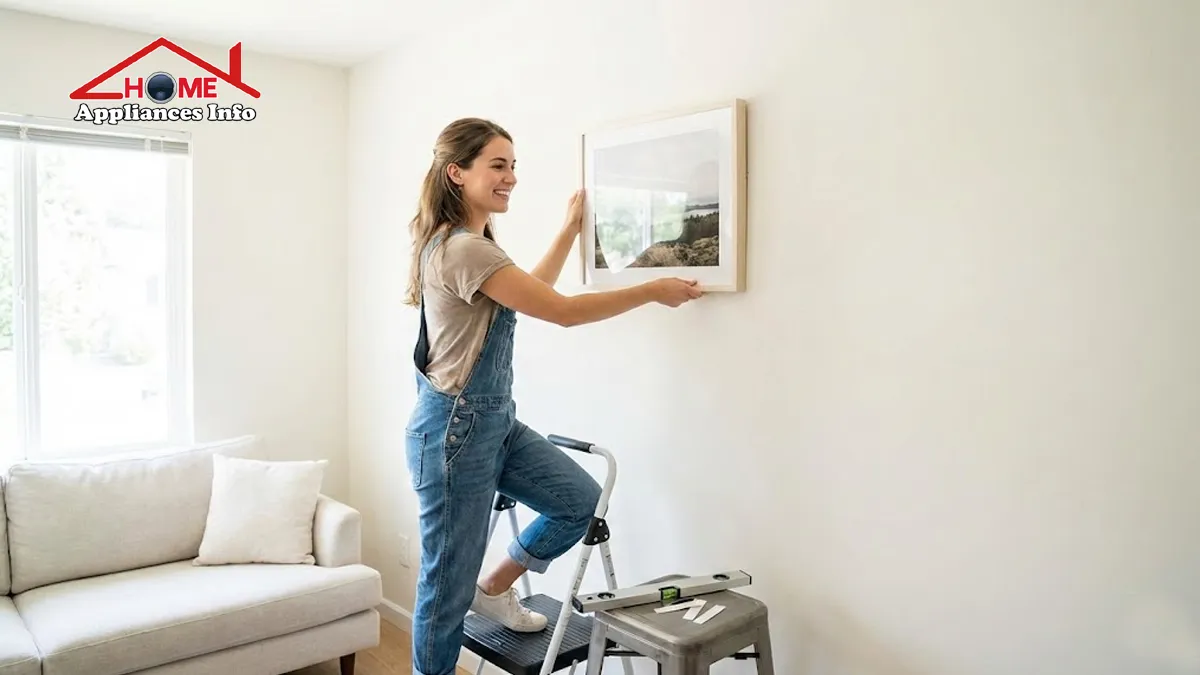
7. Respect Ladders and Stools for Serious Injury Prevention
Many home injuries happen from small falls.
A quick “I’ll just reach” can lead to sprains or fractures.
Using safe ladder use practices protects both bones and confidence.
The Centers for Disease Control and Prevention offers detailed advice on safe ladder use.
Safe ladder and stool basics
- Choose a ladder tall enough so you do not stand on the top step.
- Place it on an even, non‑slippery surface.
- Face the ladder while climbing and descending.
- Keep three points of contact: two feet and one hand, or vice versa.
Never lean sideways to reach a distant spot.
Climb down and move the ladder instead.
Ask for help when needed
If you:
- Feel unsteady on your feet
- Have balance problems
- Are recovering from injury or surgery
Ask someone to steady the ladder.
If possible, avoid climbing and delegate this part.
Your long‑term safety matters more than finishing the wall today.
8. Use Paper Templates to Avoid Unnecessary Holes and Stress
Gallery walls can feel overwhelming.
Many holes and changes can also harm wall health and appearance.
Paper templates protect both your drywall and your patience.
How to use templates
- Trace each frame on kraft or newspaper.
- Cut out the shapes.
- Label each with the frame name or number.
- Tape the papers on the wall using painter’s tape.
- Move them until the layout feels right.
This method lets you try many arrangements without drilling.
It also reduces decision fatigue and frustration.
A mental health bonus
Seeing the full layout on the wall helps your brain relax.
You can step back and check balance and spacing calmly.
People often report feeling more confident before making any holes.
That confidence supports both mental comfort and smoother work. 🙂
9. Secure Heavy Art With Anchors and Studs
For large or heavy pieces, safety becomes essential.
This is especially true above beds, sofas, and play areas.
Using wall anchors or screwing directly into studs prevents sudden falls.
This protects both people and property.
When to use wall anchors
Use anchors when:
- The frame is heavy
- You cannot find a wall stud
- You hang a mirror or glass piece
Types include:
- Plastic expansion anchors
- Self‑drilling anchors
- Toggle bolts for very heavy loads
Follow the weight limits on the packaging carefully.
Never guess.
When to find and use studs
Studs are the vertical wooden supports inside walls.
They offer stronger support for screws.
Use a stud finder and move it slowly across the wall.
Mark stud positions with pencil or tape.
Whenever possible, anchor heavy items into studs.
This choice dramatically lowers risk of wall failure.
10. Do a Final Health and Safety Check Before You Relax
Before you step back and admire your work, pause for a final check.
This quick routine supports long‑term health and peace of mind.
Physical safety checklist
Ask yourself:
- Is every heavy piece supported by appropriate hardware?
- Are any sharp edges at child head height?
- Are cords or wires (for picture lights) secured and tidy?
Gently tug each frame from the bottom.
It should feel firm, not loose or wobbly.
Personal comfort checklist
Stand where you will normally view the art.
Notice:
- Do you need to tilt your head up or down?
- Do bright reflections hit your eyes?
- Does the arrangement feel calming or cluttered?
If something feels off, adjust now.
Small changes now can prevent daily irritation and tension.
Quick Reference: Health‑First Picture Hanging Methods
Use this summary to match your situation with the right method.
- Lightweight art in rentals: Adhesive strips, low fumes, protect walls.
- Medium frames in living rooms: Nails or small hooks, eye‑level height.
- Heavy pieces over beds or sofas: Studs or anchors, double hooks, safety first.
- Tall walls or staircases: Rail systems or ledges, fewer trips up ladders.
- Kids’ spaces: Lightweight frames, acrylic fronts, lower height, rounded edges.
Each choice can reduce risk of injury and support a calmer home.
FAQs About Health‑Focused Picture Hanging
1. What is the safest way to learn how to hang a picture alone?
Start with light frames and low walls.
Use adhesive strips or small hooks first.
Work at chest height to avoid ladders.
If you must climb, follow strict ladder safety and move slowly.
2. How high should I hang pictures to avoid neck and eye strain?
Aim for the center around 57–60 inches from the floor.
Adjust for seating areas by lowering slightly.
For children’s spaces, match their eye level instead.
3. Are adhesive hooks bad for my health or indoor air?
Most modern adhesive strips are safe when used as directed.
However, some products may release mild fumes while drying.
Open windows or ventilate the space during and after use.
4. How can I hang art without hurting my back?
Keep frames close to your body while lifting.
Bend with your hips and knees, not your back.
Use a table or counter instead of the floor for preparation.
Take breaks and stretch if you feel early discomfort.
5. Is it safe to hang heavy art above my bed?
It can be safe with correct hardware.
Use sturdy anchors or mount directly into studs.
Avoid extremely heavy or sharp‑edged pieces above sleeping areas.
If you feel uncertain, choose a lighter option.
6. What if I already have neck pain but still want wall art?
Choose smaller pieces and hang them at comfortable eye level.
Avoid very high placements or crowded gallery walls.
Limit viewing that requires frequent head tilting.
Discuss persistent pain with a healthcare professional.
Conclusion: A Kinder Way to Learn How to Hang a Picture
You now have a health‑centered roadmap for this everyday task.
You learned how to hang a picture while caring for your body, your breathing, and your sense of safety.
To recap, you can:
- Protect your back, neck, and shoulders through posture and lifting habits
- Choose lightweight frames and safe materials
- Use anchors and studs for heavy pieces and high‑risk locations
- Respect ladders and height to avoid preventable injuries
- Place art at eye level to support relaxed viewing
Your home should feel like a sanctuary, not a source of strain.
Each picture you hang can support a calmer, healthier environment.
When you plan your next wall, move slowly, breathe, and listen to your body.
With these habits, understanding how to hang a picture becomes more than a chore.
It becomes a gentle practice in caring for your space and yourself. 🌿🖼️
Now choose one small wall, gather your tools, and try one method today.
Small, safe steps can transform both your home and your daily well‑being.


🌐 FOUNDER & DIGITAL PUBLISHER
Muhammad Ali
Founder | SEO Strategist & E-E-A-T Digital Publishing Specialist

📈 SEO Strategy
🛠️ Appliance Optimization
🛡️ E-E-A-T Standards
Muhammad Ali is a digital publisher, SEO strategist, and founder of Home Appliances Info. He specializes in home appliance optimization, structured schema networks, and advanced E-E-A-T digital publishing standards to ensure accurate, trustworthy content across the platform.
1 Comment
Pingback: Rain Shower Head: 7 Best Picks for a Luxurious Upgrade (Delta & Handheld Options)