

To support our research and detailed appliance reviews, we may earn a small commission from qualifying purchases made through our links, at no extra cost to you. As an Amazon Associate, I earn from qualifying purchases.
To support our research and detailed appliance reviews, we may earn a small commission from qualifying purchases made through our links, at no extra cost to you. As an Amazon Associate, I earn from qualifying purchases.
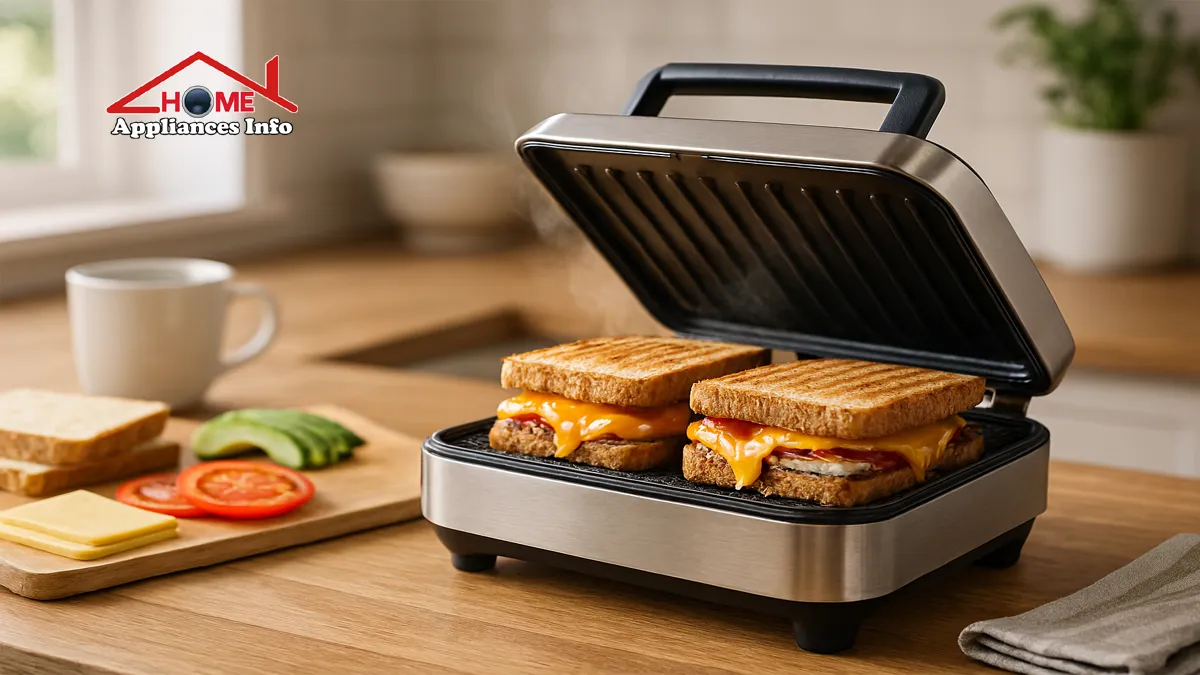
A reliable Sandwich maker can turn rushed mornings into calm, delicious starts to the day. 🥪
Instead of juggling frying pans and toasters, you close a lid, wait a few minutes, and breakfast is ready. The challenge is choosing the right press and using it well. That is where many people feel stuck.
This guide walks you through seven practical “secrets” that double as a complete buying guide. You will learn what to look for, which models shine in each category, and how to get café‑style results from your breakfast sandwich maker at home.
1. Choose the right Sandwich maker for your morning routine
Before looking at brand names, decide how you cook in real life. This shapes which press actually works for you.
Ask yourself:
- How many sandwiches do you usually make at once?
- Do you cook only breakfast sandwiches, or many other foods?
- How much counter or storage space do you have?
- What is your realistic budget?
Dedicated sandwich press vs. multi‑purpose grill
Dedicated sandwich / panini press
- Designed mainly for sandwiches and paninis.
- Plates usually close in a clamshell style.
- Often more compact and simple to use.
Multi‑purpose grill or griddle
- Works as a sandwich press and indoor grill.
- Can handle burgers, vegetables, quesadillas, and more.
- Often larger and more expensive, but very flexible.
If you mostly want fast breakfasts for one or two people, a compact breakfast sandwich maker style press is often enough.
If you like grilling indoors or cooking for a family, a multi‑use grill gives you better value.
Think about how you actually cook
Example:
- You live alone, have a tiny kitchen, and eat at your desk. A compact press that stores upright is ideal.
- You cook weekend brunch and weeknight dinners for four. A larger multi‑use grill with adjustable plates makes more sense.
Match the machine to your habits, not to a promise on the box. 😊
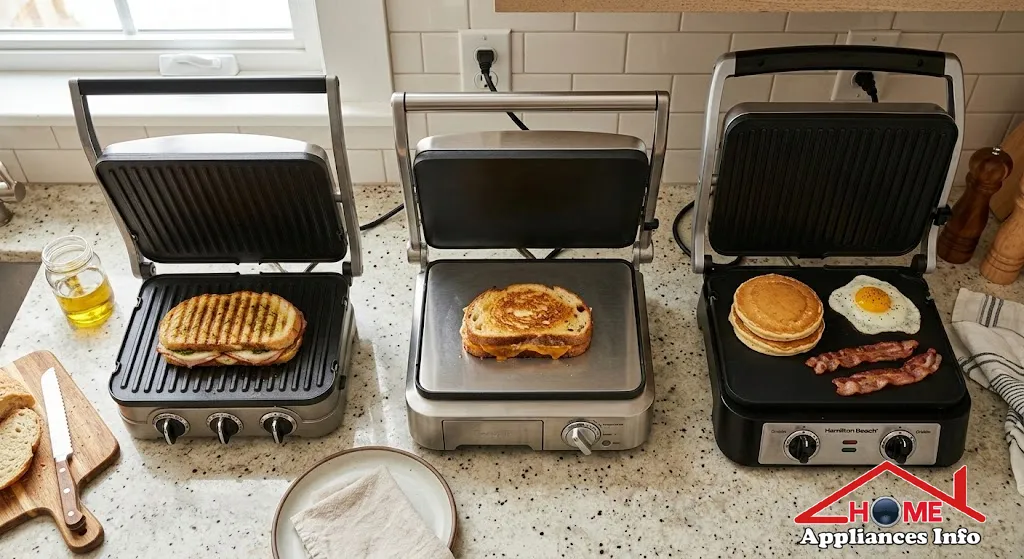
2. Understand heating plates: ridged vs. flat
Heating plates decide how your toast, cheese, and fillings behave. This is one of the biggest buying factors.
Ridged (grill‑style) plates
- Create classic grill marks on bread.
- Press sandwiches slightly, giving a firm, café‑style panini.
- Great for crusty breads and hearty fillings.
- Also handy for grilling chicken, vegetables, and burgers.
Choose ridged plates if you love:
- Paninis with chewy crusts.
- Grilled cheese with a toasted, patterned exterior.
- Quesadillas with light charring on the outside.
Flat plates
- Cook more evenly across the surface.
- Better for softer breads and very loaded sandwiches.
- Great for French toast, eggs, and pancakes on some models.
Flat plates work well if you:
- Prefer soft, even browning.
- Make delicate sandwiches with tender bread.
- Want to cook breakfast foods beyond sandwiches.
Combination or reversible plates
Some models offer:
- One ridged side and one flat side.
- Reversible plates you can flip.
These give maximum flexibility. You can press paninis one day and cook bacon and eggs the next.
3. Get the right size and capacity for your kitchen
Size is not only about how much food fits inside. It also affects how easily you live with the appliance.
Interior capacity
Consider:
- Single vs. multiple sandwiches
- Single‑sandwich presses suit solo cooks and tiny spaces.
- Larger presses can fit two to four sandwiches at once.
- Bread and filling height
- Look for a “floating hinge” if you like tall sandwiches.
- This allows the lid to rise over bulky fillings without squashing them.
Real‑world example:
If you often make thick breakfast sandwiches with eggs, avocado, and bacon, prioritize a press with a floating hinge and good height clearance.
Exterior footprint and storage
- Measure your counter depth and cabinet height.
- Check if the press stores vertically.
- Look at cord wrap options to avoid clutter.
If you rarely cook for more than two people, don’t buy an oversized grill that dominates your counter. A smaller model cooks faster, stores easier, and preheats quicker.
4. Master temperature control for perfect browning
Heat control is the secret weapon behind those golden, melty sandwiches you see in cafés.
Some presses have a single, fixed temperature. Others offer multiple settings or full temperature dials.
Why adjustable temperature matters
- Light bread toasting vs. deep, crunchy crust.
- Gentle heat for soft rolls vs. high heat for sourdough.
- More control over cheese melt without burning the bread.
A model like the Breville Panini Press is often praised because it heats evenly and recovers heat quickly. That means consistent, repeatable results.
Simple temperature guidelines
- Soft white bread, croissants, or brioche
- Use lower to medium heat.
- Cook longer for gentle browning and full melt.
- Sourdough, ciabatta, or artisan loaves
- Use medium‑high heat.
- Shorter cook time, watch closely to avoid burning.
- Quesadillas or wraps
- Medium heat usually works best.
- Enough to crisp without drying.
If you often wonder how to use a sandwich maker? well, start by preheating fully. Then match the temperature to your bread type and fillings.
A clear preheat light helps. Some high‑end models also offer audible alerts when they are ready.
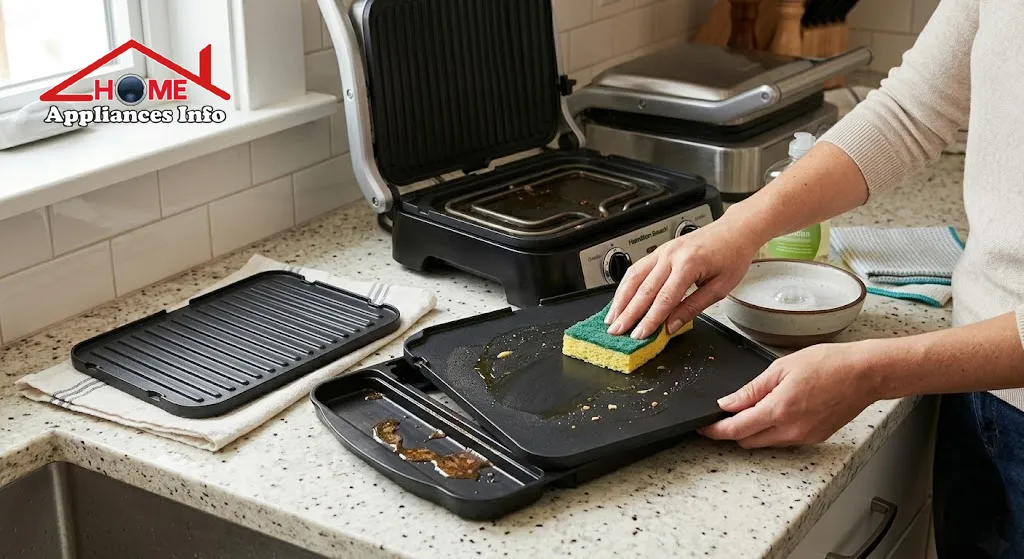
5. Make cleanup almost effortless
If cleanup feels annoying, you will stop using the machine. This is where design details really matter.
Removable vs. fixed plates
Removable plates
- Usually dishwasher‑safe.
- Easier to soak after messy cheese spills.
- Great if you cook meats or marinades.
Fixed plates
- Often found on more compact or budget presses.
- Lighter weight and simpler construction.
- Require careful wiping while the plates are warm.
If cleaning is a top priority, look for removable nonstick plates and a drip tray. That combination saves a lot of time.
Nonstick coating and care
Most presses use nonstick plates. To keep them in good shape:
- Avoid metal utensils. Use silicone or wooden tools.
- Do not use abrasive sponges.
- Wipe while warm with a damp cloth and mild soap.
If melted cheese sticks, close the lid for a minute after cooking. Residual steam loosens residue and makes wiping easier.
Drip trays and edge design
A well‑designed drip tray:
- Catches excess butter, oil, or fat.
- Helps prevent smoke and sticky messes.
Look at how easy the tray is to remove and clean. Some cheaper models use very small trays, which overflow if you grill fatty foods.
6. Pick the right model: budget, compact, or multi‑use?
Now that you know the features, let’s talk about typical “best in class” options. These are example categories you will see in many product roundups.
Common top picks and why they stand out
| Category | Example Model | Best For | Key Benefits |
|---|---|---|---|
| Best Overall | Breville Panini Press | Daily use, most households | Even heating, durable, professional results |
| Best Budget | Hamilton Beach Panini Press | Tight budgets, small kitchens | Affordable, compact, simple to operate |
| Best Compact | Cuisinart Grill & Panini Press | Apartments, dorms, RVs | Small footprint, easy storage, versatile |
| Best Multi‑Use | George Foreman Grill | Families, multi‑purpose cooking | Acts as sandwich press and indoor grill |
| Best Splurge | Breville Smart Grill | Serious home cooks, frequent use | High‑end features, adjustable plates, versatile cooking |
Roundups like the best sandwich press reviews from reputable food sites (for example, best sandwich press) often highlight these or similar models. These guides test for even heating, ease of use, and durability over time.
Pros and cons to keep in mind
Pros of modern presses
- Very fast preheating and cooking.
- Restaurant‑style grill marks and melting.
- Versatile: sandwiches, quesadillas, vegetables, even protein.
Cons
- Some multi‑use grills are bulky and heavy.
- Cleaning can be annoying if plates are not removable.
- High‑end models can be expensive.
To balance budget and longevity:
- Choose the most solid build you can afford.
- For daily use, it is often worth spending a bit more.
Independent resources like a detailed panini press guide (such as this panini press guide) also compare durability and heat performance. These make helpful companion reads when you narrow your list.
7. Use pro techniques for perfect breakfast sandwiches
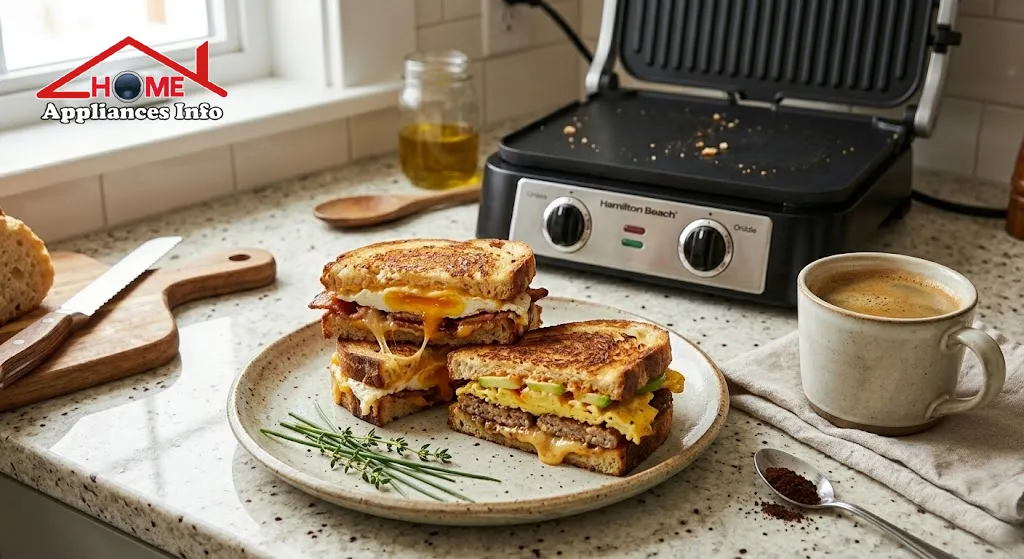
Once you have the right machine, technique matters. This is where your breakfast sandwich maker shines. 😋
Layer ingredients for even heating
- Place cheese against the bread, not in the center.
- Put wetter fillings (tomatoes, pickles) in the middle.
- Use pre‑cooked meats to avoid food safety issues.
This layering helps cheese melt quickly and keeps bread from getting soggy.
Don’t overload the sandwich
Tall stacks look great but can cook unevenly. Aim for:
- 2–3 slices of meat or a modest egg portion.
- One or two cheese slices, depending on thickness.
- A reasonable amount of vegetables.
If you want more food, make two moderate sandwiches instead of one huge one. The texture will be better.
Brush or spray oil strategically
- Lightly oil the outside of the bread for crispness.
- Use butter for rich flavor, oil for lighter crunch.
- Avoid heavy oil on very soft breads, which can get greasy.
Simple step‑by‑step: how to use a sandwich maker?
- Preheat the press until the ready light turns on.
- Assemble your sandwich on a board.
- Lightly butter or oil the outside surfaces, if desired.
- Place the sandwich on the plate and close the lid gently.
- Cook 3–6 minutes, checking after 3 minutes.
- Remove with a silicone spatula and let rest 1 minute.
That rest time lets cheese settle slightly, so it does not spill everywhere when sliced.
Make‑ahead and freezer‑friendly breakfasts
You can prep several sandwiches ahead:
- Use sturdy breads like English muffins, bagels, or ciabatta.
- Fill with cooked egg, cheese, and breakfast meat.
- Wrap and freeze.
In the morning, thaw slightly and reheat in your press until hot and crisp. This is where a reliable Sandwich maker transforms mornings from rushed to relaxed.
Quick “who should buy what?” guide
Use this mini checklist to match a press to your life:
- Budget‑conscious student
- Small Hamilton Beach‑style press, fixed plates, simple controls.
- Busy couple in a small apartment
- Compact Cuisinart‑style Grill & Panini Press, vertical storage.
- Family that grills year‑round
- George Foreman‑style grill with larger plates and drip tray.
- Serious home cook
- Breville‑style Smart Grill with adjustable temperature and plates.
FAQs about sandwich presses and breakfast sandwiches
1. Which Sandwich maker is best for a small kitchen?
Look for a compact model that stores upright and has a small footprint. Many budget presses and some Cuisinart models fit this need well.
2. Do I really need adjustable temperature settings?
Not always. For basic grilled cheese or paninis, a fixed‑temperature press works fine. Adjustable settings help if you use many bread types or cook other foods frequently.
3. Can I cook more than sandwiches in these presses?
Yes. Many presses handle quesadillas, flatbreads, vegetables, and even thin cuts of meat. Multi‑use grills are especially versatile for this.
4. Are nonstick sandwich press plates safe?
Most modern nonstick coatings are safe when used as directed. Avoid overheating an empty press, and never scrape plates with metal tools.
5. How long does a typical press last?
With regular home use and gentle cleaning, many good models last 3–7 years. Higher‑end models, cared for well, can last even longer.
6. Is a panini press different from a breakfast sandwich maker?
The designs overlap a lot. A panini press usually has ridged plates and a floating hinge. A breakfast‑focused model might be smaller and more simplified, but you can often use either for both roles.
Conclusion: Turn your kitchen into a mini café
Choosing the right Sandwich maker, and using it wisely, can completely transform breakfast at home.
You now know how to:
- Match size and style to your space and habits.
- Choose the right plates and temperature.
- Balance budget with durability and versatility.
- Use smart layering and simple steps for perfect melts.
Whether you pick a compact budget press or a high‑end multi‑use grill, the real magic comes from using it often and confidently. Let your new breakfast sandwich maker become a daily shortcut to warm, satisfying meals that actually fit your life. 🥪☕

🍳 HOME & KITCHEN APPLIANCE EXPERT
Sidra Altaf
Home & Kitchen Specialist | Product Evaluator & Appliance Reviewer

🏠 Home Essentials
⚖️ Product Comparisons
⚡ Energy & Efficiency
Sidra Altaf is a seasoned expert in home and kitchen appliances with over 5 years of hands-on experience in the field. Passionate about helping families make smarter choices, she specializes in reviewing, comparing, and recommending appliances that bring convenience, efficiency, and innovation into everyday living. Her deep knowledge of product functionality, durability, and design makes her a trusted voice for anyone looking to upgrade their home.
2 Comments
Pingback: Kitchen Glass Partition Design Ideas: 10 Stunning Looks for Modern Modular Kitchens
Pingback: Sonic Ice Maker vs Pebble Ice Maker: Real Difference Explained