

To support our research and detailed appliance reviews, we may earn a small commission from qualifying purchases made through our links, at no extra cost to you. As an Amazon Associate, I earn from qualifying purchases.
To support our research and detailed appliance reviews, we may earn a small commission from qualifying purchases made through our links, at no extra cost to you. As an Amazon Associate, I earn from qualifying purchases.
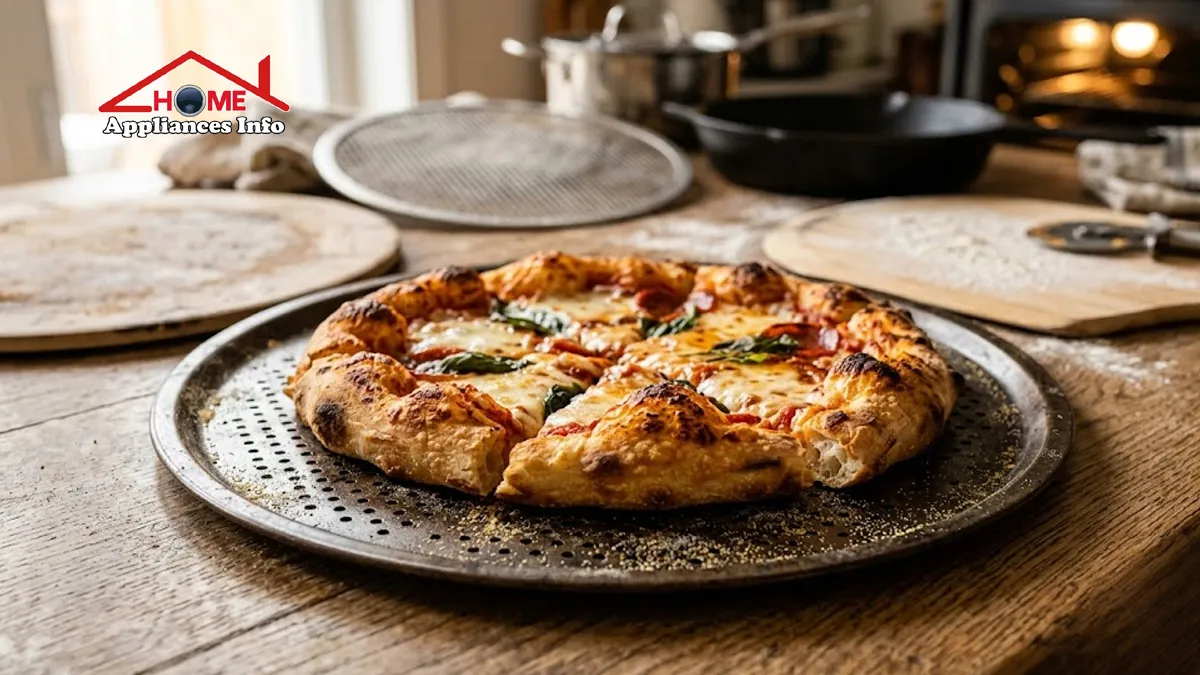
There is a reason one homemade pizza turns out crisp and blistered, while another feels pale, soft, and forgettable. In many kitchens, the missing detail is not the dough or sauce. It is the pizza pan. That single choice can change heat flow, moisture release, bake time, and the final bite of the crust 🍕.
If you have ever wondered why New York-style slices fold neatly, why Chicago deep dish stays rich and chewy, or why some home pizzas never crisp underneath, the answer often starts with the pan. Pizza lovers usually focus on flour, yeast, or toppings first. Those matter, of course. But the pan is the stage where the crust becomes what it was meant to be.
This guide breaks the topic down in a simple, practical way. You will learn how different pizza pans work, what materials matter most, how pan bottom designs affect airflow, and how to care for your bakeware so it lasts. Whether you bake in Karachi, London, or New York, these seven secrets can help you get a crust that feels intentional, not accidental.
1. Not Every Pizza Pan Is Built for Every Pizza Style
This is the first secret, and it is the one most people overlook.
A pan made for a thin New York-style pizza will not give the same result as one built for Sicilian or Chicago deep dish. They may look similar on a shelf, but they behave very differently in the oven. Think of it like shoes. You can walk in running shoes, but you would not wear them to hike a mountain.
A few common examples make this clear:
- Regular round pans work well for thin crust pizzas.
- Deep dish pans support thick dough and tall edges.
- Square deep dish pans suit Sicilian-style pizza.
- Pizza screens or disks help create faster, drier, crisp bakes.
- Pizza stones mimic the intense floor heat of traditional ovens.
- Cast iron pans hold heat extremely well and produce charred edges.
- Wide rim pans are better for serving than baking.
- Disposable pans are convenient for events, takeout, or promotions.
When bakers use the wrong pan, the crust often tells the story. It may dry out on top but stay soft below. Or it may brown too fast outside and remain doughy inside.
How style and pan work together
If you want a thin, crispy crust, choose a lighter pan, a screen, or a stone that allows faster heat transfer.
If you want a thick, chewy base, choose a deeper and often heavier pan that bakes more slowly.
That is why pizza pans are not interchangeable. Each one is designed to support a certain structure, moisture level, and baking rhythm.
Here is a quick comparison:
| Pan Type | Common Material | Best For | Crust Result | Key Notes |
|---|---|---|---|---|
| Regular Pizza Pan | Aluminum, hard-anodized | New York thin crust | Light, crisp | Heats evenly, may soften over time |
| Deep Dish Pan | Aluminum, stainless steel | Chicago-style | Thick, chewy | Tall sides, durable |
| Square Deep Dish Pan | Aluminum, steel | Sicilian pizza | Soft, thick, chewy | Great for tray-style baking |
| Pizza Screens/Disks | Mesh aluminum | Thin crust | Dry, crisp bottom | Improves airflow, quick bake |
| Pizza Stone | Ceramic, soapstone | Neapolitan-style | Crisp with chew | Requires preheating |
| Cast Iron Pan | Cast iron | Rustic, pan pizza, Neapolitan | Charred edges, deep browning | Excellent heat retention |
| Pizza CAR Pan | Aluminum | Multiple styles | Uniform crust shape | Curved edge trims excess dough |
| Wide Rim Pan | Aluminum | Serving | Softer base | Better for handling, not ideal for baking |
| Disposable Pan | Aluminum, paper, plastic | Takeout, promotions | Varies | Hygienic, but single-use |
2. Material Matters More Than Most Home Bakers Realize
The second secret is simple: the material of your pan changes the crust.
Heat moves differently through aluminum, steel, ceramic, soapstone, and cast iron. That affects how quickly the bottom cooks, how much moisture escapes, and how dark the crust becomes.
Aluminum: the reliable classic
Aluminum is common because it is lightweight and heats evenly. It is a practical choice for regular pizza pans and deep dish pans. For many home bakers, it offers a balanced result without demanding too much adjustment.
Best for:
- New York-style pizza
- General home baking
- Commercial kitchens needing speed
Possible drawback:
- Softer metal can bend or wear with heavy use
Hard-anodized aluminum: more durable, more heat-friendly
Hard-anodized pans are made to resist corrosion and hold up better over time. They are popular in busy kitchens for a reason. They also respond well to high heat.
Before first use, these pans usually need a light oiling to reduce sticking.
Stainless steel: durable but less common for crisp-focused baking
Stainless steel is strong and long-lasting. It works especially well in some deep dish applications. Still, it does not conduct heat as efficiently as aluminum, so results can differ.
Ceramic and soapstone: ideal for stone-baked character
Pizza stones are loved because they absorb and release heat in a steady way. That creates a crust with both crispness and chew. It is one reason so many bakers chase that Neapolitan texture at home.
For a broad overview of stone baking principles, the pizza stone reference is useful.
Cast iron: heavy, steady, unforgettable
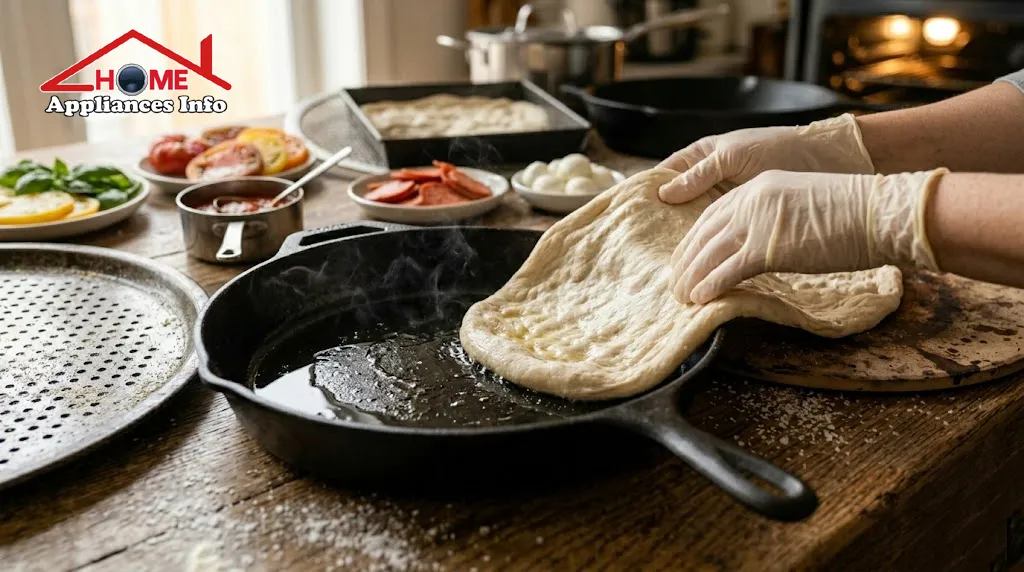
Cast iron is a different experience altogether. It stores heat beautifully and can create deep browning, crackly edges, and a rustic finish that feels close to restaurant quality. It is especially helpful in home ovens that struggle to mimic high-heat pizza ovens.
For home bakers in Karachi, where standard ovens often vary in performance, a cast iron pan or pizza stone can make a real difference. These tools help hold and deliver heat more consistently.
Why this matters in real life
A thin aluminum pan may produce a sharper crunch. A cast iron pan may produce more color and richer edge texture. A ceramic stone may give you a cleaner, artisan-style base.
So if your crust keeps disappointing you, the dough may not be the problem. The material under it may be.
3. Pan Bottom Design Controls Airflow, Moisture, and Crispiness
This is where small design details create big results.
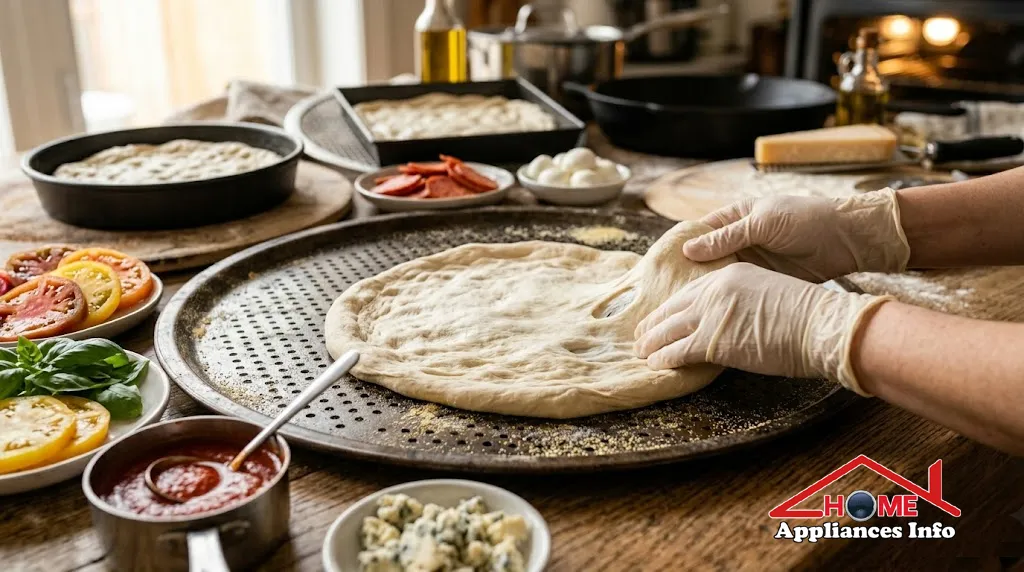
Many bakers focus on size and material, but bottom design is just as important. The underside of the pan controls how much direct contact the dough gets, how steam escapes, and how quickly the base dries.
There are four common bottom styles.
Solid or smooth bottom
This is the most familiar design. It has a flat surface and full contact with the dough.
What it does:
- Retains more moisture
- Produces a softer crust
- Works well for serving too
This style is practical and common. But if your goal is a crackly, crisp underside, it may not be the strongest option.
Nibs or raised bumps
Nibs create small lifted points under the dough. That small gap improves airflow and reduces trapped moisture.
What it does:
- Improves browning
- Reduces sogginess
- Helps produce a crisper base
This design is often a nice middle ground. It adds texture benefits without the full openness of a perforated pan.
Perforated bottom
Perforated pans have holes that allow heat and air to move more directly around the crust.
What it does:
- Bakes faster
- Creates a lighter crust
- Helps moisture escape
These are especially helpful for thinner pizzas that need a dry finish.
Super perforated bottom
This design uses a denser pattern of holes and is built for maximum airflow.
What it does:
- Greatly increases crispiness
- Helps prevent sticking
- Speeds up bake time
For people who love a dry, crisp bottom, this is often the most effective design.
A simple way to think about it
The less trapped steam under your pizza, the crisper the crust can become.
That is why many commercial kitchens use screens or highly perforated trays for thin pizzas. They create consistency and speed. If you are curious about how mesh-based baking tools work, this pizza screen resource gives a useful overview.
4. Thickness and Coating Decide Whether Crust Turns Crisp or Chewy
The fourth secret is often invisible until you bake.
Two pans may look alike, but one can be thin and bright while another is thick and dark. That changes how they absorb, hold, and reflect heat.
Thin pans create faster, crisper results
A thinner pan heats quickly. That usually leads to:
- Faster bake times
- More immediate bottom browning
- Crisper crusts
This is useful for:
- New York-style pizza
- Thin crust pizza
- Faster weeknight baking
Thick pans create slower, chewier results
A thicker pan takes longer to heat, but it can produce:
- More controlled baking
- A denser interior texture
- Chewier crusts
This is ideal for:
- Deep dish pizza
- Sicilian pizza
- Pan pizzas with richer dough
Coating also changes the bake
The surface finish matters more than people expect.
Dark anodized finish
Dark surfaces absorb more heat.
That means:
- Shorter bake times
- Better browning
- Stronger crust color
Bright finish
Bright finishes reflect more heat.
That means:
- Slower browning
- Milder bottom color
- More gentle baking
Hard-anodized protective layer
This coating adds durability and corrosion resistance. It is often preferred in busy kitchens. It also benefits from being lightly oiled before first use.
Practical example
Imagine two home bakers using the same dough. One uses a thin dark pan. The other uses a thick bright one. The first gets a crisp, browned base in less time. The second gets a paler, chewier crust that takes longer.
Neither result is wrong. It depends on the style they want.
That is why choosing the right pizza pan is really about choosing the crust experience you prefer.
5. The Best Pizza Pan for You Depends on Your Oven, Style, and Routine
This is where buying advice becomes practical.
The best pan is not always the most expensive one. It is the one that matches your oven, your preferred pizza style, and how often you bake.
For thin New York-style pizza
Choose:
- Regular aluminum pan
- Perforated pan
- Pizza screen
Why:
These options encourage fast baking and a drier, crisper base.
For Chicago-style deep dish
Choose:
- Deep dish pan with tall sides
Why:
It supports thick dough, layered fillings, and a chewy, rich crust.
For Sicilian pizza
Choose:
- Square deep dish pan
Why:
This shape and depth help create the thick, airy, tray-baked structure Sicilian pizza is known for.
For Neapolitan-inspired home baking
Choose:
- Pizza stone
- Cast iron pan
Why:
Both retain heat well and help mimic the more intense baking floor of a hotter oven.
For commercial pizzerias
Choose:
- Screens or disks for efficiency
- Deep dish pans for specialty menu items
Why:
Screens support speed and consistency. Deep dish pans are essential if that style is on the menu.
For takeout or special promotions
Choose:
- Disposable pans
Why:
They are hygienic and convenient. But they are not economical for regular baking.
For home bakers in Karachi
Ovens at home can vary a lot in temperature accuracy. A pizza stone or cast iron pan can help even out those fluctuations. That means better heat retention and more consistent browning. If crispy crust matters to you, this upgrade is often worth it.
6. Preheating and Oiling Are Small Habits That Create Big Improvements
The sixth secret is less about buying and more about using your pan properly.
Even an excellent pan can underperform if it goes into the oven cold or dry when it should not.
Always preheat pizza stones and cast iron pans
This is essential.
If you place dough on a cold stone or skillet, you lose one of their biggest advantages: stored heat. That heat is what helps create oven spring, bottom crispness, and even browning.
Preheating also reduces the risk of uneven baking.
Important note:
- Preheat gradually
- Avoid sudden temperature shock for stones
- Never place a cold stone into a blazing hot oven
That reduces the risk of cracking.
Oil anodized pans before first use
Anodized and hard-anodized pans often need a light coating of oil before first use.
Why:
- Reduces sticking
- Helps season the surface lightly
- Supports better release
A little oil can change edge texture
For pan pizzas, a small amount of oil around the dough creates a more fried, crisp edge. This is especially useful for Sicilian and cast iron styles.
Example from everyday baking
A home baker may use the same dough two weekends in a row. On the first try, the cast iron pan is cold and the pizza turns pale underneath. On the second try, the pan is fully preheated and lightly oiled. Suddenly, the crust has color, crunch, and better lift.
That is not luck. That is process.
7. Proper Maintenance Protects Performance and Extends Pan Life
The final secret is about consistency.
A worn, scratched, or poorly cleaned pan often bakes differently over time. Maintenance is not glamorous, but it protects the results you care about.
Avoid harsh acidic or alkaline cleaners
Strong cleaners can damage coatings and shorten a pan’s life. This is especially important for anodized finishes.
Better approach:
- Use warm water
- Use a soft sponge
- Clean gently
Do not over-clean when it is unnecessary
Many pizza pans do not need aggressive scrubbing after every use. Frequent harsh cleaning can wear down the surface.
If the pan is only lightly soiled, wipe it gently and preserve the finish.
Avoid soaking certain pans for long periods
Deep dish pans and specialty pans can suffer from unnecessary soaking. Extended water exposure may affect finish or durability.
Do not freeze pans after baking
Rapid temperature swings can stress metal and coatings. Let the pan cool naturally.
Never cut directly on pizza stones
This damages the stone and can leave marks or weaken the surface. Transfer the pizza before slicing.
Season cast iron regularly
Cast iron rewards care. A light oil coating after cleaning helps prevent rust and keeps the surface performing well.
Why maintenance matters
A well-maintained baking pan becomes predictable. It delivers similar results each time. That consistency is what confident bakers rely on.
Practical Buying Checklist Before You Choose
If you are shopping soon, use this short list:
- What pizza style do you make most often?
- Do you want a crisp crust or a chewy crust?
- Is your oven strong enough, or do you need heat retention help?
- Do you need a pan for baking, serving, or both?
- Will you bake often enough to justify cast iron or a stone?
- Do you want speed, airflow, and easy release?
If you answer those honestly, choosing a pizza pan becomes much easier.
FAQs
1. What type of pan makes pizza crust the crispiest?
Perforated pans, super perforated pans, pizza screens, and pizza stones usually create the crispiest results. They improve airflow and reduce trapped moisture.
2. Is a pizza stone better than a regular metal pan?
For many artisan-style pizzas, yes. A pizza stone holds heat well and can produce a crisp yet chewy crust. A metal pan is often easier for everyday use.
3. Can I use cast iron for pizza in a home oven?
Yes. Cast iron works very well in home ovens. It holds heat strongly and helps create charred edges and a deeply browned crust.
4. Why is my pizza soft in the middle but brown on top?
The pan may not be transferring enough bottom heat. A thicker or smooth-bottom pan can trap moisture. Preheating or switching to a stone, screen, or perforated pan often helps.
5. Are disposable pizza pans worth buying?
They are useful for takeout, events, and promotions. For regular baking, they are less cost-effective and usually not the best for long-term performance.
6. Should I oil my pizza pan every time?
Not always. It depends on the pan type and pizza style. Anodized pans need oil before first use, while pan-style pizzas often benefit from light oil for better release and crisp edges.
Conclusion
Perfect pizza rarely comes from guesswork. It comes from matching the right tool to the right style. The shape, material, thickness, coating, and bottom design of a pizza pan all influence how your crust bakes, browns, and tastes.
If you love thin and crisp slices, look for airflow and faster heat transfer. If you prefer deep, chewy, comfort-rich pizza, choose depth and heat retention. And whatever you buy, take care of it. Preheat when needed, clean gently, and use it with purpose.
The best crust is not always about doing more. Often, it is about choosing smarter. Start with the right pizza pan, and your next bake may feel less like a kitchen experiment and more like a result you can trust 🍕

🍳 HOME & KITCHEN APPLIANCE EXPERT
Sidra Altaf
Home & Kitchen Specialist | Product Evaluator & Appliance Reviewer

🏠 Home Essentials
⚖️ Product Comparisons
⚡ Energy & Efficiency
Sidra Altaf is a seasoned expert in home and kitchen appliances with over 5 years of hands-on experience in the field. Passionate about helping families make smarter choices, she specializes in reviewing, comparing, and recommending appliances that bring convenience, efficiency, and innovation into everyday living. Her deep knowledge of product functionality, durability, and design makes her a trusted voice for anyone looking to upgrade their home.
3 Comments
Pingback: How to Clean a Burnt Pizza Pan without Scrubbing: 4 Easy No-Scrub Methods
Pingback: The Ultimate 2026 Guide to Matter-Compatible Smart Kitchen Appliances: Expert Buying Guide
Pingback: 10 Brilliant Shoe Rack Ideas to Instantly Transform Your Home Décor