

To support our research and detailed appliance reviews, we may earn a small commission from qualifying purchases made through our links, at no extra cost to you. As an Amazon Associate, I earn from qualifying purchases.
To support our research and detailed appliance reviews, we may earn a small commission from qualifying purchases made through our links, at no extra cost to you. As an Amazon Associate, I earn from qualifying purchases.
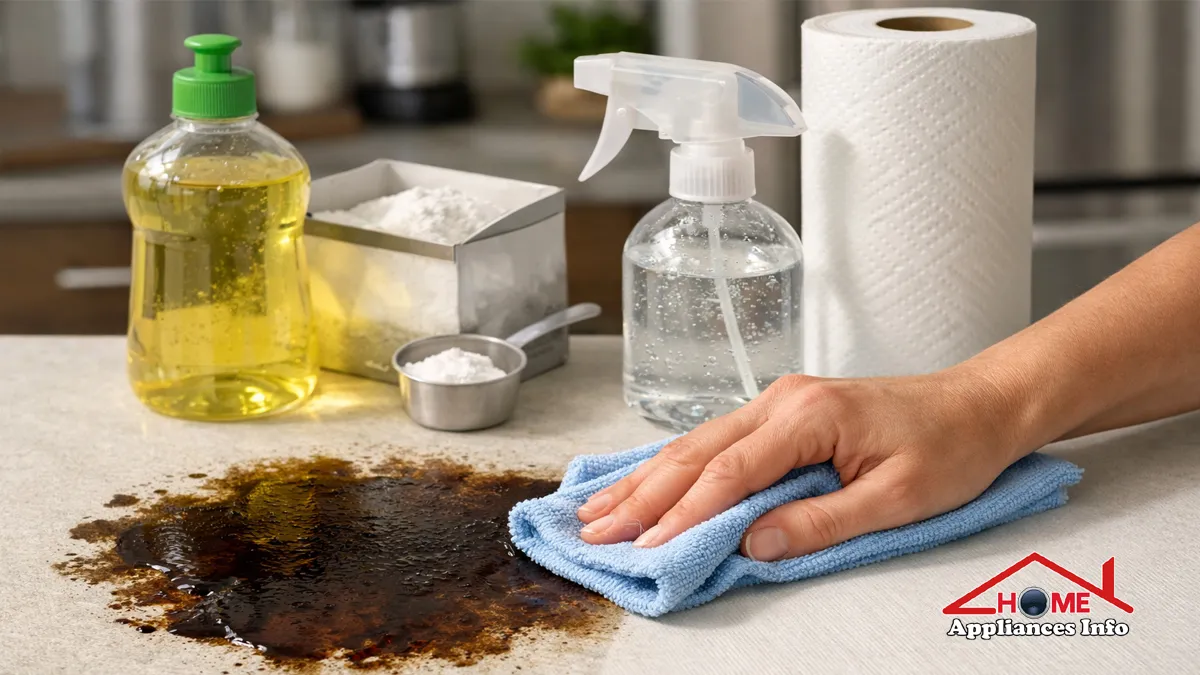
Oil spills have a way of becoming permanent memories. A splash from a frying pan, a drip from a car engine, or a greasy mark on the sofa can feel impossible to erase. That is where the right oil stain cleaner makes all the difference. Oil stains cling to fabric fibers, carpet backing, grout lines, and concrete pores. Unlike water-based messes, grease does not rinse away easily. It bonds, spreads, and often darkens over time.
The challenge is not just removing the stain. It is removing it without ruining the surface underneath. A cotton shirt needs a gentler treatment than a garage floor. A wool rug needs different care than a stovetop grate. That is why smart stain removal starts with matching the cleaner to the material, the age of the stain, and the oil type involved.
In this guide, you will learn seven effective ways to tackle oil fast. We will cover commercial products, natural options, DIY methods, and advanced solutions for stubborn grease. You will also see How to use oil stain cleaner (step by step Guide) methods that work in real homes, kitchens, and garages.
Why Oil Stains Are So Difficult to Remove
Oil is stubborn because it repels water. When it lands on a surface, it seeps into tiny spaces. Fabric fibers act like threads in a sponge. Concrete behaves like a network of small tunnels. Carpet traps oil in layers, not just on top.
That is why a quick wipe often fails. In some cases, rubbing makes the stain worse by pushing it deeper.
Common sources of oil stains include:
- Cooking splatter on clothes and counters
- Motor oil on driveways and garage floors
- Lotion or body oil on upholstery
- Salad dressing or butter on carpets
- Industrial grease on uniforms and work surfaces
A reliable cleaner must do one or more of these things:
- Absorb excess oil
- Break grease into smaller particles
- Lift oil away from fibers or pores
- Prevent the stain from setting during drying
1. Use Commercial Oil Stain Cleaners for Fast, Targeted Results
Store-bought products are often the fastest choice when time matters. Brands such as Zep, Goo Gone, and OxiClean are designed to target grease and oily residue. Many contain surfactants that surround oil particles and help wash them away.
If you are shopping, look for labels such as:
- Oil stain remover
- Degreaser
- Grease cleaner
- Laundry pre-treatment for oil
These formulas work well on:
- Kitchen counters
- Work clothes
- Driveways
- Tool benches
- Stove hoods
For product safety and performance, check guidance from the American Cleaning Institute, especially for laundry and household surface care.
What makes them effective?
Commercial products are formulated to stay on the stain long enough to loosen grease. Some use solvents. Others use alkaline builders and surfactants. The best choice depends on the surface.
Example: A mechanic’s cotton work shirt with old engine oil may need a laundry pre-treatment plus a hot wash. A stone countertop may need a non-acidic degreaser instead.
2. Try Natural Oil Stain Cleaners for Gentle, Eco-Friendly Cleaning
Not every stain needs a chemical-heavy solution. Natural cleaners can work surprisingly well on fresh or moderate oil spots. They are especially useful in homes with children, pets, or sensitive skin.
Popular natural options include:
- Baking soda
- White vinegar
- Lemon juice
- Cornstarch
- Castile soap
Best natural methods
Baking soda or cornstarch
These absorb fresh oil. Sprinkle generously, let sit for 15 to 30 minutes, then brush or vacuum away.
Dish soap and warm water
Dish soap is built to cut grease on plates. That same surfactant action helps on fabric and hard surfaces too.
Vinegar and baking soda
Useful for some hard surfaces, but test first. Avoid using acidic cleaners on natural stone.
For stain and material care, the Good Housekeeping cleaning tips library is a practical consumer-friendly resource.
When natural cleaners work best
Natural solutions are ideal for:
- Fresh cooking oil on shirts
- Light upholstery stains
- Minor splashes on sealed counters
- Greasy fingerprints on cabinets
They are less effective on burned-on grease or deep automotive oil stains. In those cases, a stronger heavy oil stain cleaner may be necessary.
3. Make a DIY Oil Stain Cleaner with Dish Soap and Water
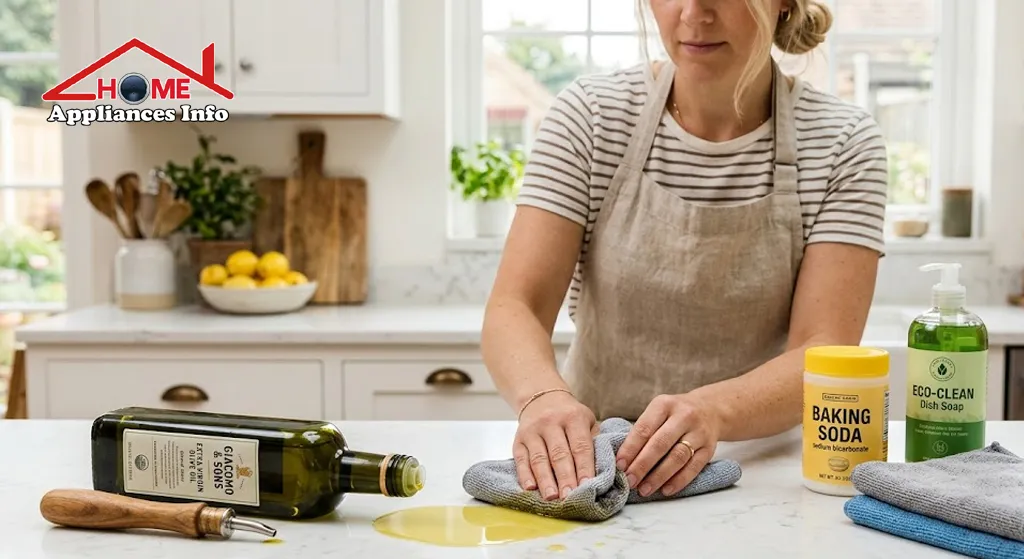
If you need a quick fix, a DIY cleaner can be very effective. The simplest method uses dish soap and warm water. This works because dish soap contains surfactants that lift oil from surfaces.
Easy DIY recipe
Mix:
- 1 tablespoon dish soap
- 1 cup warm water
For tougher stains, apply a drop of dish soap directly to the stain first.
How to use it
- Blot the stain with paper towels.
- Do not rub the area.
- Apply the soap mixture.
- Let it sit for 10 to 15 minutes.
- Blot with a clean cloth.
- Rinse or wipe with water.
- Repeat if needed.
This is one of the easiest examples of How to use oil stain cleaner (step by step Guide) in everyday life. It is affordable, simple, and often enough for fresh kitchen grease.
4. Use a Heavy Oil Stain Cleaner for Burnt-On or Industrial Grease
Some stains laugh at gentle methods. Burnt-on kitchen grease, blackened stovetop residue, and engine oil on concrete need stronger chemistry. That is where a heavy oil stain cleaner earns its place.
These products often rely on two key actions:
Alkaline saponification
This process helps convert fatty residue into a soap-like substance. That makes grease easier to rinse or wipe away.
Surfactant micelles
Surfactants form tiny structures around oil particles. These micelles trap grease so it can be lifted from the surface.
Independent cleaning tests on heavy degreasers have shown high grease-removal rates in short contact times, especially on metal grates and greasy kitchen surfaces. Results vary by product and surface, but the science is solid.
Best use cases for a heavy oil stain cleaner
- Burnt stovetop grates
- Range hoods and backsplashes
- Automotive tools
- Garage floors
- Restaurant prep surfaces
- Industrial workwear
If you need help comparing grease-removal chemistry and household safety, the U.S. Environmental Protection Agency Safer Choice program is a strong reference.
5. Follow the Right Step-by-Step Method Every Time
Even the best cleaner can disappoint when used the wrong way. Technique matters. Timing matters more.
Here is How to use oil stain cleaner (step by step Guide) in a clear, reliable format.
Step 1: Blot excess oil immediately
Use paper towels or a dry cloth. Press gently. Do not scrub. Scrubbing pushes oil deeper.
Step 2: Choose the right cleaner
Match the cleaner to the material:
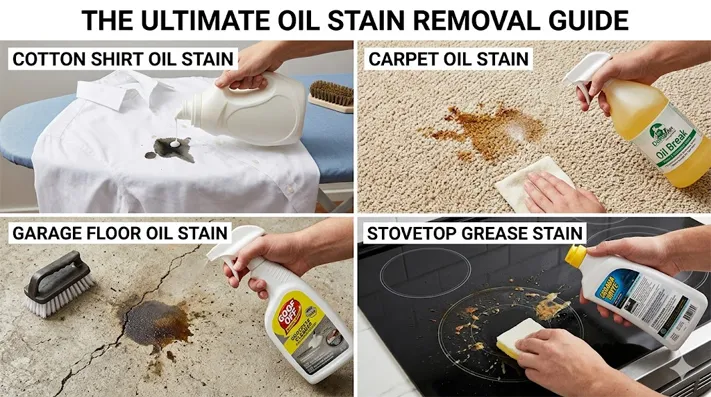
- Fabric: dish soap or laundry pre-treatment
- Carpet: absorbent powder plus carpet-safe cleaner
- Concrete: degreaser or poultice-style treatment
- Metal: alkaline degreaser
- Upholstery: fabric-safe stain remover
Step 3: Apply generously
Cover the stain fully. Oil often spreads beyond the visible edge. Let the cleaner sit for 15 to 30 minutes unless the label says otherwise.
Step 4: Blot, rinse, or wipe
Use a clean cloth, sponge, or soft brush. For fabrics, rinse thoroughly before laundering.
Step 5: Check before drying
Heat sets stains. If the mark remains, repeat treatment before using a dryer or heat source.
Step 6: Repeat for older stains
A set-in stain may need several rounds. Patience often works better than aggressive scrubbing.
6. Match the Cleaner to the Surface for Better Results
One common mistake is using the same product on everything. That can damage finishes or leave residue behind.
Here is a practical comparison:
| Surface | Best Cleaner Type | Contact Time | Key Caution |
|---|---|---|---|
| Cotton clothing | Dish soap or laundry oil remover | 10–15 min | Do not machine dry first |
| Carpet | Baking soda + carpet-safe cleaner | 15–30 min | Test for colorfastness |
| Upholstery | Fabric-safe cleaner | 10–20 min | Avoid over-wetting |
| Concrete | Degreaser or poultice | 20–30 min | Scrub gently to avoid spread |
| Stovetop grates | Heavy-duty degreaser | 15–30 min | Rinse well before reuse |
| Wood cabinets | Mild soap solution | 5–10 min | Avoid soaking wood |
Real-life example: A homeowner used a harsh degreaser on an upholstered dining chair after a salad dressing spill. The stain faded, but the fabric finish dulled. A fabric-safe approach would have been slower, but safer.
7. Prevent Future Oil Stains with Smart Habits and New Technology
The easiest stain to remove is the one that never sets. Prevention reduces stress, saves money, and extends the life of clothes and surfaces.
Simple prevention habits
- Keep paper towels nearby during cooking
- Use splatter guards on pans
- Wear an apron when frying food
- Place mats under car repair areas
- Clean greasy surfaces weekly before buildup hardens
- Deep clean rugs and upholstery regularly
New advancements in oil stain removal
The cleaning world is changing fast. Several innovations are worth watching.
Enzymatic and microbial cleaners
Some formulas use lipases and beneficial microbes to break down grease at a molecular level.
Smart washing machines
Newer machines can sense soil levels and adjust cycle strength, water use, and rinse time.
Eco-friendly chemistry
Plant-based surfactants, refill systems, and biodegradable packaging are growing in demand.
Nanotechnology coatings
Some advanced surface treatments repel oil or help break down residues under light exposure.
These advances matter in homes, restaurants, and automotive shops alike. They also influence the rising interest in the modern heavy oil stain cleaner category, especially among buyers who want both strength and sustainability.
DIY vs. Commercial: Which One Should You Choose?
There is no single winner. The best option depends on the stain.
Choose DIY or natural methods when:
- The stain is fresh
- The surface is delicate
- You want a low-cost solution
- You prefer fewer chemicals
Choose commercial or heavy-duty products when:
- The stain is old or thick
- Grease is burned on
- The surface is non-porous or industrial
- Time matters more than experimentation
In many homes, the smartest plan is to keep both. A basic dish soap solution handles daily accidents. A specialized oil stain cleaner handles the tougher jobs.
FAQs
What is the best oil stain cleaner for clothes?
A laundry pre-treatment designed for grease works best. Dish soap also helps on fresh stains.
Can baking soda remove oil stains?
Yes. It absorbs fresh oil well, especially on fabric, carpet, and some hard surfaces.
How long should oil stain cleaner sit?
Most cleaners need 15 to 30 minutes. Always follow the product label for exact timing.
Does heat make oil stains worse?
Yes. Heat can set the stain permanently. Check the area before drying or ironing.
What is the best heavy oil stain cleaner for garage floors?
A degreaser made for concrete or automotive oil is usually best. Some stains may need repeat treatment.
How often should I repeat treatment?
Repeat until the stain fades fully. Older stains often need two or three applications.
Final Thoughts
Oil stains feel personal because they often land on the items we use most. A favorite shirt, a clean sofa, a kitchen backsplash, or a driveway you just washed. The fix starts with speed, but success depends on method. The right oil stain cleaner can lift fresh grease, loosen old buildup, and restore surfaces without unnecessary damage.
Start by blotting, not rubbing. Match the cleaner to the material. Use natural or DIY methods for lighter stains. Bring in a heavy oil stain cleaner for burnt-on grease, automotive spills, and industrial residue. If you follow a careful process, even stubborn stains can become manageable.
If you are dealing with an oil mark today, treat it before it sets. A few smart steps now can save a replacement later.
References
- American Cleaning Institute: https://www.cleaninginstitute.org/
- Good Housekeeping Cleaning Tips: https://www.goodhousekeeping.com/home/cleaning/
- U.S. EPA Safer Choice: https://www.epa.gov/saferchoice

🌐 FOUNDER & DIGITAL PUBLISHER
Muhammad Ali
Founder | SEO Strategist & E-E-A-T Digital Publishing Specialist

📈 SEO Strategy
🛠️ Appliance Optimization
🛡️ E-E-A-T Standards
Muhammad Ali is a digital publisher, SEO strategist, and founder of Home Appliances Info. He specializes in home appliance optimization, structured schema networks, and advanced E-E-A-T digital publishing standards to ensure accurate, trustworthy content across the platform.
2 Comments
Pingback: Flame Air Humidifier: How It Works, Safety Review & Bedroom Guide
Pingback: Copper Kitchen Sink Buyer’s Guide: Pros, Cons & Easy Maintenance Tips