

When cold weather settles in, staying warm becomes more than a comfort issue. It becomes part of daily wellbeing. A Far Infrared Heater is gaining attention because many households now want warmth that feels fast, safe, and even, without the usual trade-offs. If you have ever sat beside a heater with one side of your body too hot and the other still cold, you already know the problem.
In many homes, especially in places without central heating, autumn and winter can feel longer indoors than outdoors. Bedrooms stay damp in the morning. Bathrooms feel icy after a shower. Living rooms warm up in patches, not as a whole. That is why choosing the right heater matters. 🔥
This guide compares three mainstream heater types and explains why newer far infrared models, such as the Keheal-style design, stand out for comfort, safety, and speed. The goal is simple: help you choose a heater that fits real life, not just product labels.
1. Why heater choice matters more than people expect
A heater affects more than room temperature. It also shapes how comfortable, safe, and healthy your indoor environment feels.
A poor heater can create:
- Hot and cold spots across the room
- Dry, stuffy air after long use
- Burn risks for children and pets
- Delayed warmth when you need it most
- Wasted energy from inefficient heating
A well-chosen heater, on the other hand, supports daily routines. It helps you get out of bed on cold mornings. It makes after-shower moments less stressful. It allows children to study, older adults to rest, and pets to stay comfortable without huddling too close.
That is where product design starts to matter. The best heaters do not just produce heat. They distribute it wisely.
2. The three mainstream heater types most people compare
Before choosing a newer option, it helps to understand the traditional models many families still use.
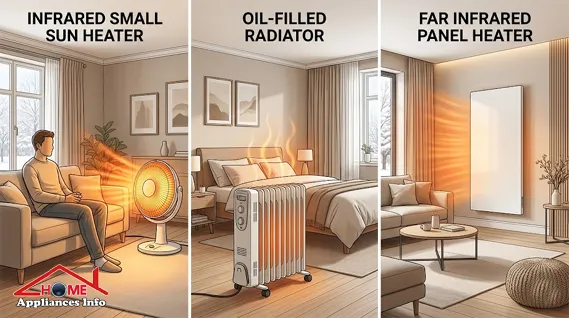
2.1 Infrared “small sun” heaters
These heaters use electric heating elements to emit infrared radiation. They are often called “small sun” heaters because the glowing elements look bright and intense.
They are popular for one reason: fast warmth. The heat feels immediate when you stand in front of the unit.
Pros:
- Instant heating
- Compact and easy to move
- Works well for short-term, direct warmth
Cons:
- Heats only in one direction
- Leaves the rest of the room cold
- Surface can get very hot
- Burn risk if touched by people or pets
This type works a bit like a flashlight. It warms what it points at, not the entire space. If you are sitting directly in front of it, you feel warm. If you move away, the effect drops quickly.
2.2 Oil-filled radiators
Oil-filled radiators heat thermal oil sealed inside metal columns. That heat then spreads through convection into the room.
These units are often chosen for long hours of steady use. They do not glow, and they usually provide a quieter and calmer heating experience.
Pros:
- Stable, lasting warmth
- Suitable for extended operation
- Less direct exposure to heating elements
Cons:
- Slow to warm up
- Slow to cool down
- Often bulky and heavy
- Less practical for quick temperature changes
An oil-filled radiator is like a cast-iron pot on low heat. It takes time to warm, but once hot, it holds warmth steadily. That can be helpful overnight, but frustrating when you need quick relief.
2.3 Electric wire heaters or kick line heaters
Electric wire heaters use metal heating wires to create heat. Air rises around the unit and forms a vertical curtain of warmth through convection.
They can deliver strong heating output and are common in spaces that need an obvious thermal boost.
Pros:
- Strong heating power
- Useful for certain room layouts
- Can create a noticeable warm zone
Cons:
- Uneven heat distribution
- Large temperature differences in the room
- Can feel uncomfortable over time
This setup often creates a familiar problem: warm near the heater, chilly farther away. That contrast may leave the room technically heated, but not truly comfortable.
3. Quick comparison table: which heater fits which need?
Here is a clear side-by-side view.
| Heater Type | How It Works | Main Advantage | Main Drawback | Best For |
|---|---|---|---|---|
| Infrared “Small Sun” | Emits direct infrared radiation from heating elements | Instant localized warmth | One-direction heating and burn risk | Short-term personal heating |
| Oil-Filled Radiator | Heats internal oil, then spreads warmth by convection | Stable heat for long use | Slow heating and bulky size | Bedrooms or long evening use |
| Electric Wire Heater | Uses heated wire and convection to form a heat curtain | Strong heating output | Uneven temperature distribution | Rooms needing a quick boost |
| Far Infrared Heater | Combines far infrared radiation, conduction, and convection | Fast, safe, and more even heating | Quality varies by brand and design | Balanced whole-room comfort |
4. The hidden problems with traditional heaters
Traditional heaters still have a place. But their weaknesses become obvious in daily use.
4.1 Uneven heating affects comfort
One of the most common complaints is uneven warmth. You may feel too hot near the heater and too cold across the room.
This matters because comfort is not only about temperature. It is about consistency. A room that changes sharply from one corner to another never feels fully settled.
For example, a parent may place a small infrared heater near a child’s desk. The child’s hands feel warm, but their back and feet remain cold. The heater is working, yet the comfort is incomplete.
4.2 Safety concerns are real for families with pets or children
Heaters with exposed, high-temperature surfaces can be risky. Curious children may touch them. Pets may nap too close.
According to the National Fire Protection Association, heating equipment is a leading cause of home fire risk during colder months. That does not mean all heaters are unsafe. It means design, spacing, and surface temperature matter greatly.
Direct-radiation heaters can also create a false sense of security. Because they warm quickly, users may place them too near bedding, sofas, or drying clothes. That raises avoidable safety concerns.
4.3 Slow heating can disrupt daily routines
Oil-filled radiators are dependable, but not fast. If you step out of a shower into a cold bathroom, waiting 20 to 30 minutes for the room to feel warm is not ideal.
Fast response matters in real homes. It helps lower the discomfort that can come from sudden cold exposure, especially for children, older adults, and anyone sensitive to temperature swings.
4.4 Dryness and stuffiness reduce long-term comfort
Some heaters make the room feel stale after extended use. Even if they do not literally remove moisture like a dehumidifier, they can create a perception of dryness by overheating nearby air or concentrating heat unevenly.
That can lead to:
- Dry skin
- Warm face but cold feet
- Stuffy corners in closed rooms
- A room that feels tiring rather than cozy
5. Why far infrared heating is drawing more attention
A Far Infrared Heater aims to solve several of those issues at once. Rather than relying on only one heating method, better designs combine radiation, conduction, and convection.
That combination matters because it creates a more natural warming experience. Instead of blasting one area, it helps spread heat through the room while also providing quick personal comfort.
Some newer models, including Keheal-style units, use carbon fiber heating tubes. This design is central to their appeal.
5.1 Comfortable warmth that feels more natural
Far infrared heat is often described as warming the body more gently and deeply. It interacts with skin and nearby surfaces in a way that feels less harsh than direct glowing heat.
Think of it like standing in winter sunlight near a window. The warmth feels calm and steady, not aggressive.
This approach can be especially helpful in homes where:
- People work from home for long hours
- Babies or older adults need stable comfort
- Pets rest on the floor away from the heater
- Bathrooms and bedrooms need quick but gentle warmth
For additional background on indoor thermal comfort, the U.S. Department of Energy offers useful information on home heating systems and efficiency.
5.2 Better safety for everyday use
Safety is one of the strongest reasons many buyers now consider far infrared models. With carbon fiber heating tubes and more thoughtful heat distribution, users do not need to crowd around the unit to feel warm.
That matters for pets in particular. A cat or dog may lie near a traditional radiant heater for too long simply because the rest of the room stays cold. With a more evenly heated space, that pressure is reduced.
Of course, any heater still requires safe placement and ventilation awareness. Yet safer design lowers the risk created by normal household habits.
5.3 Faster heating when time matters
Speed is one of the biggest quality-of-life factors. A modern far infrared unit can heat up quickly, unlike oil-filled radiators that need time to build and hold heat.
That speed helps in moments such as:
- Warming a bedroom before sleep
- Taking the chill out of a study area
- Heating a bathroom after bathing
- Making an unheated living room usable in minutes
In practical terms, fast warmth can also help reduce the stress of sudden cold exposure after showers or early mornings. That is not just a convenience issue. It shapes how healthy and comfortable daily life feels during winter.
6. Even heat distribution changes the whole room
The best part of many far infrared designs is not only speed. It is balance.
An enlarged air outlet and combined heating mechanism help spread warmth to more corners of the room. That reduces the classic “hot near, cold far” problem.
This is especially useful in regions without central heating, including many humid southern cities where winter indoor cold can feel penetrating and persistent. In these homes, comfort depends on how well a heater handles the whole room, not just the space in front of it.
A balanced heater supports:
- More uniform floor-to-face temperature
- Better comfort while moving around
- Less need to constantly reposition the heater
- A calmer indoor environment for longer use
A room should feel warm as a space, not warm only as a seat assignment.
7. How to choose the right heater for your home
A Far Infrared Heater may be the best overall fit for many households, but the right choice still depends on your routine, room size, and safety needs.
7.1 Choose infrared “small sun” if you need direct, personal warmth
This option suits people who:
- Need heat for short bursts
- Sit in one place briefly
- Want a compact budget-friendly unit
It is less ideal for homes with active children or pets.
7.2 Choose an oil-filled radiator if you value steady, long-session heating
This option suits people who:
- Use the heater for many hours
- Prefer a quieter heat profile
- Do not mind slow warm-up time
It works best in bedrooms or overnight settings where consistency matters more than speed.
7.3 Choose an electric wire heater if you need strong output in a defined area
This option suits people who:
- Need a quick thermal boost
- Heat a room with a suitable layout
- Can tolerate some uneven distribution
It may feel less comfortable for long sessions in shared spaces.
7.4 Choose far infrared if you want balance across comfort, safety, and efficiency
This option suits people who:
- Want quick room-wide warmth
- Need safer heating for children or pets
- Prefer less extreme hot-and-cold contrast
- Use living rooms, bedrooms, or bathrooms in winter
For most families, this balanced performance is what turns a heater from a temporary tool into a reliable seasonal essential. ✨
8. Buying checklist: what to look for before you purchase
When comparing models, focus on practical details, not only marketing claims.
Look for:
- Carbon fiber heating tubes
- Stable base or tip-over protection
- Overheat protection
- Wide air outlet design
- Quiet operation
- Suitable room coverage
- Easy-to-clean surface
- Child- and pet-aware design
- Reasonable energy use for the room size
Also think about where the heater will actually live. A heater for a bathroom entrance has different needs than one for a bedroom corner.
9. Real-life example: one winter, three heater experiences
Imagine three households on the same cold evening.
One family uses a small sun heater in the study. The child near the desk feels hot on the face, but their legs are still cold.
Another family uses an oil-filled radiator in the bedroom. The room feels comfortable later, but the first half hour is chilly.
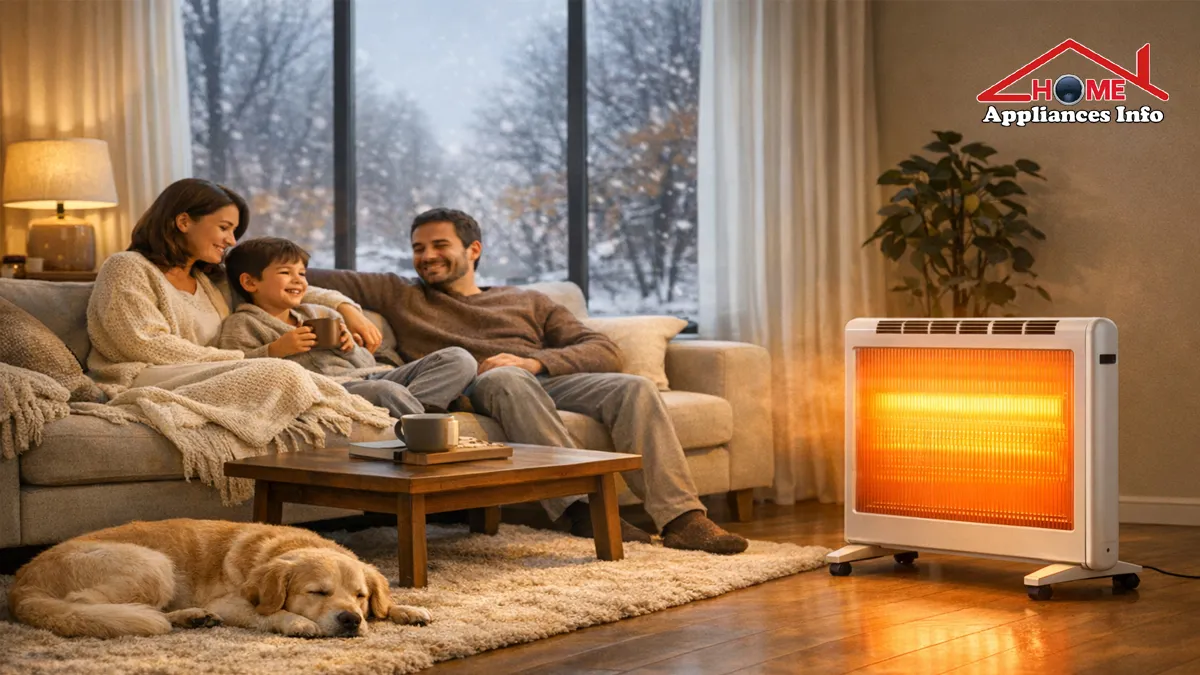
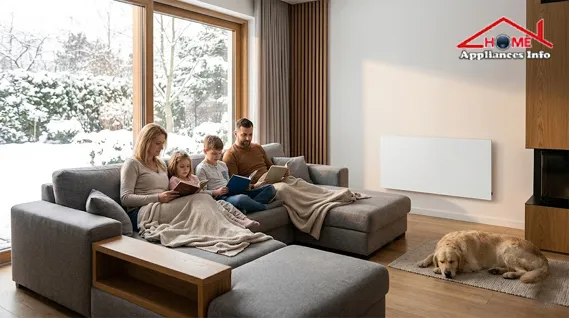
A third family uses a far infrared model in the living room. The room warms quickly, and the warmth feels more evenly shared. The dog stays relaxed across the room. Nobody has to sit too close.
That is the difference between heat being available and heat being livable.
FAQs
1. Is a far infrared heater safe for pets?
Yes, many models are safer than direct radiant heaters because pets do not need to sit very close to feel warm. Safe placement still matters.
2. Does a far infrared heater warm a room quickly?
Yes. It heats quickly and often combines several heat transfer methods for faster room comfort than oil-filled radiators.
3. Which heater is best for a bedroom?
An oil-filled radiator works for long steady use. A far infrared model is often better if you want faster and more even warmth.
4. Are infrared “small sun” heaters bad?
Not necessarily. They are useful for direct, short-term warmth. Their limits are uneven heating and higher touch-risk.
5. Do far infrared heaters make rooms feel dry?
They are often more comfortable than traditional direct heaters because warmth is distributed more evenly. Perceived dryness is usually lower.
6. Is far infrared heating energy efficient?
It can be efficient because it heats quickly and reduces the need for long preheating times. Efficiency still depends on room size and model quality.
Conclusion
Choosing a heater is really about choosing how winter feels at home. Some people need direct heat for a short time. Others want slow and steady overnight warmth. But many households now want something better balanced.
A Far Infrared Heater stands out because it addresses the main complaints people have with traditional models. It heats faster than oil-filled radiators. It spreads warmth more evenly than one-direction infrared heaters. And it offers a safer, more comfortable experience for homes with children, older adults, and pets. 🏡
If your goal is simple winter comfort without constant trade-offs, a Far Infrared Heater is often the most practical choice. Compare the features carefully, match them to your room and routine, and choose a model built for real everyday use. The right heater does more than raise temperature. It makes the whole season easier to live through.