


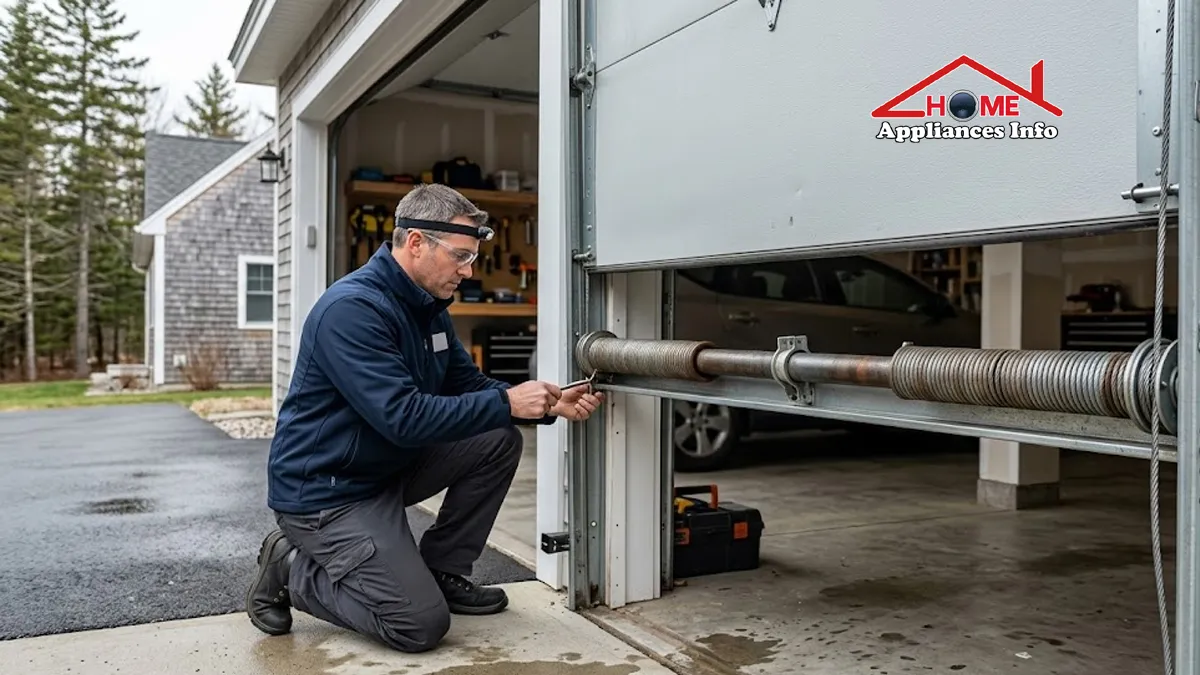
When your garage door works, you barely notice it. When it doesn’t, everything stops. 🚗
One of the most important parts of that smooth movement is the cable system. When cables fray, rust, or snap, your door can become heavy, crooked, or dangerously unstable. That is why timely garage door cable replacement is not just a repair task. It is a major safety decision for your home and family.
Below, you will learn why garage door cables matter, what causes them to wear out, how to spot early warning signs, and the 7 proven benefits of replacing them before something goes wrong.
Why Garage Door Cables Matter
Garage door cables work together with the springs to lift and lower the door. They help counterbalance the full weight of the door, which can be 150–300 pounds or more.
When they are in good shape:
- The door lifts smoothly and evenly.
- The opener does not strain.
- The door stays balanced and safe to use.
When cables are frayed, loose, or broken, problems appear fast:
- The door can become stuck halfway.
- One side may drop lower than the other.
- In severe cases, the door can slam shut suddenly.
This is why Why Garage Door Cables Matter is more than a theory. These cables are critical safety components. When one fails, other parts are pushed beyond their limits.
How cables protect the rest of your system
If a cable breaks, the springs and opener must do more work than they should. That extra strain can:
- Shorten the life of the opener motor.
- Cause springs to snap earlier than expected.
- Pull rollers out of their tracks.
In other words, a single cable issue can start a chain reaction. Timely garage door cable replacement prevents that cascade of damage.
Common Causes of Cable Wear
Even the best cables do not last forever. Understanding Common Causes of Cable Wear helps you plan maintenance wisely and avoid sudden failures.
1. Moisture and rust
Cables are made of steel strands twisted together. Steel and moisture do not mix well.
- High humidity invites rust.
- Coastal areas, like much of Maine, add salty air to the mix.
- Rust weakens the strands and makes them brittle.
In places like Bangor, Augusta, and Brunswick, winter slush and road salt can splash onto the bottom of the cables. Over time, that buildup speeds up corrosion.
2. Age and daily use
Your garage door likely opens and closes many times every day. Each movement is a “cycle.”
- Over years, metal strands fatigue.
- Microscopic cracks form and spread.
- Eventually, sections of the cable start to unravel.
Even if the cables look fine from a distance, age alone can make them unsafe.
3. Lack of maintenance
Cables do not need constant attention. But they do need some.
Skipping inspections and basic care allows small problems to grow:
- Dust and grit wear cables as they move.
- Minor rust spots can expand quickly.
- Loose drum connections go unnoticed until they fail.
A trained technician can often spot early warning signs during a routine tune‑up.
Signs Your Garage Door Cables Need Replacing
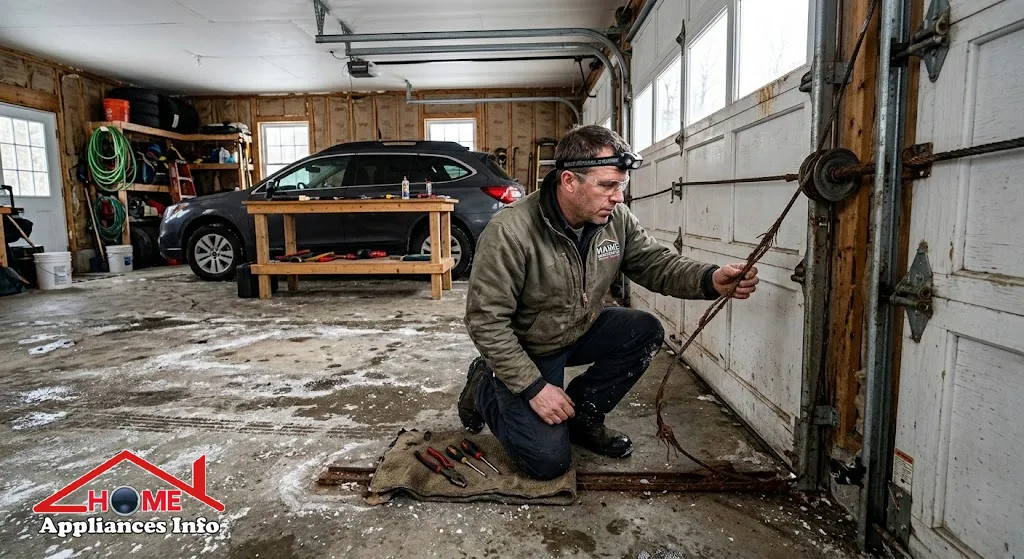
You do not have to guess about cable problems. There are clear Signs Your Garage Door Cables Need Replacing. If you notice any of these, stop using the door and call a professional. ⚠️
1. Uneven or crooked garage door
If one side of the door hangs lower, a cable may be:
- Snapped
- Stretched
- Slipped off the drum
This imbalance puts extra pressure on the tracks and opener. It can also cause the door to bind or jam.
2. Door will not open or gets stuck
Homeowners often assume the opener is broken. Sometimes the problem is the cables.
If the door:
- Starts to lift, then stops
- Moves a few inches, then reverses
- Will not move at all
…a damaged cable may be the real cause. The opener may sense the strain and shut down to protect itself.
3. Loose or hanging cables
This is one of the easiest signs to spot.
Look along the sides of the door near the tracks. If you see:
- Cables hanging loose
- Cables wrapped around the drum in a messy way
- Cables on the floor
Do not try to force the door open or closed. The door is no longer safely supported.
4. Frayed strands or rust spots
You might notice:
- Cables that look fuzzy from broken strands
- Orange or brown rust patches
- Kinks or sharp bends in the cable
These are strong clues that garage door cable replacement is overdue.
Quick reference: symptoms, causes, and risks
| Visible Sign | Likely Cause | Risk Level | What You Should Do |
|---|---|---|---|
| Door hangs crooked | Snapped or stretched cable | High | Stop using door; call a technician |
| Door stuck halfway | Cable off drum or frayed | High | Do not force door; schedule inspection |
| Cable hanging or on the floor | Broken or detached cable | Very High | Keep clear of door; seek professional help |
| Rusty or “fuzzy” cable strands | Corrosion and metal fatigue | Medium | Plan prompt cable replacement |
| Loud bang, then heavy door | Possible spring and cable issue | Very High | Do not lift door; call for emergency service |
What Happens When a Cable Breaks?
Understanding What Happens When a Cable Breaks? can help you appreciate the urgency. It is not just a minor inconvenience.
When one cable fails:
- The door may slam shut on that side.
- The other side tries to support too much weight.
- The door can go off track or jam hard.
In severe cases, the heavy door can fall quickly. This can damage vehicles, belongings, or even injure someone standing nearby.
The opener also suffers. It is designed to move a balanced door. With a broken cable, it may:
- Strain and overheat
- Strip internal gears
- Fail completely
So a broken cable does not stay “just” a cable problem for long. It spreads to springs, tracks, rollers, and the opener itself.
You can see similar safety concerns discussed in independent resources, such as those linked by the International Door Association.
How Professionals Replace Garage Door Cables in 6 Careful Steps
Professional technicians follow a structured, safety‑focused process. The steps below show why this job is not suited for DIY experimentation.
1. Disconnect power and secure the door
First, the opener is unplugged or switched off. The door is then clamped or locked in place.
This prevents sudden movement that can cause injury or damage.
2. Release spring tension
Torsion springs hold a large amount of stored energy.
Technicians:
- Use solid winding bars
- Carefully unwind the springs
- Bring the system to a safe, relaxed state
This is one of the riskiest steps for untrained homeowners.
3. Remove the damaged cable
Once the springs are safe, the old cable is detached.
The technician also inspects:
- Drums
- Bearings
- Brackets
- Bottom fixtures
Any worn or cracked part can be replaced at the same time.
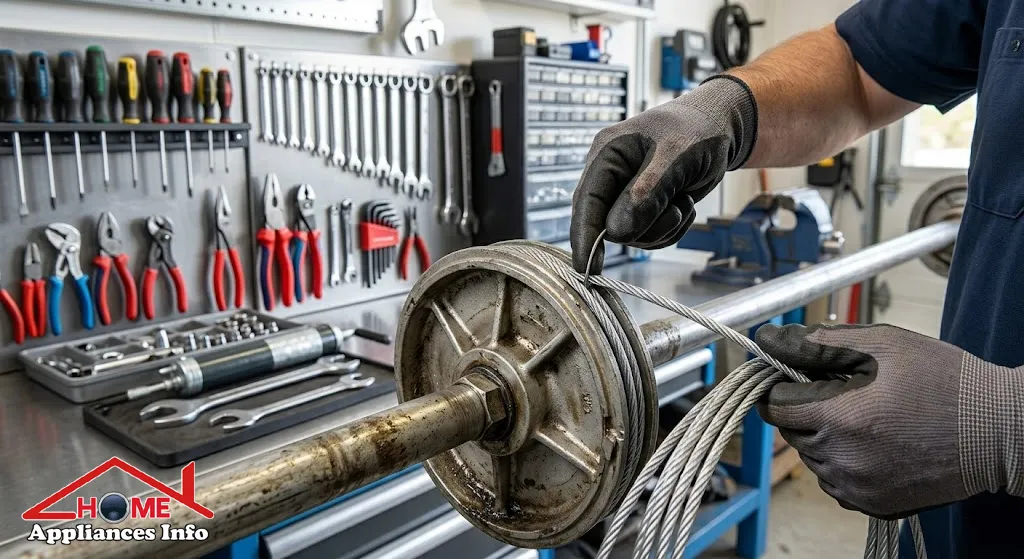
4. Install the new cable
A heavy‑duty, properly rated cable is threaded and secured.
The tech ensures:
- Correct routing
- Proper attachment points
- No twists, kinks, or sharp bends
5. Re‑tension the springs
The torsion springs are tightened again, using exact measurements.
Correct tension:
- Balances the door weight
- Reduces opener strain
- Lowers the risk of sudden spring failure
6. Test and reconnect
Finally, the technician:
- Tests manual operation
- Reconnects the opener
- Runs several open/close cycles
They listen for noises, watch for smooth movement, and confirm safety features work correctly.
This methodical process shows why garage door cable replacement is best left to trained professionals.
7 Proven Benefits of Garage Door Cable Replacement You Can’t Ignore
Now let’s look at the heart of this guide. Here are seven proven benefits of timely cable replacement that you should not overlook.
1. Restores safe operation for your family 🚸
A balanced, fully supported door is a safer door.
New cables help:
- Prevent sudden drops
- Keep the door aligned on its tracks
- Reduce the risk of entrapment or impact
If children or pets use the garage area, this benefit alone is essential.
2. Prevents sudden breakdowns and emergency repairs
Old cables rarely give a polite warning before failing. They often snap at stressful moments.
For example:
- You are late for work.
- A storm is starting.
- You are backing out of the garage.
Timely garage door cable replacement lowers the chance of:
- Doors stuck halfway open in bad weather
- Vehicles trapped inside
- Last‑minute, after‑hours repair calls
Preventive work is almost always less stressful than dealing with an emergency.
3. Protects springs, openers, and other hardware
Your garage door is a system. Every part affects the others.
Fresh cables support:
- Proper spring performance
- Reasonable opener workload
- Smooth travel of rollers and hinges
When cables carry their share of the load, the whole system lasts longer.
This is noted in many home maintenance resources, as explained by safety experts, on HowStuffWorks about garage doors.
4. Improves smooth, quiet operation 😌
Worn cables do not glide as they should. They may:
- Catch on drums
- Create jerky motion
- Cause popping or scraping noises
New cables help restore that steady, quiet travel you expect. This can make early mornings and late nights more comfortable for the whole household.
5. Saves money over the long term
It may feel tempting to delay repairs. Yet postponing cable work often leads to higher costs.
Timely replacement can:
- Reduce damage to tracks and rollers
- Avoid burned‑out opener motors
- Limit the need for emergency service calls
Think of it as an investment in the entire system, not just one part.
6. Helps maintain proper weather sealing and energy efficiency
When a door hangs crooked, gaps appear around the edges. Those gaps let in:
- Cold winter air
- Summer humidity
- Dust, leaves, and pests
By supporting a level, snug door, new cables help maintain:
- Better insulation performance
- More stable indoor temperatures
- Lower heating and cooling strain
In Maine’s climate, that balance matters during long winters and damp springs.
7. Provides peace of mind with professional workmanship and warranties
When you hire an experienced company, you gain more than new parts. You gain confidence.
Professionals typically provide:
- Properly rated, weather‑resistant cables
- Correct tools and safety procedures
- Warranties on parts and labor
You know the job was done right. You also know who to call if something seems off later.
Why DIY Garage Door Cable Replacement Is Unsafe
Many homeowners are handy. Still, cable work belongs in the “professional only” category.
Here is why DIY replacement is risky:
- Springs store dangerous tension. A sudden release can cause severe injury.
- Specialized tools are required. Improvised tools can slip or break.
- Hidden issues may be missed. You might replace a cable but overlook a cracked bracket.
Many safety organizations urge homeowners to avoid DIY work on springs and cables. A mistake here can be life‑changing, not just inconvenient.
When you hire a pro, you get safer methods, proper tools, and accountability for the outcome.
Preventing Future Cable Failures
Once your new cables are installed, a little care goes a long way. Here is how to keep them working well for years.
Lubrication and rust prevention
Cables themselves are not usually greased directly. Instead, you focus on:
- Hinges
- Rollers
- Springs
- Bearing plates
Use a silicone‑based or garage‑door‑rated lubricant every few months. This reduces friction and helps limit moisture buildup. Removing slush, salt, and debris around the bottom of the door also helps prevent rust.
Annual professional inspections 🔍
A yearly tune‑up allows a technician to:
- Spot frayed cables early
- Check spring balance
- Tighten loose hardware
They can also confirm that safety sensors and auto‑reverse systems work correctly. Early detection often turns a potential emergency into a simple, scheduled repair.
Replace both cables together
Cables work as a pair. If one is worn enough to replace, the other is not far behind.
Replacing both at the same time:
- Keeps the door balanced
- Prevents uneven wear
- Extends overall performance
This approach is more efficient and often more economical than doing them separately.
PDQ Door: Your Local Garage Door Cable Experts in Maine
For homeowners across Maine, PDQ Door understands the local climate and its effect on garage systems. ❄️🌊
PDQ Door provides:
- Expert garage door cable replacement and repair
- Service across Bangor, Augusta, Brunswick, and surrounding areas
- Fast response for urgent safety issues
Technicians use professional‑grade, weather‑rated cables suited to Maine’s humidity, temperature swings, and road salt exposure. They also inspect the entire door system, not just the cables, to ensure safe, reliable operation.
If you are unsure about your cables, scheduling a free consultation offers clarity and peace of mind. A short visit today can prevent an emergency tomorrow.
FAQs About Garage Door Cable Replacement
1. How often should garage door cables be replaced?
There is no single timeline because usage varies. Many cables last 7–10 years with normal use and good maintenance. However, rust, heavy use, or poor conditions can shorten that span. Annual inspections help determine the right time.
2. Can I use my garage door if a cable looks frayed?
It is not safe. A frayed cable can snap at any time, especially under load. Stop using the door and contact a professional for an inspection and replacement.
3. Why does my door keep going crooked on one side?
A crooked door usually points to a cable or spring issue. The cable may be stretched, off the drum, or broken. Continuing to use the door can bend tracks and damage the opener.
4. How long does professional cable replacement take?
Many jobs take about one to two hours, depending on the door type and condition. If additional parts need replacement, the visit may take longer, but this usually prevents future breakdowns.
5. Are there different types of garage door cables?
Yes. Cables vary by door size, weight, and spring system. There are torsion cables, extension spring cables, and safety cables. A professional will choose the correct, properly rated cables for your specific door.
6. Will new cables make my door quieter?
They often help, especially if old cables were catching or binding. For the quietest operation, your technician may also recommend servicing rollers, hinges, and springs during the same visit.
Conclusion: Protect Your Home With Timely Cable Care
Your garage door is one of the largest moving systems in your home. When its cables weaken or fail, safety, convenience, and long‑term costs are all affected.
By understanding Common Causes of Cable Wear, recognizing early Signs Your Garage Door Cables Need Replacing, and avoiding risky DIY attempts, you protect your family and your investment.
Professional garage door cable replacement:
- Restores safe, reliable movement
- Guards other components from damage
- Reduces the chance of sudden, costly failures
If your door seems heavy, crooked, or unreliable, do not ignore the warning signs. Reach out to a trusted local expert, such as PDQ Door in Maine, and schedule an inspection.
A short visit today can mean years of safer, smoother garage door operation tomorrow.