



A wobbly ceiling fan can do more than irritate you. It can disturb your sleep, raise your stress, and even make you worry about safety. When the room should feel calm, the constant rattle and sway can keep your body on edge.
That is why learning how to balance a ceiling fan is not just a home project. It is a simple way to support your comfort, mood, and sense of safety at home. 😊
In this guide, you will discover seven practical, proven methods. Each step is designed to reduce frustration, protect your health, and give you a quiet, steady fan you can trust.
1. Start With Safety and a Health‑Focused Mindset 🧠⚠️
Before touching your fan, pause and protect yourself. A rushed fix can lead to accidents, strained muscles, or lingering anxiety.
Safety checklist
Always:
- Turn off the power at the wall switch.
- If you feel safer, also switch off the circuit breaker.
- Use a sturdy, stable ladder, not a chair or table.
- Make sure the floor around the ladder is dry and clear.
- Ask someone to stand nearby if you feel unsteady.
This matters for your health. A fall from a ladder can cause serious injury. Even a minor scare can leave you tense and worried the next time you look up.
Listen to your body
If you:
- Feel dizzy on ladders
- Have balance issues
- Live with chronic pain
Consider asking a family member or a professional to do the higher steps. Protecting your body is more important than finishing the repair yourself.
Once you feel physically safe and mentally calm, you are ready to move closer to learning how to balance a ceiling fan in a steady, confident way.
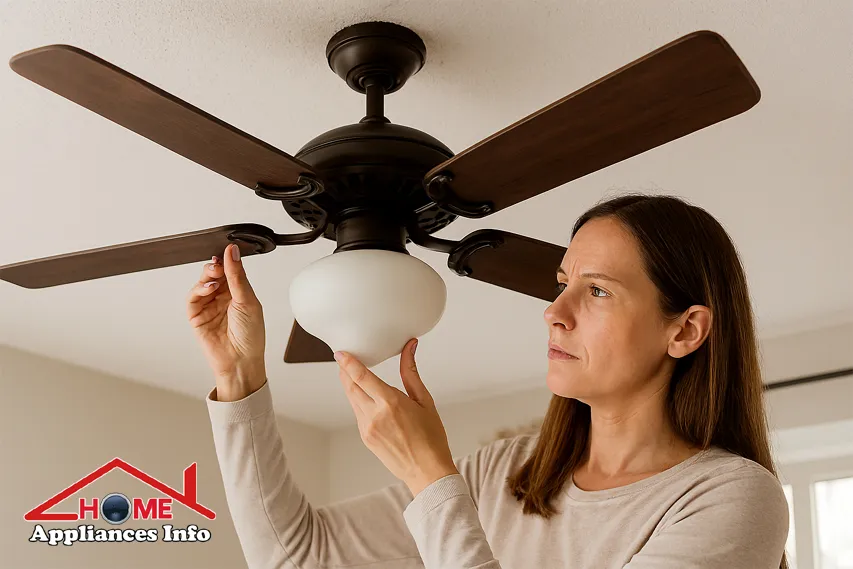
2. Why Learning How to Balance a Ceiling Fan Supports Your Wellbeing ❤️🩹
A ceiling fan is more than a comfort feature. It shapes your environment, which in turn shapes your health.
How a wobbling fan can affect you
A shaky fan can:
- Disturb your sleep with noise and vibration 😴
- Trigger tension headaches from constant low‑level stress
- Increase anxiety about possible falling parts
- Distract you while reading, working, or caring for children
The sound and motion keep your nervous system slightly alert. Over time, this can affect your mood and energy.
Balanced fans support:
- More restful sleep
- Calmer evenings and naps
- More even temperature, which eases breathing and comfort
- Better indoor air quality, especially when used with open windows
You can learn more about healthy indoor air quality through trusted organizations like the indoor air quality resources from the American Lung Association.
Seeing your fan glide smoothly also sends your brain a simple message: “This space is safe.” That feeling matters.
3. Clean the Blades: A Gentle First Step With Big Rewards 🧹
Dust may seem harmless, but it often plays a big role in fan wobble.
Why dust matters
Dust and dirt rarely settle evenly. If one or two blades carry more buildup, their weight increases. That uneven weight makes the fan wobble, especially at higher speeds.
Dust also affects health:
- It can hold allergens and irritants.
- It may worsen asthma or sensitive airways.
- It can spread across the room every time the fan runs.
How to clean your fan safely
- Turn off power at the switch and wait until blades fully stop.
- Lay an old sheet or blanket under the fan.
- Use a microfiber cloth or soft duster.
- Gently wipe each blade from base to tip.
- Clean the top and bottom of each blade.
- If grime is sticky, lightly dampen the cloth with mild soap and water.
- Dry each blade completely to prevent warping.
Keep your movements slow and steady to protect your shoulders and neck. Short breaks can prevent strain if your fan is high.
After cleaning, test the fan. Many people are surprised that this simple step improves balance, comfort, and breathing in the room.
4. Tighten Screws and Mounts: Calm the Hidden Rattles 🔧
If your fan still shakes, the next step looks at its structure. Loose parts can create noise, vibration, and worry.
Areas to check
Work methodically and gently:
- Blade screws
- Where blades attach to the metal arms.
- Arm screws
- Where each arm connects to the motor housing.
- Canopy and mounting bracket
- The cover at the ceiling and the bracket it attaches to.
- Downrod connections
- If your fan hangs from a rod, check the pin and screws.
Use a screwdriver that fits each screw snugly. Turn until firm, but avoid over‑tightening. Too much force can strip threads and weaken parts.
How this supports your health
Fewer rattles and vibrations mean:
- Less noise to disturb sleep or relaxation
- Less visual motion to bother sensitive eyes
- Reduced fear that the fan might fall
After this step, test your fan at low, medium, then high speeds. Notice how your body feels when the sound is smoother and calmer.
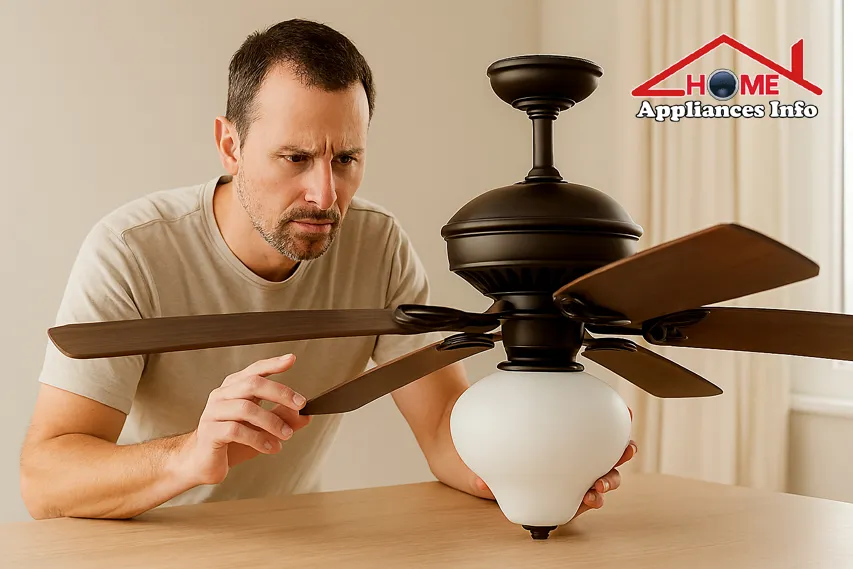
5. Step‑by‑Step: How to Balance a Ceiling Fan That Wobbles ⚙️
When cleaning and tightening are not enough, it is time for more focused balance work. This is where you truly learn how to balance a ceiling fan that wobbles in a precise, structured way.
Before you begin
Gather:
- A ladder
- A measuring tape or ruler
- Painter’s tape or sticky notes
- A fan balancing kit (often included with new fans)
We will start with simple tests before using the kit.
Step 1: Check blade height
- Turn off the fan and power.
- Measure the distance from the ceiling to the tip of one blade.
- Rotate the fan by hand and measure each blade in turn.
All measurements should be nearly the same. A difference of even a few millimeters can cause wobble.
- If one blade is higher or lower:
- Gently adjust its arm up or down.
- Never bend hard or use tools on thin arms.
Step 2: Check blade alignment
Stand back and look along the edges of the blades.
Ask:
- Do any blades look twisted or warped?
- Does one seem shorter or longer than the rest?
Warped blades sometimes need replacement. Using warped blades can keep the wobble and stress your mind every time you look up.
Step 3: Use a balancing kit
Most balancing kits include:
- Small metal or plastic weights
- A clip for testing position
Process:
- Place the clip on the back edge of one blade, near the center.
- Turn the fan to a low speed.
- If wobble improves, mark that blade with tape.
- Move the clip slightly along the blade to find the most stable spot.
- Once found, stick a permanent weight in that location.
- Remove the clip and test again.
Repeat with other blades if needed. Go slowly and note each change. This patient approach keeps frustration lower and results more stable.
Example
Imagine your bedroom fan shakes at medium speed. You use the clip on blade two and the movement calms. You attach a weight there and immediately feel more relaxed lying in bed. The room sounds softer. Your chest feels less tight. That is the real value of this careful method.
6. How to Balance a Ceiling Fan With Coins (When You Have No Kit) 🪙
Sometimes you do not have a balancing kit, or the store is far away. You can still make progress at home by learning how to balance a ceiling fan with coins.
Why coins can help
Coins are:
- Small
- Consistent in weight
- Easy to tape temporarily
They act like the balancing weights in a kit.
What you need
- Several identical coins (for example, three or four quarters)
- Strong tape, like masking or painter’s tape
- A ladder
Coin balancing steps
- Turn off power and wait for blades to stop.
- Choose one blade and place a coin near its center, on the top side.
- Tape the coin securely so it cannot slide.
- Turn the fan to low speed and watch for wobble.
- If wobble improves, keep working with that blade.
- Move the coin a few centimeters toward the tip and test again.
- If wobble worsens, move the coin toward the blade’s base.
You are looking for the position where the fan moves most smoothly.
If one coin is not enough:
- Add a second coin beside the first.
- Test again at low speed.
- Only move to medium speed when low speed feels steady.
Health and safety tips
- Avoid stacking many coins. Extra weight can strain the blade.
- Check your work every few weeks. Coins can loosen over time.
- If you worry about tape failing, consider switching to a proper kit later.
This method may feel simple, but the impact is real. A quieter, smoother fan can ease your mind, reduce sensory stress, and support better rest.
7. Common Wobble Causes and What They Mean for Your Comfort (Table) 📊
Use this table to connect what you see and feel with likely causes. It can reduce guesswork and help you feel more in control.
| What you notice | Likely cause | How it can affect you | First action to try |
|---|---|---|---|
| Fan wobbles mostly on high speed | Slightly uneven blade weight | Anxiety about safety, visual discomfort | Clean blades and use balancing kit |
| Wobble plus rattling noise | Loose screws or mounting bracket | Disturbed sleep, ongoing irritation | Tighten all screws and check bracket |
| One blade looks lower than others | Bent blade arm or warped blade | Distracting movement, worry about damage | Measure blade height and inspect arms |
| Wobble started after recent cleaning | Blade slightly bent while cleaning | Frustration, tension in shoulders | Re‑check alignment and gently adjust |
| Wobble plus clicking at motor housing | Motor housing or canopy loose | Concern about falling parts | Turn off power and inspect mounting |
| No wobble, only humming noise | Electrical or motor noise | Mild annoyance or stress | Consider professional inspection |
Use this as a quick reference while you work. Knowing the likely cause can ease mental load and make each step feel more purposeful.
8. When to Call a Professional and Protect Your Peace 🧑🔧
Sometimes, despite best efforts, the fan still feels unstable. Or you may feel unsure after a few attempts. That is understandable. Your health and safety come first.
Signs you should call an expert
Consider professional help if:
- The fan shakes the ceiling visibly.
- The mounting box in the ceiling looks cracked or loose.
- You hear grinding or burning smells.
- You feel nervous every time you stand on the ladder.
- You have chronic pain, dizziness, or heart concerns.
A licensed electrician or experienced installer can:
- Verify that the ceiling box is rated for fans, not just light fixtures.
- Check wiring and motor health.
- Replace damaged blades, arms, or mounts.
Yes, it may cost more than a do‑it‑yourself fix. Yet the trade‑off in safety, peace of mind, and body comfort is often worth it.
9. Blend Fan Balance With Your Overall Sleep Environment 😴
A well‑balanced fan is a key part of a healthy sleep space. But it works best when paired with other supportive habits.
A calm sleep environment can help you fall asleep faster and stay asleep longer. Resources like the Sleep Foundation’s guide to sleep environment explain how light, sound, and temperature shape rest.
Combine changes for deeper comfort
Along with your newly balanced fan, consider:
- Keeping bedroom temperature cool but not cold.
- Using blackout curtains if light keeps you awake.
- Reducing electronic noise near bedtime.
- Choosing comfortable bedding that breathes.
Your fan then supports a full system of care. The room feels quieter, the air moves gently, and your body can finally relax.
FAQs: Quick Answers About Wobbly Fans and Your Health ❓
1. Is a wobbling ceiling fan dangerous?
It can be, especially if the mounting box or bracket is loose. Even when it is not immediately dangerous, the stress and worry it causes can harm your sense of safety. If the wobble is strong or getting worse, stop using the fan and inspect it carefully.
2. Can a ceiling fan cause headaches or dizziness?
Indirectly, yes. Constant noise, motion, and worry can trigger tension headaches or worsen anxiety. For some people, the visual motion of a shaky fan can also feel dizzying. Balancing the fan often reduces these symptoms.
3. How often should I clean and check my ceiling fan?
In most homes, aim for every three months. If you have allergies, asthma, or pets, monthly wiping can help. A quick check for loose screws and wobble during these cleanings keeps small issues from becoming stressful problems.
4. Is it safe to sleep under a ceiling fan?
Yes, when the fan is properly installed, balanced, and well maintained. Many people find that gentle air movement supports breathing and rest. If you ever feel unsafe, stop the fan, inspect it, or contact a professional.
5. Will balancing my fan lower my energy bills?
A well‑balanced fan can run more efficiently and quietly. This can encourage you to use it more instead of lowering the thermostat. Over time, that shift often reduces energy use and helps keep your home comfortable at moderate settings.
6. Should I replace my fan if it still wobbles after trying these steps?
If you have cleaned, tightened, measured, and tried weights or coins without success, replacement may be wise. Old or warped blades, poor‑quality mounts, or outdated designs can resist perfect balancing. A new, well‑installed fan can offer both safety and a sense of fresh calm.
Conclusion: A Balanced Fan, a Calmer Home 💡
You have seen that learning how to balance a ceiling fan is more than a technical chore. It is a gentle investment in your daily wellbeing.
By:
- Putting safety and your body first
- Cleaning away dust and allergens
- Tightening mounts and hardware
- Carefully correcting blade height
- Using a balancing kit when needed
- Trying coins as a practical backup
- Calling a professional when appropriate
…you move from frustration toward confidence and calm.
A smooth, steady fan can ease your mind, soften background noise, and support a healthier home environment. The next time you lie down to rest and see the blades glide quietly overhead, you will feel the difference.
Now is a good moment to choose one room and begin. Your future self — better rested, less tense, and more at ease — will thank you. 🌿

