




Keeping your water fresh, clean, and safe starts right at the sink. Thoughtful kitchen faucet maintenance protects your family’s health, your plumbing, and your peace of mind. 🚰
Many people scrub counters and sanitize cutting boards, yet forget the faucet itself. That small oversight can allow germs, mineral buildup, and even mold to thrive right where you wash food and hands.
This guide shares seven practical, science-backed tips, with a special focus on Moen solutions. You will learn simple habits, reliable products, and easy checks that make everyday water use cleaner and safer.
1. Kitchen Faucet Maintenance Starts With a Gentle Daily Wipe-Down
Daily care seems basic, yet it has a huge impact on hygiene. Every hand that touches the handle leaves behind oils, soap residue, and microbes.
Try this simple routine once a day:
- Wash your hands first.
- Dampen a soft microfiber cloth with warm water.
- Add a small drop of mild dish soap if the faucet feels greasy.
- Wipe the handle, spout, and base.
- Finish with a dry cloth to prevent water spots. 🧽
This quick habit removes biofilm, which is the slimy layer where bacteria can grow. Less biofilm means a healthier faucet surface and better overall kitchen hygiene.
Moen finishes, especially spot-resistant stainless and matte black designs, are made to handle frequent cleaning. When you care for them gently, they stay beautiful and durable for years.
For anyone choosing a new fixture, browsing Moen kitchen faucets can help you find options that balance style and easy cleaning.
2. Deep-Clean the Aerator for Safer, Smoother Water Flow
The aerator is the small screen at the faucet tip. It mixes air into the water, reduces splashing, and can trap mineral deposits. Over time, it also collects tiny particles and, occasionally, bacteria.
Regular aerator cleaning supports both faucet performance and water quality. For reliable moen kitchen faucet maintenance, this step matters a lot.
Follow this monthly or bi-monthly process:
- Plug the sink drain, so small parts do not fall through.
- Unscrew the aerator by hand or with a soft cloth for grip.
- Disassemble parts carefully, noting their order.
- Soak them in equal parts white vinegar and warm water for 15–30 minutes.
- Gently scrub with a soft toothbrush.
- Rinse well and reassemble.
- Screw the aerator back on, hand-tight.
If you notice sand-like grit, cloudy water, or weak flow, clean the aerator sooner. That helps reduce exposure to any debris reaching your tap.
3. Guard the Handle, Base, and Spray Head Against Germs
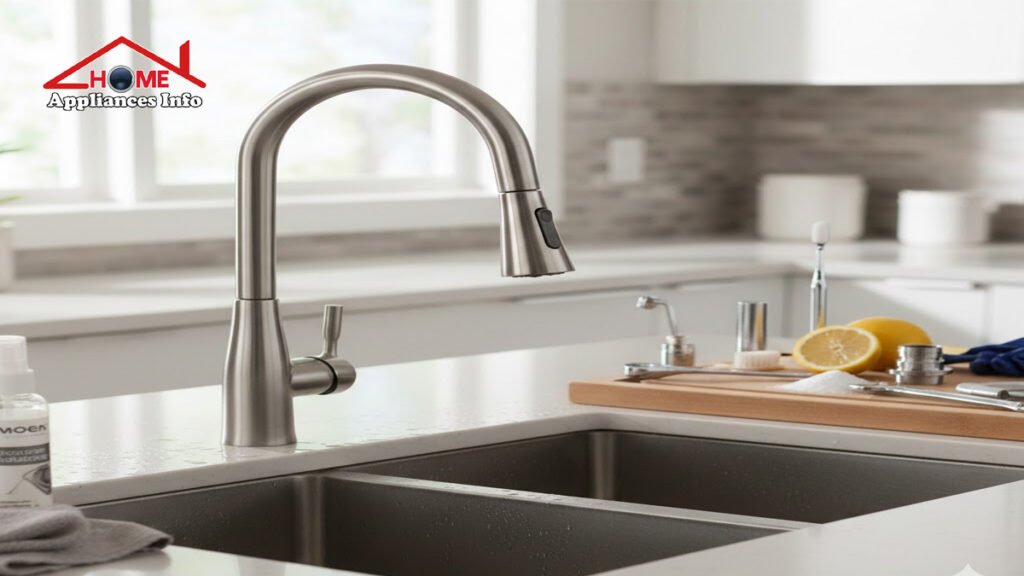
Handles, pull-down sprays, and the base ring around the faucet are high-touch zones. Moisture often collects there, especially after dishwashing or produce rinsing. That warm, damp environment can support mold, mildew, and bacteria.
Once a week, try this targeted cleaning routine:
- Spray a disinfectant cleaner that is food-contact safe.
- Let it sit for the recommended contact time.
- Use a soft toothbrush around seams and crevices.
- Wipe clean with a damp cloth, then dry fully.
Pay special attention to pull-down or pull-out sprayers. Food particles sometimes remain on the spray face and rubber nozzles. Gently rub those with your fingers or a soft brush.
Touchless Moen models help reduce germ transfer, since you tap less with dirty hands. Still, their sensors, spouts, and surrounding areas need consistent cleaning to keep your sink zone truly healthy.
4. Stop Leaks Early to Protect Your Home’s Air and Surfaces
A slow drip or small puddle may seem harmless. Yet constant moisture encourages mold growth, which can affect indoor air quality and respiratory health. Early leak detection is an important part of kitchen faucet maintenance. 💧
Once a month, run through this short check:
- Turn the water on, then off, and watch the spout.
- Look for drips that continue after a few seconds.
- Gently move the handle and check for wobbling.
- Open the cabinet and inspect supply lines and shutoff valves.
- Feel the cabinet floor for dampness or swelling.
If you find moisture, address it quickly. Tighten connections lightly, but do not overtighten. If that fails, contact a licensed plumber or reach out to Moen support with your model number.
Persistent leaks can waste significant water and raise utility bills. More importantly, they create hidden damp areas where mold spores and bacteria multiply.
5. Protect Water Quality With Filter and Cartridge Care
Many Moen faucets, especially filtered and touchless models, include cartridges or filters. These parts influence water taste, flow, and, in some designs, filtration. Ignoring them can reduce water quality and, in rare cases, allow trapped contaminants to break free.
For safe moen kitchen faucet maintenance, check your user manual for the exact schedule. Common guidelines include:
- Replace faucet filters every three to six months.
- Replace cartridges when you notice drips or harder handle movement.
- Flush new filters as directed before drinking the water.
If you live in an older home, you may worry about metals such as lead. Reputable guides on lead in drinking water explain risks and testing options.
Many households choose a certified filter or under-sink system for added protection. Combine that with consistent faucet cleaning for a healthier overall water routine.
6. Keep the Finish Safe: Choose Cleaners That Protect Health and Hardware
Harsh chemicals can damage faucet finishes and may leave residue close to food preparation areas. Bleach, abrasive powders, and rough scrub pads often scratch or dull surfaces. Over time, that damage makes cleaning harder and allows more grime to cling.
A gentle, health-conscious approach works best:
- Use mild dish soap and warm water for everyday cleaning.
- For mineral spots, apply white vinegar diluted with water.
- Avoid steel wool, scouring pads, or gritty cleansers.
- Rinse thoroughly after using any cleaner.
The table below summarizes common issues, likely causes, and simple, healthy solutions.
| Issue | What You Notice | Likely Cause | Healthy Fix |
|---|---|---|---|
| White spots | Dried drops on faucet surface | Hard water minerals | Wipe daily; use diluted vinegar, then rinse and dry |
| Cloudy stream | Bubbly or uneven flow | Aerator buildup | Remove and soak aerator in vinegar; brush gently |
| Musty smell near sink | Odor when standing at faucet | Moisture, hidden mold | Check for leaks; dry cabinet; clean base with disinfectant |
| Spots on handle | Smudges and film | Oils, soap, food residue | Daily wipe with soapy microfiber cloth; rinse and dry |
For deeper material guidance, a neutral resource on kitchen faucet aerators and finishes can complement your faucet manual.
7. Know When to Call Moen Support or a Professional
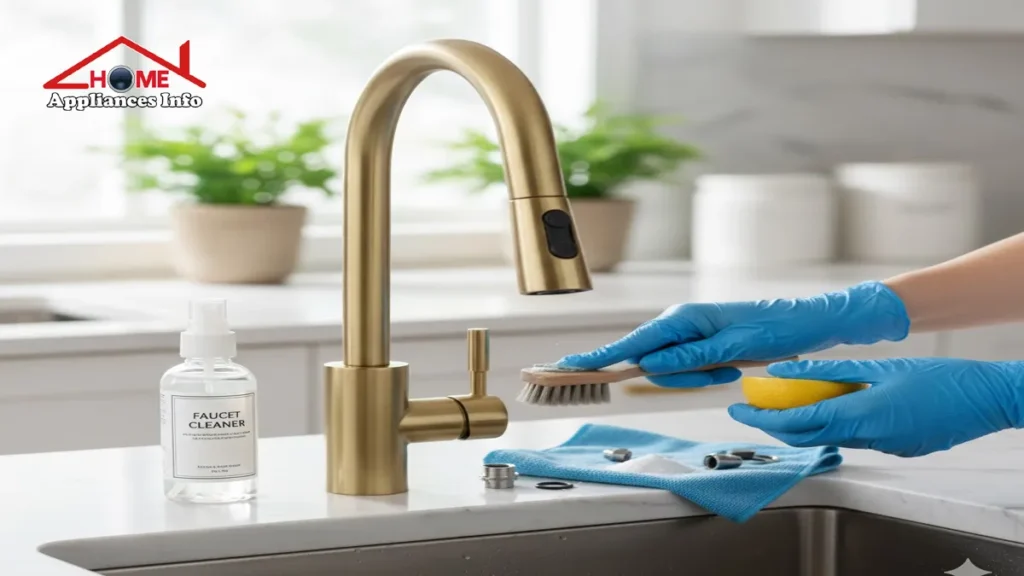
Even with excellent kitchen faucet maintenance, parts can eventually wear out. Seals age, cartridges harden, and internal components may loosen. Knowing when to seek help protects both your health and your investment. 🛠️
Consider professional support when you notice:
- Rust-colored water only from the kitchen faucet.
- Repeated leaks after you tighten connections.
- Cracks in the faucet body or handles.
- Sudden changes in temperature control.
Moen offers robust warranties on many products. Registering your faucet and keeping the model number handy helps you get accurate help faster. Their official resources for Moen kitchen faucets explain coverage and replacement policies.
A licensed plumber can also evaluate your home’s broader plumbing health. That includes supply lines, shutoff valves, and under-sink drainage, which all influence cleanliness and safety around your faucet.
FAQs: Kitchen Faucet Maintenance and Moen Care
How often should I clean my kitchen faucet aerator?
Most homes do well with aerator cleaning every one to two months. In areas with hard water or visible sediment, monthly cleaning offers better protection.
What is the best kitchen faucet maintenance schedule overall?
Aim for a quick daily wipe, weekly germ-focused cleaning, monthly aerator care, and seasonal checks for leaks. This layered approach keeps both hygiene and performance strong.
Can I use bleach wipes on my Moen faucet?
Avoid frequent bleach use on finishes. Occasional use may be safe for some models, but always follow your Moen manual and rinse thoroughly after.
How does kitchen faucet maintenance support my family’s health?
Regular care removes biofilm, cuts down on bacteria, limits mold growth, and helps maintain consistent, safe water flow. That supports cleaner cooking, handwashing, and produce rinsing.
When is it time to replace an old kitchen faucet?
Consider replacement if you see repeated leaks, corrosion, difficult temperature control, or finish damage that traps grime. Very old fixtures may also lack newer health and efficiency features.
Conclusion: Make Kitchen Faucet Maintenance a Healthy Daily Ritual
Your sink is the heart of everyday cooking, cleaning, and hydration. When you commit to smart kitchen faucet maintenance, you protect water quality, reduce germs, and create a safer food-prep space.
Moen designs are built to reward that care. Gentle daily wiping, regular aerator cleaning, smart leak checks, and attentive filter management all work together. These practices keep finishes shining, flow steady, and your family’s health supported.
Choose one tip to start today. Maybe a quick handle wipe, or an aerator soak tonight. Then build the full routine over time. With consistent care, your Moen faucet can remain a reliable, hygienic partner in your kitchen for many years to come. 🌟