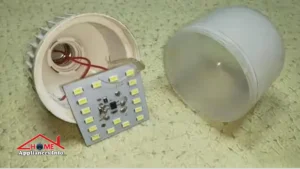



As a new type of lighting equipment, LED lights are widely used and their trend of replacing other light sources is becoming increasingly apparent. However, it is undeniable that, with current technology, led light flicker is a common problem . So, how can ordinary people solve this flicker problem?
First, what is lamp flicker?
According to Baidu Baike, stroboscopic effect occurs when viewing the screen of another appliance through the screen of one appliance, a bright line appears on the other appliance’s screen, moving from the bottom to the top and then reappearing from the bottom. This continues indefinitely, giving the impression of a flickering image.
The encyclopedia’s explanation is too technical. Zhihu author Shrugged’s definition of flicker is more accessible and easier to understand: Flicker is a frequency-dependent blinking motion. The rapid and repetitive change of light over time is called flicker, and the direct perception is that the image is jerky and unstable.
Secondly, to what extent does the flicker of LD lighting/light sources affect our health?
Most people can clearly perceive flicker below 50 or 60 Hz. When the frequency reaches a certain level, the human eye will perceive the flickering light as a continuous source. This frequency is called the ” critical flicker frequency ” (CCF).
CCF varies from person to person and can also change for the same person under different circumstances, but most people’s CCF value does not exceed 100 Hz. Many people feel very uncomfortable with flicker below 50/60 Hz, and some people are still uncomfortable between 50-100 Hz. So what frequency is needed to eliminate this effect? It varies from person to person; some say 160 Hz, 200 Hz, and some say 500 Hz, but the industry generally believes that reaching kilohertz (KHz) is generally sufficient.
Thirdly, what are the hazards of LED lighting/light source flicker?
Studies have shown that varying degrees of screen flicker can affect a person’s physical and mental health, with mostly negative effects, such as impaired vision, irritability, and the potential to trigger epilepsy. For example:
1. For sports venues that require nighttime lighting, such as billiards halls, table tennis halls, badminton halls, and tennis halls, the flickering lights make it difficult to see the moving balls.
2. In situations involving photography and videography, if flashing lighting is used, it will be unavoidable that dark areas will appear during photography and black scrolling bars will appear during videography.
3. These include stress fatigue, eye strain, blurred vision, migraines, and decreased vision;
4. Low-frequency flickering has a less noticeable effect and may cause migraines or severe headaches within minutes, often accompanied by nausea, visual disturbances, and other symptoms;
Fourth, the causes of flickering in LED lights/light sources
Most light sources exhibit flicker, albeit to varying degrees. LED flicker is largely not a problem with the LED chip itself, but rather originates from the driver and dimming components. Common causes of flicker include:
1. Inferior driving components cannot reduce the voltage and current output ripple generated during the process of converting AC to DC from the driving component to the LED chip.
1. Inferior dimming components, poor compatibility, or the use of low-frequency PWM dimming .
Fifth, are there any flicker-free LED lights/light sources?
Absolutely flicker-free operation is practically impossible. The Chinese industry standard requires a flicker frequency of 3125Hz for qualified products. From a professional perspective, “flicker-free” is more accurately described as “imperceptible flicker.” According to the China Quality Certification Center’s requirements for the flicker of reading and writing desk lamps, “fluctuation depth” is the standard value for measuring the flicker of a desk lamp.
Taking desk lamps as an example, the national standard requires that the fluctuation depth of desk lamps be less than 3.2% to be qualified. However, in fact, many so-called “eye-protecting desk lamps” on the market have a fluctuation depth of more than 3.2%, which means that most of them are not “eye-protecting”.
Finally, what should ordinary consumers do when faced with flickering screens?
As mentioned earlier, there are currently no absolutely flicker-free light fixtures, so we can only try our best to select light fixtures with flicker within the acceptable range.
1. It is recommended not to buy LED products that lack the required certifications, are cheap and of poor quality. Try to choose reputable brand lighting fixtures and light sources.
2. Try to choose lighting fixtures and light sources that are certified by the China Quality Certification Center (CQC).
3. A daylighting system can be used to bring natural outdoor light indoors. The natural light is processed by the system to be flicker-free and will not harm the eyes. At the same time, it will block most of the ultraviolet and infrared rays. The light is soft, the illumination is uniform, and it is warm and comfortable, allowing us to bask in the natural light with peace of mind and return to nature.
Postscript: Lighting design is not just about choosing lights; it’s a job that combines technical skill and artistry. If you really don’t have the time or expertise to DIY your lighting design, why not hire a lighting designer?