


Creating a home that feels warm, soulful, and welcoming can feel overwhelming. Persian interior design offers a beautiful path forward. It blends history, art, and comfort in a way that supports both family life and personal well‑being. 🏡
Whether you love clean modern lines or rich traditional details, Persian-inspired interiors can adapt. You don’t need a palace or a huge budget. Small, thoughtful choices can bring this timeless style into any space.
In this guide, you’ll discover 10 practical ideas you can apply in real homes. You’ll see how persian interior design can work in a city apartment, a family house, or even a studio.
Let’s explore how to create rooms that feel elegant, grounded, and truly lived in.
1. Start With a Signature Persian Rug
If you choose just one element, choose a rug. A handwoven carpet often becomes the soul of a Persian-style room.
In both modern and traditional spaces, a Persian rug anchors the design. Its patterns and colors guide everything else.
Why rugs matter so much
- They add warmth and softness underfoot.
- They introduce color without painting walls.
- They tell a story through pattern and craftsmanship.
Designers often build entire rooms around a single rug. This works beautifully in modern persian interior design, where the rug becomes a bold focal point against simple furniture.
Quick tips for choosing your rug
- For small rooms, pick medium patterns and lighter backgrounds.
- For busy family homes, choose darker, more forgiving tones.
- If your furniture is loud, go for a calmer rug design.
Real‑life example:
A small city living room with white walls feels cold. The owner adds a deep red Kashan-style rug, then repeats its blue in cushions. The space suddenly feels warm, coherent, and inviting.
Image prompt: Ultra-detailed interior photograph of a modern living room with a large traditional Persian rug as the centerpiece, neutral sofa, minimal decor, soft daylight, subtle houseplants, cinematic lighting, 4k
2. Embrace Rich, Layered Color Palettes
Color is at the heart of Persian interior design. Yet it can still feel calm and balanced. The key is layering.
Traditional Persian spaces often use:
- Deep reds and burgundies
- Sapphire and turquoise blues
- Warm golds, creams, and ivories
- Accents of green or soft pink
In traditional persian interior design, you might see several strong colors in one room. Patterns, textiles, and painted details all work together.
For a more modern take, keep the walls neutral. Then layer color through:
- Rugs
- Cushions
- Throws
- Artwork
- Ceramics
This approach brings Persian warmth into clean, contemporary rooms. It supports emotional comfort without visual chaos.
Helpful starting palettes
| Element | Traditional Look | Modern Interpretation | Practical Tip |
|---|---|---|---|
| Walls | Cream, sand, or muted terracotta | Warm white or soft greige | Keep walls calm if your rug is busy. |
| Main textiles | Deep red, navy, gold | One bold color plus neutrals | Repeat rug colors in cushions or throws. |
| Accents | Turquoise, emerald, soft pink | A single accent hue used sparingly | Use accents in vases, artwork, or lamps. |
| Metals & woods | Brass, dark wood | Brushed brass, walnut or oak | Match metal tones across hardware and lighting. |
3. Mix Intricate Patterns With Calm Solids
Many people love Persian motifs but fear their rooms will feel busy. The solution is balance.
Classic Persian style includes florals, medallions, vines, and geometric borders. All these patterns can coexist when you use them thoughtfully.
Pattern layering rules that work
- Start with one “hero” pattern, often your rug.
- Add one smaller-scale pattern in cushions or curtains.
- Keep other pieces mostly solid or very subtle.
In a modern persian interior design scheme, you might use:
- One richly patterned rug
- One patterned cushion or throw
- Solid color sofa, curtains, and bedding
In a more traditional home, you can enjoy several patterns. Just vary the scale:
- Large scale: rug medallion or wall art
- Medium scale: cushions or curtain design
- Small scale: trims, borders, or small accessories
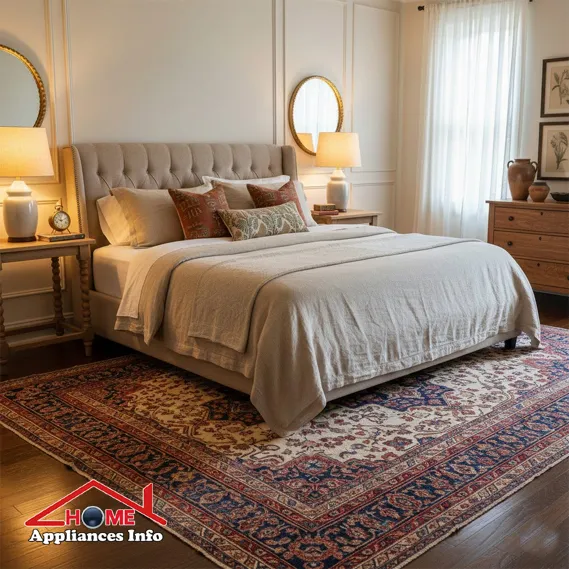
Real‑life example:
A bedroom features a navy and red Persian rug. The bedspread is a solid cream. Two cushions carry a tiny floral print. The result feels layered, not overwhelming. 🌿
4. Celebrate Natural Materials and Handcrafted Details
Authentic Persian interior design honors craftsmanship. Materials feel real, solid, and time-tested. This supports a sense of grounding and calm.
Common materials include:
- Solid wood (walnut, oak, or darker tones)
- Wool and cotton textiles
- Brass, copper, and aged metals
- Natural stone or ceramic tiles
You do not need antiques or museum pieces. You only need items that feel handmade or thoughtfully crafted.
Easy ways to add this feeling
- Swap synthetic throws for cotton or wool.
- Choose a wooden coffee table with visible grain.
- Use brass or bronze handles on doors and cabinets.
- Bring in hand‑painted ceramics or pottery.
In traditional persian interior design, you might also see carved wood doors, lattice screens, and inlaid furniture. In modern homes, a single carved piece can provide that heritage touch.
Well-being benefit:
Natural materials age gracefully and develop character. This can help your home feel comforting rather than “used up” over time.
5. Layer Soft Lighting for a Warm, Golden Glow
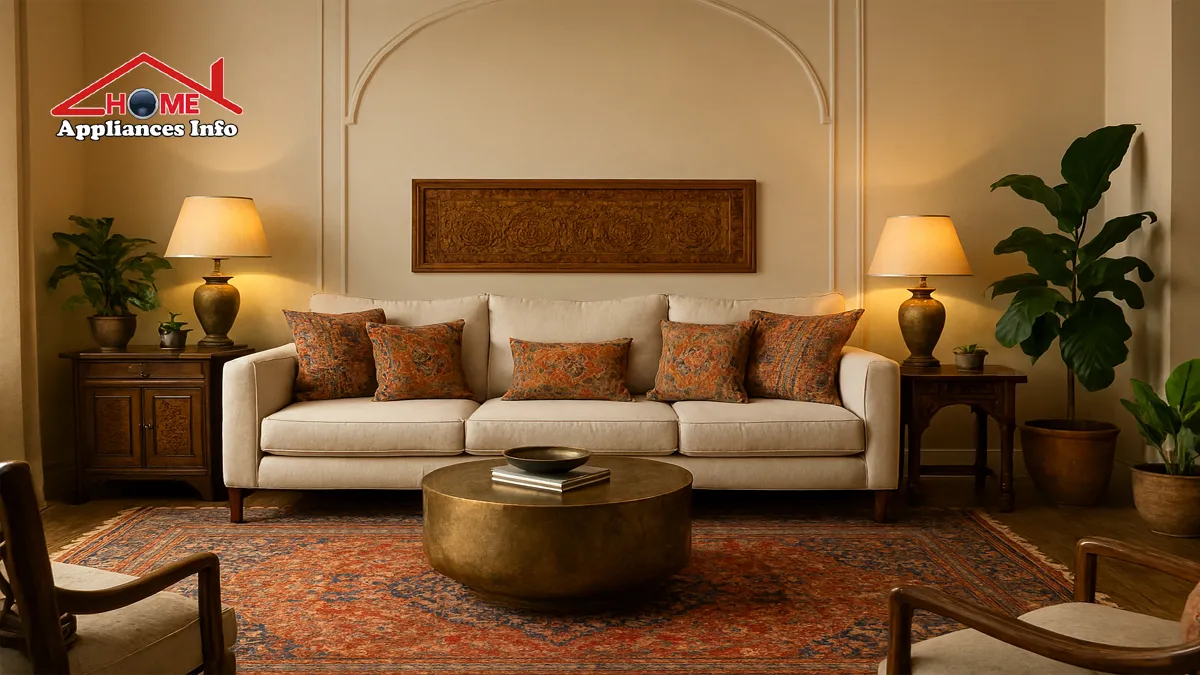
Persian-style interiors rarely rely on harsh white light. Instead, they use layers of warm, gentle lighting. This supports relaxation and connection.
Try combining:
- A main ceiling light with a warm bulb
- One or two table lamps with fabric shades
- A floor lamp in a reading corner
- Optional candles or lanterns for evenings 🕯️
Choose warm white bulbs (around 2700–3000K). This echoes the golden tones of traditional interiors and flatters skin tones.
Design tips
- Metal lanterns with patterned cutouts cast beautiful shadows.
- Colored glass lamps can echo rug or cushion colors.
- Wall sconces work well in hallways and near seating.
In a more modern space, keep lamp bases simple. Let the light, not the fixture, create the mood. In a traditional room, you can enjoy more ornate designs.
Real‑life example:
A family living room uses ceiling spots plus one brass floor lamp. At night, only the floor lamp and a small table lamp stay on. The room feels intimate and serene.
6. Use Low Seating and Cozy Gathering Areas
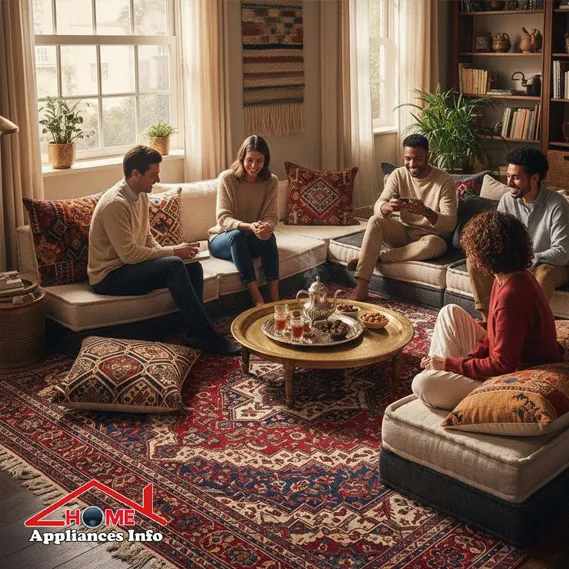
Many Persian homes emphasize hospitality and connection. Low seating, floor cushions, and flexible layouts support this social style.
You might include:
- A low sofa or bench against the wall
- Floor cushions or poufs near the rug
- A low central table for tea and snacks
- A corner reading area with cushions and throws
This layout works especially well in small homes. You can seat more people comfortably without bulky chairs.
In modern persian interior design, designers often blend:
- A standard sofa
- A couple of floor cushions
- A pouf for extra seating or leg support
In more traditional homes, you might see long, low cushions lining the walls. These create an inviting space for conversation and shared meals.
Comfort tip:
Use supportive cushions and a mix of soft and firm pieces. This keeps gatherings comfortable for longer periods.
7. Highlight Art, Calligraphy, and Cultural Stories
Persian culture has a rich artistic heritage. Bringing this into your home adds depth and meaning, not just decoration.
Consider:
- Framed calligraphy in Farsi or other scripts
- Miniature-style paintings or prints
- Photographs of traditional architecture
- Tiled art pieces or ceramic wall plates
You do not need to fill every wall. One meaningful piece per area can feel more powerful.
In a minimalist living room, a single calligraphy artwork above the sofa can become the main focal point. In a more traditional space, you might create a gallery wall with mixed pieces.
How to choose art thoughtfully
- Pick themes that align with your values: love, peace, wisdom, or nature.
- Combine family photos with cultural art for a personal touch.
- Use frames that echo your metal finishes or wood tones.
Real‑life example:
A hallway features three framed calligraphy prints. Each carries a short phrase about patience, gratitude, and kindness. Every walk down the hall becomes a gentle reminder. 💛
8. Create a Calm, Persian‑Inspired Bedroom Sanctuary
Your bedroom plays a key role in rest and emotional health. Persian style suits this space beautifully, thanks to its warmth and softness.
Focus on three main elements:
- Textiles
- A small or medium Persian rug beside or under the bed.
- Soft cotton or linen bedding in warm neutrals.
- One or two richly patterned cushions.
- Color
- Gentle creams, soft blues, or dusky rose tones.
- A darker rug for grounding and warmth.
- Lighting
- Bedside lamps with fabric shades.
- Optional fairy lights or lanterns for a dreamy feel.
In traditional persian interior design, you may see more ornate headboards, carved details, or embroidered bedspreads. In modern rooms, keep the furniture simple and let the textiles speak.
Simple bedtime ritual tip:
Add a small tray with a candle, a book, and a cup for herbal tea. This turns your bedside table into a tiny self‑care corner.
9. Blend Persian Style With Contemporary Minimalism
Many people love the depth of Persian decor but prefer a clean, uncluttered home. You do not have to choose one or the other.
You can enjoy a hybrid approach that feels both modern and timeless.
Core idea for modern persian interior design
- Keep the architecture and large furniture pieces simple.
- Add Persian richness through smaller, flexible layers.
For example:
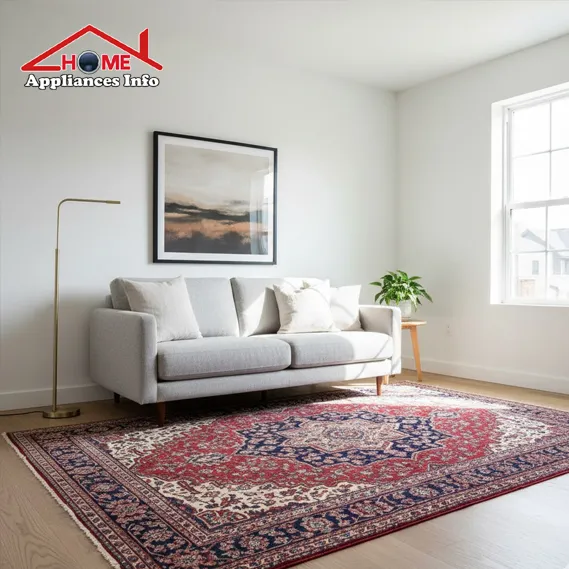
- White or soft grey walls
- A simple, low-profile sofa
- One or two Persian rugs
- A few brass accents and patterned cushions
- One statement art piece
Limit decorative objects. Choose only items that feel meaningful or visually strong. Leave empty spaces on shelves and walls.
This approach works well in apartments, rentals, and shared homes. You can even take most pieces with you when you move.
Real‑life example:
A studio flat has only a sofa, a small dining table, and a bed. One rug, two cushions, and a brass floor lamp create a clear Persian touch without clutter.
10. Design Welcoming Entrances and Dining Areas
Entrances and dining spaces set the tone for your entire home. In Persian culture, hospitality is central. You can reflect that feeling through design.
For your entrance or hallway
- Place a small rug or runner near the door.
- Add a bench or chair for putting on shoes.
- Use a mirror to reflect light and create openness.
- Include a small bowl or tray for keys and small items.
For dining areas
- Choose a wooden table, even if small.
- Add a runner or small Persian rug under the table, if practical.
- Use simple dishes, then layer color through napkins or placemats.
- Keep a small vase, lantern, or candleholder at the center.
In more traditional homes, shared meals may happen on floor cushions around a low table. You can adapt this idea with a picnic-style evening once a week. This can feel special for families and guests alike. 🍽️
Frequently Asked Questions About Persian Interior Design
1. Is Persian interior design suitable for small apartments?
Yes, it can work beautifully in compact spaces.
Focus on one or two key elements, like a rug and cushions.
Keep walls and large furniture simple to avoid visual overload.
2. Do I need authentic, expensive pieces to achieve the look?
Not at all.
You can mix high and low items.
Focus on color, pattern, and warmth rather than price.
Even machine‑made rugs can evoke the feeling, especially at first.
3. How can I keep Persian-inspired rooms from feeling cluttered?
Decide what should stand out, like a rug or artwork.
Keep other items calmer and more neutral.
Use closed storage for small objects and paperwork.
4. Can Persian style work with Scandinavian or minimalist decor?
Yes, they combine very well.
Use Scandinavian furniture shapes and pale woods.
Then add one Persian rug, a few textiles, and warm lighting.
5. What if I love the style but rent my home?
Focus on movable pieces.
Rugs, cushions, lamps, and art make a big impact.
You can also use removable hooks and non‑permanent wall hangings.
6. How do I start if I feel overwhelmed by choices?
Begin with one room and one key element, usually a rug.
Build slowly from there.
Add textiles, lighting, and art over time, not all at once.
Conclusion: Bringing Persian Warmth Into Your Everyday Life
Persian interior design is not only about aesthetics. It is about how your home feels to live in. It supports hospitality, comfort, and a sense of continuity with tradition.
Whether you lean toward traditional persian interior design or a sleek modern blend, the principles stay similar. Honor craftsmanship, layer color and pattern with care, and create spaces meant for gathering and rest.
You do not need to transform your home overnight. Start small:
- Add a single rug.
- Soften your lighting.
- Introduce one meaningful artwork or piece of calligraphy.
Over time, these choices can reshape the emotional tone of your home. Rooms feel warmer, more grounded, and more “you.”
When you are ready for the next step, consider planning one room in detail. Choose a rug, define a color palette, and map your lighting. Then build slowly, with intention.
Your home can become a living story of culture, comfort, and care—guided gently by the timeless beauty of persian interior design.