


If you love samosas but worry about oil, digestion, or blood sugar, a samosa maker can help you find balance. Instead of deep‑fried, mystery‑filling snacks, you can prepare lighter, cleaner versions right at home.
By choosing the right appliance, you can:
- Use less oil without losing crunch.
- Control the filling, from lean protein to fiber‑rich veggies.
- Bake or air fry instead of deep fry.
This guide reviews seven health‑oriented appliances, from simple stovetop molds to electric and air‑fryer‑friendly tools. Each review focuses on how the device affects:
- Fat and calorie intake.
- Digestive comfort.
- Blood sugar and heart health.
You will also find a comparison table, buying tips, FAQs, and practical examples. The goal is not perfection. It is to help you enjoy cultural comfort food in a way that respects your body. 🌿
How These 7 Reviews Are Organized
To keep things clear and practical, each of the seven reviews highlights:
- What type of appliance it is.
- Who it is best for.
- Health‑focused benefits.
- Potential drawbacks to consider.
Then you will see a side‑by‑side table to compare them easily.
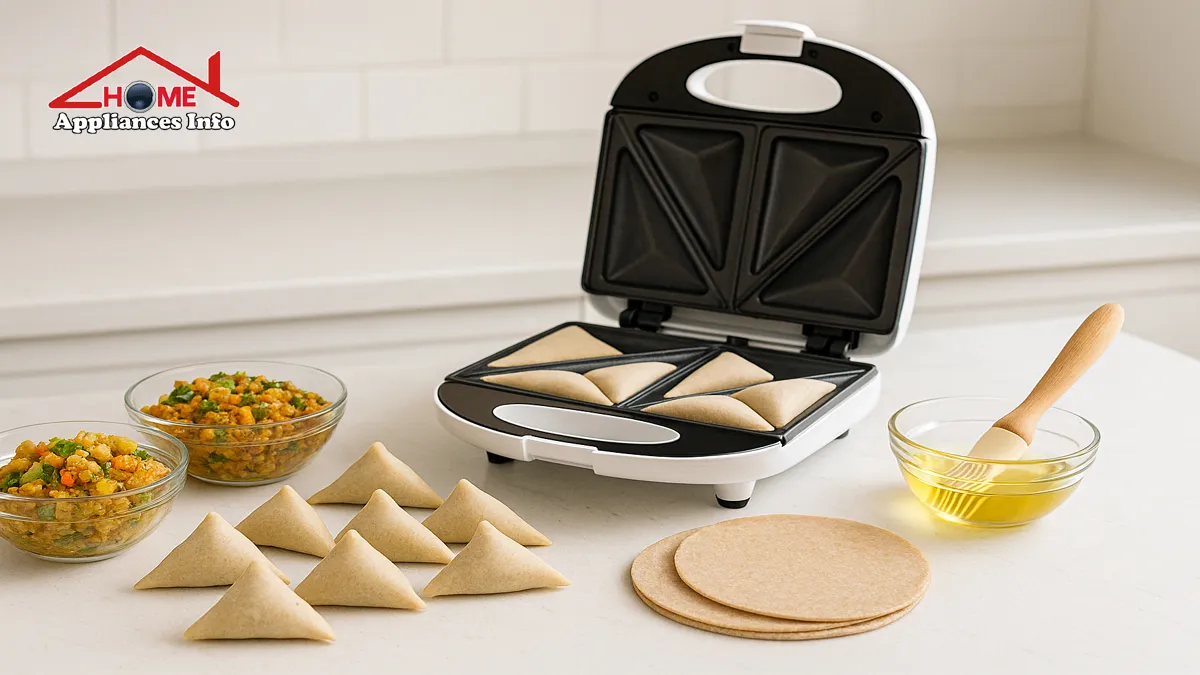
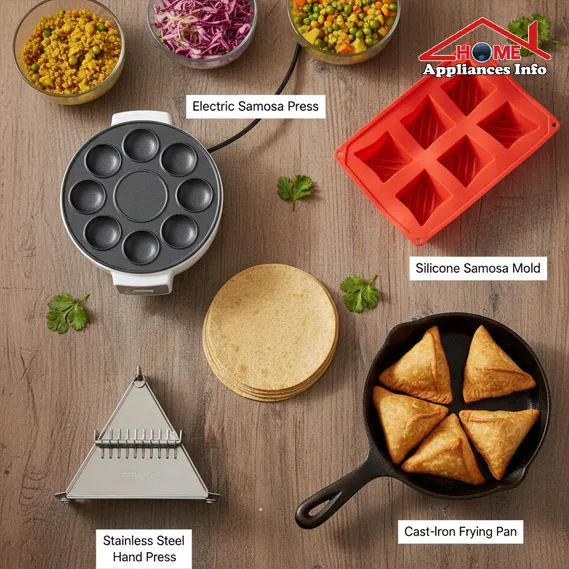
1. Compact Electric Non‑Stick Samosa Maker (Great for Busy Health‑Conscious Households) ⚡
This countertop electric appliance looks like a waffle maker, but with triangular molds for samosas. It seals and cooks the pastry using top and bottom heated plates.
Best for
- People with limited time.
- Small kitchens or dorms.
- Beginners who want predictable results.
Health Benefits
- Lower oil use. The non‑stick plates need only a light brush of oil, or sometimes none.
- Even cooking. Consistent heat reduces burning, which can create unwanted compounds.
- Portion awareness. Fixed molds support planned serving sizes.
Example:
Someone who usually deep fries 8–10 large samosas might instead make 4–6 smaller, evenly sized ones. This can cut total fat and calories without losing the ritual.
Pros
- Very easy for beginners.
- Quick cooking time for weeknight snacks.
- No open flame or deep‑fry pot.
Cons
- Fixed mold size limits creativity.
- Pastry stays somewhat thicker than baked sheet versions.
- Needs counter or storage space.
2. Stovetop Triangle Samosa Maker Pan (Traditional Feel, Health‑Upgraded) 🔺
This is a metal pan with several triangular molds. You place it over a gas or electric burner. It works similarly to a traditional aebleskiver or stuffed pancake pan, but shaped for samosas.
Best for
- People who prefer stovetop control.
- Homes already using gas or induction cooking.
- Those who enjoy a slower, more mindful cooking process.
Health Benefits
- Flexible oil control. You can use a cooking spray, a brush of oil, or clarified butter in tiny amounts.
- Mindful cooking. Turning and watching the samosas encourages slower eating later.
- Easier digestion. Lightly pan‑cooked pastry can feel gentler than deep fried versions.
Example:
A family can prepare a weekend snack session, involving children in filling and sealing. Cooking more slowly often leads to eating fewer pieces and noticing fullness earlier.
Pros
- Works without electricity.
- Durable metal construction.
- Fits into existing stovetop routines.
Cons
- Requires attention to avoid hot spots.
- More manual turning and checking.
- Some models can be heavy.
3. Air‑Fryer‑Compatible Samosa Rack (For Crispy, Low‑Oil Treats) 🌬️
This rack or basket insert is designed to hold samosas in a single layer inside an air fryer. It is not a mold, but it supports shape and airflow.
Best for
- People who already own an air fryer.
- Those trying to cut down on deep‑frying.
- Anyone watching cholesterol or heart health.
Health Benefits
- Much less added fat compared with traditional deep frying.
- Good texture without immersing food in oil.
- Supports heart‑friendly eating patterns when combined with lean fillings.
Example:
Using spiced chickpeas, peas, and carrots as filling, you can make samosas that are high in fiber and baked with only a light spray of oil.
Pros
- Very low oil requirement.
- Excellent for small batches.
- Easy cleanup.
Cons
- Depends on owning a compatible air fryer.
- Can dry out thin pastry if overcooked.
- Limited capacity for larger gatherings.
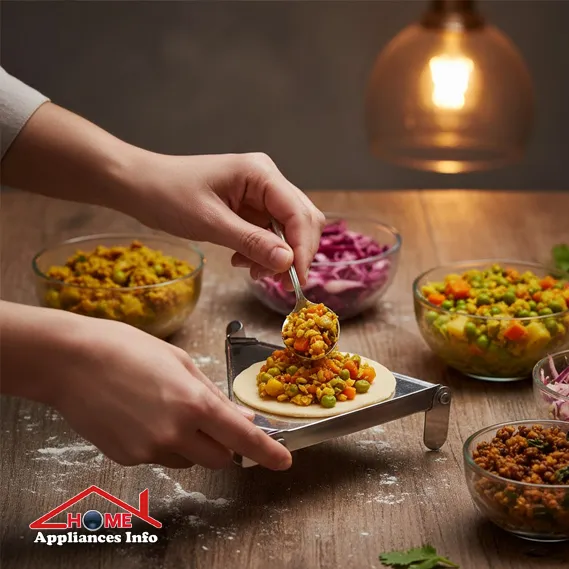
4. Manual Stainless Steel Samosa Press (Precision Sealing With Simple Tools) 🤲
This handheld press looks similar to a dumpling or empanada mold but shaped for samosas. Many designs form a neat triangle, making it a type of triangle samosa maker.
Best for
- People who enjoy hands‑on cooking.
- Meal preppers who make large batches.
- Those who want tight seals to avoid leaks.
Health Benefits
- Portion control by design. Each press yields nearly identical sizes.
- Less risk of filling leakage. Reduced oil splatter if you still choose to fry.
- Supports whole‑grain dough. Presses often seal even when dough is slightly thicker or more fibrous.
Example:
Someone managing blood sugar can weigh one filled samosa once, calculate the carbohydrates, and then confidently repeat that size for the whole batch.
Pros
- No electricity needed.
- Works with baking, air frying, or light pan frying.
- Very durable and easy to wash.
Cons
- Manual process can be time‑intensive.
- Requires practice to avoid overfilling.
- Does not cook, only shapes and seals.
5. Silicone Oven Tray Samosa Mold (Best for Baked Samosas and Sensitive Digestion) 🧁
This flexible silicone tray has triangular pockets for multiple samosas. You fill them, cover with pastry, and bake in a standard oven.
Best for
- People with sensitive digestion or reflux.
- Those with limited stovetop access.
- Families who prefer baking over frying.
Health Benefits
- Very low fat when used without much oil.
- Gentle on digestion. Baking reduces heavy fried taste and after‑effects.
- Good for batch cooking. You can prepare many pieces at once and freeze extras.
Example:
Someone with occasional heartburn might handle baked samosas better than deep‑fried ones, especially if they use light fillings like potatoes, peas, and spinach.
Pros
- Oven‑based cooking frees you to do other tasks.
- Non‑stick surface is easy to clean.
- Can also be used with egg or chickpea batter instead of pastry.
Cons
- Texture is softer than deep fried.
- May need a baking tray underneath for stability.
- Silicone quality varies by brand.
6. Cast‑Iron Triangle Pan (Slow, Satisfying Cooking With Excellent Heat Retention) 🍳
This heavy pan offers multiple triangular molds in cast iron. It works on gas, electric, and sometimes induction cooktops.
Best for
- People who enjoy intentional, slow cooking.
- Those who want equipment that lasts many years.
- Cooks comfortable with seasoning and caring for cast iron.
Health Benefits
- Even heat can reduce burning and over‑crisping.
- Versatile use. You can cook fillings in the same pan using minimal oil.
- Supports iron intake in some contexts, especially with acidic ingredients.
Example:
A person trying to increase iron intake through diet might cook tomato‑based lentil fillings in a seasoned cast‑iron pan, then shape and cook samosas in the same piece.
Pros
- Extremely durable when cared for properly.
- Excellent browning with modest oil.
- Works outdoors on some grills.
Cons
- Heavy and not ideal for everyone to lift.
- Needs maintenance to prevent rust.
- Can run hotter than expected without practice.
7. Multi‑Slot Stainless Steel Samosa Maker for Family Meal Prep 👨👩👧👦
This large, multi‑slot device works on the stovetop or in some large ovens, depending on design. It allows you to cook many samosas at once.
Best for
- Larger households.
- People who love weekly meal prep.
- Social gatherings with many guests.
Health Benefits
- Supports planned cooking. You can make a big batch on weekends, then freeze.
- Prevents last‑minute deep‑fried takeout. Having healthy freezer snacks can reduce impulsive choices.
- Encourages variety. Prepare vegetable, lean meat, and legume fillings in different rows.
Example:
A family might prepare three fillings: lentils, mixed vegetables, and minced turkey. They bake or pan cook them in batches, then freeze labelled portions for quick weekday snacks.
Pros
- Efficient for large quantities.
- Helps maintain consistent portion sizes.
- Often dishwasher safe.
Cons
- Bulky and needs storage space.
- Less practical for one or two people.
- Takes more time to clean.
Comparison Table: Which Option Fits Your Health Goals?
| # | Type of Tool / Appliance | Best Health Focus | Oil Use Level | Ideal For |
|---|---|---|---|---|
| 1 | Compact electric non‑stick device | Lower fat, portion control | Very low | Busy individuals, beginners |
| 2 | Stovetop triangle pan | Mindful cooking, digestion | Low to moderate | Traditional cooks |
| 3 | Air‑fryer‑compatible rack | Heart health, low oil | Very low | Air fryer owners |
| 4 | Manual stainless steel press | Portion precision, blood‑sugar awareness | Depends on method | Batch prep, hands‑on cooks |
| 5 | Silicone oven tray mold | Gentle on digestion, minimal fat | Very low | People with reflux or sensitivity |
| 6 | Cast‑iron triangle pan | Even cooking, potential iron support | Low to moderate | Experienced home cooks |
| 7 | Multi‑slot stainless steel family device | Meal prep, reducing impulsive takeout | Low to moderate | Large families, gatherings |
Use this table as a quick reference. Think less about perfection and more about which tool you will actually enjoy using. Consistency is more important than any single “perfect” choice.
How to Choose the Right Samosa Maker for Your Health Priorities 🧠
Before buying, reflect on your daily life and health goals. Ask yourself:
- How often do I realistically cook snacks?
- Do I want to reduce oil, or mainly refine ingredients?
- Is digestion, cholesterol, or blood sugar my main concern?
Match the Tool to Your Needs
- For lowest oil use: Focus on air‑fryer racks, silicone oven molds, or compact electric plates.
- For digestion comfort: Prefer baked or lightly pan‑cooked options over deep frying.
- For blood‑sugar balance: Choose tools that support small, repeatable sizes.
Also consider:
- Kitchen space. Can you store a large device comfortably?
- Energy source. Do you lean on stovetop, oven, or countertop gadgets?
- Physical comfort. Heavy cast iron may not suit everyone.
A samosa maker machine only benefits your health if it fits smoothly into your routine. The most advanced appliance will not help if it gathers dust.
Health‑Focused Filling and Pastry Tips 🌱
The appliance is only half of the equation. The other half is what you put inside.
Smarter Pastry Choices
- Use whole‑wheat flour or a mix of whole and white.
- Roll dough slightly thinner to reduce refined carbohydrates.
- Brush with heart‑healthy oils like canola or olive, instead of saturating.
Nourishing Filling Ideas
- Fiber‑rich options: Lentils, chickpeas, black beans, peas, and mixed vegetables.
- Lean protein: Skinless chicken, turkey, or crumbled tofu.
- Flavor from spices, not fat: Use cumin, coriander, ginger, garlic, chili, and herbs.
Replacing heavy, greasy fillings with these choices can support better blood sugar, cholesterol, and digestive comfort. For more general guidance on healthy ways to cook, see evidence‑based resources on healthy cooking methods, such as healthy cooking methods.
Healthy Cooking Habits When Using Any Samosa Tool 🧂
No matter which tool you choose, some habits make a big difference.
- Measure oil. Use a teaspoon or spray, not “free‑pour” from the bottle.
- Bake or air fry more often than deep fry. Save deep frying for rare occasions.
- Serve with fresh sides. Pair samosas with salad, yogurt, or chutneys low in added sugar.
- Eat slowly. Pause between pieces to notice fullness and comfort.
- Plan portions. Decide in advance how many pieces feel appropriate for your body.
These steps are simple but surprisingly effective. Small adjustments, repeated, often matter more than drastic, short‑term changes.
Real‑Life Example: Lightening a Family Samosa Night
Imagine a family that traditionally deep fries samosas once a week. Everyone loves the taste, but several adults now have concerns about cholesterol and weight.
With a few changes:
- They buy a triangle samosa maker tray for baking.
- They switch from only potato filling to a mix of potatoes, peas, carrots, and lentils.
- They use whole‑wheat pastry and lightly oil the tops with a brush.
The weekly ritual stays the same. The laughter, aromas, and cultural connection remain. Yet total fat, refined carbs, and after‑dinner heaviness all decrease. This is what sustainable, health‑respectful change looks like.
FAQs
1. Is a samosa maker healthier than frying by hand?
It can be, depending on how you use it. Most tools make it easier to bake, air fry, or lightly pan cook instead of deep frying. Lower oil use usually means fewer calories and less strain on heart health.
2. Which option is best for someone with heart issues?
Air‑fryer racks, silicone oven molds, and compact electric devices that require minimal oil are often preferable. Combine them with lean protein, lots of vegetables, and whole‑grain pastry for better support of heart health. Always follow your clinician’s specific advice.
3. Can I make gluten‑free samosas in these tools?
Yes, most tools work with gluten‑free doughs or wrappers. You may need to experiment with blends to prevent crumbling. A manual press or silicone mold often helps keep fragile doughs in shape.
4. How many samosas are reasonable in one sitting?
That depends on the size of each piece, your health status, and what else you eat. Many adults feel comfortable with two or three small to medium samosas when paired with salad or vegetables. If you manage blood sugar or weight, discuss serving sizes with a dietitian.
5. Are baked samosas always healthy?
Not always. Health depends on pastry type, filling, and portion size. Baked versions are often lighter than deep fried, but very rich fillings can still be heavy. Focus on fiber, lean protein, and moderate fat.
Conclusion: Let Your Samosa Maker Support, Not Sabotage, Your Health 🌿
Samosas can be part of a thoughtful, health‑conscious lifestyle. The right samosa maker helps you use less oil, choose better ingredients, and shape consistent portions.
To recap:
- Electric and air‑fryer‑related tools support very low‑oil cooking.
- Stovetop pans and cast‑iron options appeal to those who enjoy traditional methods.
- Presses and molds make it easier to control size and composition.
Choose the tool that fits your kitchen, schedule, and health priorities. Start with simple changes, like whole‑grain pastry and fiber‑rich fillings, and build from there.
Your cultural foods deserve respect, and so does your body. With a thoughtful samosa maker, you do not have to choose between them. 🥟💚