

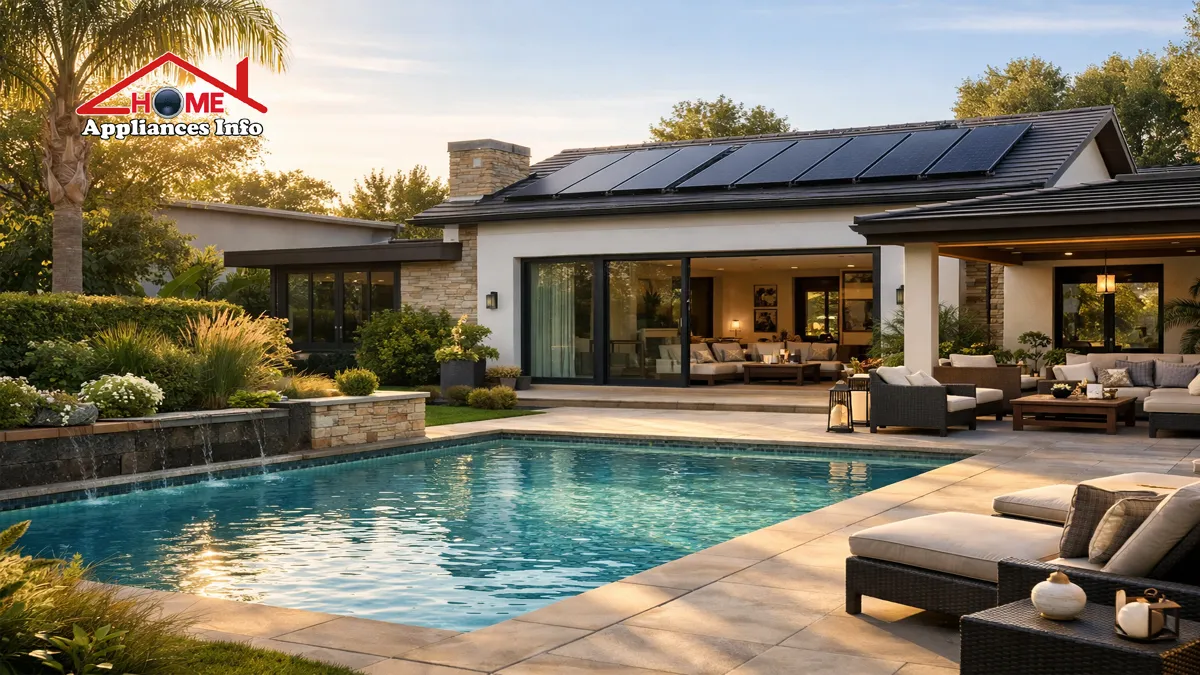
A pool can transform a backyard. Yet cold water often cuts that dream short. That is why solar pool heaters have become a smart upgrade for homeowners who want comfort, savings, and a more polished outdoor living space. In 2026, these systems do more than warm water. They help extend swim season, reduce energy bills, and support a cleaner, more elegant home design.
If you have invested in landscaping, patio furniture, or a beautiful deck, your pool should feel just as inviting. A heating system powered by sunlight can make that happen without the ongoing fuel costs of gas or the heavy electricity use of traditional electric heaters. It is one of those upgrades that works quietly in the background while improving how your whole outdoor area looks and feels.
This guide explains what solar pool heating is, how it works, and the ten most proven benefits for homeowners. You will also find costs, sizing tips, examples, and a simple FAQ section to help you make a confident choice.
What Is a Solar Pool Heater?
A solar pool heater is a system that moves pool water through solar collectors, often called thermal panels. The water absorbs heat from the sun and returns to the pool at a warmer temperature.
Most systems include:
- Solar collectors, either glazed or unglazed
- A pump
- A filter
- A flow control valve
- Sensors and simple controls
The idea is straightforward. Think of it like placing a garden hose in the sun, then feeling warmer water come out later. A pool solar heating system uses that same principle, but in a much more efficient and controlled way.
For best results, collectors usually cover 50% to 100% of the pool’s surface area. South-facing placement often works best in the Northern Hemisphere because it gets the strongest sunlight throughout the day.
1. They Can Cut Heating Costs by Up to 70%
The biggest reason homeowners choose solar pool heating is simple: lower operating costs.
Gas heaters warm water quickly, but they can be expensive to run. Electric resistance heaters also add up over time. Solar uses free energy from the sun. Your main ongoing cost is the small amount of electricity needed for the pump.
According to the U.S. Department of Energy, solar pool heating is one of the most cost-effective uses of solar energy for many homes.
Why the savings matter
Many homeowners focus on the purchase price first. That is natural. But long-term cost often tells the real story.
Typical installed costs range from:
- 2,500to2,500to6,500 for many residential systems
- Higher for large pools or premium collector brands
In many climates, the payback period falls between 2 and 7 years. After that, the savings continue.
A family in Arizona or Florida may see fast returns because of strong sun exposure. A homeowner in a cooler state may still save, but sizing and collector type matter more.
2. They Extend Your Swimming Season Without Constant Worry
A pool that looks beautiful but feels too cold becomes decoration, not a destination.
Solar heating helps stretch the season by keeping water comfortable during cooler mornings, mild spring weather, and early fall evenings. That means more use from the same backyard investment.
Real-life example
Imagine a family that opens the pool in April but does not enjoy it until June. With a well-sized solar setup, they may start swimming weeks earlier. They may also continue well into autumn.
That extra use changes how the backyard functions. It turns into a place for regular exercise, weekend gatherings, and quiet evenings outdoors.
3. They Support an Eco-Friendly Lifestyle
Today’s homeowners often want beauty and sustainability together. Solar systems deliver both.
Unlike gas heaters, solar pool heaters produce no direct emissions while heating water. That makes them appealing for families trying to reduce their environmental impact and align with broader climate goals.
Hotels and resorts have already recognized this value. Many are adopting solar heating to lower costs and attract eco-conscious travelers. Homeowners can benefit from the same shift.
If sustainability matters in your household, this kind of system pairs naturally with low-water landscaping, energy-efficient outdoor lighting, and even rooftop solar electricity.
Why this matters in 2026
Climate standards are tightening. Buyers are also paying more attention to efficient home features. A solar-heated pool can become part of a future-ready property strategy, not just a comfort upgrade.
4. They Improve the Feel of Your Outdoor Décor
This benefit often gets overlooked.
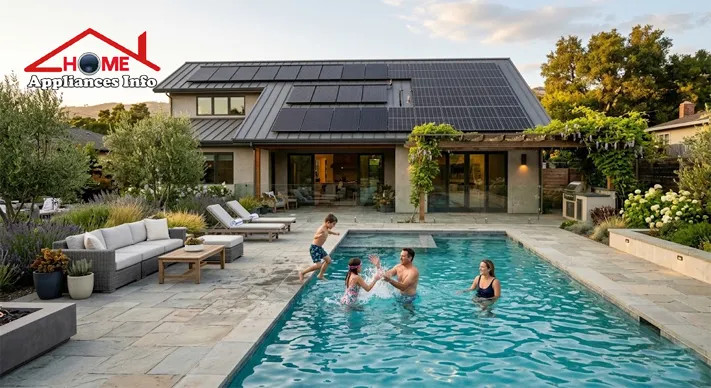
A warm pool changes how people experience the entire backyard. It makes the space feel finished, usable, and inviting. A pool that stays comfortable becomes a true design feature rather than a visual centerpiece that nobody uses.
How heating supports home décor
When the water is consistently pleasant, homeowners are more likely to invest in surrounding upgrades such as:
- Outdoor lounges
- Umbrellas and cabanas
- Built-in seating
- Fire pits
- Dining areas
- Mood lighting
In other words, a heated pool encourages people to use the full outdoor living zone. That creates a stronger link between function and design.
A cold pool can make a luxury patio feel incomplete. A warm one makes the whole space feel intentional.
5. Modern Systems Last 10 to 20+ Years
Durability is one of the strongest arguments for choosing solar.
Most well-made systems are built to handle UV exposure, changing weather, and years of regular use. Many premium brands now advertise lifespans of 20 years or more when installed correctly.
That often exceeds the life expectancy of some gas heaters, especially where corrosion or heavy use is an issue.
Notable brands in 2025–2026
Several names stand out in the market:
- Heliocol: Known for unibody panel design and long lifespan
- Thermax: Strong performance in cooler conditions
- SwimJoy: Popular for DIY-friendly kits
- SmartPool S601 and SunHeater: Reliable mid-range choices
- AQUASTRONG Inverter Heat Pump: A smart hybrid-style option for larger pools
- 3PCS Upgraded Solar Heater: Budget-friendly for smaller pools
The right brand depends on your climate, pool size, and installation goals. A small above-ground pool may need a very different setup than a luxury in-ground pool.
6. They Require Minimal Maintenance
Homeowners already manage enough. Pool ownership comes with cleaning, water chemistry checks, and seasonal care. Adding a heating system should not create another major chore.
That is where solar shines.
Compared with combustion-based systems, solar pool heaters generally have fewer moving parts and lower maintenance needs. There is no burner to manage and no fuel line to worry about.
Typical maintenance tasks
Most systems only need:
- Periodic inspection for leaks
- Basic checks of valves and sensors
- Occasional panel cleaning if debris builds up
- Winterization in colder climates
That simplicity adds peace of mind. It also helps protect long-term value.
For homeowners who want a practical overview of system design and efficiency, solar swimming pool heaters are covered well by federal energy guidance.
7. Flexible Installation Makes Them Fit More Homes
Not every property looks the same. Some homes have broad south-facing roofs. Others have nearby structures, garages, or open yard areas. Modern systems offer more installation flexibility than many people expect.
Collectors can often be mounted on:
- Rooftops
- Pergolas
- Ground racks
- Pool houses
- Detached garage roofs
That flexibility helps preserve the visual balance of the home.
A design-minded advantage
Homeowners focused on curb appeal worry about equipment being too visible. With thoughtful placement, panels can blend with roof lines or be placed away from main sightlines.
This is especially helpful when the pool area is part of a carefully styled outdoor design plan.
One key trade-off
Roof space matters. If roof area is limited, homeowners may need to choose between thermal panels for pool heating and solar PV panels for household electricity. In some cases, combining both technologies is still possible with smart planning.
8. Collector Options Make It Easier to Match Climate and Budget
Not all collectors work the same way. This is actually helpful because it gives buyers more control.
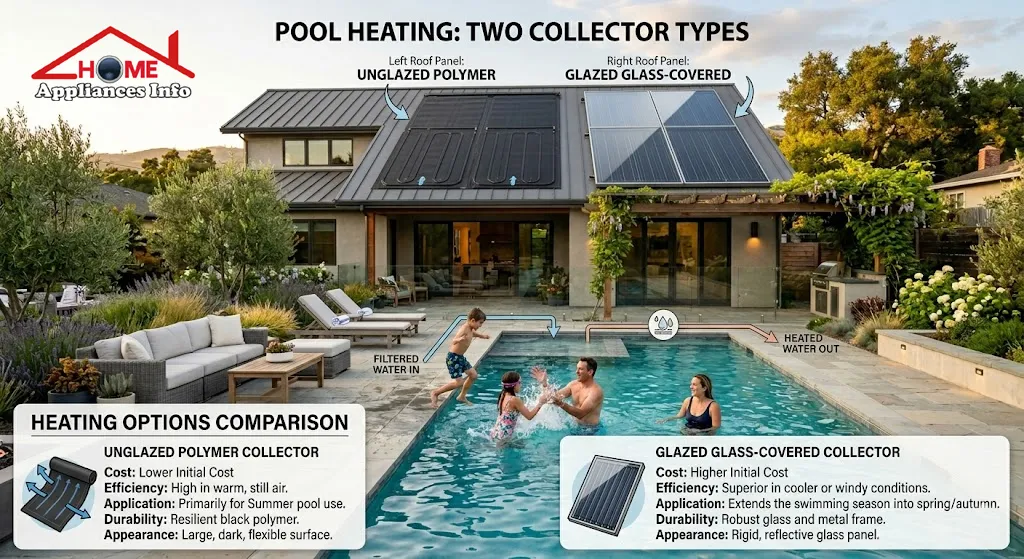
Here is a simple breakdown:
| Collector Type | Material | Best For | Cost Level | Performance |
|---|---|---|---|---|
| Unglazed Collectors | Plastic or rubber | Warm climates, seasonal use | Lower | Strong in sunny weather |
| Glazed Collectors | Copper tubing with glass cover | Cooler climates, year-round needs | Higher | Better heat retention |
Unglazed collectors are common for homes in sunny regions. They cost less and work well for seasonal swimming. Glazed collectors cost more but offer better performance when temperatures drop.
Sizing matters more than many realize
A common rule is to size collectors at 75% to 100% of the pool’s surface area.
For example:
- A 15 x 30 ft pool has a surface area of 450 sq ft
- Recommended collector size may be about 338 to 450 sq ft
An undersized system may disappoint. A properly sized one can transform the user experience.
If you want broader guidance on renewable energy planning, renewable energy resources from NREL offer useful context.
9. Smart Controls Make Today’s Systems Easier to Use
Pool technology has become more connected, and heating systems are following that trend.
Many newer systems now include:
- Wi-Fi-enabled controls
- App-based monitoring
- Automated flow management
- Temperature sensors
- Scheduled heating settings
This matters because convenience shapes how often people use a feature. If adjusting pool temperature becomes easy, owners are more likely to keep the pool in ready-to-use condition.
Why smart features help
A homeowner leaving work can check temperatures on a phone. A property manager can monitor performance without constant manual checks. A resort owner can improve efficiency across multiple pools.
That kind of control makes modern solar pool heaters feel more aligned with the connected home ecosystem.
10. They Add Long-Term Value to Your Property
Home upgrades work best when they deliver both enjoyment and lasting value. Solar heating can do that.
A heated pool often feels more premium to buyers than an unheated one. Add low operating costs and eco-friendly appeal, and the feature becomes even stronger.
What buyers notice
Potential buyers often respond to:
- Lower expected utility costs
- Longer usable swim season
- Sustainable home features
- Better outdoor living potential
- Durable equipment already in place
A solar-heated pool can also support a more cohesive lifestyle story. It suggests the home has been improved thoughtfully, not just decorated.
For homeowners planning to stay put, that means years of enjoyment. For those thinking ahead to resale, it can strengthen the overall appeal of the property.
Solar Pool Heater Costs, Savings, and Best Use Cases at a Glance
Here is a quick overview to simplify the decision:
| Factor | Typical Range or Recommendation |
|---|---|
| Installation cost | 2,500–2,500–6,500 |
| Annual heating savings | Up to 70% |
| Payback period | 2–7 years |
| Lifespan | 10–20+ years |
| Best collector coverage | 75%–100% of pool surface area |
| Best orientation | South-facing, with strong sun exposure |
| Ongoing costs | Low, mostly pump electricity |
| Maintenance level | Minimal |
Important Considerations Before You Buy
Even strong investments deserve a realistic review.
Sun exposure is essential
These systems perform best where sunlight is dependable. Shaded roofs reduce efficiency.
Climate affects system choice
Cooler regions often benefit from glazed collectors or hybrid systems.
Roof space may be limited
Some homeowners must balance solar thermal needs with rooftop solar electricity plans.
Professional sizing matters
A poorly sized system can underperform, even in sunny areas.
If you are comparing energy-efficient pool solutions, energy efficiency guidance from the U.S. Department of Energy can support broader planning.
FAQs About Solar Pool Heaters
Are solar pool heaters worth it in 2026?
Yes. For many homeowners, they remain one of the most cost-effective ways to heat a pool over time.
How long do solar pool heaters last?
Most quality systems last 10 to 20 years or longer, depending on materials, climate, and installation quality.
Do they work on cloudy days?
Yes, but output drops. They still collect some heat in indirect sun, though performance is best on clear days.
Can a solar pool heater work for above-ground pools?
Yes. Many smaller kits are designed specifically for above-ground pools and are easier to install.
What is better, glazed or unglazed collectors?
Unglazed works well in warm climates. Glazed collectors are better in cooler areas or for longer seasonal use.
Can solar heating cool a pool too?
In hot climates, some systems can circulate water at night to release heat and lower pool temperature.
Conclusion
A beautiful pool should be more than something you admire through a window. It should be a living part of your home. That is why solar pool heaters continue to stand out in 2026. They lower heating costs, extend swim season, support sustainability, and make outdoor spaces feel more complete.
They also fit the way modern homeowners think. People want upgrades that are practical, durable, and visually aligned with the rest of the property. Solar delivers that balance. Whether you want a modest seasonal boost or a more refined backyard experience, this is an upgrade worth serious consideration.
If you are planning a pool improvement this year, start with sizing, sun exposure, and your décor goals. The right system can turn a beautiful pool into a truly welcoming one.
References
- U.S. Department of Energy – Solar Swimming Pool Heaters: https://www.energy.gov/energysaver/solar-swimming-pool-heaters