

To support our research and detailed appliance reviews, we may earn a small commission from qualifying purchases made through our links, at no extra cost to you. As an Amazon Associate, I earn from qualifying purchases.
To support our research and detailed appliance reviews, we may earn a small commission from qualifying purchases made through our links, at no extra cost to you. As an Amazon Associate, I earn from qualifying purchases.
If your electric pressure cooker suddenly stops working right, it can be stressful. Dinner is delayed, steam is leaking, or the lid will not open. The good news is that many common issues are simple to diagnose and fix at home. This guide walks you through exactly how to repair electric pressure cooker problems fast, safely, and confidently. ✅
We will go step by step through the most common faults, what causes them, and what you can do right now to get your cooker working again.
1. Lid Difficulties: When the Lid Won’t Open After Cooking 😟
Nothing is more frustrating than finishing a meal and finding the lid stuck. This is a built‑in safety feature, but sometimes it can misbehave.
Why the lid stays locked
Most modern cookers use:
- A float valve that rises when pressure builds.
- A lid lock system that keeps the lid closed until pressure drops.
If pressure is not fully released, or the valve sticks, the lid can refuse to open.
Main causes and quick fixes
- Float valve not dropping
- Cause: After cooking, the float valve may stay slightly raised due to:
- Residual pressure.
- Starch or food residue.
- Slight misalignment.
- Fix:
- Make sure the pressure release valve is turned to Venting.
- Wait a few minutes for steam to escape fully.
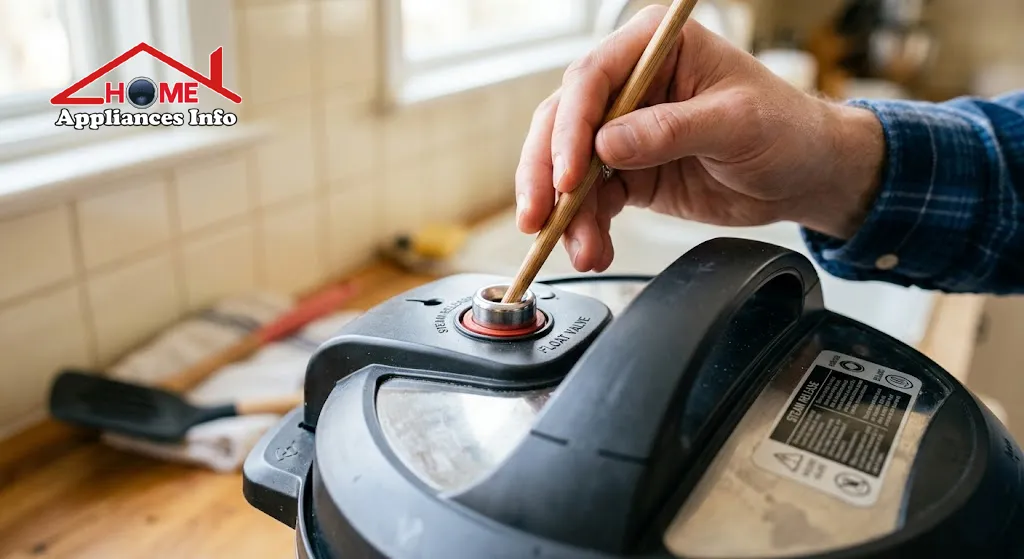
- Use a chopstick or similar tool to gently press down the float valve from the outside.
- Do not force it. If you feel strong resistance, wait longer.
- Lid or pot body deformation
- Cause: Overheating, impacts, or manufacturing defects can deform:
- The lid.
- The rim of the inner pot.
- The body where the lid locks.
- Fix:
- Inspect the lid rim and the cooker body from the side. Look for bending or warping.
- If you see any obvious deformation:
- Do not force the lid open with tools.
- Once pressure is fully released, open it gently.
- Plan to repair or replace the lid or pot body.
With warped metal, replacement is usually safer and more reliable than repair.
📝 Example:
You make soup, the cooking cycle ends, and the indicator says “Keep Warm,” but the lid will not open. You vent steam, wait, and the float valve should drop. If it does not, a gentle nudge with a chopstick often solves the problem.
Safety tip: Never try to pry the lid open while the cooker is still pressurized. Always confirm that steam has stopped escaping and the float valve is fully down.
2. Float Valve Not Rising: Cooker Never Reaches Pressure 😤
If your electric pressure cooker starts heating but the float valve never pops up, the cooker cannot seal. This leads to long cooking times, undercooked food, or constant steam loss.
Common causes
- Missing sealing ring on the float valve
- Many cookers have a tiny silicone ring under or behind the float valve.
- If this ring is missing, hardened, or split:
- Steam escapes around the valve.
- Pressure does not build.
Fix:
- Remove the lid and locate the float valve.
- Check underneath (inside the lid) for a small silicone or rubber gasket.
- If missing or damaged:
- Buy a replacement float valve gasket that fits your model.
- Install it according to the manual.
- Steam leakage around the lid
- If steam escapes along the lid edge:
- The sealing ring may be misaligned.
- The lid may not be fully locked.
Fix:
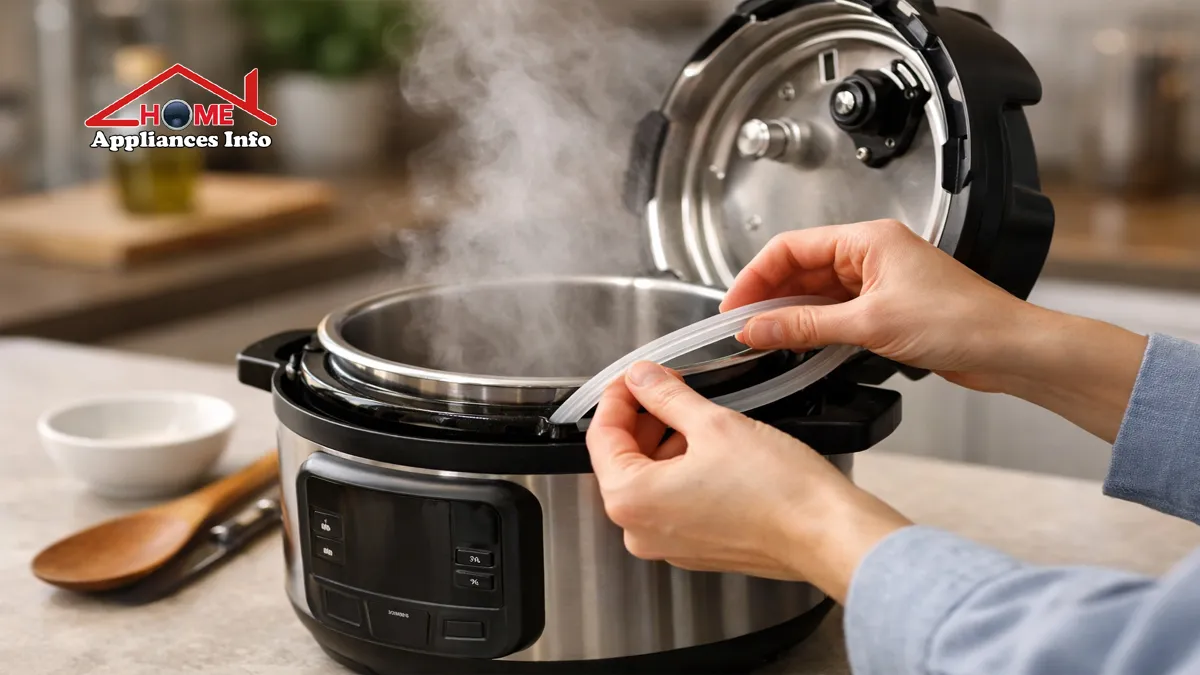
- Remove the silicone sealing ring from the lid.
- Inspect it for:
- Cracks.
- Warping.
- Food or oil buildup.
- Reinstall it firmly and evenly.
- Close the lid again and ensure it locks fully.
- Damaged float valve
- If the valve is bent, corroded, or stuck:
- It may not move up and down freely.
- This can prevent sealing and correct pressure.
Fix:
- Clean the valve area with warm soapy water.
- Wiggle the float valve gently to test movement.
- If it sticks or looks damaged:
- Replace the float valve with an original or compatible part.
- This part is usually inexpensive and easy to install.
3. Steam Leakage From the Lid: Hissing, Spraying, and Smells 😬
Steam leaking continuously from your cooker is a clear sign something is wrong. It also means food might burn, or the cooker will never reach pressure.
Typical causes and how to fix them
- Missing sealing ring
- If the large silicone sealing ring is not installed:
- Your cooker cannot seal.
- Steam escapes from all around the lid.
Fix:
- Check that the ring is present, not in the dishwasher or drawer.
- If missing, purchase a replacement sealing ring.
- Ensure it matches your cooker size (e.g., 6‑quart, 8‑quart).
- Lid not properly closed
- The lid must be:
- Lined up with the correct marks.
- Turned until it clicks or locks.
Fix:
- Open and close the lid again.
- Follow the lock icon or arrows.
- Start a short test cycle with water to check for leaks.
- Food residue on the sealing ring
- Oil, sauces, or starch can:
- Prevent a tight seal.
- Cause uneven pressure.
Fix:
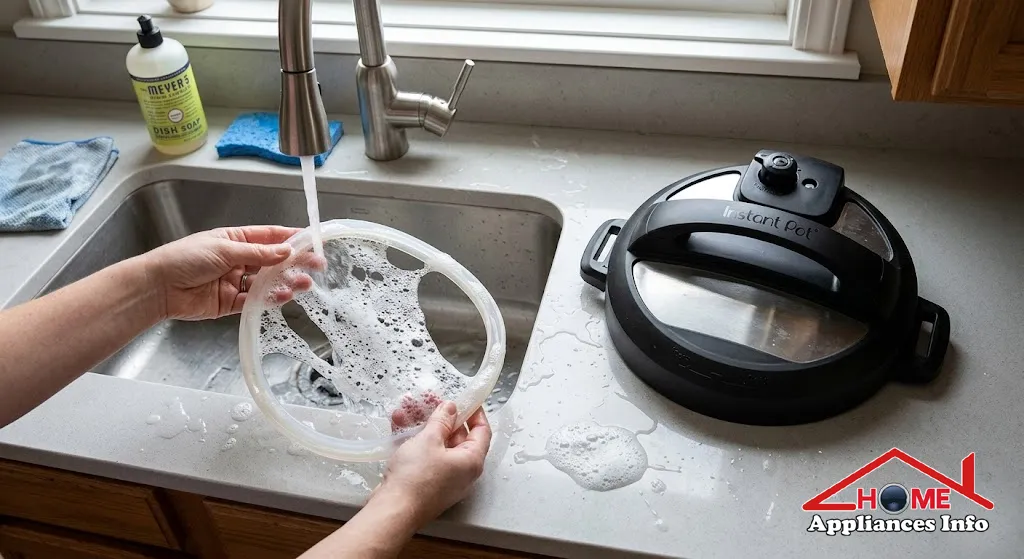
- Remove the ring and wash with warm soapy water.
- Rinse and dry completely.
- Reinstall firmly.
- Worn or stretched sealing ring
- Over time, silicone:
- Loses elasticity.
- Retains smells.
- Can deform slightly.
Fix:
- If the ring seems loose, cracked, or discolored:
- Replace it.
- Many manufacturers recommend replacing the ring every 12–18 months with regular use.
- Deformed lid or pot body
- Drops, bumps, and extreme heat can bend:
- Lid edges.
- Pot rims.
Fix:
- Inspect the lid and rim for warping.
- If you see distortions:
- Use the cooker only after professional inspection.
- Prefer replacement of the damaged part for long‑term safety.
- Inner pot deformation
- If the inner pot is:
- Dented.
- Bent at the rim.
- The lid may not sit level.
Fix:
- Replace the inner stainless steel or nonstick pot.
- Do not try to hammer it flat. That can weaken the metal.
Quick Reference Table: Steam Leakage Issues
| Symptom | Likely Cause | Recommended Fix |
|---|---|---|
| Steam from entire lid edge | Missing or misaligned ring | Install or reseat sealing ring |
| Steam from one spot on lid | Food on ring or small warp | Clean ring; inspect for wear or warping |
| Steam near float valve | Float valve gasket missing | Install new float valve gasket |
| Persistent leaks even after cleaning | Worn ring or deformed parts | Replace sealing ring; check lid and pot |
4. Failure to Switch to “Keep Warm” Mode 🔁
Some electric cookers cook properly but never shift to “Keep Warm” after the timer ends. Instead, they may shut off or show an error.
This problem is usually electronic, not mechanical.
Main culprits
- Damaged display or control board
- The display board also controls:
- Mode switching.
- Timers.
- Indicator lights.
- If damaged, the cooker may:
- Finish cooking but not switch modes.
- Freeze at one setting.
Fix:
- Unplug the cooker for 5–10 minutes and plug it back in.
Sometimes, a simple reset helps. - If the issue continues:
- The display or control board may need replacement.
- Due to electrical risks, this should be done by:
- A certified technician.
- An authorized service center.
- Faulty indicator light
- Cooking and Keep Warm may still work.
- But the light that should indicate Keep Warm is broken.
Fix:
- Check whether the food remains warm after the cycle.
- If functions work but the light does not:
- You likely have a burnt‑out LED or indicator.
- Replacement requires opening the panel.
- For safety, leave this to professionals unless you have electronics training.
Safety note: If you are not trained in electronics repair, do not open the main housing. Risk of electric shock is real, even in small appliances.
5. No Heating After Power On: Cooker Stays Cold 😱
Your electric pressure cooker powers on, the panel lights up, but nothing heats. Or maybe it does not power on at all. This usually points to internal electrical issues.
Common causes and how to handle them
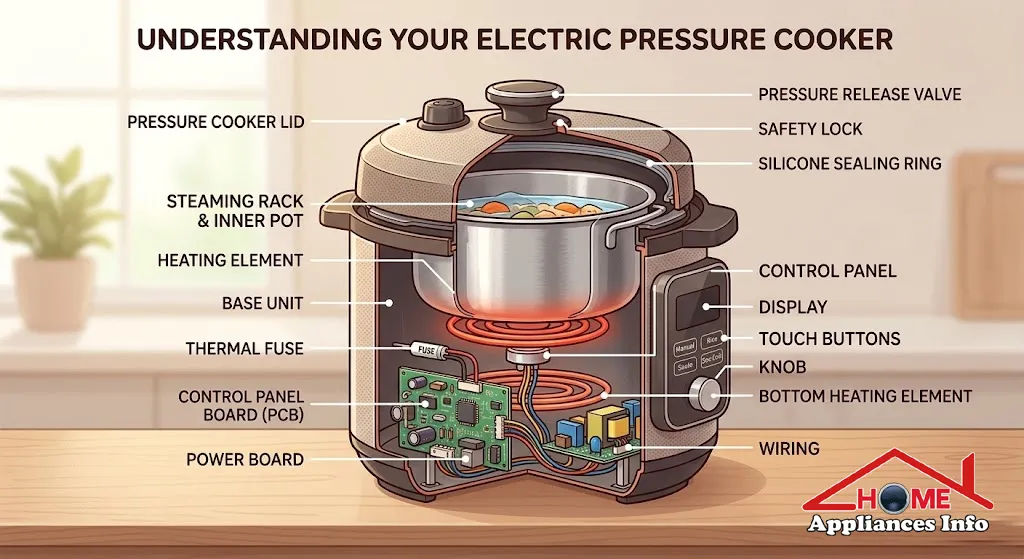
- Damaged power board or heating element
- The power board controls electricity flowing to the heater.
- The heating element is the metal coil or plate under the inner pot.
Signs:
- No warmth on the base even after 10–15 minutes.
- Error codes related to heating.
Fix:
- Check external causes first:
- Try a different outlet.
- Avoid extension cords or power strips when testing.
- If still no heat:
- The power board or heating element may be damaged.
- These parts usually need replacement, not repair.
- This should be handled by a professional technician.
- Poor internal wiring contact
- Inside the cooker, wires can:
- Shake loose over time.
- Burn or corrode at connection points.
Signs:
- Cooker cuts out randomly.
- Display flickers when you move the unit.
Fix:
- This is an internal electrical problem.
- Do not attempt DIY repairs unless you are qualified.
- Take the cooker to an authorized service center for a wiring inspection.
- Faulty display board
- The cooker may still heat, but you cannot:
- Set times.
- Read modes.
- Or the board may block heating entirely.
Fix:
- If the display is blank or garbled:
- Try a basic reset by unplugging for several minutes.
- If no change, the display or control board likely needs replacement.
- Melted thermal fuse
- A thermal fuse is a safety device.
- It cuts power if the cooker overheats dangerously.
- Once blown, it does not reset.
Signs:
- The cooker suddenly stops working mid‑cook.
- There is no power at all afterward, though the outlet is fine.
Fix:
- A technician can test the thermal fuse with a multimeter.
- If it is blown, it must be replaced with the correct rating.
- Do not bypass or bridge the thermal fuse. That removes critical safety protection.
For more detailed background on how pressure cookers work and why safety parts matter, resources like the National Center for Home Food Preservation explain pressure cooker safety according to article/topic.
6. Food Burning or Dry Cooking: Scorched Bottoms and Error Codes 🍲🔥
Burnt food at the bottom is one of the most common complaints. Your cooker might also show “Burn,” “OvHt,” or similar warnings.
These issues are usually related to insufficient liquid, poor sealing, or faulty controls.
Typical causes
- Lid leakage
- If the lid does not seal well:
- Liquid evaporates faster.
- Food sticks and burns.
Fix:
- Check the sealing ring and float valve.
- Review the steam leakage section above.
- Always use enough liquid for your recipe.
- Pressure release valve malfunction
- If the pressure release (steam release) valve is:
- Stuck partially open.
- Clogged.
- Steam may escape or fail to regulate pressure.
Fix:
- Remove the valve (if your model allows it).
- Clean it with warm soapy water, ensuring no food blocks it.
- Check the small metal or silicone parts for wear.
- If damaged, replace the pressure release valve.
- Faulty controller
- The electronic controller manages:
- Temperature.
- Pressure.
- Timing.
- If it overestimates liquid or underestimates heat, food may overcook or burn.
Fix:
- If you notice frequent burning with normal recipes:
- Try shorter times and more liquid.
- If burning continues despite careful use:
- Have the controller checked by a technician.
- Replacement of the control board may be required.
- Excessive pressure or temperature
- Faulty pressure or temperature switches can:
- Allow temperatures higher than intended.
- Fail to signal when to reduce heat.
Fix:
- Error codes related to overheat or overpressure often appear.
- In such cases:
- Stop using the cooker until inspected.
- A technician may need to adjust or replace the pressure/temperature switches.
- Timer not working correctly
- If the timer:
- Fails to count down.
- Resets unexpectedly.
- Stops early.
- Food can cook for too long.
Fix:
- Try a short test with water only.
- If time readings are inconsistent:
- The timer circuit on the board may be failing.
- Board repair or replacement is safer than DIY.
📝 Practical example:
You cook rice and get a “Burn” warning. On checking, you find a thick layer stuck on the bottom. Later you notice light steam leakage from one side of the lid. Replacing the sealing ring and carefully cleaning the pressure release valve often solves this.
7. Control Panel Buttons or Indicators Not Working 🖱️
Your electric pressure cooker might still heat, but some buttons do not respond, or lights never come on.
Likely reasons
- Damaged display or control board
- Repeated exposure to moisture, heat, or power surges can damage the board.
- Symptoms:
- Some buttons dead.
- Random beeping.
- Frozen screen.
Fix:
- Unplug and let the unit rest for several minutes.
- If the issue persists:
- The control board likely needs professional replacement.
- Faulty buttons or lights
- On some models, the buttons or LEDs are separate from the main board.
Fix:
- If one or two buttons are bad but others work:
- A keypad or overlay issue is possible.
- Replacing the keypad may resolve it.
- If only lights are out but functions still work:
- The LED components may need replacement.
- Poor wiring contact
- Internal connectors can loosen from:
- Vibration.
- Temperature cycles.
Fix:
- If pressing on certain spots around the control panel makes it work temporarily:
- That suggests a loose connection.
- Internal wiring repair is an electrical job.
Have a technician open the unit and reseat or replace connectors.
Key Takeaways: What Fails Most Often and How to Prevent It ✅
From all the problems above, a few patterns appear.
1. Sealing rings and float valves are the top trouble spots
- Most lid, pressure, and steam issues come down to:
- A worn or dirty sealing ring.
- A misbehaving float valve or its small gasket.
Prevention tips:
- Clean the ring after each use.
- Remove and clean the float valve regularly.
- Replace sealing rings every 12–18 months with frequent use.
2. Electrical components cause heating and control failures
- No heat, random shutdowns, or dead displays usually point to:
- Display/control boards.
- Power boards.
- Heating elements.
- Thermal fuses.
Prevention tips:
- Avoid using your electric pressure cooker on unstable or damp surfaces.
- Plug directly into a wall outlet when possible.
- Do not immerse the base in water when cleaning.
3. Regular cleaning and inspection save headaches
- Wipe the lid and rim after every cook.
- Wash the sealing ring and valves.
- Check for cracks, warping, and sticky movement.
4. Replacement is often better than repair for worn parts
- Silicone parts and small valves are cheap and easy to swap.
- Trying to patch them usually does not last.
- For long‑term safety and performance, replace worn parts instead of trying to glue or bend them back.
Practical Safety and Repair Advice 🛡️
When learning how to repair electric pressure cooker problems, it is vital to stay safe.
- Always release pressure fully
Before opening the lid or touching the float valve, confirm:- Steam release is set to Venting.
- The float valve has dropped completely.
- No steam sound remains.
- Keep sealing rings clean and clear
Food residue on seals is one of the main causes of:- Steam leaks.
- Burn warnings.
- Poor pressure build.
- Respect electricity
If your cooker:- Repeatedly fails to heat.
- Shows strange codes.
- Smells like burning plastic.
Consider: - Professional servicing or
- Replacement of the unit.
- Avoid DIY electrical repairs unless trained
Inside are high‑voltage components. Improper handling can cause:- Shock.
- Fire risk.
- Void warranties.
- Know when to replace the cooker
If the:- Pot body is deformed.
- Control board has failed more than once.
- Thermal fuse blows repeatedly.
It might be time for a new cooker instead of repeated repair.
FAQs About Electric Pressure Cooker Problems ❓
1. Why does my electric pressure cooker take so long to pressurize?
This usually happens when there is:
- Not enough liquid.
- A leaking sealing ring.
- A problem with the float valve or steam release valve.
Check for steam leaks and make sure the sealing ring is installed correctly.
2. Can I use my cooker if the sealing ring is cracked?
No. A cracked ring cannot hold pressure safely. Replace the sealing ring before using the cooker again.
3. My cooker says “Burn” – what should I do?
Turn it off, release pressure safely, and open the lid.
Stir the food, scrape the bottom, add more liquid, and check the sealing ring and valves for blockages before restarting.
4. Is it safe to repair the heating element myself?
Unless you are trained in appliance repair, it is not recommended. Heating elements and power boards are high‑voltage parts and should be serviced by professionals.
5. How often should I replace parts like sealing rings and float valve gaskets?
For regular use:
- Replace sealing rings every 12–18 months.
- Inspect float valve gaskets every few months and replace at the first sign of wear, cracking, or stiffness.
6. Why does my electric pressure cooker smell like burning plastic?
Unplug it immediately. Possible causes include:
- Food or plastic stuck on the heating plate.
- A failing power board or wiring issue.
Do not use it again until a technician inspects it.
Conclusion: Fix Electric Pressure Cooker Problems Fast and Safely 🙌
Most issues with an electric pressure cooker come down to a few key parts: the sealing ring, float valve, and basic electrical components. By cleaning seals, checking for leaks, and watching for error signs, you can prevent many problems before they start.
When something does go wrong, remember:
- Start with simple checks
Clean the sealing ring and valves. Look for obvious leaks or misalignment. - Replace small parts instead of patching
New rings, gaskets, and valves are affordable and much safer than temporary fixes. - Leave complex electrical repairs to professionals
If it does not heat, shuts off randomly, or shows display issues, it is safer to let a technician handle it—or consider a replacement cooker.
With this guide, you now have a clear roadmap on how to repair electric pressure cooker problems quickly, safely, and confidently. Take a few minutes to inspect your cooker today, and you will enjoy reliable, stress‑free meals for years to come. 🍲

🌐 FOUNDER & DIGITAL PUBLISHER
Muhammad Ali
Founder | SEO Strategist & E-E-A-T Digital Publishing Specialist

📈 SEO Strategy
🛠️ Appliance Optimization
🛡️ E-E-A-T Standards
Muhammad Ali is a digital publisher, SEO strategist, and founder of Home Appliances Info. He specializes in home appliance optimization, structured schema networks, and advanced E-E-A-T digital publishing standards to ensure accurate, trustworthy content across the platform.
4 Comments
Pingback: Oil Dispensers: 7 Best Picks That Will Instantly Upgrade Your Kitchen
Pingback: Samsung Refrigerator Water Filter: 8 Proven Tips for Maintaining It the Right Way
Pingback: Gas Stove Won’t Ignite? 10 Troubleshooting Tips to Fix It Fast
Pingback: Why Does My Air Fryer Smell Like Plastic and How to Get Rid of It