

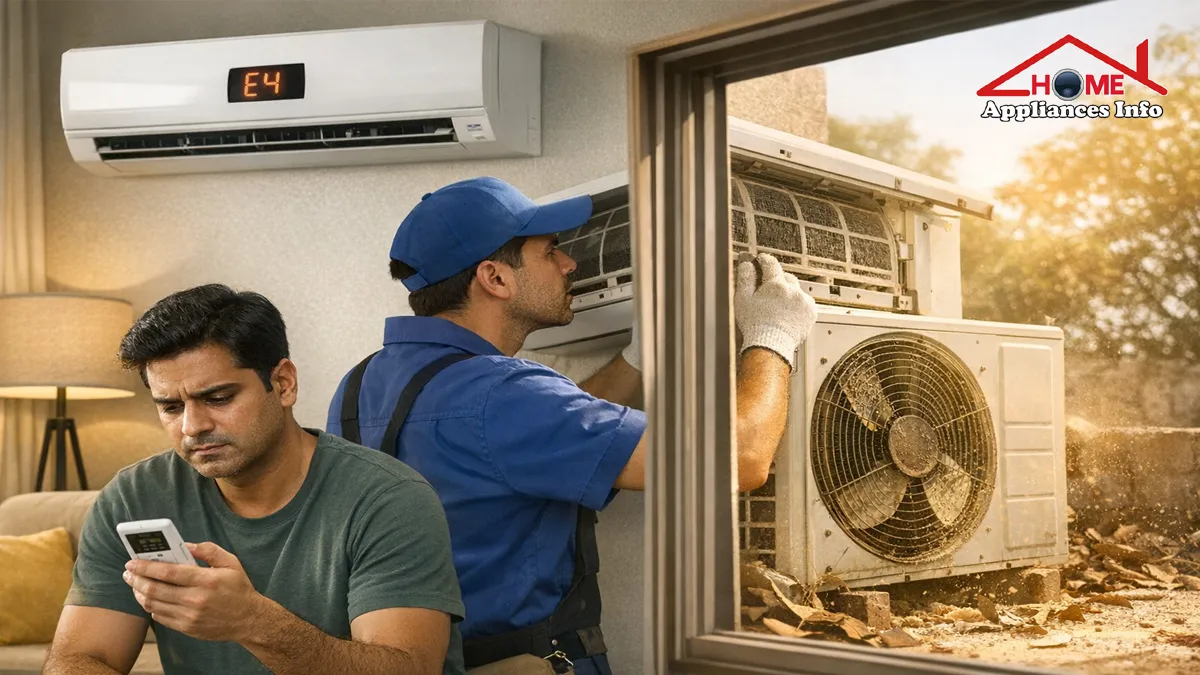
When the E4 error code appears on your appliance, it can feel like the whole day stops. You load the machine, press start, and instead of a clean cycle, you get a warning that looks confusing and urgent. Many people assume the unit is badly damaged. In reality, this alert is often a protective signal. It tells you something is wrong before the problem becomes expensive.
In many homes, especially during harsh summers in Pakistan, air conditioners work under heavy stress. Brands like Gree and Haier often show this code when the system detects overheating, sensor trouble, or pressure imbalance. Dust, blocked airflow, and poor ventilation can also trigger it. The meaning may vary by brand, but the message is similar: the machine needs attention.
This guide explains what the error means, why it happens, what you can safely do yourself, and when a technician is the wiser choice. The goal is simple. Help you solve the issue calmly, safely, and with confidence.
1. What Is the E4 Error Code?
The E4 error code is a built-in diagnostic alert. It appears when the appliance senses abnormal operating conditions. Think of it like a dashboard warning light in a car. It does not always mean total failure. It often means the system is trying to protect itself.
For air conditioners, E4 usually points to one of these issues:
- Evaporator coil temperature problems
- Compressor overload protection
- High-pressure faults
- Sensor malfunction
- Communication errors between indoor and outdoor units
The exact definition depends on the manufacturer. That is why one Gree unit may treat E4 differently from a Haier model.
Brand-specific differences
Gree air conditioners
On many Gree units, E4 often relates to evaporator coil temperature protection or compressor overload. In very hot cities like Karachi or Hyderabad, this can happen when the AC runs for long hours without proper cleaning.
Haier air conditioners
Haier models may use E4 for high-pressure protection or sensor issues. If airflow is restricted, pressure can rise and force the system into protection mode.
Portable and mini-split units
Portable ACs and mini-splits often display this code when they overheat, lose airflow, or fail to read sensor data correctly. Poor ventilation is a common cause.
A useful technical reference can be found through the U.S. Department of Energy air conditioner maintenance guidance, which explains how airflow and cleaning affect AC performance.
2. Why Does This Error Happen? Common Causes You Should Know
Most E4-related problems come from neglect, heat, or wear. That sounds harsh, but it is also hopeful. Many causes are manageable.
1. Blocked airflow
This is one of the most common triggers. Dirty filters, dusty coils, and blocked vents force the system to work harder. When air cannot move properly, heat builds up inside the unit.
Common signs include:
- Weak cooling
- Louder fan noise
- Warm air from vents
- Error returning after a reset
In Sindh, dust-heavy conditions make filter clogging much more likely. Homes near roads, markets, or construction areas often face this issue sooner.
2. Faulty sensors
Air conditioners rely on sensors to read temperature and pressure. If one sensor sends the wrong data, the control board may shut the system down to avoid damage.
A faulty sensor can cause:
- Random shutdowns
- Inconsistent cooling
- Error code appearing without obvious dirt or blockage
3. Refrigerant pressure issues
Low refrigerant or excessive pressure can both trigger protection alerts. This is not a safe DIY repair. Refrigerant handling requires tools, training, and certification.
Pressure issues may come from:
- Refrigerant leaks
- Overcharging during service
- Blocked coils
- Extreme outdoor temperatures
For homeowners, the key point is simple. If you suspect refrigerant trouble, do not keep restarting the unit.
4. Electrical or control board faults
Sometimes the problem is not mechanical. It is electronic. Loose wiring, voltage fluctuation, or a failing control board can break communication between indoor and outdoor components.
This is especially relevant in areas with unstable power supply. Frequent voltage swings can stress appliance electronics over time.
5. Overheating in extreme weather
During 40°C+ summer days, ACs may run for long periods without rest. If the outdoor unit has poor ventilation, or if sunlight hits it directly, the system can overheat and trip protection mode.
A short example: a family in Hyderabad kept getting E4 every afternoon. The cause was not a failed compressor. The outdoor unit was boxed in by stored items and hot air had nowhere to escape.
3. First Steps You Can Try at Home
Before calling a technician, a few safe checks may solve the issue. These steps are simple, practical, and worth trying.
Step 1: Turn the unit off
Power the system off completely. If possible, switch it off from the main supply. Let it rest for 5 to 10 minutes. This allows the protection mode to reset.
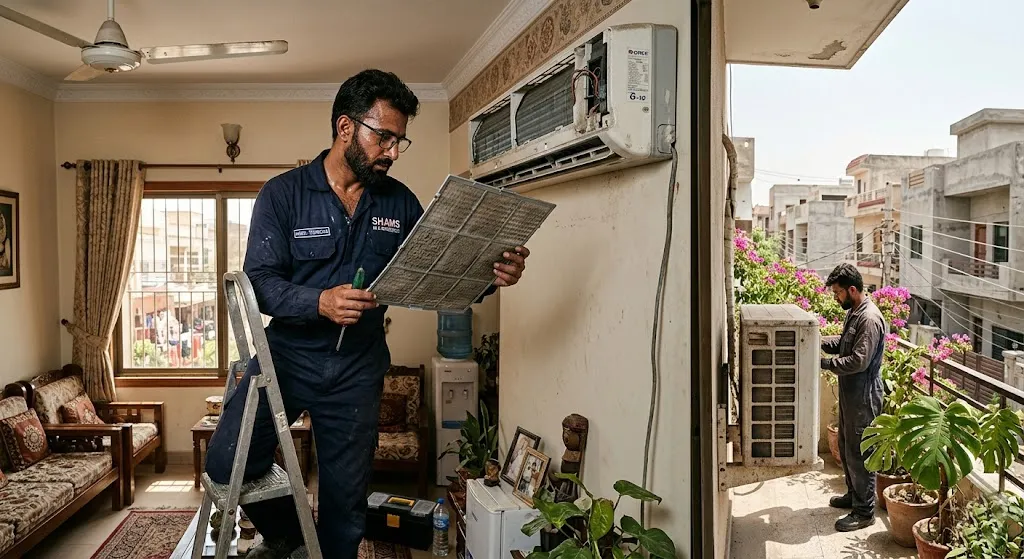
Step 2: Clean the air filters
Remove the filters and inspect them closely. If they are coated with dust, wash them gently and let them dry fully before reinstalling.
Monthly filter cleaning helps prevent many performance issues.
Step 3: Inspect the indoor vents
Make sure curtains, furniture, or stored items are not blocking airflow. Even partial obstruction can reduce efficiency.
Step 4: Check the outdoor unit
Look around the outdoor unit. Remove leaves, plastic, or debris. Leave enough open space around it for proper ventilation.
Step 5: Restart and observe
Turn the system back on and monitor it for 10 to 15 minutes. If cooling improves and the error does not return, the issue may have been temporary.
What not to do
Avoid these risky actions:
- Do not open sealed refrigerant lines
- Do not bypass sensors
- Do not keep restarting a struggling unit
- Do not ignore burning smells or unusual sounds
4. When It Is Time to Call a Technician
Some problems need expert diagnosis. If the code returns after cleaning and resetting, a professional inspection is the safest move.
Call a technician if:
- The alert keeps coming back
- The unit is blowing warm air
- Ice forms on coils
- You hear clicking, buzzing, or grinding
- You suspect gas leakage
- The compressor does not start properly
A trained professional can test refrigerant pressure, sensor output, and control board communication. These checks require proper tools and experience.
For safety and reliability, homeowners should follow recognized guidance like the ASHRAE thermal comfort and HVAC standards, especially when dealing with cooling system performance and protection issues.
5. Quick Comparison Table: Cause, Symptoms, and Best Fix
| Cause | Common Symptoms | Safe DIY Action | Technician Needed? |
|---|---|---|---|
| Dirty filters | Weak airflow, poor cooling, E4 after long use | Clean filters and restart | Not always |
| Blocked outdoor unit | Hot air trapped, shutdown in peak heat | Clear surrounding area | Sometimes |
| Faulty sensor | Random errors, uneven cooling | Reset only | Yes |
| Refrigerant issue | Warm air, frequent trips, icing | None | Yes |
| Control board fault | Error persists, strange behavior | Power reset | Yes |
| Overheating | Afternoon shutdowns, error in extreme heat | Improve ventilation | Sometimes |
This table shows an important truth. The same warning can come from different causes. That is why guessing can waste time.
6. E4 Error Code in Pakistan: Why Local Conditions Matter
In Pakistan, cooling systems face a different kind of pressure. Heat is intense, dust is constant, and maintenance is often delayed until performance drops.
Dust-heavy environments
Cities in Sindh often expose appliances to fine dust. Filters clog faster, coils get coated, and airflow suffers long before users notice anything wrong.
Rising electricity demand
As electricity demand grows, many households try to reduce usage by switching systems on and off repeatedly. That habit can stress some components and hide underlying faults.
Inverter and portable AC trend
Many people now buy inverter and portable units for efficiency and flexibility. Yet these models still need proper ventilation and regular cleaning. Portable units, in particular, are often placed in corners with poor air circulation.
The user education gap
Many households treat E4 as a fatal machine error. In many cases, it is a preventive alert. The unit is trying to protect itself. That is frustrating, but it is also useful. It gives you a chance to act early.
The World Health Organization indoor air quality resources also reinforce the value of clean airflow and safe indoor cooling conditions.
7. How to Prevent E4 from Coming Back
Prevention is usually easier than repair. A few habits can reduce the chance of future E4 alerts.
Clean filters every month
This matters even more in dusty cities. Set a calendar reminder. A five-minute cleaning routine can protect system efficiency.
Schedule seasonal servicing
A professional checkup before peak summer can catch:
- Sensor drift
- Coil dirt buildup
- Refrigerant imbalance
- Weak electrical connections
Keep the outdoor unit clear
Leave open space around the outdoor unit. Do not store boxes, buckets, or plants too close to it.
Watch for early warning signs
Take action if you notice:
- Cooling takes longer than usual
- The unit cycles off too soon
- Water leakage increases
- Noise changes suddenly
Use smart monitoring where possible
Newer ACs with app support or smart diagnostics can flag maintenance needs earlier. Predictive maintenance may reduce these alerts significantly over time.
8. A Simple Mindset Shift: Don’t Panic, Diagnose
The E4 error code sounds technical, and that alone can trigger stress. But most homeowners do not need to become HVAC experts overnight. They need a calm process.
Start with the basics:
- Power off
- Clean filters
- Check airflow
- Restart
- Observe
If the problem remains, stop there and call a trained technician. That is not failure. That is smart maintenance.
The most expensive repairs often happen when people ignore warning signs or keep forcing the appliance to run.
FAQs
1. Is E4 a serious error?
It can be serious, but not always. Often, it is a protective alert caused by airflow, heat, or sensor issues.
2. Can I fix E4 myself?
You can safely clean filters, clear obstructions, and reset the unit. Refrigerant and electrical repairs need a technician.
3. Does E4 mean low gas?
Sometimes, but not always. Low refrigerant is one possible cause, along with sensor faults and overheating.
4. Why does E4 appear only in the afternoon?
High outdoor temperatures can increase system stress. Poor ventilation often shows up during the hottest hours.
5. How often should I clean AC filters?
Once a month is a good rule. In dusty areas, more frequent cleaning may be necessary.
6. Will ignoring E4 damage the appliance?
Yes, it can. Continued operation may strain the compressor and raise repair costs.
Conclusion
The E4 error code is not always a sign of disaster. In many cases, it is an early warning that your appliance needs airflow, cleaning, or professional inspection. For homes in Pakistan, especially in high-heat and dusty areas, this alert is often linked to blocked filters, overheating, or sensor trouble. Start with simple checks. If the problem continues, bring in a qualified technician before a small issue turns into a major repair.
A careful response protects your comfort, your electricity bill, and the life of your cooling system. If you are seeing E4 repeatedly, do not delay. Early action is the most affordable fix.
References
- U.S. Department of Energy: air conditioner maintenance
- ASHRAE: thermal comfort and HVAC standards
- World Health Organization: indoor air quality