

To support our research and detailed appliance reviews, we may earn a small commission from qualifying purchases made through our links, at no extra cost to you. As an Amazon Associate, I earn from qualifying purchases.
To support our research and detailed appliance reviews, we may earn a small commission from qualifying purchases made through our links, at no extra cost to you. As an Amazon Associate, I earn from qualifying purchases.
When a kitchen or laundry appliance stops working, stress arrives fast. Food can spoil. Laundry piles up. Dinner plans fall apart. That is why samsung appliance repair matters so much for busy households. A small issue often starts quietly, then grows into a costly repair if ignored.
The encouraging part is this: not every problem means you need a full replacement. In many cases, a simple check, a basic cleaning step, or a careful reset can restore performance. Still, Samsung appliances use advanced electronics and smart systems. That means some fixes are safe for homeowners, while others should stay in trained hands. ⚙️
This guide walks you through six practical repair hacks that can help you save money without taking unsafe risks. You will learn what you can inspect yourself, what warning signs to watch for, and when it makes sense to call a certified service like Appliance Medic.
1. Start With the Cheapest Fix First: Clean, Reset, and Recheck
Many appliance failures look serious at first. In reality, some begin with dirt buildup, blocked airflow, a clogged filter, or a settings issue. Before spending money, start with the simplest possible checks. Think of it like checking your shoes before blaming your knees for a painful walk.
A smart first step in samsung appliance repair is to rule out the easy causes.
What to check before calling for service
- Confirm the appliance has power
- Inspect the plug and outlet
- Reset the circuit breaker
- Review the control panel settings
- Clean visible filters or vents
- Make sure doors and lids close fully
- Check if child lock or delay start is active
These steps take minutes, not hours. They can save you from an unnecessary service visit.
Real-life example
A homeowner notices the refrigerator is warming up. They assume the compressor has failed. After a quick inspection, they find thick dust on the condenser coils. Cleaning the coils improves cooling within a few hours. That is a small fix with a big payoff. ❄️
Why this hack saves money
- It avoids unnecessary diagnostic fees
- It prevents minor issues from becoming major repairs
- It improves appliance efficiency
- It may extend the life of the unit
If the problem remains after basic checks, then move to appliance-specific troubleshooting.
2. Fix Refrigerator Cooling Problems Before Food Loss Grows
A refrigerator that is not cooling properly can become expensive very quickly. Groceries spoil fast, and temperature swings can affect food safety. One of the most common calls in samsung appliance repair involves cooling issues.
Common causes of a Samsung refrigerator not cooling
| Appliance | Common Issue | Likely Cause | Suggested Solution |
|---|---|---|---|
| Refrigerator | Not cooling | Dirty condenser coils, faulty compressor, broken fan | Clean coils; if unresolved, call a technician |
| Washer | Not spinning | Faulty lid switch, drive belt, motor coupler, unbalanced load | Balance load, check lid; replace belt/coupler if needed |
| Dryer | Not heating | Defective heating element, blown thermal fuse, faulty thermostat | Test or replace fuse; heating element replacement needs a pro |
| Dishwasher | Not draining | Blocked drain pump, clogged filters | Clean filter, check hose; replace pump if faulty |
| Oven | Not heating evenly | Damaged heating element, faulty temperature sensor | Inspect elements; recalibrate or replace sensor |
Smart refrigerator repair hack
Start with airflow and cleanliness. Pull the fridge away from the wall if possible. Check for dust on the condenser coils. Make sure the vents inside the refrigerator are not blocked by food containers. Also inspect the door seal. A weak seal leaks cold air and forces the unit to work harder.
If you are dealing with Samsung refrigerator repair, focus on these safe homeowner checks:
- Clean condenser coils carefully
- Confirm temperature settings are correct
- Check that the fan area is not blocked
- Inspect door gaskets for cracks or looseness
- Avoid overpacking shelves
When the issue is likely more serious
If the refrigerator still stays warm after cleaning and resetting, the problem may involve:
- A failed evaporator fan
- A faulty defrost system
- A compressor issue
- A control board problem
Those repairs need specialized tools and technical knowledge. According to the Samsung Support, model-specific diagnostics and authorized service are often the safest path for modern units.
Why professional help matters here
A refrigerator compressor is not a casual DIY project. It involves sealed system work, refrigerant handling, and exact diagnosis. This is where certified service providers such as Appliance Medic bring real value. They can identify whether the problem is electrical, mechanical, or airflow-related without guesswork.
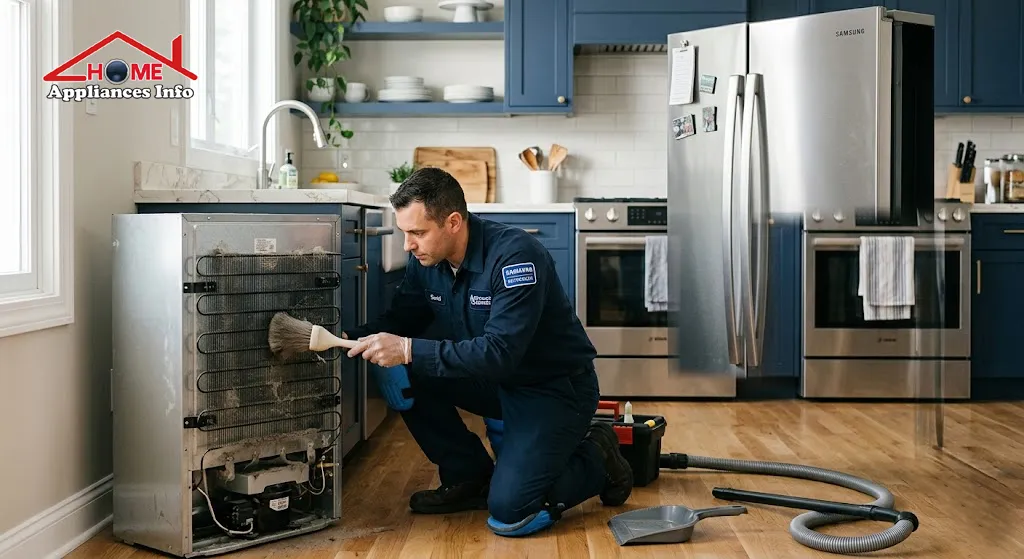
Image Caption: Cleaning refrigerator coils is one of the safest first steps when cooling problems begin.
3. Stop Washer and Dryer Problems With Basic Load and Vent Checks
Laundry appliances often show warning signs before they fail completely. A washer that does not spin or a dryer that does not heat can raise utility costs and create daily frustration. Yet some causes are simple enough to catch early.
Washer hack: balance the load before assuming a broken motor
If a Samsung washer stops spinning, do not assume the motor is gone. Start with the load inside the drum. Heavy towels or uneven items can shift to one side and trigger a safety stop.
Check these first
- Redistribute clothes evenly
- Remove overloaded items
- Make sure the lid or door closes fully
- Inspect for obvious belt wear if accessible
- Restart the cycle after rebalancing
A washer may also stop spinning because of a faulty lid switch, drive belt, or motor coupler. Those parts can wear over time. Some are accessible. Others are not. If you hear grinding, smell burning, or see repeated error codes, call a technician.
Dryer hack: clean the vent before replacing parts
Many people search for Samsung dryer troubleshooting only after the dryer stops heating. But restricted airflow is one of the most common causes of poor drying performance. A blocked lint path can make the dryer run hotter, work longer, and wear out faster. It can also create a safety risk. 🔥
Try these dryer checks
- Clean the lint filter completely
- Inspect the exhaust vent for blockage
- Check the vent hose for crushing or bends
- Confirm the dryer cycle settings are correct
- Look for signs of a blown thermal fuse
If airflow is poor, clothes stay damp and energy bills rise. If the thermal fuse has blown, that often points to overheating caused by vent restriction.
The U.S. Consumer Product Safety Commission regularly emphasizes appliance safety, including proper maintenance for household devices that generate heat.
When to stop DIY dryer work
If the problem points to a heating element, thermostat, or internal electrical issue, do not push further unless you are trained. Dryers contain high-voltage components. Professional service protects both your appliance and your safety.
Why this hack saves money
- Balanced washer loads reduce wear on suspension and drive parts
- Clean dryer vents shorten drying time
- Early action can prevent larger part failures
- Proper maintenance lowers energy use
4. Tackle Dishwasher Drain Problems Before Water Damage Starts
A dishwasher that leaves dirty water at the bottom is frustrating and unsanitary. It can also damage your kitchen floor if ignored. One of the most searched issues today is Samsung dishwasher not draining, and for good reason. It is common, disruptive, and often linked to a few predictable causes.
Dishwasher repair hack: start with the filter and hose
If your dishwasher is not draining, first turn off power or unplug it safely if accessible. Then inspect the filter area inside the tub. Food debris, grease, and buildup can slow drainage more than people expect.
Safe first steps
- Remove and clean the filter
- Check for visible debris near the drain opening
- Inspect the drain hose for kinks
- Run a short cycle after cleaning
- Listen for unusual pump noises
A blocked filter can act like a clogged sink strainer. Water has nowhere to go, so it sits at the bottom.
What a faulty pump sounds like
If you hear humming without drainage, the drain pump may be blocked or failing. In some cases, a small object like glass or bone fragments jams the impeller. In other cases, the pump motor itself wears out.
For more maintenance guidance, the Sears Home Services appliance repair resources provide broad troubleshooting information for dishwashers, dryers, refrigerators, and more.
When to call a professional
Dishwasher drainage issues become more technical when they involve:
- Drain pump replacement
- Electrical continuity testing
- Internal wiring faults
- Control board issues
If your unit shows repeat draining errors after cleaning the filter and hose, a qualified technician should inspect it.
Why expert service helps
Professional repair avoids misdiagnosis. Replacing the wrong part wastes both time and money. Appliance Medic, for example, handles drainage issues with trained Samsung technicians who know the brand’s common fault patterns. That helps reduce repeat visits and guesswork.
5. Use Oven Heating Clues to Avoid Bigger Repair Bills
Oven problems often begin subtly. Cookies brown unevenly. One side of a casserole cooks faster. Roast times become unpredictable. These signs can point to a heating element issue or a temperature sensor fault.
For many homeowners, this is where samsung appliance repair becomes less about convenience and more about trust. A poorly working oven affects meal planning, food quality, and safety.
Oven hack: test performance before assuming total failure
Before replacing anything, observe the pattern.
Ask these simple questions:
- Does the oven preheat slower than usual?
- Does one side cook faster?
- Is the broiler working but baking is weak?
- Does the displayed temperature match the real temperature?
An oven thermometer can help you compare actual heat to the set temperature. If the difference is consistent, the temperature sensor may need recalibration or replacement.
Safe checks you can do
- Visually inspect the bake element for blistering or cracks
- Check whether both upper and lower elements glow when expected
- Clean heavy grease buildup that may affect performance
- Test with an oven thermometer
When not to DIY
Electric and gas ovens both involve real safety concerns. Electrical shock, gas leaks, and control board damage are not worth the risk. If an element is visibly damaged or the temperature remains unstable, book a professional repair.
Practical example
A family notices that homemade bread burns at the back and stays pale in front. They first blame the recipe. Later, a technician confirms the temperature sensor is faulty. The repair is much cheaper than replacing the oven and restores even cooking.
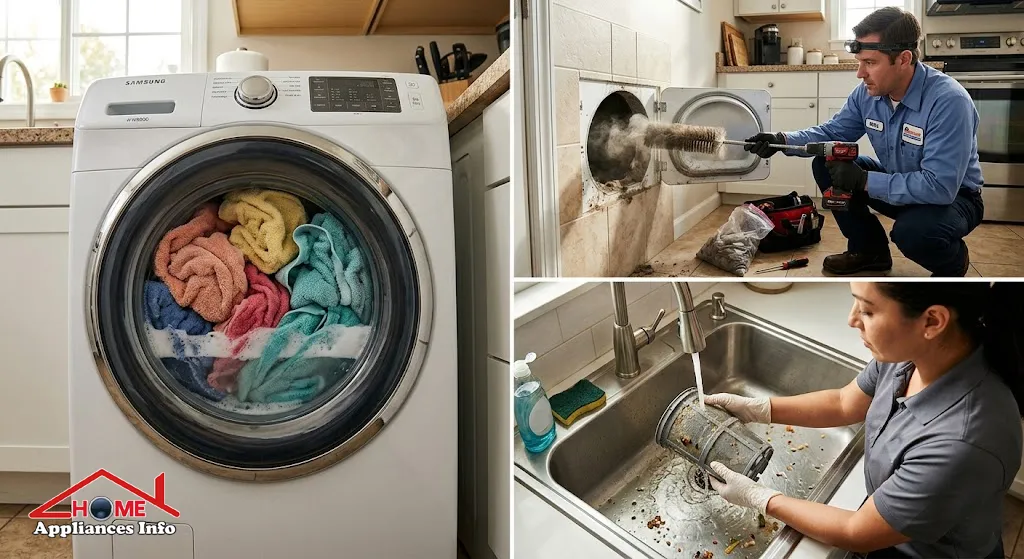
Image Caption: Simple maintenance steps can solve common washer, dryer, and dishwasher issues before they become expensive repairs.
6. Know When Professional Samsung Repair Saves More Than DIY
DIY can be useful for maintenance and simple inspections. But advanced appliance systems demand skill, safe handling, and the right tools. The most cost-effective decision is not always doing it yourself. Sometimes the real savings come from getting the right repair the first time.
Why professional repair is recommended
1. Expertise
Samsung appliances use smart sensors, electronic control boards, and model-specific components. Certified technicians understand how these systems interact.
2. Safety
Dryers, ovens, washers, and refrigerators all involve electrical or mechanical risks. Incorrect handling can create hazards.
3. Warranty protection
Opening sealed systems or installing the wrong parts may void your warranty. Authorized service helps keep coverage intact.
4. Time savings
A trained technician can usually diagnose faster than a homeowner can search through forums and trial-and-error repairs.
Why Appliance Medic stands out
Appliance Medic is highlighted as a trusted Samsung repair provider because it offers:
- Certified technicians trained for Samsung systems
- Same-day or next-day service in many cases
- Transparent pricing
- Repair support for refrigerators, washers, dryers, dishwashers, and ovens
- Affordable rates, often in the 100–100–400 range depending on the issue
That cost range often makes repair a better choice than replacement, especially for newer appliances.
Repair or replace?
A useful rule is age and repair cost.
Consider replacement if:
- The appliance is more than 10 years old
- Repair cost is close to half the cost of a new unit
- Parts are difficult to source
- Multiple major issues are happening at once
Consider repair if:
- The appliance is under warranty
- The issue is isolated
- The appliance is under 10 years old
- The repair cost is reasonable
For readers in Pakistan, including Karachi and Drigh Road, this advice still applies. Even if Appliance Medic is U.S.-based, the core strategy remains the same: use Samsung-authorized service centers whenever possible. That protects your warranty and improves the chances of getting genuine replacement parts. 🌍
Cost, Time, and What to Expect From a Repair Visit
Many homeowners delay service because they fear surprise charges. In reality, appliance repair is often more affordable than expected when the problem is caught early.
Typical repair cost range
Most Samsung appliance repairs fall between 100and100and400, depending on:
- Appliance type
- Part cost
- Labor complexity
- Urgency of service
- Whether the issue involves electronics or mechanical parts
Typical repair timelines
- Minor fixes: often completed in a few hours
- Mid-level repairs: same day or next day in many cases
- Major jobs like compressor replacement: longer, depending on parts availability
How to prepare for a service call
- Note any error codes
- Describe sounds, smells, or timing of the issue
- Clear access around the appliance
- Share warranty details
- Mention any troubleshooting already done
This helps technicians diagnose faster and more accurately.
FAQs
1. How much does samsung appliance repair usually cost?
Most repairs range from 100to400. The final price depends on the appliance, part, and labor involved.
2. Is it safe to repair Samsung appliances yourself?
Basic cleaning and simple checks are usually safe. Electrical, gas, motor, and compressor work should be left to professionals.
3. What should I do if my Samsung refrigerator is not cooling?
Start by cleaning condenser coils, checking airflow, and confirming temperature settings. If cooling does not improve, schedule Samsung refrigerator repair with a certified technician.
4. Why is my Samsung dryer running but not heating?
Common causes include a blown thermal fuse, poor airflow, a bad thermostat, or a failed heating element. Begin with Samsung dryer troubleshooting by cleaning the lint filter and vent.
5. Why is my Samsung dishwasher not draining?
The most common reasons are a clogged filter, blocked drain hose, or faulty drain pump. If cleaning does not help, a technician should inspect the unit for Samsung dishwasher not draining issues.
6. Should I repair or replace an old Samsung appliance?
If the appliance is over 10 years old, compare repair cost with replacement value. For newer units, repair is often the smarter investment.
Final Thoughts
Appliance trouble can feel overwhelming, especially when it interrupts daily life. But smart action, taken early, often keeps costs under control. Clean first. Inspect carefully. Watch for patterns. Then know when to stop and bring in an expert.
The best approach to samsung appliance repair is a balanced one. Handle safe maintenance tasks yourself, but trust certified professionals for technical, electrical, or warranty-sensitive issues. That protects your appliance, your home, and your budget. ✅
If your refrigerator is warming, your washer will not spin, your dryer is not heating, your dishwasher will not drain, or your oven cooks unevenly, do not wait too long. A qualified repair service like Appliance Medic can often solve the issue quickly and affordably. And if you are in Pakistan, look for Samsung-authorized repair centers in your area for the same level of care and protection.
References
- Samsung Support
- U.S. Consumer Product Safety Commission
- Sears Home Services appliance repair resources

📱 SMART HOME TECHNOLOGY CONSULTANT & IOT SPECIALIST
Alfredo Torres
Technology Consultant | Smart Home Automation & IoT Specialist (Lima, Peru)

🌐 Matter Protocol & IoT
⚡ Energy Efficiency
🛠️ Future-Proofing Infrastructure
Alfredo Torres is a seasoned technology consultant based in Lima, Peru, specializing in the integration of next-generation IoT ecosystems and smart home automation. With over a decade of experience navigating the rapidly evolving tech landscape of the Global South, Alfredo brings a unique, practical perspective to homeappliancesinfo.com.
As a specialist in the 2026 Matter protocol rollout, Alfredo focuses on bridging the gap between legacy household infrastructure and modern connectivity standards. His consulting work centers on “future-proofing” homes—helping users select appliances that offer maximum durability, energy efficiency, and cross-platform compatibility without the burden of “app fatigue.”
Alfredo’s expert insights are grounded in real-world problem solving, from optimizing smart kitchen workflows to implementing cost-effective home maintenance solutions in emerging markets. When he isn’t benchmarking the latest AI-integrated appliances, he can be found exploring the intersection of sustainable architecture and digital living.
3 Comments
Pingback: E4 Error Code Fix: Ultimate Guide to air conditioner Repair
Pingback: How to Repair Hair Dryer: Ultimate Step by Step Guide for DIY Fixes
Pingback: Whirlpool Washer F05 Error Code Troubleshooting: Sensor & Drain Fix