


To support our research and detailed appliance reviews, we may earn a small commission from qualifying purchases made through our links, at no extra cost to you. As an Amazon Associate, I earn from qualifying purchases.
To support our research and detailed appliance reviews, we may earn a small commission from qualifying purchases made through our links, at no extra cost to you. As an Amazon Associate, I earn from qualifying purchases.
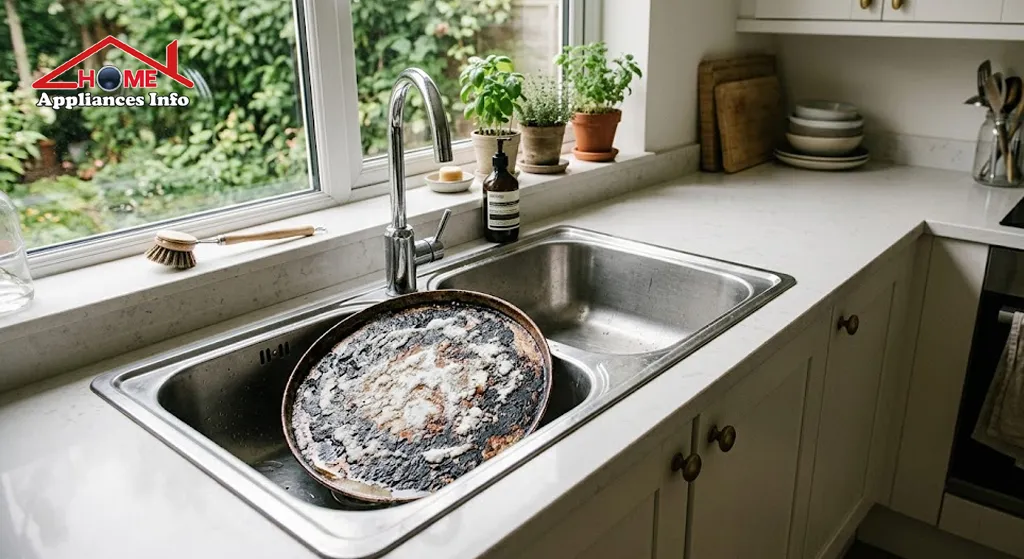
I learned How to Clean a Burnt Pizza Pan without Scrubbing after ruining one too many pizza nights. You pull a bubbling pizza from the oven, enjoy dinner, then face the pan. It is streaked with black spots, burnt cheese, and a layer of grease that seems welded on. I used to attack it with steel wool. That only scratched the surface and wasted time.
In my experience, the better approach is almost always the lazier one. A good soak, a simple reaction between pantry staples, and a soft wipe can do more than ten minutes of angry scrubbing. If you want a safe, simple, and low-effort way to restore your pan, you are in the right place.
Stainless Steel Pizza Pan Check Price on Amazon
This guide covers the methods I use at home, why they work, and how to prevent heavy burns next time. I will also point out when one method is better than another, especially if your pan is non-stick, aluminum, or stainless steel. If you also care about cookware lifespan, you may want to explore.
1. Why I Stopped Scrubbing Burnt Pizza Pans
Scrubbing feels productive. It is not always smart.
I noticed that hard scrubbing often made my pans look worse. Non-stick coatings became dull. Aluminum pans picked up fine scratches. Even stainless steel lost some shine over time.
Here is why I avoid abrasive cleaning now:
1. Scrubbing can damage the pan
Steel wool and harsh pads can scratch coatings and raw metal. That damage is not just cosmetic. Scratches can make future sticking worse.
The U.S. Consumer Product Safety Commission and many cookware makers advise following surface-safe cleaning methods to protect cookware and reduce wear.
2. Burnt grease rarely comes off fast
Baked-on sauce and cheese harden like glue. Dry scrubbing usually removes the top layer but leaves a dark stain behind.
3. Soaking uses chemistry, not force
Baking soda helps loosen carbonized residue. Vinegar reacts with it and lifts grime. Hydrogen peroxide helps break down stubborn organic stains. Hot water softens what feels impossible.
That is the real secret behind How to Clean a Burnt Pizza Pan without Scrubbing. You let time and chemistry do the hard part.
2. The Best No-Scrub Cleaning Methods I Have Tested
I have tested each of these methods at home on pans with burnt cheese, charred crust dust, and sticky oil rings. None required hard scrubbing. A gentle sponge or microfiber cloth was enough.
Method 1: Baking Soda and Vinegar
This is my go-to for everyday burns.
How I do it
- Fill the pan with water.
- Heat it gently on the stove, if safe for the pan, or pour in boiling water.
- Let the hot water sit for a few minutes.
- Drain most of the water.
- Sprinkle a generous layer of baking soda over the burnt areas.
- Add vinegar slowly.
- Let it fizz for 15 to 20 minutes.
- Wipe with a soft sponge or microfiber cloth.
Why it works
The fizzing action helps loosen stuck residue. Baking soda also acts as a mild deodorizer and gentle cleaner.
Best for
- Light to medium burns
- Grease rings
- Baked-on sauce
I often use this after homemade pizza nights when a little cheese spills over the crust.
Method 2: Boiling Water and Baking Soda Soak
This method is gentler and ideal when the pan is covered with dried cheese or tomato sauce.
How I do it
- Place the pan in the sink.
- Add very hot or boiling water.
- Mix in about 1 cup of baking soda.
- Let it soak for 1 hour.
- Wipe with a soft sponge.
- Repeat if needed.
Why it works
Hot water softens the burnt layer. Baking soda slowly loosens it without scratching.
Best for
- Aluminum pizza pans
- Non-stick surfaces
- Dried cheese and sauce
This method takes more waiting time, but almost no effort. For me, that trade-off is worth it.
Method 3: Baking Soda and Hydrogen Peroxide Paste
When a pan looks beyond saving, this is the method I trust most.
How I do it
- Sprinkle baking soda over the entire pan.
- Pour enough hydrogen peroxide to dampen the layer.
- Add another light dusting of baking soda on top.
- Leave it for 2 to 8 hours.
- Wipe clean with a damp sponge.
Why it works
Hydrogen peroxide can break down organic residue and discoloration. The paste stays in place and works over time.
Best for
- Heavy burns
- Deep brown or black stains
- Pans neglected overnight
The first time I used this, I was skeptical. By morning, the dark patch at the center had softened enough to wipe away with almost no pressure.
Method 4: Dishwasher Tablet Soak
I use this mostly on stainless steel or durable metal pans.
How I do it
- Put the pan in the sink or a large tub.
- Fill with hot water.
- Drop in one dishwasher tablet.
- Leave it overnight.
- Wipe clean the next morning.
Why it works
Dishwasher tablets contain cleaners designed to cut grease and food residue.
Best for
- Stainless steel pans
- Thick grease buildup
- Overnight cleaning
I avoid this on delicate finishes unless the manufacturer says it is safe.
3. Quick Comparison Table: Which Method Should You Choose?
Here is the simple comparison I wish I had years ago.
| Method | Time Required | Effort Level | Best For |
|---|---|---|---|
| Baking Soda + Vinegar | 30 minutes | Low | Everyday burns |
| Boiling Water + Baking Soda | 1 hour | Low | Baked-on cheese or sauce |
| Baking Soda + Hydrogen Peroxide Paste | 2–8 hours | Very Low | Heavy burns and dark stains |
| Dishwasher Tablet Soak | Overnight | Very Low | Stainless steel pans |
If I had to pick one universal method, I would start with baking soda and vinegar. If that fails, I move to the peroxide paste.
4. Natural Alternatives I Reach for in a Pinch
Sometimes I run out of vinegar or peroxide. In those moments, a few simple alternatives still help.
Salt
Salt is a mild abrasive. It is gentler than steel wool and can help lift softened residue after soaking.
Best use:
- Sprinkle on a damp sponge
- Wipe lightly, not aggressively
Coffee grounds
Used coffee grounds can deodorize and offer a bit of texture. I use them only after a soaking step.
Best use:
- Great for greasy smells
- Works best on sturdy pans
Lemon essential oil or lemon juice
Lemon helps cut grease and leaves a fresh scent. In many South Asian homes, lemon and salt are traditional cleaning staples. I grew up seeing this trick used on metal utensils and trays.
Best use:
- Add to warm water
- Combine with baking soda for greasy spots
For readers trying to build a lower-toxin kitchen routine, the Environmental Working Group cleaning guide is a useful resource for evaluating household products.
5. Why These Methods Are Better for Health and the Planet
One reason I prefer these techniques is simple. They are easier on the home.
Harsh oven cleaners and degreasers can leave strong fumes. In small kitchens, that matters. If children or pets are around, it matters even more.
Natural soaking methods offer several benefits:
- Less exposure to harsh chemicals
- Less risk of scratching and replacing cookware
- Lower cleaning cost
- Pantry ingredients you likely already own
- Reduced waste from disposable scrub pads
The National Center for Biotechnology Information has published broad research on indoor chemical exposure and household product safety. While not specific to pizza pans, it reinforces a practical point: fewer harsh chemicals can mean a healthier indoor environment.
6. My Step-by-Step Routine for Stubborn Burnt Pans
When a pizza pan looks truly terrible, I do not guess. I follow a sequence.
Step 1: Identify the pan surface
Before cleaning, I check whether the pan is:
- Non-stick
- Aluminum
- Stainless steel
- Ceramic-coated
This matters because not all cleaners suit all materials.
Step 2: Start with heat and water
I always begin by softening the mess. Hot water alone can lift more residue than most people expect.
Step 3: Use the mildest effective method first
I usually begin with baking soda and vinegar. If the stain remains, I step up to peroxide paste.
Step 4: Wipe, do not scrape
A microfiber cloth, soft sponge, or silicone spatula is enough once the residue loosens.
Step 5: Wash and dry fully
After cleaning, I wash the pan with mild dish soap, rinse it well, and dry it completely. This helps prevent spotting and keeps metal pans looking brighter.
This sequence is the heart of How to Clean a Burnt Pizza Pan without Scrubbing. It saves effort because you are not fighting the pan. You are working with it.
7. Prevention Tips That Saved Me the Most Time
Cleaning matters. Preventing burns matters more.
Here are the habits that reduced my cleanup time the most:
Use moderate heat
A lot of pizza pan burns happen because the heat is too high for too long. Moderate oven settings usually cook more evenly.
Try parchment paper
For thin crusts or cheesy toppings, parchment paper creates a buffer between food and metal.
Add a light oil coating
A very thin film of oil can reduce sticking, especially on older metal pans.
Do not leave the pan unattended
In my experience, most badly burnt pans were not caused by recipes. They were caused by distraction.
Clean soon after use
If you soak the pan while eating, cleanup becomes much easier later.
8. Common Mistakes to Avoid
Even with the best method, a few mistakes can make things harder.
Using steel wool on non-stick pans
This can shorten the life of the pan quickly.
Mixing random chemicals
Stick to simple, known combinations. Do not combine cleaners unless you know they are safe together.
Skipping the soak time
The soak is not optional. It is the reason the method works.
Using too much force too early
If the residue does not wipe away, the pan needs more time, not more aggression.
FAQs
1. What is the easiest way for How to Clean a Burnt Pizza Pan without Scrubbing?
I start with baking soda and vinegar for most cases. It is quick, cheap, and works well on common burnt residue.
2. Can I use these methods on non-stick pizza pans?
Yes, but stick to soft sponges and avoid harsh abrasives. The boiling water and baking soda soak is usually the safest choice.
3. Does hydrogen peroxide damage cookware?
In my experience, it is helpful for stubborn stains when used as a short-term paste. Still, check the manufacturer’s care advice first.
4. What if the stain does not disappear completely?
Repeat the soak or move to a stronger no-scrub option, like the peroxide paste. Some old discoloration may remain even after the residue is gone.
5. Can I use lemon and salt instead of baking soda?
Yes, especially for light grease and odor. It is also a nice companion method.
6. Is a dishwasher tablet soak safe for every pizza pan?
No. I reserve it for sturdy stainless steel or durable metal pans. Delicate coatings need gentler treatment.
Conclusion
If you have been battling burnt pans the hard way, I hope this changes your routine. How to Clean a Burnt Pizza Pan without Scrubbing is not about shortcuts that fail. It is about using simple reactions, patience, and the right method for the right mess.
In my kitchen, baking soda, vinegar, hot water, and hydrogen peroxide have done more than any scrub pad ever did. They save time, protect the pan, and make cleanup feel manageable after a long day. Start with the mildest method, give it time, and let the residue loosen on its own.
The next time your pizza pan comes out looking hopeless, do less. That is often the secret.
References
- U.S. Consumer Product Safety Commission
- Environmental Working Group cleaning guide
- National Center for Biotechnology Information

🌐 FOUNDER & DIGITAL PUBLISHER
Muhammad Ali
Founder | SEO Strategist & E-E-A-T Digital Publishing Specialist

📈 SEO Strategy
🛠️ Appliance Optimization
🛡️ E-E-A-T Standards
Muhammad Ali is a digital publisher, SEO strategist, and founder of Home Appliances Info. He specializes in home appliance optimization, structured schema networks, and advanced E-E-A-T digital publishing standards to ensure accurate, trustworthy content across the platform.
2 Comments
Pingback: Why Does My Air Fryer Smell Like Plastic and How to Get Rid of It
Pingback: How to Unclog a Kitchen Sink: 6 Easy DIY Methods