


To support our research and detailed appliance reviews, we may earn a small commission from qualifying purchases made through our links, at no extra cost to you. As an Amazon Associate, I earn from qualifying purchases.
To support our research and detailed appliance reviews, we may earn a small commission from qualifying purchases made through our links, at no extra cost to you. As an Amazon Associate, I earn from qualifying purchases.
If you’re searching for how to unclog a kitchen sink, you’re probably staring at cloudy water, floating food bits, and a drain that has decided to stop cooperating. I’ve been there. A kitchen sink clog always seems to happen at the worst time: after dinner, before guests arrive, or right when the dishwasher is full.
The good news is that most kitchen sink clogs are fixable without calling a plumber. In my experience, the safest approach is to start simple, then move step by step toward more hands-on methods. Boiling water, a plunger, baking soda and vinegar, a drain snake, and P-trap cleaning can all work when used correctly.
This guide walks you through six practical DIY methods. I’ll also explain what to do if you need to know how to unclog a kitchen sink with standing water, how to handle a garbage disposal safely, and when a clog may point to a larger plumbing issue.
Before you begin, grab gloves, a bucket, old towels, and eye protection. A clogged drain is messy. A little preparation keeps it manageable.
Quick Safety Checklist Before You Start
Before we touch the drain, let’s cover the basics. Most home plumbing problems get worse when people rush.
Here’s what I always check first:
- Turn off the garbage disposal before reaching near the drain.
- Never put your hand inside a disposal chamber.
- Do not mix cleaners. Vinegar and bleach can create toxic fumes.
- Avoid plunging after using chemical drain cleaners.
- Wear gloves and eye protection.
- Stop if multiple drains are backing up at once.
If your kitchen sink, bathroom sink, tub, and toilet are all draining slowly, the issue may be in the main sewer line. That is not a DIY kitchen sink problem. Call a licensed plumber.
Also, if you regularly maintain appliances, this is a good time to think about other cleaning routines too, such as Clean Washing Machine with Vinegar and Baking Soda or How to Clean a Burnt Pizza Pan Without Scrubbing. Kitchen and laundry drains often suffer from the same problem: grease, residue, and buildup.
1. Try Boiling Water for Grease-Based Clogs
Boiling water is usually my first move when I suspect grease. It is simple, cheap, and low-risk when done carefully.
Grease clogs happen slowly. Warm fat goes down the drain as liquid, then cools and hardens along the pipe walls. Over time, food scraps stick to it. The drain gets narrower until water barely moves.
How to do it
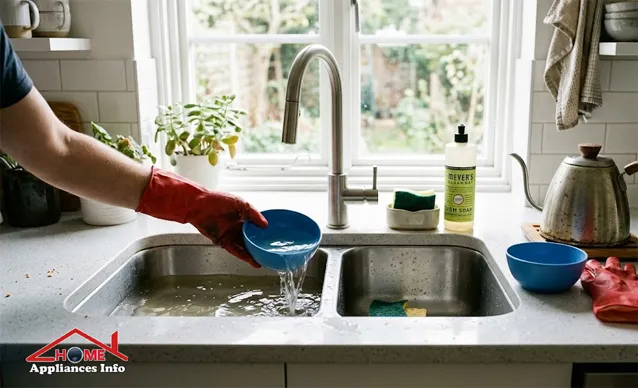
- Remove as much standing water as possible with a cup or bowl.
- Boil a kettle or large pot of water.
- Pour the boiling water slowly into the drain in two or three stages.
- Wait five minutes.
- Run hot tap water for 30 seconds.
- Repeat up to three times if the drain improves.
I’ve noticed this works best for newer clogs where the sink drains slowly but is not completely blocked. If water is not moving at all, boiling water may simply sit in the basin.
When not to use boiling water
Be careful with older PVC pipes, porcelain sinks, or drains that have recently had chemical products poured into them. Very hot water can stress some materials. If you are unsure, use very hot tap water mixed with dish soap instead.
A mix of dish soap and hot water is especially useful for greasy buildup. Dish soap helps break down oils, while hot water helps move the softened grease through the pipe.
2. Use a Cup Plunger to Loosen Food Clogs
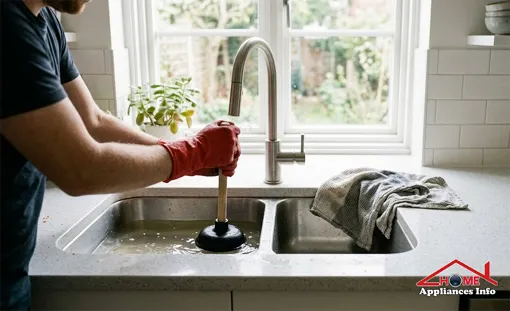
A plunger is one of the most effective tools for learning how to unclog a kitchen sink drain because it uses pressure instead of chemicals. For kitchen sinks, use a cup plunger with a flat bottom. Toilet plungers have a flange and are shaped differently.
In my experience, plunging works best for food scraps, soft blockages, and clogs sitting near the top of the drain line.
How to plunge a kitchen sink
- Add 3–4 inches of water to the sink if it is not already full.
- Place the plunger directly over the drain.
- If you have a double sink, seal the other drain with a wet rag.
- Push down firmly to create a seal.
- Plunge with sharp, controlled strokes for 20–30 seconds.
- Lift the plunger and check whether water drains.
- Repeat two or three times.
The seal matters more than strength. If air escapes around the plunger, you lose pressure. I like to tilt the plunger slightly at first to release trapped air, then press it flat over the drain.
Avoid this mistake
Do not plunge if you recently used chemical drain cleaners. Splashback can burn your skin or eyes. According to Poison Control, many drain products can cause serious injuries if mishandled, especially when mixed or splashed.
3. Use Baking Soda and Vinegar for Organic Buildup
Baking soda and vinegar will not dissolve a heavy clog like a commercial acid product. But it can help loosen mild organic buildup, deodorize the drain, and clear grime around the pipe walls.
Most plumbing pros agree that baking soda and vinegar are safer than harsh chemicals, but they are not magic. Think of this method as a gentle cleaner, not a cure-all.
How to use baking soda and vinegar
- Remove standing water from the sink.
- Pour ½ cup baking soda into the drain.
- Follow with ½ cup white vinegar.
- Cover the drain with a cloth or stopper.
- Wait 15–30 minutes.
- Flush with hot water.
You will see fizzing. That reaction can help disturb residue in the drain opening and upper pipe. If the clog is deep or compacted, move on to a plunger, drain snake, or P-trap cleaning.
This method is also helpful for light odor control. I often use it after clearing a clog, especially when the sink smells sour from trapped food.
4. How to Unclog a Kitchen Sink with Standing Water
Knowing how to unclog a kitchen sink with standing water requires a slightly different process. You cannot treat the drain effectively if the sink is full. You also do not want dirty water splashing around the kitchen.
Step one: remove the water
Use a cup, bowl, or small container to scoop water into a bucket. Then soak up the remaining water with a sponge or towel.
Do not pour that dirty water into another sink if you suspect a wider plumbing problem. Use a toilet only if it is draining normally.
Step two: choose the right method
Once the sink is mostly empty, try this order:
- For grease: use dish soap and hot water.
- For food clogs: use a cup plunger.
- For deeper clogs: use a drain snake.
- For stubborn clogs: clean the P-trap assembly.
If you are dealing with standing water and a garbage disposal, turn off power to the disposal before doing anything else. More on that below.
What I avoid with standing water
I avoid chemical drain cleaners in a full sink. They can sit in the basin, create fumes, damage surfaces, and become dangerous if you later try plunging.
Standing water usually means the blockage is fairly solid. Mechanical pressure or physical removal is often more effective.
Quick Comparison Table: Best DIY Sink Unclogging Methods
| Method | Best For | Tools Needed | Risk Level | My Practical Note |
|---|---|---|---|---|
| Boiling water | Grease clogs | Kettle or pot | Low | Best for slow drains, not full blockages |
| Plunger | Food mass clogs | Cup plunger, rag | Medium | Seal the second drain on double sinks |
| Baking soda + vinegar | Odor and light organic buildup | Baking soda, vinegar | Low | Better for maintenance than major clogs |
| Standing water fix | Full sink basin | Bucket, sponge, gloves | Medium | Remove water before treating the clog |
| Garbage disposal reset | Disposal jams | Tongs, Allen wrench | Medium | Always shut off power first |
| P-trap cleaning | Deep or visible clogs | Bucket, pliers, towels | Higher | Messy but very effective |
5. How to Unclog a Kitchen Sink with a Garbage Disposal
If you need to know how to unclog a kitchen sink with a garbage disposal, slow down and treat it as both a plumbing issue and an electrical safety issue.
Garbage disposals commonly jam when fibrous foods, coffee grounds, eggshells, pasta, rice, or small utensils get lodged inside. I’ve pulled out bottle caps, twist ties, and even a broken measuring spoon from disposal drains.
Safety first
Before troubleshooting:
- Turn off the wall switch.
- Unplug the disposal if possible.
- If it is hardwired, turn off the breaker.
- Never place your hand inside the disposal.
Use tongs or needle-nose pliers to remove visible debris.
Reset the disposal
Most disposals have a small red reset button on the bottom. If the unit overheated or jammed, press the button after power is off and debris is removed.
Then restore power and briefly test it with cold water running.
Rotate the blades manually
Many garbage disposals include a hex-shaped opening underneath. Insert the correct Allen wrench and rotate it back and forth. This can free jammed impellers.
For manufacturer safety basics, InSinkErator provides helpful support information about garbage disposal operation at https://insinkerator.emerson.com
Flush the drain
Once the disposal spins freely:
- Run cold water.
- Turn on the disposal.
- Let it run for 10–15 seconds.
- Flush with more water.
Use cold water when grinding food because it helps keep fats solid long enough to be chopped and flushed away. Hot water can melt grease, sending it farther down the pipe where it may harden again.
This is similar to appliance care habits I recommend for related household problems, including Whirlpool Washer F05 Error Code troubleshooting. With machines, the safest first step is often power off, inspect, reset, and test.
6. Clean the P-Trap Assembly
The P-trap is the curved U-shaped pipe under your sink. It holds a small amount of water to block sewer gases from entering your home. It also catches debris.
If plunging and hot water do not work, cleaning the p-trap assembly is often the next best move.
What you need
- Bucket
- Towels
- Rubber gloves
- Slip-joint pliers
- Old toothbrush or bottle brush
How to clean the P-trap
- Place a bucket under the curved pipe.
- Put towels around the cabinet floor.
- Loosen the slip nuts by hand or with pliers.
- Carefully remove the trap.
- Empty water and debris into the bucket.
- Scrub the inside of the trap.
- Check the pipe leading into the wall.
- Reassemble the trap.
- Run water and check for leaks.
This method is messy, but it works. I’ve seen P-traps packed with onion skins, rice, grease, and even small plastic wrappers. Once removed, the sink often drains instantly.
When to use a drain snake
If the P-trap is clear but the drain still backs up, the clog may be farther down the wall pipe. That is when a drain snake can help.
Feed the snake slowly into the drain line. Rotate the handle as you push. When you feel resistance, keep turning to break up or hook the clog. Pull it out carefully and flush the line with hot water.
For a general overview of snaking basics, Family Handyman has a practical guide on using a drain snake at https://www.familyhandyman.com/project/how-to-snake-a-drain/.
If the snake keeps hitting a hard blockage or comes back with sewage-like material, stop and call a plumber.
What Causes Kitchen Sink Clogs?
Most kitchen clogs are not random. They build over time.
Common causes include:
- Grease and cooking oil
- Coffee grounds
- Rice and pasta
- Eggshells
- Potato peels
- Fibrous vegetables
- Soap residue
- Small food scraps
- Foreign objects
Rice and pasta are especially frustrating because they expand with water. Coffee grounds clump together. Grease acts like glue.
Most studies and plumbing guidance agree on one prevention rule: keep fats, oils, and grease out of drains. Wipe pans with a paper towel before washing. Put cooled grease in the trash.
How to Prevent a Clogged Kitchen Sink
Once you clear the drain, prevention is easier than repeating the repair next week.
Here is what I recommend:
- Use a sink strainer every day.
- Scrape plates into the trash before rinsing.
- Never pour grease down the drain.
- Flush the drain weekly with hot tap water.
- Use dish soap and hot water after greasy dishwashing.
- Run the garbage disposal with cold water.
- Keep water running 10–15 seconds after using the disposal.
- Avoid dumping coffee grounds into the sink.
For cleaning routines across the kitchen, I also like pairing drain maintenance with tasks such as How to Clean a Burnt Pizza Pan Without Scrubbing. Less burnt-on food in the sink means fewer scraps heading toward the drain.
When to Call a Plumber
DIY methods are useful, but they have limits.
Call a plumber if:
- Multiple fixtures are clogged.
- Water backs up into another drain.
- You smell sewage.
- The clog keeps returning.
- The sink leaks under the cabinet.
- The drain snake does not reach or clear the blockage.
- You hear gurgling from nearby drains.
- You suspect a main sewer line issue.
A one-time kitchen clog is usually manageable. A repeated clog means something deeper is happening.To strengthen semantic indexing and help search engines understand the article, I’d align this page
FAQs About How to Unclog a Kitchen Sink
1. What is the fastest way to unclog a kitchen sink?
The fastest method depends on the clog. For grease, try dish soap and hot water. For food clogs, use a cup plunger. If that fails, clean the P-trap or use a drain snake.
2. How do I unclog a kitchen sink with standing water?
First, scoop the standing water into a bucket. Then try plunging, dish soap with hot water, or a drain snake. Avoid chemical drain cleaners because they can splash, sit in the basin, and create safety risks.
3. Can baking soda and vinegar damage pipes?
Baking soda and vinegar are generally safe for most household drains when used occasionally. They are best for light buildup and odors, not severe blockages.
4. Why does my kitchen sink keep clogging?
Recurring clogs usually mean grease, food scraps, or buildup remain inside the drain line. It may also mean the clog is farther down than the P-trap. A plumber can inspect the line if the problem keeps coming back.
5. Should I use boiling water if I have PVC pipes?
Use caution. Boiling water can stress some older PVC plumbing if used repeatedly. Very hot tap water with dish soap may be safer. If you are unsure about your plumbing, start with plunging or P-trap cleaning.
6. Can a washing machine issue affect kitchen drainage?
Usually, no. But if several drains clog at the same time, you may have a shared line or main drain issue. Related maintenance topics like Clean Washing Machine with Vinegar and Baking Soda and Whirlpool Washer F05 Error Code can help you spot appliance drainage symptoms separately.
Conclusion: Start Simple, Then Go Deeper
Learning how to unclog a kitchen sink is mostly about patience and order. Start with the safest methods: remove standing water, try hot water, use a plunger, and clean with baking soda and vinegar. If the clog remains, move to the garbage disposal, P-trap assembly, or drain snake.
In my experience, most kitchen sink clogs come from grease and food buildup. The fix is often simple, but prevention matters more. Use a strainer. Keep grease out of the drain. Run water long enough after using the disposal.
If the clog spreads to multiple fixtures or keeps coming back, bring in a professional. A clear kitchen sink is satisfying. A safe repair is even better.
References
- Family Handyman: drain snake — https://www.familyhandyman.com/project/how-to-snake-a-drain/

🌐 FOUNDER & DIGITAL PUBLISHER
Muhammad Ali
Founder | SEO Strategist & E-E-A-T Digital Publishing Specialist

📈 SEO Strategy
🛠️ Appliance Optimization
🛡️ E-E-A-T Standards
Muhammad Ali is a digital publisher, SEO strategist, and founder of Home Appliances Info. He specializes in home appliance optimization, structured schema networks, and advanced E-E-A-T digital publishing standards to ensure accurate, trustworthy content across the platform.