


To support our research and detailed appliance reviews, we may earn a small commission from qualifying purchases made through our links, at no extra cost to you. As an Amazon Associate, I earn from qualifying purchases.
To support our research and detailed appliance reviews, we may earn a small commission from qualifying purchases made through our links, at no extra cost to you. As an Amazon Associate, I earn from qualifying purchases.
If you’ve been wondering how to clean washing machine with vinegar and baking soda, you’re not alone. I’ve had that moment too: you open the washer door expecting “fresh laundry” and instead get a sour, musty smell. It’s frustrating, especially when the machine that should clean your clothes starts smelling dirty itself. The fix, in my experience, is simple and surprisingly effective. When used the right way, distilled white vinegar and baking soda can break down buildup, remove odors, and help your washer run more efficiently—without relying on harsh cleaners.
I’ve tested this method on both top-load and front-load machines, including models from Whirlpool and Haier, and the key is not just tossing ingredients into the drum and hoping for the best. Order matters. Timing matters. And cleaning the hidden parts matters even more.
If you’re also comparing washer care habits before buying a new unit, our Washing Machine Buying Guide and Haier Washing Machines Reviews can help you spot which designs are easiest to maintain long term.
Why This Method Works Better Than Most “Quick Fixes”
A lot of people try to solve washer odor with one rushed rinse. I’ve done that myself. It rarely works for long because the smell usually isn’t coming from one spot. It comes from layers of detergent residue, trapped lint, standing moisture, mold, and mineral deposits.
Here’s why this method works:
1. Vinegar cuts through soap scum and hard-water residue
Distilled white vinegar is acidic. That matters because washing machines often collect alkaline buildup from detergent and fabric softener. Vinegar helps dissolve:
- Soap scum
- Mineral deposits
- Detergent film
- Light mold residue
When I run a hot water cycle with vinegar first, I usually notice the drum already smells cleaner by the end.
2. Baking soda neutralizes odors and lifts loosened grime
Baking soda—also called bicarbonate of soda in some regions—is mildly abrasive and excellent at absorbing odors. After the vinegar cycle loosens residue, baking soda helps scrub and deodorize what’s left.
3. It’s affordable and low-toxicity
Compared with specialty cleaners, this method is cheap, easy to repeat monthly, and gentler for households trying to reduce exposure to strong chemicals. Consumer guidance from organizations like the U.S. Environmental Protection Agency has long encouraged safer household cleaning choices where practical.
The Right Order: Never Use Vinegar and Baking Soda in the Same Cycle
This is where many guides get sloppy. They tell you to mix everything together. I don’t recommend that.
When vinegar and baking soda combine immediately, they fizz. That reaction looks satisfying, but it also neutralizes much of what makes each ingredient useful. In plain terms: they work best one after the other, not all at once.
So if you want the best answer to how to clean washing machine with vinegar and baking soda, remember this:
- Run vinegar first
- Run baking soda second
- Clean the gasket, tray, and filter separately
That sequence gives each ingredient room to do its job.
Step-by-Step: How I Deep Clean a Washer Naturally
Here’s the process I use at home and recommend most often.
1. Empty the machine completely
Remove all laundry. Check the washing machine drum for stray socks, lint, pet hair, or packaging debris. It sounds obvious, but even small items can trap grime and block water flow.
2. Check and clean the filter
Before any cycle, I inspect the filter. This is especially important if your washer smells swampy or drains slowly.
If you’re asking where is the filter on a whirlpool washing machine, the answer depends on the model. On many front-load Whirlpool washers, the filter is behind a small access panel at the bottom front of the machine. Some top-load models have a different design and may not have a user-cleanable pump filter in the same spot. Always verify in the user manual.
When I open the filter compartment, I usually place a towel underneath first. A little water often comes out.
Clean out:
- Lint
- Hair
- Coins
- Buttons
- Small debris
This step alone can make a major difference in both odor and drainage.
3. Run a vinegar cycle
Pour 2 cups of distilled white vinegar directly into the drum, not the detergent drawer unless your manufacturer specifically allows it.
Then run:
- The hottest setting available
- The longest cycle possible
- A sanitize or tub clean cycle if your washer has one
This first cycle helps dissolve soap scum, mildew film, and mineral deposits. In my experience, front-load machines benefit the most because they seal tightly and trap moisture more easily.
4. Run a baking soda cycle
Once the vinegar cycle is finished, sprinkle 1 cup of baking soda into the drum.
Then run another hot cycle.
This second wash helps neutralize lingering odor and loosen residue left behind after the vinegar pass. If the machine had a strong musty smell before, I sometimes repeat this step once more a week later.
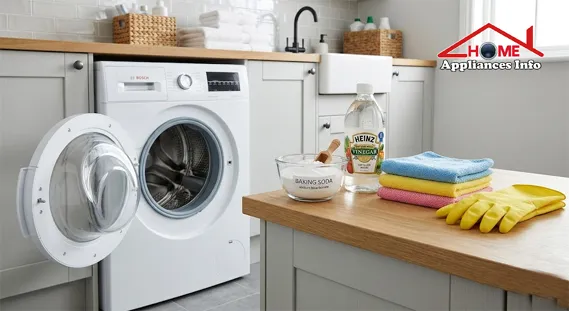
5. Clean the gasket and detergent drawer by hand
This is the part many people skip, and it’s often where the smell hides.
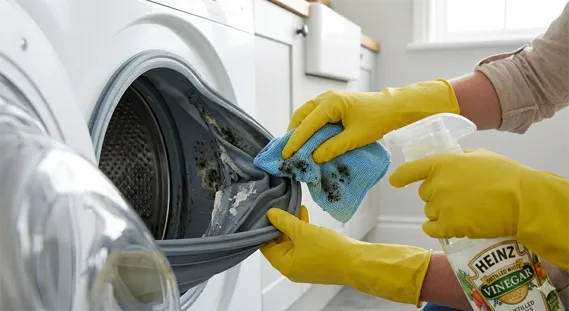
If you’re trying to learn how to clean front load washing machine gasket, here’s the simplest method I’ve found:
- Mix equal parts vinegar and water
- Dip a microfiber cloth into the solution
- Pull back the rubber seal gently
- Wipe all folds and creases thoroughly
- Use a soft toothbrush for stubborn spots
I almost always find hidden grime in the gasket folds: black specks, detergent slime, or damp lint. If left there, it keeps feeding odor and mold.
Now remove the detergent tray if your machine allows it. Soak it in warm water with a splash of vinegar, then scrub out softener residue and detergent crust.
6. Wipe the outside and let the washer dry
Finish by wiping:
- The door
- The control panel
- The rubber seal
- The lid or glass
- The exterior housing
Then leave the door open for a few hours. This may be the easiest long-term habit for anyone learning how to clean washing machine smell issues before they start.
Front-Load vs. Top-Load: What Changes?
The core method stays the same, but a few details shift.
| Washer Type | Main Trouble Spot | Best Cleaning Focus | Frequency |
|---|---|---|---|
| Front-load | Gasket, detergent drawer, filter | Seal folds, trapped moisture, mildew prevention | Monthly |
| Top-load | Drum wall, agitator area, residue under lid | Hot cycle cleaning, rim wipe-down | Every 1–2 months |
| High-efficiency (HE) | Low-water detergent buildup | Use less detergent, run hot maintenance cycle | Monthly |
Front-loaders are more efficient, but they’re also more likely to develop odors if you shut the door immediately after each wash. That’s one reason readers comparing designs often go from our Mijia Washer Dryer overview to maintenance articles like this one.
How to Clean Washing Machine Smell for Good
If the odor keeps coming back, the issue usually isn’t the drum alone. It’s the routine.
Here’s what has worked best for me over time when tackling how to clean washing machine smell problems:
Use less detergent than you think you need
Too much detergent leaves residue. High-efficiency washers need even less than many people assume.
Don’t leave wet clothes sitting overnight
That damp load creates a mini humidity chamber. Odor develops fast.
Leave the door and drawer cracked open
Airflow matters. A dry washer is a less smelly washer.
Run a monthly maintenance cycle
A monthly vinegar cycle followed by baking soda helps stop buildup before it becomes obvious.
Wash pet bedding and heavily soiled loads separately
These loads dump more hair, oils, and dirt into the system. I clean the filter soon after.
Common Mistakes I See All the Time
Mixing vinegar and bleach
Never do this. It can create harmful chlorine gas. If bleach was used recently, run an empty rinse cycle first.
Using vinegar too often on every tiny mess
Most experts suggest moderation. Monthly use is usually enough for routine care unless your machine has severe buildup.
Forgetting the rubber gasket
Again, if you own a front-loader, this is often the heart of the smell.
Ignoring the manual
Manufacturer advice matters. Some brands have special recommendations for self-clean cycles, detergent tray care, or filter access. Whirlpool, LG, Samsung, and Bosch all have model-specific guidance.
For official care recommendations, I often cross-check with Whirlpool washer product help, The Spruce cleaning guide, and Martha Stewart cleaning advice. Those references are useful for model-specific or housekeeping best practices.
A Simple Monthly Washer Cleaning Routine
If you want to keep things easy, this is the schedule I recommend:
Once a month
- Run a hot vinegar cycle
- Run a baking soda cycle
- Wipe the gasket
- Rinse the detergent drawer
- Check the filter
Once a week
- Leave the door open after use
- Wipe visible moisture from the seal
- Remove leftover detergent drips
Every few months
- Inspect hoses
- Check for drain issues
- Review your detergent amount
This same “little and often” approach works in other home care areas too. It’s similar to the maintenance mindset we use in Carpet Shampoo Secrets—small preventive habits save you from major deep cleaning later.
Fresh Insight for 2026: Why Natural Cleaning Is Getting More Attention
In the last few years, I’ve noticed a stronger shift toward low-toxicity home care. Appliance experts and consumer safety voices increasingly emphasize simple maintenance over harsh chemical overload. The general consensus is clear: regular cleaning extends appliance life, supports energy efficiency, and reduces the chance that residue will interfere with washing performance.
Most studies and household care experts agree on a few points:
- Buildup reduces cleaning efficiency
- Moisture plus residue creates odor
- Regular maintenance helps machines last longer
- Simple cleaners can work well when used correctly
That doesn’t mean vinegar and baking soda solve every mechanical issue. If your washer leaks, makes grinding noises, or still smells after repeated cleaning, the problem could be a clogged drain line, failing pump, or mold growth beyond reachable surfaces.
FAQs
1. How often should I clean my washing machine with vinegar and baking soda?
I recommend once a month for most households. If you wash heavily soiled loads, pet bedding, or sports gear often, you may need more frequent filter and gasket checks.
2. Can I mix vinegar and baking soda together in the drum?
No. For the best result, use them separately. Vinegar first, then baking soda in a second cycle.
3. How do I handle a front-loader that still smells after cleaning?
Focus on how to clean front load washing machine gasket, the detergent drawer, and the filter. Persistent odor usually means hidden residue is still trapped in those areas.
4. Where is the filter on a Whirlpool washing machine?
If you’re asking where is the filter on a whirlpool washing machine, it’s often behind a lower front access panel on many front-load models. Check your exact manual because placement varies by design.
5. What’s the best way to solve how to clean washing machine smell issues fast?
Run a hot vinegar cycle, follow with baking soda, clean the gasket and tray manually, then leave the door open to dry. That’s the most reliable fast reset I’ve used.
6. Can I use this method on a washer-dryer combo?
Usually yes, but check the manufacturer instructions first. Combo units can have extra moisture retention points, so drying the seal and door area matters even more. If you own or are considering one, our Mijia Washer Dryer guide may help you compare care needs.
Conclusion
Learning how to clean washing machine with vinegar and baking soda is less about a trendy hack and more about doing the steps in the right order. Use vinegar first to break down residue. Follow with baking soda to scrub and deodorize the drum completely. By breaking the deep clean down into separate, purposeful cycles and maintaining the hidden filters and gaskets, you prevent mold and mineral scale from taking hold in the first place.
Taking ten minutes a month to run these natural cycles doesn’t just eliminate odors—it protects your appliance investment, keeps your clothes smelling genuinely fresh, and ensures your washing machine runs efficiently for years to come.

🌐 FOUNDER & DIGITAL PUBLISHER
Muhammad Ali
Founder | SEO Strategist & E-E-A-T Digital Publishing Specialist

📈 SEO Strategy
🛠️ Appliance Optimization
🛡️ E-E-A-T Standards
Muhammad Ali is a digital publisher, SEO strategist, and founder of Home Appliances Info. He specializes in home appliance optimization, structured schema networks, and advanced E-E-A-T digital publishing standards to ensure accurate, trustworthy content across the platform.
3 Comments
Pingback: Whirlpool Washer F05 Error Code Troubleshooting: Sensor & Drain Fix
Pingback: How to Unclog a Kitchen Sink: 6 Easy DIY Methods
Pingback: How to Clean Refrigerator Coils: Easy Step-by-Step Expert Guide