


To support our research and detailed appliance reviews, we may earn a small commission from qualifying purchases made through our links, at no extra cost to you. As an Amazon Associate, I earn from qualifying purchases.
To support our research and detailed appliance reviews, we may earn a small commission from qualifying purchases made through our links, at no extra cost to you. As an Amazon Associate, I earn from qualifying purchases.
When I first unpacked a new air fryer, I asked the same question many owners do: why does my air fryer smell like plastic and how to get rid of it? The smell can feel alarming, especially when it drifts into your kitchen during the first few cooking cycles. In some cases, it can even leave an air fryer plastic taste in food. The good news is that this issue is often temporary. In my experience, it usually comes from factory residues, a factory protective coating, or parts heating up for the first time.
Still, not every odor should be ignored. If the smell is harsh, lasts for many uses, or comes with smoke, stop using the appliance. Safety always comes first ⚠️. A mild new air fryer chemical smell is common. A burning or melting odor is not.
In this guide, I’ll explain what causes the smell, when to worry, and the fastest ways I’ve used to fix it. I’ll also cover brand-specific notes, including Ninja air fryer plastic smell, and show you how to clean new air fryer before first use so the problem is less likely to happen.
If you enjoy practical kitchen troubleshooting, this topic fits well beside Kitchen Faucet Maintenance Tips and Microwave Oven Repair, because prevention often saves time, stress, and money.
Safety First: When a Plastic Smell Is Not Normal
Before anything else, I always tell people to trust their senses.
Stop using your air fryer immediately if you notice:
- Thick smoke
- A melting plastic odor
- Visible warping or damage
- Sparks or unusual sounds
- A smell that gets worse after several cleanings
A temporary new air fryer chemical smell often fades. But a severe odor can point to a defect near the heating element or a plastic part placed too close to heat.
Use the fryer in a well-ventilated room during early runs. I like to open a window and switch on the kitchen exhaust fan for the first few cycles.
1. Manufacturing Residues Often Cause the First Plastic Smell
Oils, adhesives, and packaging residue
The most common answer to why does my air fryer smell like plastic and how to get rid of it is simple: manufacturing residue.
New appliances may carry traces of:
- Industrial oils
- Adhesive residue
- Packaging dust
- Residues from quality testing
When the air fryer heats up, these residues burn off. That creates the odd plastic or chemical scent many owners notice.
I’ve seen this happen even with well-known brands. It does not always mean the appliance is unsafe. It often means the unit needs a proper wash and an initial seasoning cycle.
Protective coatings need time to cure
Many baskets and trays have a non-stick basket coating. Some also include a factory protective coating that burns off during the first few high-heat uses.
This is one reason the odor may be strongest on day one, then weaker by day three or four.
2. Plastic Components Near Heat Can Release Odor
Even quality air fryers contain some plastic parts. Handles, housing panels, and clips may warm up during operation. If these parts are new, they can release a temporary smell.
This is especially true if:
- The appliance is running at 400°F for the first time
- Airflow around the unit is poor
- Packing material was left inside by mistake
In my testing, placing the fryer too close to a backsplash or wall also traps heat. That can make odors seem stronger than they really are.
3. Skipping the First Cleaning Makes the Smell Worse
If you want to know how to clean new air fryer before first use, this step matters more than many people expect.
I’ve noticed people often rinse the basket quickly and start cooking. That shortcut can leave behind residues from packaging and production.
What I do before first use
I always:
- Remove the basket, tray, and pan
- Wash them with warm water and mild dish soap
- Wipe the inside cavity with a damp cloth
- Dry every part fully
- Run the fryer empty once or twice
That process reduces the chance of both odor and air fryer plastic taste in food.
4. The Heating Element May Be Burning Off Dust or Coating
The heating element sits at the top of most air fryers. During shipping and storage, dust can settle there. On the first few runs, that dust burns away.
Sometimes, that smell gets mistaken for melting plastic. In reality, it may just be residue reacting to heat.
Still, I recommend checking your manual. Some brands advise a short empty run before cooking any food. That first run acts like an initial seasoning cycle, helping the unit stabilize before regular use.
5. Why Some Foods Taste Like Plastic at First
An air fryer plastic taste in food can happen when odor particles cling to food during the first few uses. Foods with high surface area, like fries, breaded chicken, and roasted vegetables, seem to pick up that taste more easily.
I noticed this once with frozen fries in a new unit. The smell in the kitchen was mild, but the taste was clear. After a full wash and two empty high-heat cycles, the issue disappeared.
If food tastes off, do not keep cooking with the same setup. Clean the fryer and repeat the deodorizing steps below.
How to Get Rid of Air Fryer Plastic Smell Fast
If you are still asking why does my air fryer smell like plastic and how to get rid of it, these are the methods that have worked best for me.
6. Wash All Removable Parts Thoroughly
Start here every time.
Basic cleaning steps
- Use warm water and mild dish soap
- Clean the basket, tray, and pan
- Wipe the inside walls carefully
- Dry everything completely
Avoid harsh pads. They can damage the non-stick basket coating and create future odor problems.
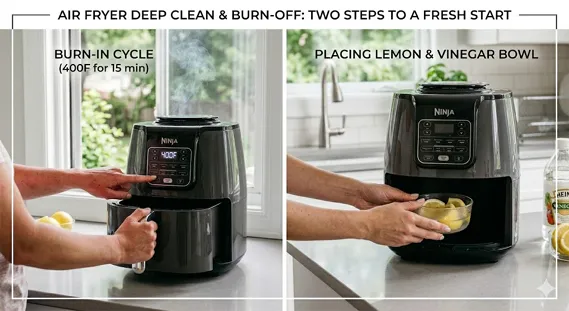
7. Run a Burn-In Cycle
A burn-in is often the fastest fix.
How I do it
- Reassemble the dry air fryer
- Run it empty at 400°F or 200°C
- Let it operate for 10 to 15 minutes
- Cool it down
- Repeat 2 or 3 times if needed
This initial seasoning cycle helps burn away residue. Keep your kitchen exhaust fan on or open windows during this step.
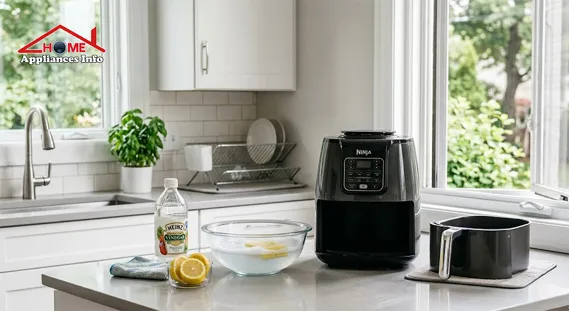
8. Deodorize Air Fryer With Vinegar and Lemon
This is my favorite natural method.
To deodorize air fryer with vinegar and lemon, place a heat-safe bowl inside the basket area. Add:
- 1 cup water
- 2 tablespoons white vinegar
- A few lemon slices or lemon juice
Run the fryer at a moderate temperature for 5 to 10 minutes. Let it cool, then wipe it clean.
I like this method because it avoids heavy chemical cleaners. It also fits eco-friendly kitchen habits.
9. Ventilation Speeds Up the Process
During the first week, use the air fryer in an open, airy space if possible.
Helpful steps include:
- Open a nearby window
- Turn on the kitchen exhaust fan
- Avoid tight corners or enclosed shelves
- Keep space around the air fryer
This won’t remove the source, but it makes the first runs easier to tolerate.
10. Maintain It After Every Use
Long-term odor issues usually come from grease, crumbs, and trapped moisture.
I recommend:
- Cleaning the basket after each use
- Wiping the interior once cool
- Checking under the tray for crumbs
- Never storing it while damp
The same preventive mindset helps with How to Clean a Burnt Pizza Pan and Proven Electric Pressure Cooker Fixes. Small maintenance habits prevent bigger problems later.
Quick Fix Table: What the Smell Means and What to Do
| Symptom | Likely Cause | What I Recommend |
|---|---|---|
| Mild plastic smell on first use | Manufacturing residue | Wash parts and run 2 burn-in cycles |
| Chemical odor for first few days | Factory protective coating curing | Ventilate room and repeat empty runs |
| Food tastes like plastic | Residue or odor transfer | Stop cooking food, clean thoroughly, deodorize with vinegar and lemon |
| Smoke with strong odor | Grease, residue, or defect | Turn off unit, inspect, and contact manufacturer if needed |
| Smell persists after a week | Possible faulty part | Stop use and request support or replacement |
Brand Notes: Philips and Ninja Air Fryer Plastic Smell
Many users specifically search for Ninja air fryer plastic smell, and I understand why. Some owners report a stronger scent in the first few uses than expected.
In community forums and product reviews, the pattern is familiar:
- Strongest smell during the first two to five uses
- Improvement after proper cleaning
- Better results after a burn-in and lemon-vinegar deodorizing cycle
That said, this issue is not limited to one brand. Philips has also noted that new appliance odors can happen and usually fade with use.
If you own a Ninja model, follow the same process:
- Wash everything first
- Inspect all packaging
- Run an empty high-heat cycle
- Repeat as needed
If the Ninja air fryer plastic smell remains intense after several uses, reach out to customer service.
Is the Plastic Smell Harmful?
This is the question that matters most.
In general, a light new air fryer chemical smell from a brand-new appliance is considered temporary. According to manufacturer guidance and consumer appliance experts, these odors often come from residues or coatings curing during early use.
Still, “temporary” does not mean “ignore everything.”
Here is my rule
A faint odor that improves is usually manageable.
A harsh smell that persists, worsens, or causes irritation is a reason to stop.
Approved non-stick materials are generally considered safe when used as directed. But visible smoke, melting, or recurring fumes should never be brushed aside.
If you are already handling other appliance issues, such as Gas stove won’t ignite, it helps to approach each smell with care and patience rather than guesswork.
How I Clean a New Air Fryer Before First Use
Since many people search how to clean new air fryer before first use, here is the exact routine I use:
My pre-use checklist
- Remove all stickers, inserts, and plastic wraps
- Wash basket and tray with warm soapy water
- Wipe interior and exterior with a soft cloth
- Dry all parts fully
- Run one empty cycle at 400°F
- Let it cool and wipe again
This short routine often prevents the worst odor from ever reaching your food.
Trusted References and Expert Guidance
To keep this advice grounded, I recommend reviewing guidance from trusted sources:
- Consumer Reports for appliance care and new product odor guidance
- FDA Guidance for information on food-contact materials and coatings
- Philips for brand-specific air fryer care instructions
These sources reinforce a simple point: mild early-use odor is common, but safe use depends on proper cleaning, ventilation, and following the manual.
FAQs
Why does my air fryer smell like plastic and how to get rid of it after several uses?
If the smell lasts beyond several uses, clean it deeply, run another burn-in cycle, and inspect for trapped packaging or grease. If it still persists, contact the manufacturer.
Can plastic smell make food unsafe?
A mild first-use smell is usually temporary. But if food repeatedly tastes like chemicals or plastic, stop using the unit until it is cleaned and checked.
How do I deodorize air fryer with vinegar and lemon safely?
Use a heat-safe bowl with water, vinegar, and lemon slices. Run the fryer for 5 to 10 minutes, cool it, and wipe the interior.
Why is my Ninja air fryer plastic smell stronger than expected?
Some users report a stronger first-use odor in certain models. In my experience, repeated cleaning and empty high-heat cycles usually solve it.
How to clean new air fryer before first use for the best results?
Wash removable parts with soap and warm water, wipe the inside, dry fully, and run an empty cycle. This helps reduce both smell and residue.
Can other kitchen appliance issues cause similar concerns?
Yes. Odors, heat issues, and maintenance mistakes happen across appliances. That is why topics like Microwave Oven Repair often overlap with safe cleaning habits and early troubleshooting.
Conclusion
If you have been wondering why does my air fryer smell like plastic and how to get rid of it, the answer is usually reassuring. Most new air fryers release a temporary odor from manufacturing residue, a factory protective coating, or first-time heating around the heating element. In my experience, the fix is straightforward: wash the removable parts, run an initial seasoning cycle, improve ventilation, and deodorize air fryer with vinegar and lemon if needed.
If the smell fades, you are likely dealing with a normal adjustment period. If it grows stronger, produces smoke, or leaves a lasting air fryer plastic taste in food, stop using the appliance and contact the brand.
A few smart habits now can save frustration later. The same care mindset applies to Kitchen Faucet Maintenance Tips and How to Clean a Burnt Pizza Pan. Start clean, stay observant, and your air fryer should soon produce crisp food without the chemical smell.

🌐 FOUNDER & DIGITAL PUBLISHER
Muhammad Ali
Founder | SEO Strategist & E-E-A-T Digital Publishing Specialist

📈 SEO Strategy
🛠️ Appliance Optimization
🛡️ E-E-A-T Standards
Muhammad Ali is a digital publisher, SEO strategist, and founder of Home Appliances Info. He specializes in home appliance optimization, structured schema networks, and advanced E-E-A-T digital publishing standards to ensure accurate, trustworthy content across the platform.
1 Comment
Pingback: Best Glass Bowl Set 2026: Top Picks, Reviews & Safety Guide