

To support our research and detailed appliance reviews, we may earn a small commission from qualifying purchases made through our links, at no extra cost to you. As an Amazon Associate, I earn from qualifying purchases.
To support our research and detailed appliance reviews, we may earn a small commission from qualifying purchases made through our links, at no extra cost to you. As an Amazon Associate, I earn from qualifying purchases.
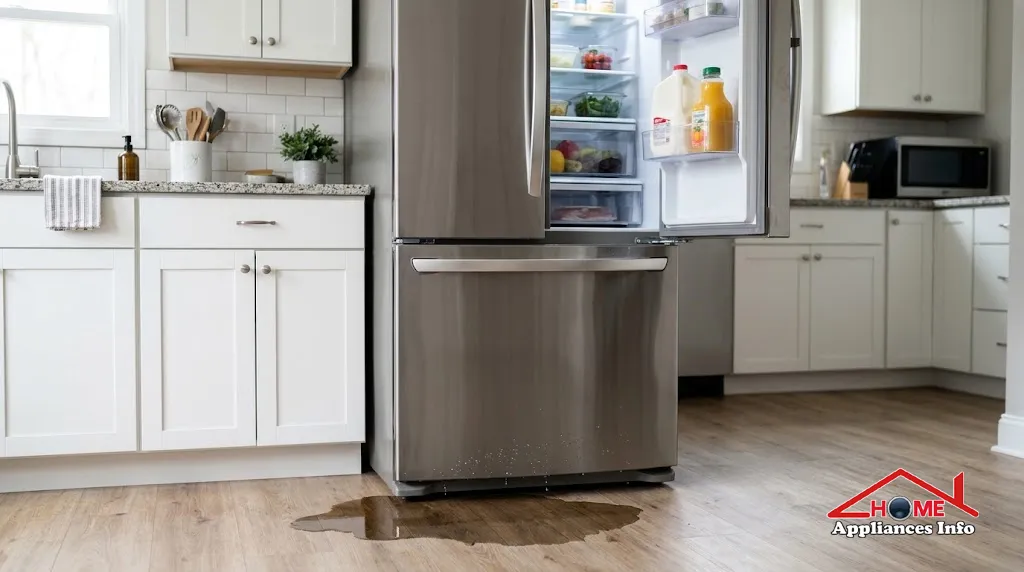
Why is my fridge leaking water? Most often it’s a frozen or clogged defrost drain. Less often it’s a loose water line, a worn door seal, or a misplaced drain pan. The confusing part is that the puddle on your kitchen floor usually isn’t where the problem started. The water may have come from the back of the freezer, from behind a crisper drawer, or from a filter connection near the water dispenser.
This guide helps you find the source of the leak before you try to repair anything. It covers how a refrigerator normally handles water, the seven most common causes, what to check depending on where the water appears, and the point at which a technician is the safer choice.
How a Refrigerator Normally Handles Water
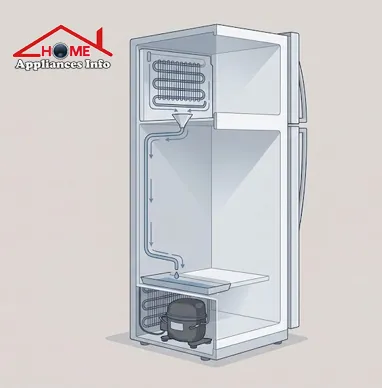
Most frost-free refrigerators produce water on purpose. The evaporator, the component that absorbs heat from inside the cabinet, collects frost as it cools. A defrost cycle periodically warms it, and the frost melts. The meltwater runs into a trough, through a drain opening and a drain tube, and into a pan near the compressor, where heat from the compressor and surrounding parts evaporates it.
Condensers are often confused with evaporators, but they do different jobs. The evaporator absorbs heat inside the refrigeration system, and the condenser releases it. Condenser problems generally show up as weak cooling, not water on the floor.
If any link in the drain path fails, whether the opening, the tube, or the pan, water ends up somewhere it shouldn’t. Layouts vary by model, so treat the description above as the typical arrangement and check your owner’s manual for where your own drain and pan sit.
Seven Common Causes of Refrigerator Water Leakage
1. A clogged or frozen defrost drain
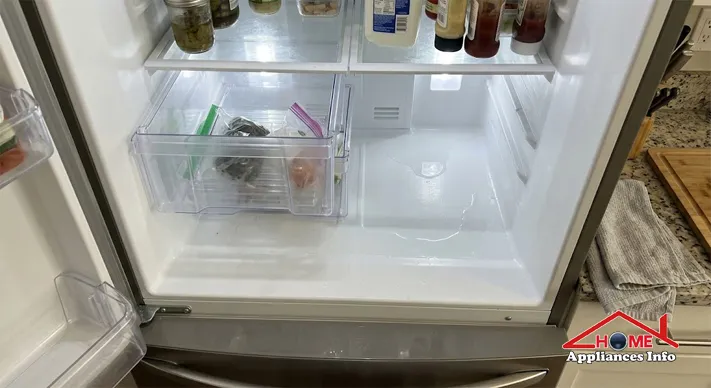
This is the leading suspect. Food particles, debris, or ice can block the drain opening, so meltwater has nowhere to go. It pools in the freezer, spills into the fresh-food compartment, and shows up as water underneath the crisper drawers or, eventually, on the floor. Whirlpool’s own guidance notes that the drain hole is usually at the bottom-back of the freezer and that a blocked tube can send water puddling inside the cabinet.
What to do: Find the drain using your manual, clear any visible debris with the cleaning method the manufacturer recommends, and keep stored items from covering the opening. Persistent ice blockages call for professional inspection.
2. A loose or damaged water supply line
Fridges with an ice maker or water dispenser connect to the home water supply. A loose fitting, a cracked tube, or a damaged connection can leak continuously, often at the back of the unit. Whirlpool’s guide also points out that tubing can develop an ice blockage, which looks like a translucent clog.
What to do: Turn off the water supply before inspecting accessible connections, and replace damaged tubing or fittings. A leak from a connection you can’t reach safely belongs with a technician.
3. A damaged or dirty door seal
A worn or dirty gasket stops the door from closing fully. Warm, humid air gets in, and the extra moisture condenses or freezes, which later melts and adds to the water load on the drain. The U.S. Department of Energy’s consumer guidance has long advised checking that refrigerator door seals are airtight, mainly for efficiency, but a poor seal also feeds frost and condensation.
What to do: Wipe the gasket with mild soapy water, dry it, and look for gaps, cracks, or flattened sections. Replace it if it’s damaged. Don’t pour very hot water over a gasket, which can damage the rubber.
4. A cracked, overflowing, or misplaced drain pan
The drain pan catches defrost water so it can evaporate. If it’s cracked, out of position, or overfilled because humid air is creating extra frost, water can slip past the edge. Whirlpool also notes that an unlevel fridge can cause leaks from the bottom when too much water collects at the front of the pan.
What to do: If your model gives access to the pan, check that it sits correctly and isn’t cracked, and confirm the refrigerator is level using the leveling feet described in your manual. Not every pan is meant to be removed by the owner, so don’t force one out.
5. Excess condensation inside the cabinet
Moisture has to come from somewhere. Frequent door openings, hot food placed straight inside, uncovered liquids, and humid kitchens all add water vapor. When the moisture outpaces the drainage system, droplets and puddles form on shelves and walls.
What to do: Let hot food cool safely before refrigerating it, cover containers, and limit the time the door stays open. It’s also worth confirming the door closes fully.
6. A poorly installed filter or faulty inlet valve
A filter that isn’t seated properly, a cracked filter housing, or a failing water inlet valve can leak inside or behind the unit. If you’ve changed the filter recently, start there. Our refrigerator water filter replacement guide shows how the filter should sit and what compatibility to check.
What to do: Confirm the filter is the correct type and fully locked in, and inspect any connection you can reach. A faulty inlet valve or damaged housing usually needs replacement.
7. Defrost system or cooling-related faults
A failed defrost heater, defrost sensor, or control board can let ice build up far beyond the normal amount. When that heavy ice finally melts, the drain can’t keep up and water overflows. Not every cooling fault causes leaks, so the connection runs through excess frost and drainage, not cooling trouble itself.
What to do: Watch for unusual frost on the freezer back wall and temperature problems. Electrical defrost parts and sealed-system faults should be diagnosed by a qualified appliance technician.
Why Is My Fridge Leaking Water Inside?
Water inside the cabinet narrows the field quickly, because the water supply line and the drain pan are usually outside it. Here’s how to read what you see:
Water under the crisper drawers. A blocked or frozen defrost drain is the most common explanation. The meltwater has run through the freezer, down the back, and collected at the lowest point of the fresh-food side.
Droplets on the back wall. Some models show occasional condensation or small droplets, which can be normal. Heavy, constant dripping or a puddle that keeps returning needs investigation.
Water on the shelves. Spills and uncovered food are the simplest explanations. After ruling those out, consider excess condensation or a drainage problem above.
Water or ice in the freezer. Check for heavy frost, a defrost drainage problem, or, if there’s an ice maker, a leak from its water line or fill tube.
Fridge Leaking Water on the Floor: What Should You Check?
Start by working out whether the water is coming from the front, the rear, or underneath. That one distinction removes half the possibilities. Water at the front often traces back to a full drain pan or water spilling from inside past the bottom door seal. Water at the rear points toward supply connections or the drain tube. Water directly underneath could be either.
The usual sources of a fridge leaking water on the floor are:
- Water supply connections behind the refrigerator
- A damaged or overflowing drain pan
- A drain tube that has come loose
- A water inlet valve or filter housing
- A blocked defrost drain sending water out through the bottom of the cabinet
Pull the fridge forward carefully, if your flooring and water line allow it, and look behind and beneath it with a flashlight. Dry the area first. A fresh puddle is easier to trace than an old stain.
How to Fix a Leaking Refrigerator Safely
Work from the simplest, lowest-risk check to the most involved, and stop when the source is unclear.
| Step | What to do |
|---|---|
| 1 | Unplug the refrigerator if water is near electrical components or the power connection. |
| 2 | Turn off the water supply if there’s an ice maker or dispenser and a water-line leak is suspected. |
| 3 | Remove standing water and protect the surrounding floor. |
| 4 | Check the door gasket and make sure the door closes properly. |
| 5 | Inspect accessible drainage openings for visible blockages. |
| 6 | Check accessible water connections and the collection tray. |
| 7 | Contact a qualified technician if the source remains unclear or involves electrical or sealed cooling components. |
If water has reached the outlet, shut off power at the breaker instead of reaching for the plug.
A few cautions matter here, because some well-meaning advice online can do harm. Don’t push sharp needles, long metal wires, or other rigid objects deep into drain pipes, since they can puncture or kink the internal tubing. A mix of vinegar, baking soda, and detergent isn’t a universal drain cleaner either, and the manufacturer’s recommended cleaning method is the safer route. Whirlpool’s guide lists a turkey baster and pipe cleaners among the tools for the job, which are gentle by comparison, but check what your own manual allows.
The sealed refrigeration circuit, refrigerant, and electrical components are not home-repair territory.
Quick Troubleshooting Table
| Where you see water | Possible cause |
|---|---|
| Under crisper drawers | Blocked defrost drain |
| Inside the refrigerator compartment | Drainage or condensation problem |
| On the kitchen floor | Drain pan, water line, or drainage leak |
| Behind the refrigerator | Water supply connection or drain tube |
| Around the freezer compartment | Defrost or ice-maker problem |
| Near the water dispenser | Filter, housing, or water-line leak |
When to Call a Refrigerator Repair Technician
Basic checks resolve many leaks, but some situations are better handed off. Call a technician if:
- Water keeps leaking despite basic troubleshooting.
- The refrigerator is no longer cooling properly.
- Ice repeatedly builds up around the evaporator.
- The water inlet valve or internal water tubing is damaged.
- Electrical components have been exposed to water.
- The defrost heater, thermostat, sensor, or control board may be faulty.
- You suspect a refrigerant-system problem.
Whirlpool’s own advice is that if you aren’t familiar with how a refrigerator’s parts work, professional help is the better choice once troubleshooting fails.
If the unit is old and repairs are stacking up, it can help to compare the repair estimate against the price of a replacement. Our refrigerator buying guide covers what to weigh when choosing a new model.
Frequently Asked Questions
Why is my fridge leaking water from the bottom?
Water that reaches the bottom has usually traveled there. The common routes are a blocked defrost drain that spills past the door seal, a cracked or overfull drain pan, or a leaking water connection. An unlevel fridge can also push water out the front of the pan.
Why is my fridge leaking water inside but not outside?
When water stays inside, a blocked defrost drain or heavy condensation is the likelier explanation, because the supply line and drain pan sit outside the cabinet. Water collects under drawers or on shelves and may never find an exit.
Is it safe to use a refrigerator that is leaking water?
Minor condensation usually isn’t dangerous. Water near electrical components or the power connection is a different matter and creates a shock risk, so unplug the unit or switch off the breaker before dealing with it.
Can a blocked defrost drain cause water leakage?
Yes. Defrost water is meant to flow through the drain opening and tube to the pan. If that route is blocked, the meltwater backs up, refreezes or pools in the freezer, and eventually spills into the fridge compartment.
How do I stop my refrigerator from leaking water?
Locate the source first. Then clear accessible blockages using the manufacturer’s method, check the door seal, confirm the filter and connections are secure, and make sure the fridge is level. If the leak persists, have a technician inspect it.
Why does my refrigerator leak water even when the door is closed?
A closed door doesn’t stop the water that comes from inside the system. Drain problems, loose water connections, faulty valves, and defrost faults can all cause leaks regardless of how often you open the door.
Conclusion
Asking why is my fridge leaking water is really asking where the water begins. A blocked defrost drain explains most puddles under drawers, a failing connection explains many puddles behind the unit, and a worn gasket or humid air quietly adds to both. Identify where the water appears, work through the safe checks above, and avoid sharp tools or improvised drain cleaners. If the leak returns, the fridge stops cooling properly, or water is near electrical parts, a qualified technician is the sensible next step. Maintaining the appliance, including cleaning the condenser coils occasionally, also keeps the area around the drain pan clean.
References
- Whirlpool. “How to Fix a Refrigerator That Is Leaking Water.” https://www.whirlpool.com/blog/kitchen/refrigerator-leaking-water.html
- U.S. Department of Energy, Energy Efficiency and Renewable Energy (archived consumer tips page). “Refrigerators.” https://webarchive.library.unt.edu/eot2008/20080921073515/http://www1.eere.energy.gov/consumer/tips/refrigerators.html

📱 SMART HOME TECHNOLOGY CONSULTANT & IOT SPECIALIST
Alfredo Torres
Technology Consultant | Smart Home Automation & IoT Specialist (Lima, Peru)

🌐 Matter Protocol & IoT
⚡ Energy Efficiency
🛠️ Future-Proofing Infrastructure
Alfredo Torres is a seasoned technology consultant based in Lima, Peru, specializing in the integration of next-generation IoT ecosystems and smart home automation. With over a decade of experience navigating the rapidly evolving tech landscape of the Global South, Alfredo brings a unique, practical perspective to homeappliancesinfo.com.
As a specialist in the 2026 Matter protocol rollout, Alfredo focuses on bridging the gap between legacy household infrastructure and modern connectivity standards. His consulting work centers on “future-proofing” homes—helping users select appliances that offer maximum durability, energy efficiency, and cross-platform compatibility without the burden of “app fatigue.”
Alfredo’s expert insights are grounded in real-world problem solving, from optimizing smart kitchen workflows to implementing cost-effective home maintenance solutions in emerging markets. When he isn’t benchmarking the latest AI-integrated appliances, he can be found exploring the intersection of sustainable architecture and digital living.