

To support our research and detailed appliance reviews, we may earn a small commission from qualifying purchases made through our links, at no extra cost to you. As an Amazon Associate, I earn from qualifying purchases.
To support our research and detailed appliance reviews, we may earn a small commission from qualifying purchases made through our links, at no extra cost to you. As an Amazon Associate, I earn from qualifying purchases.
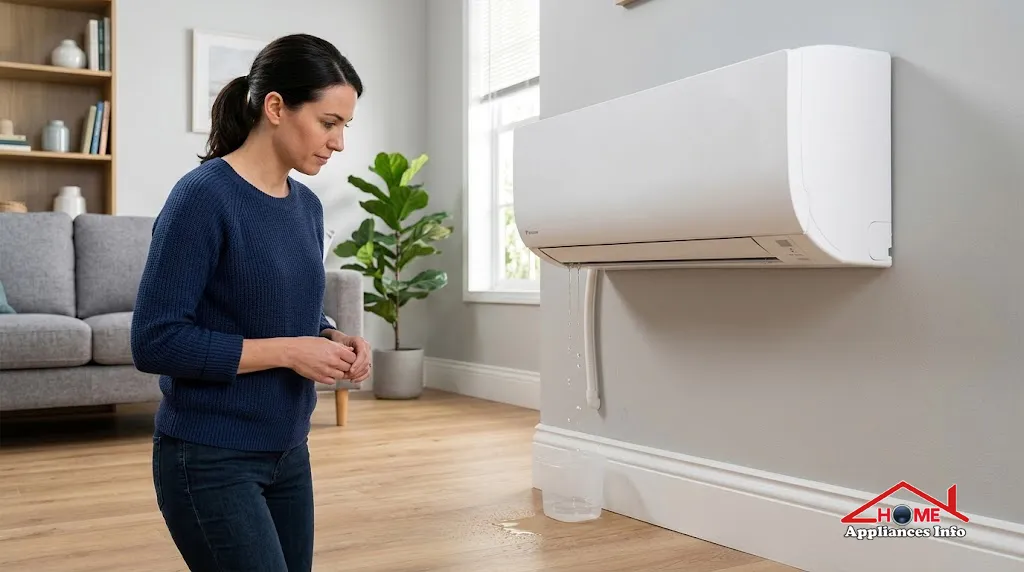
Finding water leaking from aircon equipment can be worrying, especially when water is dripping from the indoor unit onto a wall, floor, or piece of furniture. Fortunately, the problem is often related to the system that removes condensation rather than a major failure.
An air conditioner naturally pulls moisture from warm indoor air while cooling it. That moisture collects as condensation and should flow through a drain pan and condensate drain system. When that drainage process is interrupted, water can back up and leak indoors.
The most common causes include a clogged condensate drain line, a frozen evaporator coil, restricted airflow from a dirty filter, a damaged drain pan, or a loose or poorly positioned drain hose. This guide explains how to identify the likely cause, what basic maintenance you can safely perform, and when it is time to call an HVAC technician.
Why Does an Air Conditioner Produce Water?
Before troubleshooting an AC water leakage problem, it helps to understand what the water is doing there in the first place.
Warm air contains water vapor. As your air conditioner cools indoor air, moisture can condense on the cold evaporator coil, much like water droplets forming on the outside of a cold glass.
The system is designed to manage that water:
- Condensation forms around the cooling coil.
- Water collects in a drain pan.
- The water travels through an AC condensate drain line or drain hose.
- It exits at an appropriate drainage point.
A problem develops when water cannot follow that path properly.
Water draining in the correct outdoor location may be normal, depending on the type of air conditioner. Water dripping from an indoor wall-mounted or air-handling unit, however, usually needs attention.
What Causes Water Leaking From Aircon?
Several problems can produce similar symptoms. The location of the leak and the way the air conditioner is operating can provide useful clues.
Clogged Condensate Drain Line
A clogged AC drain pipe is one of the most common reasons an air conditioner starts leaking water indoors.
Dust and airborne particles can enter the condensate system over time. When moisture combines with this debris, it can create buildup inside the drain line. Algae and other organic growth may also contribute to blockages.
When the line becomes restricted, condensation cannot drain away fast enough. Water backs up into the drain pan and may eventually overflow.
Possible warning signs include:
- Water dripping from the indoor AC
- A puddle beneath the unit
- Standing water in an accessible drain pan
- Musty odors
- A system shutting down because of a condensate safety switch
Carrier identifies blocked condensate drainage as a frequent cause of AC water leaks.
Dirty Air Filter and Restricted Airflow
A dirty air filter may seem unrelated to water, but it can trigger a chain reaction:
Dirty filter → reduced airflow → evaporator coil becomes excessively cold → ice forms → ice melts → excess water enters the drainage system.
The leak may not appear while the coil is frozen. Instead, you may notice water after the ice begins to melt.
Look for signs such as weak airflow, reduced cooling, visible frost, or an unusually dirty filter. A frozen coil should not simply be ignored and repeatedly restarted. Continued operation can worsen the underlying problem.
Frozen Evaporator Coil
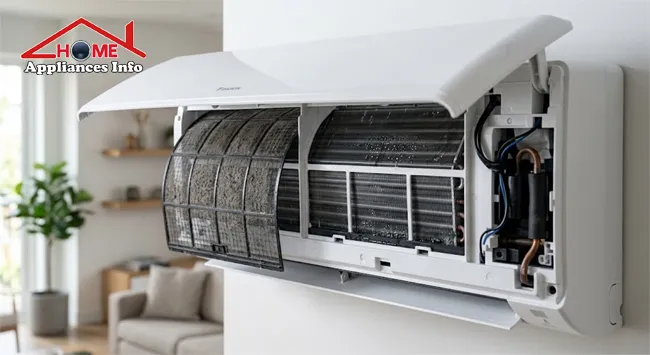
The evaporator coil is the part of the system that absorbs heat from indoor air. Under normal conditions, condensation forms on the coil and drains away.
When the coil freezes, a larger amount of water may be released as the ice melts. If the drain system is blocked or unable to handle the sudden volume, the result can be an AC leaking water indoors.
A frozen coil can be associated with:
- Dirty or clogged filters
- Restricted airflow
- A dirty coil
- Refrigerant-related problems
- Other mechanical faults
If you see ice, turn off the cooling function and avoid chipping ice from delicate components. Checking the filter is a reasonable first step, but refrigerant diagnosis should be left to a qualified technician.
Damaged or Cracked Drain Pan
The air conditioner drain pan collects condensation before directing it into the drain line.
Over time, a pan may corrode, crack, rust, or become misaligned. If it cannot hold water properly, leakage can occur even when the drain line itself is clear.
A damaged pan generally requires inspection and, in many cases, replacement rather than a simple cleaning.
Loose or Damaged Drain Hose
This problem is particularly relevant to a split AC leaking water indoors.
Check accessible parts of the drainage system for:
- A disconnected hose
- A visibly loose connection
- Cracks
- Sharp bends or kinks
- Damage caused during cleaning or servicing
Do not dismantle sealed refrigeration components while looking for a drainage problem. If the hose connection is hidden inside the unit or requires significant disassembly, professional service is safer.
Incorrect Installation or Poor Drainage Slope
Many drainage systems depend on gravity. If a drain pipe is routed incorrectly or lacks an appropriate downward slope, water may not flow as intended.
Installation problems can include:
- Poor drain pipe slope
- Kinked drainage tubing
- Incorrect positioning of the indoor unit
- Improper drain hose routing
These problems usually require correction by an experienced AC technician.
Why Is My Aircon Leaking Water Inside the House?
If you are asking, “Why is my aircon leaking water inside the house?”, the short answer is that condensation is probably not draining correctly.
The exact cause depends on what else you notice.
| What You Notice | Possible Cause | What to Do |
|---|---|---|
| Water dripping from the indoor unit | Clogged drain line | Check accessible drainage and consider basic cleaning |
| Weak airflow with ice or frost | Dirty filter or frozen coil | Turn off cooling, check filter, seek help if freezing returns |
| Leak starts after servicing | Loose or disturbed drain connection | Inspect visible connections and contact the service provider |
| Constant leak from one location | Damaged drain pan or hose | Professional inspection may be needed |
| Water near electrical parts | Electrical safety concern | Turn off the system and seek professional help |
An indoor leak should be addressed promptly. Continued moisture can damage floors, walls, ceilings, and nearby furnishings. The U.S. Environmental Protection Agency also emphasizes controlling indoor moisture and keeping AC drip pans and drain lines clean and unobstructed.
How to Fix a Clogged AC Condensate Drain Line DIY
A simple drain blockage may sometimes be cleared without major disassembly. However, stop if the system design is unfamiliar or if reaching the drain requires working around electrical components.
Step 1: Turn Off the Air Conditioner
Switch off the air conditioner before inspecting the drainage system.
If appropriate for your installation, disconnect power at the designated breaker or disconnect point. This reduces the risk of the system running while you are working and prevents additional condensation from being produced.
Step 2: Locate the Condensate Drain System
The drain may be:
- A PVC pipe near an indoor air handler
- A flexible hose connected to a split AC indoor unit
- Connected to a condensate pump
- Routed to an exterior drainage point
Consult the manufacturer’s documentation if you are unsure which pipe or hose is the condensate drain.
Step 3: Check for Standing Water
If an accessible drain pan contains standing water, remove only what can be safely reached.
A towel or wet/dry vacuum may be useful. Keep water away from electrical wiring and electronic controls.
Standing water indicates that the drainage process is not working properly and should not simply be ignored.
Step 4: Clear the Drain Line From the Accessible Outlet
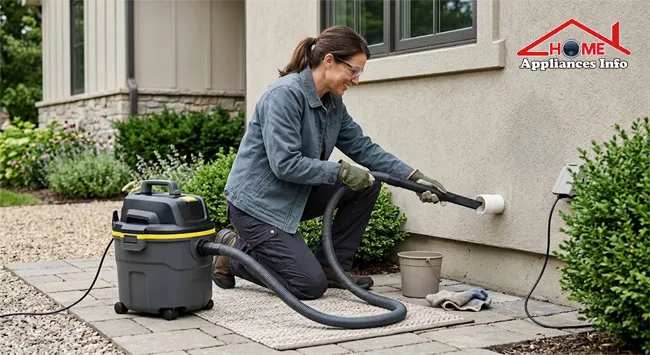
One commonly used method is to place a wet/dry vacuum over an accessible exterior drain outlet and use suction to remove water and debris.
The basic process is:
- Locate the drain line exit.
- Position the wet/dry vacuum securely over the opening.
- Run it briefly according to the vacuum manufacturer’s instructions.
- Check whether water and debris have been removed.
- Inspect whether drainage improves.
This approach is commonly discussed for accessible condensate drain clogs.
Step 5: Flush Only as Recommended for Your System
After a blockage has been cleared, some maintenance guidance discusses flushing an accessible drain line with a suitable cleaning liquid.
Carrier, for example, discusses distilled white vinegar as one possible approach for accessible drain-line maintenance. However, recommendations can vary by system and manufacturer. Strong chemicals should not be treated as a universal solution because they may damage components or surrounding materials.
If you are unsure what your manufacturer permits, stop and ask an HVAC professional.
Step 6: Test the Drainage
Restore power and run the system normally.
Monitor:
- Whether water exits through the intended drain point
- Whether water returns inside
- Whether the unit cools normally
- Whether new ice forms
If the leak continues, repeated flushing is unlikely to solve a damaged pan, frozen coil, disconnected hose, or installation problem.
Aircon Leaking Water From Indoor Unit vs Outdoor Unit
The location of the water matters.
Water From the Indoor Unit
Water inside the room is more likely to indicate a problem requiring investigation.
Common causes include:
- Clogged condensate drain line
- Frozen evaporator coil
- Damaged drain pan
- Loose drain hose
- Improper drainage installation
Indoor leakage can damage building materials and should not be allowed to continue.
Water Near the Outdoor Unit
Water outside is not automatically a sign of failure.
Depending on the air conditioner and operating conditions, condensation may be directed outdoors. However, investigate unusual flooding, persistent water from an unexpected component, or water reaching electrical equipment.
The practical distinction is simple: water appearing at the intended outdoor drainage point may be normal, while water entering the room usually indicates that the drainage system needs attention.
Aircon Leaking Water After Cleaning or Servicing
If an aircon leaking water after cleaning or servicing problem begins immediately after maintenance, the timing is important.
Possible explanations include:
- A drain hose was not fully reconnected
- A connection became loose
- The hose was moved into an unfavorable position
- A blockage was disturbed but not completely removed
- Insulation or another drainage-related component was displaced
Start by turning off the AC if water is actively entering the room.
You can inspect obvious external hose connections, but avoid dismantling electrical or refrigeration components. If the leak started immediately after professional servicing, contacting the service provider is often the most sensible next step.
A drainage problem caused by a loose connection will not necessarily improve simply by cleaning the drain line again.
Is Water Leaking From an Air Conditioner Dangerous?
Is water leaking from an air conditioner dangerous? Not always immediately, but the situation can become serious depending on where the water goes and how long the leak continues.
Electrical Risk
Water near wiring, electrical panels, power connections, or electronic controls can create a safety hazard.
Turn the system off and seek professional assistance rather than trying to work around wet electrical components.
Property Damage
A persistent leak can damage:
- Wood and laminate flooring
- Carpets
- Drywall
- Ceilings
- Furniture
Moisture and Mold Problems
Persistent dampness can encourage mold growth. The EPA advises addressing water and moisture problems promptly and keeping HVAC drain systems functioning properly.
Turn the AC Off Immediately If:
- Water is reaching electrical components
- Water is leaking through a ceiling
- Significant flooding is occurring
- The coil repeatedly freezes
- You smell burning or notice electrical problems
- The leak continues after basic maintenance
Quick Checklist for Water Leaking From Aircon
Before arranging a repair, safely check the basics:
- Is the air filter dirty?
- Is there visible frost or ice?
- Is the condensate drain visibly blocked?
- Is the drain hose loose, disconnected, or sharply bent?
- Did the leak begin after cleaning or servicing?
- Is the water coming from indoors or an intended outdoor drain point?
- Is the AC cooling normally?
- Is water near electrical components?
This checklist can help narrow down the problem, but it does not replace professional diagnosis when the cause is unclear.
How to Prevent Aircon Water Leakage
Preventive maintenance is usually easier than dealing with an overflowing indoor unit.
Check Air Filters Regularly
A clean filter supports proper airflow and reduces the chance of conditions that contribute to coil freezing.
Follow the maintenance instructions for your particular model. Filters vary significantly between central systems, split systems, and room air conditioners.
Keep the Condensate Drain System Clear
Periodic inspection can help identify:
- Dirt buildup
- Organic growth
- Standing water
- Slow drainage
The EPA specifically recommends keeping AC drip pans clean and drain lines unobstructed and flowing properly.
Schedule Professional Maintenance
A technician can inspect parts that are difficult or unsafe for a homeowner to assess, including:
- Evaporator coil condition
- Drain pan condition
- Refrigerant-related issues
- Condensate pumps
- Hidden drain connections
- Installation and drainage slope
Do Not Ignore Small Recurring Leaks
A few drops may seem harmless, but repeated moisture exposure can eventually stain ceilings, damage walls, or create conditions suitable for mold.
Fix the source rather than repeatedly placing a bucket underneath the unit.
When Should You Call an AC Technician?
Basic maintenance has limits. Contact a qualified technician when:
- The drain line cannot be cleared
- Water continues leaking after basic checks
- The evaporator coil freezes repeatedly
- You suspect a refrigerant problem
- The drain pan is cracked
- A condensate pump may have failed
- The AC continues leaking after recent servicing
- Water is near electrical components
- The indoor unit appears incorrectly installed
Repeated coil freezing deserves particular attention because the cause may involve more than a dirty filter. Refrigerant and electrical troubleshooting should be handled by a qualified professional.
Frequently Asked Questions
Why is my aircon leaking water inside the house?
The most likely reason is that condensation is not draining properly. Common causes include a clogged drain line, frozen evaporator coil, dirty filter, damaged drain pan, or loose drain hose.
Can I use my aircon when it is leaking water?
An active indoor leak should not be ignored. Turn the unit off if water is causing significant damage, reaching electrical components, or appearing alongside a frozen coil. Arrange inspection if the cause is not obvious.
How do I fix a clogged AC condensate drain line DIY?
Turn off the system first. If the drain outlet is safely accessible, a wet/dry vacuum may help remove debris. If the blockage persists or the system continues leaking, contact an HVAC technician.
Why is my aircon leaking after cleaning?
A drain hose or connection may have been disturbed, incorrectly positioned, or not fully reconnected. A blockage may also remain in the drainage system.
Is water leaking from the outdoor AC unit normal?
Some outdoor drainage can be normal, depending on the system and operating conditions. Indoor water leakage is generally more concerning and should be investigated.
How do I stop aircon from leaking water repeatedly?
Address the underlying cause rather than repeatedly cleaning the same area. Check filters and accessible drainage components, and seek professional diagnosis if leaks or coil freezing return.
Final Thoughts
Water leaking from aircon equipment is often caused by a drainage problem, but the underlying issue can range from a straightforward clogged condensate line to a frozen evaporator coil, damaged drain pan, loose hose, or installation fault.
If you discover an indoor leak, start with safety. Turn off the system when water is significant or near electrical components. Check the air filter, inspect accessible drainage parts, and clear a simple blockage only when it can be done safely.
Regular filter care and condensate drain maintenance can help prevent many common leaks. But if the problem keeps returning, the best approach is proper diagnosis rather than repeatedly treating the visible water.
References
- Carrier — Why Is My AC Leaking Water?
- Carrier — How to Clean an AC Drain Line
- U.S. Environmental Protection Agency — A Brief Guide to Mold, Moisture and Your Home
More Maintenance Guide Articles

📱 SMART HOME TECHNOLOGY CONSULTANT & IOT SPECIALIST
Alfredo Torres
Technology Consultant | Smart Home Automation & IoT Specialist (Lima, Peru)

🌐 Matter Protocol & IoT
⚡ Energy Efficiency
🛠️ Future-Proofing Infrastructure
Alfredo Torres is a seasoned technology consultant based in Lima, Peru, specializing in the integration of next-generation IoT ecosystems and smart home automation. With over a decade of experience navigating the rapidly evolving tech landscape of the Global South, Alfredo brings a unique, practical perspective to homeappliancesinfo.com.
As a specialist in the 2026 Matter protocol rollout, Alfredo focuses on bridging the gap between legacy household infrastructure and modern connectivity standards. His consulting work centers on “future-proofing” homes—helping users select appliances that offer maximum durability, energy efficiency, and cross-platform compatibility without the burden of “app fatigue.”
Alfredo’s expert insights are grounded in real-world problem solving, from optimizing smart kitchen workflows to implementing cost-effective home maintenance solutions in emerging markets. When he isn’t benchmarking the latest AI-integrated appliances, he can be found exploring the intersection of sustainable architecture and digital living.