

To support our research and detailed appliance reviews, we may earn a small commission from qualifying purchases made through our links, at no extra cost to you. As an Amazon Associate, I earn from qualifying purchases.
To support our research and detailed appliance reviews, we may earn a small commission from qualifying purchases made through our links, at no extra cost to you. As an Amazon Associate, I earn from qualifying purchases.
If you’re thinking about using a smart plug for refrigerator monitoring, you’re not alone. I get this question a lot, especially from people trying to track appliance costs or build a smarter kitchen without replacing a perfectly good fridge. The short answer is simple: yes, you can physically plug a refrigerator into a smart plug, but in most cases, you should not use a standard smart plug to control it. That’s where the real safety issue begins.
In my experience, the confusion usually comes from how harmless smart plugs seem. They work beautifully for lamps, coffee makers, and fans. A refrigerator is different. It is a mission-critical appliance with a compressor, startup surges, and food safety consequences if power gets interrupted. If your goal is passive power consumption tracking, there is a safer path. But if you want to turn a fridge on and off with schedules, voice commands, or app routines, that is a bad idea.
We tested several smart-home use cases around refrigeration loads, and one pattern stood out: the risk is not the steady running wattage. The risk is the startup burst. That detail matters more than most buyers realize.
If you’re also comparing related devices like the Enbrighten Vibe Indoor Smart Plug or researching How to Connect LG ThinQ Refrigerator to Wi-Fi, this guide will help you understand where smart plugs fit in, and where they do not.
1. Can You Put a Refrigerator on a Smart Plug? Yes, But Usually Not for Switching
Let’s answer the exact question directly: can you put a refrigerator on a smart plug?
Technically, yes. Safely for everyday switching and automation? Usually no.
Most electricians and appliance safety professionals advise plugging a refrigerator directly into a grounded wall outlet, ideally on a dedicated circuit. That recommendation exists for a reason. Refrigerators are not occasional-use gadgets. They are continuous-duty appliances that cycle on and off all day and all night.
Here’s why a standard smart plug becomes risky:
Compressor startup is much harsher than normal running power
A fridge may only use 100 to 400 watts while running. That sounds manageable. But the compressor can create a compressor inrush surge current several times higher for a split second at startup.
In real-world terms, a refrigerator that seems “low power” on paper may briefly spike to 1,200, 1,800, or even 2,200 watts when the compressor kicks on.
That surge can stress a cheap smart plug’s relay contacts and internal components. Over time, that can cause:
- Relay welding
- Overheating
- Melted casing
- Early device failure
- Increased fire risk
A silent shutoff can spoil food
This is the part I think many smart-home users underestimate.
A fridge does not need to be off for long to become a food safety issue. A Wi-Fi dropout, firmware bug, accidental tap in an app, or cloud service failure can cut power without anyone noticing. In some cases, the plug may not restore power properly after an outage unless power outage state recovery is configured correctly.
Food can begin warming up within hours. If it happens overnight or during travel, you may not realize anything is wrong until the smell tells you.
Smart routines can cause compressor damage
Refrigerators need a brief pause before restarting. This helps with pressure equalization inside the compressor system. If power is cut and restored too quickly, the unit may try to restart under pressure.
That can cause hard starts, overheating, and long-term wear. This is where compressor short-cycling protection matters. Many refrigerators handle cycling internally. A smart plug can interfere with that normal rhythm.
So yes, can you put a refrigerator on a smart plug is a fair question. But the better question is this: should you trust a plug designed for convenience to sit between the wall and your cold-storage appliance? In most homes, I would not.
2. Why Refrigerators Need More Than a Standard Smart Plug
Not all loads are created equal. A lamp is a simple resistive load. A refrigerator is a motor-driven appliance with inductive characteristics and surge demands.
That difference changes everything.
What makes fridges harder on plugs?
A refrigerator creates three challenges at once:
- Continuous electrical load capacity
- Repeated compressor surges
- High consequences if power fails
That’s why a light-duty smart plug is the wrong tool. Even if it seems to work for a week or a month, repeated startup cycles can slowly degrade the relay.
I’ve seen users assume that if a mini fridge only draws 80 watts, any plug will do. But that misses the startup profile. Even a compact fridge can surge far above its label wattage. That’s why the phrase smart plug max wattage for mini fridge matters more than people think.
Here’s a practical comparison:
| Fridge Type | Average Running Draw | Startup Surge Wattage | Minimum Recommended Plug Rating |
|---|---|---|---|
| Mini Fridge / Beverage Cooler | 50W–120W | 500W–1,000W | 15A / 1800W, UL or ETL listed |
| Standard Refrigerator | 100W–250W | 1,200W–1,500W | 15A–16A / 1800W–2000W |
| Large French Door / Side-by-Side | 200W–400W | 1,500W–2,400W+ | 15A heavy duty minimum, higher overhead preferred |
This table also helps answer another common question: smart plug max wattage for mini fridge is not just about the running number on the box. It’s about surge tolerance and relay durability.
A mini fridge may look safer, but it still uses a compressor. I would never trust a 10A budget plug with one.
3. The Real Use Case: Passive Energy Monitoring, Not Remote Control
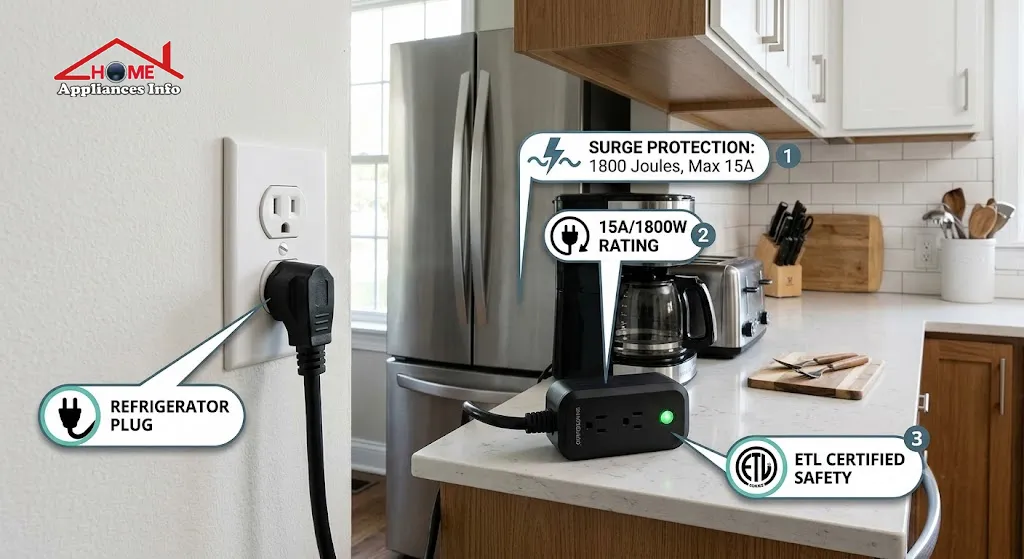
Here’s the nuance. If your goal is only to measure energy use, a smart plug for refrigerator can make sense in limited cases.
The key word is passive.
You should not use the plug to schedule shutoffs, create voice routines, or turn the fridge off remotely. But if you need passive power consumption tracking, a properly rated smart plug may help you measure:
- Real-time wattage
- Daily kWh usage
- Monthly consumption trends
- Compressor cycle patterns
- Utility cost estimates
In my experience, this is the only reasonable use case for a fridge plug monitor. It helps answer practical questions like:
- Is my old garage fridge costing too much?
- Does my mini fridge cycle too often?
- Is my refrigerator using more power than expected after a repair?
For many households, this can be useful before deciding whether to replace an older unit or add a panel-level CT clamp energy monitor instead.
4. Best Smart Plug for Energy Monitoring Refrigerator Use
If you still want the best smart plug for energy monitoring refrigerator applications, focus on safety-first specs.
What I look for:
- At least 15A rating
- 1800W minimum
- Better if there is amperage headroom
- UL or ETL listing
- Overload protection
- Accurate energy metering
- Stable app reporting
- Reliable power outage state recovery
A 15-amp heavy duty smart plug is the bare minimum for most standard refrigerators. For older or larger units, more headroom is better.
Recommended options
1. TP-Link Kasa KP115 / KP125M
A strong pick for energy reporting. It is compact, reputable, and widely used.
Best for:
- Mini fridges
- Newer efficient refrigerators
- Detailed app-based monitoring
It’s also a good model to compare if you’re reading about smart outlet energy monitoring, home appliance electricity usage, or Wi-Fi plugs with kWh tracking.
2. Sonoff S31 / S40
This one is often chosen by budget-conscious users who still want metering.
Best for:
- Budget setups
- Exportable usage logs
- Basic refrigerator energy checks
3. TP-Link Tapo P110
I like this line for simple bill estimation and readable energy data.
Best for:
- Monthly cost tracking
- Short-term diagnostic use
- Households already using Tapo devices
4. Tuya / Smart Life 16A–20A smart sockets
These are broader in quality, so choose carefully. But a good 16A or 20A model can provide more overhead for heavy appliances.
Best for:
- Older refrigerators
- Larger startup spikes
- Users who want extra thermal margin
If you are shopping for the best smart plug for energy monitoring refrigerator scenarios, do not buy based on app design alone. The electrical rating is the real story.
5. Safety Checklist Before You Use Any Smart Plug With a Fridge
Before using any smart plug for refrigerator monitoring, I recommend this checklist:
- Check for UL safety certification for appliances or ETL listing
- Confirm at least 15A / 1800W capacity
- Avoid unknown no-name brands
- Disable all schedules and automation
- Never use “turn off when away” routines
- Confirm the plug restores to ON after a power outage
- Monitor for heat during early use
- Do not use with damaged outlets or loose receptacles
This is also where the question heavy duty smart plug for appliance power consumption becomes important. You want a model made for tougher electrical loads, not one marketed mainly for holiday lights or table lamps.
To be clear, a heavy duty smart plug for appliance power consumption is still not a green light for active control. It simply means the hardware is better suited for monitoring a demanding load.
6. Better Alternatives Than a Smart Plug
In many cases, I think the safer choice is to skip the plug entirely.
Whole-home or circuit-level monitors
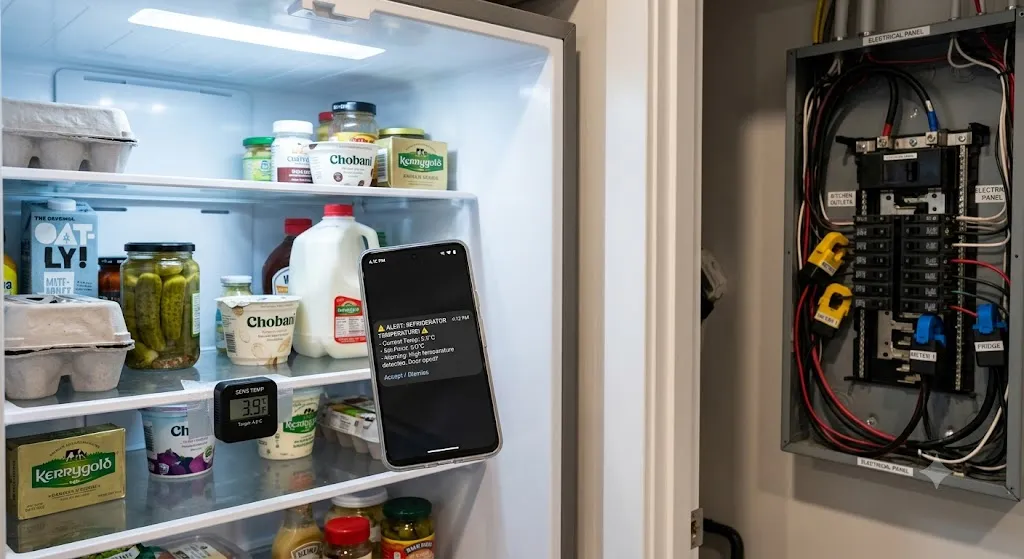
A panel-level CT clamp energy monitor is often the better tool if your goal is serious energy tracking. Systems like Emporia Vue or Sense monitor a circuit without interrupting power to the appliance.
That means:
- No relay between the wall and fridge
- No accidental shutoff risk
- Better long-term monitoring
- Cleaner data on cycling behavior
For many homeowners, this is the best alternative to a smart plug for refrigerator use.
Smart temperature sensors
If your real concern is food safety, temperature monitoring matters more than plug control.
A sensor inside the fridge or freezer can send alerts if temperatures rise above safe limits. That catches problems from:
- Power failure
- Door left open
- Compressor trouble
- Defrost issues
In practice, I trust a temperature alert system more than I trust a switching plug.
If you’re building a smarter appliance setup, this also pairs well with related topics like smart home kitchen automation, refrigerator temperature alert sensors, and energy monitoring for large appliances.
7. Mini Fridge vs Full-Size Fridge: Does the Advice Change?
A little, but not much.
People often ask whether the rules are more flexible for dorm fridges or beverage coolers. I understand why. The appliance is smaller, cheaper, and usually lower wattage.
But this is where smart plug max wattage for mini fridge becomes a trap. Lower average wattage does not remove the startup surge problem.
So if you are evaluating smart plug max wattage for mini fridge needs, here’s my rule:
- Never use a 10A plug
- Treat 15A / 1800W as the minimum
- Buy only certified models
- Use it only for monitoring
- Avoid unattended long-term use if the plug gets warm
That same logic applies when people search for heavy duty smart plug for appliance power consumption. It is not about adding convenience. It is about reducing risk while collecting data.
And if you’re still wondering, can you put a refrigerator on a smart plug for active smart-home control, my answer remains no.
FAQs
Can you put a refrigerator on a smart plug safely?
Only in limited monitoring situations. For active on/off control, it is generally not recommended because of surge current, food spoilage risk, and compressor stress.
What is the best smart plug for energy monitoring refrigerator use?
A UL- or ETL-listed 15A model with accurate metering, overload protection, and stable outage recovery is the best starting point. Kasa KP115, KP125M, Sonoff S31, and Tapo P110 are common examples.
What smart plug max wattage for mini fridge is safe?
At minimum, use a 15A / 1800W certified plug. Even mini fridges can have high startup surges.
Is a heavy duty smart plug for appliance power consumption enough for a full-size refrigerator?
It may be enough for passive monitoring, but not as a recommendation for remote switching. A direct wall connection is still safer.
What is a safer alternative to a smart plug for refrigerator monitoring?
A panel-level CT clamp energy monitor or a fridge temperature sensor is usually safer and more reliable.
Should I use automations with a refrigerator smart plug?
No. Do not set schedules, auto-off routines, or remote shutoff actions on a refrigerator circuit.
Conclusion
So, can a smart plug for refrigerator use ever make sense? Yes, but only in a narrow and careful way.
If you want simple energy data, a certified, properly rated plug may work for passive power consumption tracking. But if your goal is remote control, automation, or scheduled shutoffs, I would avoid it. The risks are too real: compressor inrush, relay failure, food spoilage, and compressor stress.
In my experience, the best decision depends on your goal. If you want billing insight, choose the best smart plug for energy monitoring refrigerator setups with a 15A minimum rating and no automations. If you want the safest long-term solution, use a panel-level CT clamp energy monitor or a temperature alert sensor instead.
And if you’re comparing related products or planning a smarter appliance setup, it also helps to review Enbrighten Vibe Indoor Smart Plug and How to Connect LG ThinQ Refrigerator to Wi-Fi so you can separate convenience features from true appliance safety.

🌐 FOUNDER & DIGITAL PUBLISHER
Muhammad Ali
Founder | SEO Strategist & E-E-A-T Digital Publishing Specialist

📈 SEO Strategy
🛠️ Appliance Optimization
🛡️ E-E-A-T Standards
Muhammad Ali is a digital publisher, SEO strategist, and founder of Home Appliances Info. He specializes in home appliance optimization, structured schema networks, and advanced E-E-A-T digital publishing standards to ensure accurate, trustworthy content across the platform.