


To support our research and detailed appliance reviews, we may earn a small commission from qualifying purchases made through our links, at no extra cost to you. As an Amazon Associate, I earn from qualifying purchases.
To support our research and detailed appliance reviews, we may earn a small commission from qualifying purchases made through our links, at no extra cost to you. As an Amazon Associate, I earn from qualifying purchases.
If you’ve ever hauled a week’s worth of laundry down three flights of stairs, waited for a shared washer, and still paid too much for the privilege, I get it. I’ve lived that apartment life. That’s exactly why finding the best portable washing machine for apartment living can feel less like a luxury and more like a sanity-saving upgrade. For renters, students, and anyone in a small space, a portable washer can turn laundry from a recurring hassle into a manageable routine.
I’ve tested compact laundry setups in tight apartments, dealt with awkward faucet fittings, and learned the hard way that not every machine is truly renter-friendly. In this guide, I’ll walk you through what actually matters: machine types, setup, noise, drying options, lease concerns, and which features make daily use easier.
If you’re also building out a more efficient home setup, this topic often overlaps with a Refrigerator Buying Guide, a Far Infrared Heater Buying Guide, and even a smart toilet Buying guide when you’re trying to maximize comfort in a compact apartment.
Quick Comparison Table: Portable Washer Types for Apartments
| Model Type | Best For | Capacity (cubic feet) | Hookup Requirement | Key Advantage |
|---|---|---|---|---|
| Fully Automatic Single-Tub | Everyday renter use | 0.9–1.6 | Standard sink faucet | Wash, rinse, and spin in one drum |
| Manual Twin Tub | Budget-conscious users | 1.5–2.0 equivalent | Faucet or bucket fill | Faster cycles, lower price |
| Mini Foldable Washer | Delicates, baby clothes, travel | Under 0.5 | Manual fill/drain | Ultra-compact storage |
| Mini Compact Washer Dryer Combo | Premium small-space setups | Varies | Often needs more planning | Two-in-one convenience |
1. Why a Portable Washer Is an Apartment Essential
Portable Washing Machine Check Price on Amazon
Apartment laundry is often a tradeoff. You either share machines with strangers, pay laundromat fees, or hand-wash essentials when things get busy. In my experience, a portable washer creates independence more than anything else.
Here’s what changed for me after using one:
- I stopped scheduling my day around laundry room availability.
- I washed smaller loads more often.
- Delicate clothing lasted longer because I had more control.
- I spent less on weekly laundromat runs.
Most renters don’t have dedicated hookups, and that’s where portable machines shine. Many are designed to connect temporarily to a kitchen or bathroom faucet using a sink adapter. Water drains out through a drainage hose into a sink or tub. No permanent installation. No major renovation.
That’s why these machines are especially attractive for people searching for the best portable washer and dryer for apartments without hookups. The whole point is flexibility. You use it when needed, then roll it away or store it in a closet.
According to the U.S. Department of Energy, compact and efficient laundry appliances can reduce both energy and water use compared with older, less efficient machines. That matters in apartments where utility costs add up fast.
2. Understanding the Two Main Types: Fully Automatic vs. Twin Tub
This is the first big decision, and it affects everything from convenience to price.
Fully Automatic Single-Tub Machines
These are usually the easiest option for renters. You load clothes, connect the machine to a faucet, select a cycle, and let it handle wash, rinse, and spin cycle functions in sequence.
What I like about them:
- More hands-off
- Cleaner overall workflow
- Better for frequent use
- Easier for beginners
A 0.9 to 1.0 cubic feet unit usually works well for one person or a couple doing light loads. Think T-shirts, underwear, socks, lightweight towels, and sleepwear. It won’t replace a full-size family washer, but it doesn’t need to.
These models are often the closest answer for people looking for the quietest portable washing machine for small spaces, especially when paired with anti-vibration pads and a level floor.
Twin Tub Portable Washers
Twin tubs have two separate compartments: one for washing, one for spinning. You manually move the clothes from wash side to spin side.
I’ll be honest. They require more effort. But they also have real advantages:
- Lower upfront cost
- Faster wash cycles
- Better water control
- Often lighter to move
This is where small twin tub portable washing machine reviews become useful. Twin tub fans often value speed and simplicity more than automation. If you don’t mind being a little involved, a good twin tub model can be very efficient.
I noticed twin tubs are especially popular among renters who want to do quick midweek loads and don’t need a polished, set-it-and-forget-it experience.
3. What to Look for Before You Buy
The best machine on paper can still fail in a real apartment if you miss a few practical details.
Check Your Faucet Compatibility
This is the most common frustration point. A portable washer often needs a faucet connection, but not every faucet works out of the box. You may need to remove the sink aerator first, then attach the included connector or a separate brass adapter kit.
I strongly recommend buying a multi-size faucet adapter kit at the same time as the machine. It saves time and prevents that miserable day-one surprise where your new washer can’t connect.
Useful terms to watch for in product descriptions:
- Quick-connect faucet adapter
- Universal sink connection
- Compatible with removable aerator faucets
For practical setup guidance, the American Cleaning Institute is a solid reference for detergent use and appliance-safe laundry habits.
Confirm Drainage Logistics
The drainage hose matters more than most buyers expect. It has to stay firmly positioned in a sink or bathtub during draining. If it slips out, you could have water on the floor fast.
What worked best for me:
- Securing the hose with a clamp or zip tie
- Testing drain flow before the first full load
- Keeping the hose as straight as possible
Measure Storage and Mobility
Don’t just measure the footprint where you’ll use it. Measure the path to get there.
I always tell renters to check:
- Doorway width
- Closet depth
- Bathroom clearance
- Space beside the sink
- Floor level
Models with caster wheels are much easier to live with, especially if you need to move the washer between a storage corner and the kitchen.

4. How to Safely Set Up and Use a Portable Washer
Once you’ve picked the right unit, daily use is usually straightforward. Still, setup is where renters make the biggest mistakes.
Step 1: Read the Lease
Before anything else, check your rental agreement. Some landlords restrict temporary appliance use, especially anything involving water. Look for terms related to:
- Unauthorized water fixtures
- Appliance limitations
- Water damage liability
In my experience, rolling non-permanent machines are usually easier to justify than anything that looks semi-installed.
Step 2: Connect the Faucet Properly
Attach the sink adapter to your faucet. If your faucet has a built-in sink aerator, remove it gently first. Then connect the inlet hose securely.
Test for leaks before loading clothes.
Step 3: Position the Drainage Hose
Place the drainage hose deep enough into the sink or tub that it won’t jump out under water pressure. This sounds basic, but it’s one of those details that can prevent a disaster.
Step 4: Load Lightly
Portable washers work best with small, balanced loads. Overloading creates noise, poor rinsing, and rougher spinning.
A realistic load might include:
- 4–6 T-shirts
- A few undergarments
- Lightweight pajamas
- One small towel
Step 5: Use the Right Detergent
I prefer liquid detergent because it dissolves more easily in compact washers. Pods can work, but only if the manufacturer says they’re suitable and they dissolve fully.
Too much detergent creates residue and poor drainage. Less is usually better.
Step 6: Let the Machine Finish the Spin Cycle
The spin cycle won’t make clothes fully dry, but it removes enough water to cut air-drying time dramatically. That’s a huge help in apartments where drying space is limited.
5. Finding the Quietest Portable Washing Machine for Small Spaces
Noise is not a small issue when you share walls, floors, and ceilings with other people. I’ve tested machines that sounded manageable during washing but became much louder during spinning.
If you want the quietest portable washing machine for small spaces, focus on three things:
Stable Base
A perfectly level floor matters. Uneven surfaces increase vibration and noise.
Anti-Vibration Pads
Rubber pads under each foot make a real difference. They reduce rattling and protect flooring. In thin-walled apartment buildings, this can be the difference between a peaceful wash and an apology to your downstairs neighbor.
Load Balance
Even a good machine gets noisy if the load bunches to one side. I’ve had the best results by mixing similar-weight items and avoiding bulky single pieces.
This is one area where many reviews don’t go deep enough. Quiet operation is not just about motor quality. It’s also about setup discipline.
6. Drying Clothes in an Apartment Without Dedicated Laundry Space
Washing is only half the challenge. Drying is where many apartment systems fall apart.
If you’re searching for the best portable washer and dryer for apartments without hookups, you’re probably trying to solve the full laundry problem, not just half of it.
Option 1: Air-Drying With a Folding Rack
This is still the simplest and most reliable method. After a strong spin cycle, most everyday clothes dry surprisingly fast on a foldable rack placed near airflow or sunlight.
Best items for rack drying:
- T-shirts
- Activewear
- Socks
- Light cotton pieces
Option 2: Compact Spin + Separate Dryer Setup
Some renters pair a portable washer with a compact ventless dryer or drying cabinet. This can work well, but always verify space, outlet requirements, and lease limitations first.
Option 3: Mini Compact Washer Dryer Combo
A mini compact washer dryer combo for apartment living can be appealing if you want fewer steps. These are less common in truly portable formats, but they do exist in compact apartment-friendly categories.
The tradeoff is usually cost, capacity, or drying speed. In my experience, combo units offer convenience, but many renters still prefer a simpler portable washer plus drying rack because it’s cheaper, lighter, and easier to store.
For fabric care and drying guidance, Consumer Reports regularly covers washing machine performance and ownership considerations.
7. Best Use Cases: Which Portable Washer Fits Your Lifestyle?
Not every renter needs the same machine. Here’s the simplest way I break it down.
Choose a Fully Automatic Model If You:
- Wash clothes 2–4 times per week
- Want the easiest daily routine
- Prefer less manual handling
- Care about quieter operation
Choose a Twin Tub If You:
- Want to spend less
- Don’t mind moving clothes manually
- Need fast wash turnaround
- Like controlling water use closely
Choose a Foldable Mini Washer If You:
- Mostly wash delicates
- Live in a micro-apartment
- Need occasional backup laundry help
- Travel in an RV or split time between places
Consider a Combo If You:
- Want an all-in-one setup
- Have a slightly higher budget
- Need fewer separate appliances
- Are specifically looking for a mini compact washer dryer combo for apartment use
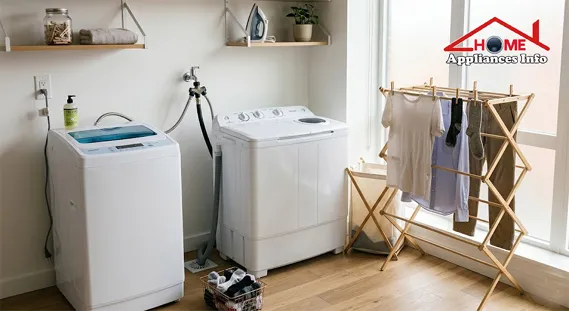
8. Real-World Pros and Cons I Noticed
After using and evaluating apartment-friendly washers, here’s the honest version.
What I Loved
- Laundry on my own schedule
- Lower long-term cost than laundromats
- Better care for delicates
- Easier stain treatment right away
- More privacy and convenience
What Took Adjustment
- Smaller load sizes
- Learning faucet compatibility
- Managing the drainage hose
- Finding drying space
- Remembering that portability doesn’t always mean feather-light
That last point matters. Some machines have caster wheels, which help a lot, but the unit itself may still be heavy once water hoses and clothing are involved.
9. FAQs
Is a portable washing machine worth it for renters?
Yes, especially if you do regular small loads and want to avoid laundromat costs. In my experience, the time savings alone can justify it.
Can I use a portable washer if my apartment has no hookups?
Usually, yes. Many models are made for temporary sink connection, which is why people search for the best portable washer and dryer for apartments without hookups. Just confirm faucet compatibility and lease rules first.
What size portable washer is best for one person?
Around 0.9 to 1.2 cubic feet is often enough for one person’s weekly basics. It handles small but practical loads without taking over your apartment.
Are twin tub washers better than fully automatic ones?
Not better for everyone. They’re cheaper and faster, but more manual. That’s why reading small twin tub portable washing machine reviews helps if you’re comparing value versus convenience.
How do I make a portable washer quieter?
Use anti-vibration pads, level the machine, and keep loads balanced. That’s the most practical path to the quietest portable washing machine for small spaces.
What else should I plan for in a small apartment setup?
Think beyond the washer. A smart layout matters. Readers who are organizing compact homes often also compare products through a Refrigerator Buying Guide, a Far Infrared Heater Buying Guide, or a smart toilet Buying guide to make every square foot work harder.
Conclusion
The best portable washing machine for apartment living is the one that fits your routine, your floor plan, and your tolerance for hands-on effort. If you want simplicity, go with a fully automatic model. If budget and speed matter most, a twin tub may serve you better. If you’re chasing an all-in-one solution, a mini compact washer dryer combo for apartment use can be worth considering, but only if the tradeoffs make sense for your space.
I’ve found that the biggest win isn’t just cleaner clothes. It’s control. No more hauling baskets across the building. No more waiting for communal machines. No more turning laundry into a half-day event.
If you’re ready to upgrade your apartment routine, start by checking faucet compatibility, measuring your space, and deciding whether convenience or price matters more. That’s usually how renters find the right fit the first time.
And if you’re building a smarter small-space home overall, keep an eye on practical product comparisons like a smart toilet Buying guide, Far Infrared Heater Buying Guide, and Refrigerator Buying Guide to make the rest of your apartment work just as efficiently.
References
- American Cleaning Institute — American Cleaning Institute
- Consumer Reports — washing machines

🌐 FOUNDER & DIGITAL PUBLISHER
Muhammad Ali
Founder | SEO Strategist & E-E-A-T Digital Publishing Specialist

📈 SEO Strategy
🛠️ Appliance Optimization
🛡️ E-E-A-T Standards
Muhammad Ali is a digital publisher, SEO strategist, and founder of Home Appliances Info. He specializes in home appliance optimization, structured schema networks, and advanced E-E-A-T digital publishing standards to ensure accurate, trustworthy content across the platform.