

To support our research and detailed appliance reviews, we may earn a small commission from qualifying purchases made through our links, at no extra cost to you. As an Amazon Associate, I earn from qualifying purchases.
To support our research and detailed appliance reviews, we may earn a small commission from qualifying purchases made through our links, at no extra cost to you. As an Amazon Associate, I earn from qualifying purchases.
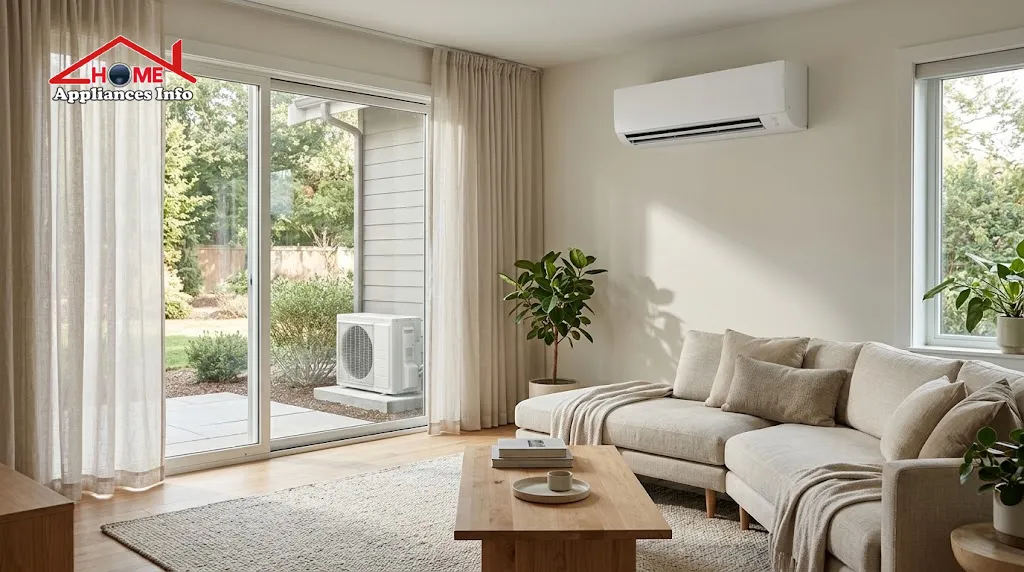
Choosing a Ductless Air Conditioner in 2026 is less about finding a single “perfect” model and more about matching the system to your room, climate, budget, efficiency goals, and installation situation. A ductless mini-split can be particularly useful when a home has no existing ductwork, when one room needs independent cooling, or when extending central HVAC would be unnecessarily expensive or disruptive.
The seven options below are best treated as a 2026 shortlist rather than a strict performance ranking. Mitsubishi Electric, Fujitsu, Daikin, LG, MrCool, Carrier, and Midea each offer ductless systems with different strengths. Exact performance can vary substantially between model numbers, capacities, and regional versions.
Independent 2026 testing from Consumer Reports includes mini-split models from Mitsubishi, Fujitsu, Daikin, MrCool, and other manufacturers, while ENERGY STAR provides guidance on efficiency, sizing, and cold-climate performance.
The most useful way to compare these systems is to look beyond the brand name. Pay attention to SEER2 efficiency, capacity, operating noise, inverter technology, heating performance, warranty, installer availability, and total installed cost.
7 Ductless Air Conditioners to Consider in 2026
The order below is not a ranking from first to seventh. Each system family is included because it represents a meaningful option for a particular type of buyer.
1. Mitsubishi Electric Hyper-Heat and M-Series
Mitsubishi Electric’s ductless lineup deserves attention from homeowners who want a premium system with efficient variable-speed operation, quiet indoor comfort, and the option of heating as well as cooling.
The Hyper-Heat systems are particularly relevant in locations where a mini-split will operate during winter. Rather than looking only at the advertised maximum BTU output, buyers should check the exact model’s heating capacity at low outdoor temperatures.
Mitsubishi’s broad range also means that shoppers need to compare the complete indoor and outdoor unit combination. Efficiency, capacity, operating range, controls, and installation requirements can differ between configurations.
Best suited for:
Homeowners seeking a premium ductless system for year-round heating and cooling, particularly where cold-weather performance matters.
Check before buying: exact model combination, SEER2, HSPF2, low-temperature heating capacity, warranty terms, and availability of a qualified local installer.
2. Fujitsu AIRSTAGE
Fujitsu AIRSTAGE is another established name in ductless HVAC. Its product range includes different configurations for cooling and heat-pump applications, making it useful for homeowners who want to compare equipment according to climate and intended use.
Fujitsu is also represented in Consumer Reports’ 2026 mini-split testing, which makes the brand relevant to buyers who want to consider independent testing alongside manufacturer specifications.
A Fujitsu system may make sense when the priority is a mature ductless platform with inverter technology and a range of capacities rather than simply buying the least expensive unit available.
Best suited for:
Buyers who want an established ductless HVAC manufacturer with multiple configurations and efficiency levels.
3. Daikin Ductless Mini-Splits
Daikin is another major manufacturer with both single-zone and multi-zone ductless systems.
This flexibility matters because the right system for a bedroom is not necessarily the right system for a three-room home. A single-zone mini split connects one indoor unit to an outdoor condenser, while a multi-zone system can connect multiple indoor units to one outdoor unit, depending on the equipment.
Consumer Reports’ 2026 testing included Daikin’s Oterra Series, giving shoppers another independently tested option to investigate.
Best suited for:
Homeowners who want a major-brand ductless system and need flexibility across different room layouts.
4. LG Ductless Mini-Split Systems
LG’s ductless systems are worth considering for shoppers interested in inverter efficiency, modern controls, and connected-home features.
The important point is not to assume that every LG mini-split has the same performance. Efficiency ratings, cooling capacity, heating capability, sound levels, operating temperature range, and smart features can vary between individual models.
For that reason, compare the specific model number, not just the LG brand.
For buyers interested in connected appliances, it can also be useful to look at how an AC’s smart functions fit into the rest of the home rather than paying extra for features that will rarely be used.
Best suited for:
Homeowners who value smart controls and modern indoor-unit features alongside efficient cooling.
5. MrCool DIY Mini-Split Systems
MrCool has a particularly distinctive position in the market because some of its systems are designed around a more DIY-friendly installation approach.
That does not mean a mini-split is simply a plug-in appliance.
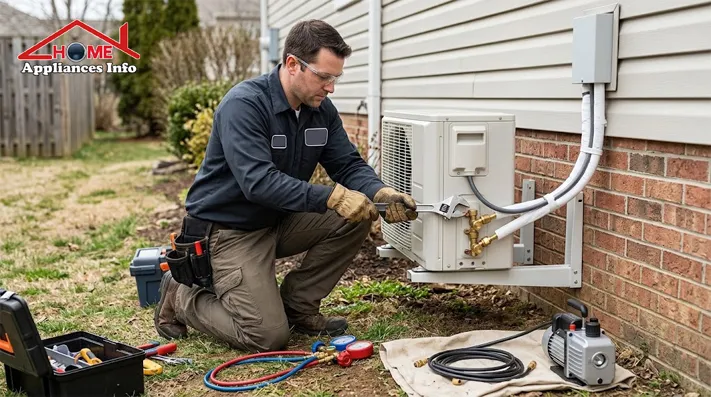
Installation can involve mounting the indoor and outdoor units, routing refrigerant lines, providing electrical power, managing condensate drainage, and complying with local requirements. Refrigerant-related work may also be regulated depending on the country or jurisdiction.
For example, the U.S. EPA states that Section 608 certification is required for certain activities involving the refrigerant circuit, including connecting or disconnecting pre-charged lines in covered systems. Local rules outside the United States can differ.
Best suited for:
Experienced homeowners specifically interested in a manufacturer-designed DIY installation system and who have verified local electrical, building, refrigerant, and permit requirements.
6. Carrier Ductless Mini-Splits
Carrier provides another established option for buyers who prefer professional HVAC installation and a widely recognized HVAC manufacturer.
Carrier’s current 2026 guidance puts ductless mini-split installation costs across a broad range of roughly $2,500 to $15,000 or more, depending on system type, number of zones, efficiency, labor, and installation complexity.
That range is a useful reminder that the equipment price shown online is only part of the purchase.
A single-zone installation with short line runs and easy outdoor access can be very different from a multi-zone installation requiring several indoor units, longer refrigerant lines, electrical work, or difficult access.
Best suited for:
Homeowners who want professional installation and an established HVAC service network.
7. Midea Ductless Mini-Splits
Midea is another manufacturer worth investigating when shoppers are comparing features, capacity, and purchase price across several ductless systems.
The key is to evaluate the individual system rather than assuming that a brand’s entire lineup performs identically.
Before buying, compare the model’s efficiency rating, cooling and heating capacity, noise specifications, operating range, warranty, parts availability, and local installer support.
Best suited for:
Value-conscious buyers who want to compare several inverter ductless systems rather than limiting the search to premium brands.
What Makes the Best Ductless Mini Split Air Conditioner?
There is no single specification that determines whether a mini-split is right for your home.
A useful comparison should include:
| Buying factor | Why it matters |
|---|---|
| SEER2 | Measures seasonal cooling efficiency |
| EER2 | Compares efficiency under specified test conditions |
| HSPF2 | Important when the system also provides heating |
| BTU capacity | Helps determine whether the system is properly sized |
| Inverter compressor | Allows variable-speed operation instead of simple full-on/full-off cycling |
| Noise rating | Particularly important in bedrooms and home offices |
| Low-temperature heating capacity | Important if the unit will heat during winter |
| ENERGY STAR certification | Provides an independent efficiency qualification |
| Warranty | Can reduce the financial risk of equipment failure |
| Installer availability | Proper installation is critical to performance |
| Parts availability | Matters for long-term maintenance |
| Smart controls | Useful for scheduling and remote operation |
| Single- or multi-zone design | Determines how many areas can be independently conditioned |
ENERGY STAR’s current criteria for qualifying split heat pumps include minimum SEER2, EER2, and HSPF2 requirements. Its cold-climate designation also requires demonstrated low-temperature performance.
That is why comparing two systems solely by their advertised SEER2 number can be misleading. A buyer also needs to consider capacity, climate, operating hours, installation quality, and whether the system will provide heating.
Ductless Air Conditioner Cost for Single Room
The ductless air conditioner cost for single room installation can vary considerably.
A basic single-zone installation may be relatively straightforward, while another room may require electrical modifications, long refrigerant lines, difficult outdoor-unit access, additional wall work, or permits.
Carrier’s current 2026 guidance gives a broad installed range of approximately $2,500 to $15,000 or more for ductless mini-split projects, with cost influenced by zones, equipment efficiency, local labor, and installation complexity.
Carrier also lists a broader 2026 range of approximately $2,000 to $10,500 on another current cost guide, illustrating why online estimates should be treated as general budgeting information rather than a guaranteed quote.
For a single bedroom, office, garage, or addition, ask the installer for a detailed quote that identifies:
- Indoor and outdoor equipment
- Cooling capacity
- Refrigerant line length
- Electrical work
- Condensate drainage
- Mounting materials
- Permits, where applicable
- Labor
- Warranty coverage
- Startup and commissioning
The actual quotation is much more useful than choosing a system based on an online average.
Carrier’s 2026 ductless installation-cost guide
DIY Ductless Air Conditioner Buying Guide
A DIY ductless air conditioner can look attractive because avoiding some professional labor may reduce upfront costs. But buyers should understand exactly what the manufacturer means by “DIY.”
Some systems are designed with precharged refrigerant connections that simplify certain installation steps. That still does not eliminate the need for correct mounting, electrical work, drainage, line routing, system setup, and compliance with local requirements.
Check the refrigerant connection
Find out whether the system uses a manufacturer-specific precharged line arrangement or requires conventional refrigerant installation.
Do not assume that because a product is marketed as DIY, every part of the installation can legally or safely be performed by an unqualified homeowner.
Check electrical requirements
Mini-splits can require dedicated electrical circuits, and requirements vary by equipment size and model.
Carrier notes that smaller systems may use lower-voltage configurations, while many ductless systems require a dedicated higher-voltage circuit.
Electrical work should be performed according to applicable local codes.
Check permits and local rules
DIY installation does not automatically remove permitting or licensing requirements.
The rules depend on where you live. Verify them before purchasing the equipment, particularly if you are planning to install the system yourself.
Check the warranty
Some manufacturers have different warranty conditions depending on who installs the system or whether required installation procedures are followed.
Read the warranty before buying rather than discovering the restriction after a problem occurs.
Size the system correctly
DIY installation does not make sizing less important.
ENERGY STAR recommends that contractors use Manual J, a calculation method used to determine the heating and cooling load of a building. Oversized and undersized systems can both create comfort and performance problems.
Ductless Air Conditioner vs Central Air Efficiency
The ductless air conditioner vs central air efficiency comparison needs more context than simply comparing two numbers on equipment labels.
A ductless system delivers conditioned air directly from an indoor unit into the room. Central air distributes conditioned air through a duct network.
That difference can matter because ductwork can experience heat gain and energy losses, particularly when ducts are poorly insulated or located in unconditioned spaces.
Ductless systems also make zoning easier. If only the bedroom or home office needs cooling, a single-zone system can condition that area without necessarily cooling every room.
The U.S. Department of Energy describes ductless mini-split heat pumps as an efficient and flexible solution for homes without existing ductwork and highlights their usefulness for zone heating and cooling.
However, that does not mean ductless is always more efficient for every house.
If a home already has well-designed, properly sealed and insulated ductwork, a high-efficiency central system can remain a practical solution for whole-house cooling.
Why ductless systems can reduce energy use
Potential advantages include:
- Direct delivery of conditioned air
- Variable-speed compressor operation
- Independent room or zone control
- Less need to condition unused spaces
- High efficiency in some equipment configurations
- No need to install a conventional duct network
The best comparison is therefore between the complete systems in the actual home, rather than between two headline efficiency numbers.
Single-Zone vs Multi-Zone Ductless Systems
A single-zone mini split uses one indoor unit with a compatible outdoor unit.
It can be appropriate for:
- A bedroom
- Home office
- Garage
- Basement
- Sunroom
- Home addition
- Small apartment area
A multi-zone ductless system connects multiple indoor units to a compatible outdoor condenser.
This can be useful when several rooms need independent temperature control without installing conventional ductwork.
The trade-off is cost and complexity. More indoor units mean additional refrigerant piping, electrical and drainage requirements, installation labor, and equipment considerations.
For two or more rooms, compare the total system rather than simply multiplying the price of one single-zone unit.
How Many BTUs Do You Need?
Mini split BTU sizing should not be based on room floor area alone.
The cooling requirement can be influenced by:
- Room dimensions
- Ceiling height
- Window size
- Solar exposure
- Insulation
- Number of occupants
- Appliances and other internal heat
- Building orientation
- Outdoor climate
- Air leakage
ENERGY STAR specifically warns that equipment that is too large or too small can struggle to provide the expected comfort and recommends proper load calculations.
This is one reason simply buying the biggest available unit is not a reliable shortcut.
An oversized system may reach its temperature setting quickly without necessarily providing the humidity control and operating behavior you want. An undersized system may have difficulty maintaining the desired temperature during peak conditions.
For a permanent installation, proper load calculation is preferable to a simple online BTU calculator.
Inverter Mini Split Air Conditioner: Why It Matters
An inverter mini split air conditioner uses variable-speed compressor technology.
Instead of operating only at full output and then shutting off, the compressor can adjust its output according to the current demand.
That can help the system maintain a more stable indoor temperature and operate efficiently when the required cooling load is lower.
The word “inverter,” however, should not be treated as a guarantee of low electricity consumption. Actual energy use depends on the equipment’s efficiency, capacity, operating conditions, thermostat setting, insulation, outdoor temperature, installation, and how long the system runs.
For that reason, compare the actual efficiency ratings rather than buying solely because a product description contains the word “inverter.”
If you are also comparing conventional inverter split ACs, our existing inverter split AC buying information can provide additional context on inverter operation, smart controls, capacity, and installation considerations.
Cooling-Only AC or Ductless Heat Pump?
Many modern ductless systems are actually heat pumps, which means they can reverse the refrigeration cycle to provide heating as well as cooling.
That can make a heat-pump system useful throughout the year.
If winter heating matters, look beyond the maximum heating BTU figure. Check:
- Low-temperature operating range
- Heating capacity at cold outdoor temperatures
- HSPF2
- ENERGY STAR certification
- Cold-climate certification where applicable
- Backup heating requirements
ENERGY STAR identifies cold-climate heat pumps separately because their low-temperature performance is an important part of their suitability for colder regions.
For a cooling-only application in a consistently warm climate, those heating specifications may matter much less.
Where a Ductless System Makes the Most Sense
A ductless system can be especially practical when:
- The home has no existing ductwork
- One or two rooms need separate cooling
- A home addition needs climate control
- A garage or converted room is difficult to connect to central HVAC
- A home office becomes uncomfortable during working hours
- Different family members prefer different room temperatures
- Existing window AC units are being replaced
- Both heating and cooling are needed in a room without ducts
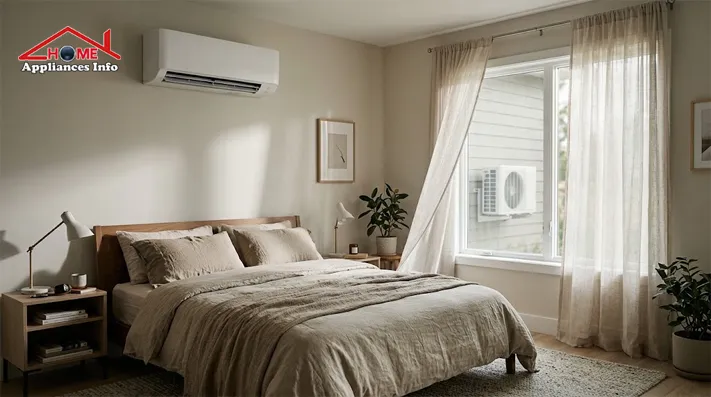
ENERGY STAR specifically identifies applications such as additions, older homes without ductwork, garages, home offices, and areas with persistent hot or cold spots as potential uses for ductless systems.
When Central Air May Make More Sense
Central air remains a practical choice when:
- The home already has suitable ductwork
- Several rooms need simultaneous whole-house cooling
- Existing ducts are well sealed and insulated
- The homeowner prefers concealed vents
- A central HVAC replacement is already planned
The decision is therefore partly about infrastructure.
Installing ductless equipment in a house that already has efficient, well-designed ductwork may not provide the same benefits as installing it in an older home with no ducts.
Likewise, installing new central ductwork solely to cool one isolated room can be a very different proposition from replacing an existing central system.
What to Check Before Buying in 2026
Before choosing among the seven manufacturers, ask these questions:
- What is the calculated cooling load?
Do not choose BTUs solely from room size. - Will the system cool, heat, or both?
A heat-pump model can provide greater year-round flexibility. - What is the actual SEER2/EER2 rating?
Compare the complete model combination rather than the brand. - How noisy is the indoor unit?
Bedroom and office applications deserve particular attention. - Is professional installation required or strongly recommended?
Check manufacturer instructions and local regulations. - What does the warranty actually cover?
Installation requirements can affect coverage. - Are replacement parts readily available?
This becomes increasingly important several years after purchase. - Can you find a qualified installer?
A highly efficient system is not much use if local technicians cannot properly install or service it. - What is the complete installed price?
Include electrical work, line sets, drainage, permits, labor, and accessories. - Does the system fit your home’s layout?
A technically efficient unit may still be a poor choice if the indoor head cannot distribute air effectively.
Frequently Asked Questions
Is a ductless mini-split better than central air?
Neither system is universally better. Ductless equipment can be particularly useful for homes without ducts, room additions, and targeted zone cooling. Central air can be practical for homes that already have efficient ductwork and need whole-house conditioning.
How much does a single-room ductless AC cost?
There is no universal single-room price because equipment capacity, labor, electrical work, line-set length, installation access, permits, and local market conditions can all affect the total. Current Carrier guidance places overall ductless installation in a broad range that can extend from a few thousand dollars to considerably more for complex multi-zone projects.
Can I install a ductless mini-split myself?
Some systems are specifically designed to simplify homeowner installation, but DIY does not necessarily mean every installation step can be performed by anyone. Electrical, refrigerant, building-code, permit, and warranty requirements should be checked before starting.
How long do ductless mini-splits last?
Service life depends on equipment quality, installation, climate, operating hours, and maintenance. Rather than relying on a guaranteed number of years, buyers should focus on manufacturer support, parts availability, proper installation, and routine maintenance.
Do ductless systems heat as well as cool?
Many ductless systems are heat pumps and can provide both heating and cooling. Their winter performance varies by model, so buyers in colder climates should examine low-temperature heating capacity and cold-climate specifications rather than assuming all heat-pump mini-splits perform identically.
What size mini-split do I need for one room?
The correct size depends on the room’s cooling load, not simply its floor area. Window size, sunlight, insulation, ceiling height, occupancy, appliances, climate, and air leakage can all affect the required capacity. ENERGY STAR recommends using a proper load calculation such as Manual J.
Final Takeaway
The best ductless air conditioner for 2026 depends on what you are actually trying to solve.
Mitsubishi Electric and Fujitsu are worth investigating for premium ductless applications, Daikin and LG provide broad configuration and feature choices, MrCool is particularly relevant to buyers interested in DIY-oriented equipment, while Carrier and Midea provide additional options for shoppers comparing professional installation, features, and price.
The more important decision is the specific model and installation, not the logo on the front.
For a single bedroom or office, start with accurate sizing, noise, efficiency, indoor-unit placement, and total installed cost. For multiple rooms, compare single-zone and multi-zone configurations carefully. If heating is also required, examine low-temperature performance and HSPF2 rather than looking only at cooling efficiency.
And if you are considering a DIY system, treat the word “DIY” as a description of the installation approach—not as permission to ignore electrical, refrigerant, code, safety, or warranty requirements.
A ductless system can be an efficient and flexible way to cool or heat a home, particularly where conventional ductwork is missing or unnecessary. The smartest purchase is the one whose capacity, efficiency, installation requirements, and long-term support fit the actual space you need to condition.
References
- ENERGY STAR — Ductless Heating & Cooling: guidance on ductless applications, proper sizing, Manual J, and cold-climate considerations. ENERGY STAR: Ductless Heating & Cooling
- Consumer Reports — 3 Best Mini-Splits of 2026, Lab-Tested and Reviewed: current 2026 independent mini-split testing and examples from major manufacturers. Consumer Reports: Best Mini-Splits of 2026
- U.S. Department of Energy — Heat Pump Systems: background on ductless air-source heat pumps and their use for zone heating and cooling. U.S. Department of Energy: Heat Pump Systems

📱 SMART HOME TECHNOLOGY CONSULTANT & IOT SPECIALIST
Alfredo Torres
Technology Consultant | Smart Home Automation & IoT Specialist (Lima, Peru)

🌐 Matter Protocol & IoT
⚡ Energy Efficiency
🛠️ Future-Proofing Infrastructure
Alfredo Torres is a seasoned technology consultant based in Lima, Peru, specializing in the integration of next-generation IoT ecosystems and smart home automation. With over a decade of experience navigating the rapidly evolving tech landscape of the Global South, Alfredo brings a unique, practical perspective to homeappliancesinfo.com.
As a specialist in the 2026 Matter protocol rollout, Alfredo focuses on bridging the gap between legacy household infrastructure and modern connectivity standards. His consulting work centers on “future-proofing” homes—helping users select appliances that offer maximum durability, energy efficiency, and cross-platform compatibility without the burden of “app fatigue.”
Alfredo’s expert insights are grounded in real-world problem solving, from optimizing smart kitchen workflows to implementing cost-effective home maintenance solutions in emerging markets. When he isn’t benchmarking the latest AI-integrated appliances, he can be found exploring the intersection of sustainable architecture and digital living.