

To support our research and detailed appliance reviews, we may earn a small commission from qualifying purchases made through our links, at no extra cost to you. As an Amazon Associate, I earn from qualifying purchases.
To support our research and detailed appliance reviews, we may earn a small commission from qualifying purchases made through our links, at no extra cost to you. As an Amazon Associate, I earn from qualifying purchases.
A morning smoothie should not have to sound like a small construction project. If you regularly blend before work, while the family is sleeping, or in an apartment with thin walls, finding the quietest blender for smoothies can make everyday use much more pleasant.
The challenge is that quieter operation often comes with compromises. Powerful motors, high blade speeds, ice and frozen fruit naturally create substantial noise. Some manufacturers address that with sound enclosures or shields, while others use insulated containers, vibration control or redesigned cooling systems.
For this 2026 guide, I compared current independent testing with manufacturer specifications and noise-reduction designs. One important qualification: decibel figures from different publications should not be treated as directly interchangeable because testing distance, ingredients, speed and room acoustics vary. RTINGS currently ranks the Vitamix Ascent X5 as its best quiet blender, measuring 89.0 dBA at maximum speed, while Allrecipes previously measured the Breville Super Q at an average of 82.1 dBA in its own testing.
So rather than declaring one number universally “the quietest,” this list considers noise, smoothie quality, frozen-ingredient performance, design and everyday practicality.
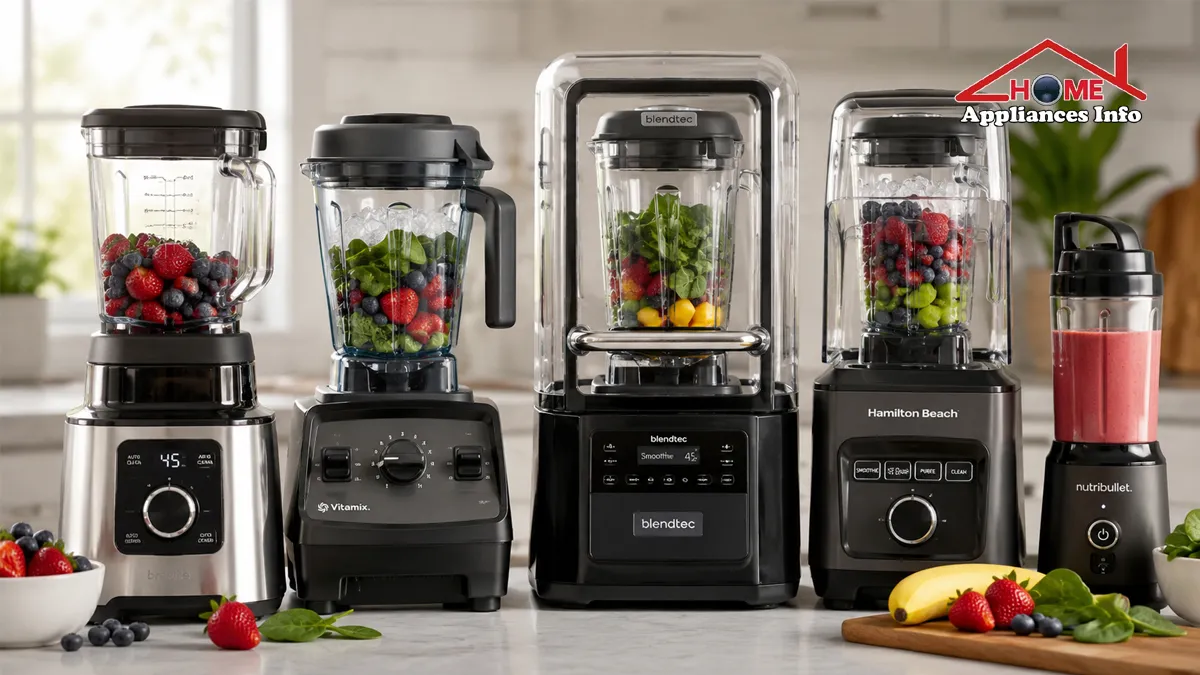
Quick Comparison: 5 Quiet Blenders for Smoothies
| 🥤 Blender | 🎯 Best for | 🔇 Noise-reduction approach | ⚡ Smoothie performance |
|---|---|---|---|
| Breville Super Q | Quiet premium blending | Noise-suppression cooling system | Excellent |
| Vitamix Ascent X5 | Best overall quiet full-size blender | Relatively quiet high-performance design | Excellent |
| Blendtec Professional 800 | Sound enclosure | Sealed sound enclosure | Excellent |
| Hamilton Beach Professional Quiet Blender | Value + frozen ingredients | Quiet shield and vibration control | Very good |
| Nutribullet Flip | Personal smoothies | Insulated stainless-steel vessel | Very good for its size |
1. Breville Super Q — Best for Quiet Premium Smoothies
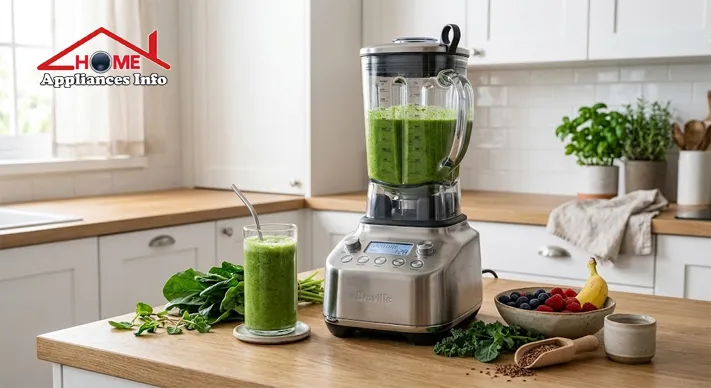
The Breville Super Q is one of the strongest choices if your priority is reducing noise without giving up full-size blending power.
Independent testing from Allrecipes named the Super Q its quietest blender, recording an average of 82.1 dBA during its testing. The same evaluation found it particularly capable with smoothies and soups.
Breville takes a different approach from a traditional sound dome. The Super Q uses a dedicated cooling system designed to reduce operating noise, while the blender itself has an 1,800-watt motor, a 68-ounce jug, 12 speed settings and five one-touch programs. Two of those programs are specifically designed for smoothies.
That makes it a particularly sensible choice for households that want one blender for much more than breakfast drinks. It can handle frozen desserts, ice, sauces, nut butters and soups as well as smoothies.
The included personal blending attachment is another useful feature if you occasionally want a smaller serving rather than filling the large jug.
Why choose it:
- Strong full-size smoothie performance
- 68-ounce jug
- 1,800-watt motor
- Dedicated noise-suppression technology
- Two smoothie programs
- Personal blending attachment
- 12 speed settings
The drawback: The Super Q is a premium purchase. Breville’s U.S. site currently lists it at $499.95, so it makes more sense for frequent blender users than someone making an occasional smoothie.
Best for: Daily smoothie drinkers who want premium performance with less disruptive operating noise.
2. Vitamix Ascent X5 — Best Overall Quiet Full-Size Blender
If you want a blender that combines low noise with broad performance, the Vitamix Ascent X5 is arguably the most complete choice on this list.
RTINGS’ May 2026 update currently places the Ascent X5 at the top of its quiet-blender rankings. Its maximum-speed noise measurement was 89.0 dBA, and RTINGS describes that as quiet for a full-size high-performance blender.
The important point is that the X5 is not merely quiet for easy recipes. RTINGS found that it produces very smooth results with fibrous smoothie ingredients, handles crushed ice effectively and performs well with thick mixtures such as nut butter.
It has a 48-ounce container and a broad range of programs and speed controls. The X5 also uses Vitamix’s SELF-DETECT system with compatible containers, allowing the machine to recognize the container and adjust operation accordingly.
This makes it a strong option for someone who does not want to buy a blender solely for smoothies. You can use it for soups, sauces, frozen drinks and other demanding kitchen jobs.
Why choose it:
- Excellent smoothie texture
- Strong performance with leafy greens
- Effective ice crushing
- Quiet for a high-powered full-size blender
- Broad range of blending programs
- High build quality
- Useful for many kitchen tasks beyond smoothies
The drawback: It is expensive, and its 48-ounce capacity is somewhat smaller than some competing full-size models. RTINGS also notes that some competitors process fibrous ingredients faster.
Best for: Buyers who want a premium quiet blender that can handle smoothies, ice, soups, nut butter and other demanding recipes.
3. Blendtec Professional 800 — Best Blender With a Sound Enclosure
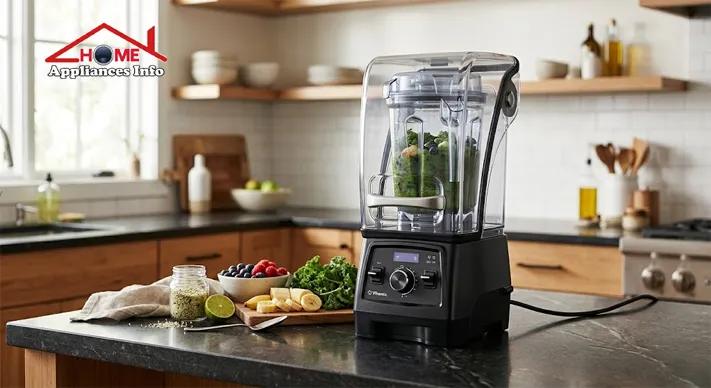
If your main search is for a quiet blender with sound shield, the Blendtec Professional 800 deserves special attention.
Its defining feature is a physical sound enclosure that surrounds the blending area. Instead of relying entirely on motor design, the enclosure acts as a barrier between the blender and the surrounding room.
The Professional 800’s documentation also emphasizes airflow and cooling. Its motor housing is designed to optimize sound and airflow, while the installation instructions warn users not to obstruct the vents or rear exhaust.
That last point matters. A sound enclosure should never be improvised in a way that blocks ventilation. High-powered blender motors generate heat, and airflow is part of the appliance’s operating design.
The Professional 800 is also built for demanding recipes. Its control system provides 11 manual speed levels and programmed blending cycles, making it suitable for smoothies and frozen preparations.
Why choose it:
- Dedicated sound enclosure
- High-powered motor
- Designed specifically around noise reduction
- Multiple speed settings
- Suitable for demanding frozen recipes
- Strong option for frequent smoothie preparation
The drawback: The enclosure makes the blender larger and less convenient to store than a conventional personal blender. It is also more machine than many people need for a single smoothie.
Best for: Serious home users who want substantial sound reduction without moving to a lower-powered blender.
4. Hamilton Beach Professional Quiet Blender — Best Value Full-Size Option
The Hamilton Beach Professional Quiet Blender is worth considering if you want a low noise blender with strong frozen-ingredient performance but do not want to move immediately into the most expensive premium models.
The 58870 model uses a 1,500-watt motor and a dedicated quiet enclosure. Hamilton Beach also describes rubber-mounted components and optimized motor airflow as part of its noise-reduction design. Its manufacturer information says the blender can crush ice and frozen ingredients in seconds and includes smoothie, ice-crush, puree and cleaning programs.
RTINGS’ current testing gives this model a noise score of 8.2 and reports maximum noise of a little over 87 dBA when the noise dome is being used. RTINGS also found that it handles fibrous ingredients such as kale and broccoli well.
That combination makes it particularly interesting for people searching for the quietest blender for frozen fruit and ice. It has enough power for demanding smoothie ingredients while its shield helps reduce the noise reaching the room.
There is, however, an important limitation. RTINGS found that for especially tough mixtures involving nuts and ice, the tamper may be needed and the noise dome has to be removed, making operation noticeably louder.
Why choose it:
- 1,500-watt motor
- Quiet enclosure
- Rubber-mounted components
- Smoothie and ice-crush programs
- Strong frozen-ingredient capability
- Smaller 32-ounce capacity can suit smaller batches
The drawback: The 32-ounce capacity is less convenient for families or large batches, and the quietest operation is not necessarily available during every demanding blending task.
Best for: Users who want a quieter full-size blender for smoothies, frozen fruit and ice without paying the highest premium prices.
5. Nutribullet Flip — Best Low-Noise Personal Blender
The Nutribullet Flip takes a completely different approach to quiet blending. Instead of using a large countertop motor with a noise dome, it combines a portable blender with an insulated stainless-steel vessel.
Homes & Gardens tested more than 50 blender models and selected the Nutribullet Flip as its top quiet-blender choice. Its testing recorded approximately 71–73 dB, substantially lower than the maximum-speed measurements reported for many high-powered countertop machines.
The double-walled stainless-steel construction appears to contribute to its quieter character. Homes & Gardens also found it effective with frozen fruit, seeds and protein-shake ingredients. In one hands-on test, a smoothie containing banana, frozen blueberries, protein powder, yogurt, oat milk, oats and chia seeds measured 73 dB.
However, this is where buyers need to pay attention to the difference between a best low noise personal blender and a quiet full-size blender.
The Flip is designed for individual drinks. It is not the right tool for every ice-heavy or large-batch recipe. Homes & Gardens specifically notes that it cannot crush ice.
RTINGS also measured the Flip differently, recording 87.4 dB at maximum speed. That large difference from the Homes & Gardens figure demonstrates why decibel numbers from different test environments should not be treated as a universal ranking.
Why choose it:
- Compact personal design
- Insulated stainless-steel vessel
- Cordless operation
- Low reported noise in Homes & Gardens testing
- Good for individual smoothies and protein shakes
- Convenient for apartments and offices
The drawback: It is not designed to replace a powerful full-size blender for large quantities or hard ice.
Best for: One-person smoothies, apartments, offices and early-morning blending where minimizing noise matters more than maximum versatility.
Which Is the Quietest Blender for Smoothies?
There is no single universally comparable decibel winner because the major testing sources use different methodologies.
If you follow RTINGS’ current 2026 ranking, the Vitamix Ascent X5 is the best quiet blender they have tested, with a maximum measurement of 89.0 dBA.
If you look at Allrecipes’ testing, the Breville Super Q was their quietest model, averaging 82.1 dBA.
For a personal blender, Homes & Gardens’ testing of the Nutribullet Flip produced a much lower 71–73 dB result, although RTINGS’ own test produced 87.4 dB.
The practical takeaway is more useful than choosing a winner based on one number:
- Quiet premium full-size: Breville Super Q
- Best overall quiet full-size: Vitamix Ascent X5
- Best sound enclosure: Blendtec Professional 800
- Best value for quiet frozen blending: Hamilton Beach Professional Quiet Blender
- Best personal option: Nutribullet Flip
What Makes a Blender Quiet?
A blender’s noise comes from several sources: the motor, cooling airflow, blades interacting with ingredients and vibration transmitted into the countertop.
A blender with noise reduction can therefore use several different strategies.
Sound enclosure
A physical shield or dome blocks some airborne sound. The Blendtec Professional 800 is a clear example of this approach.
Vibration control
Rubber-mounted components can reduce the vibration transferred from the motor into the blender base and countertop. Hamilton Beach specifically includes this type of design in its Professional Quiet Blender.
Cooling-system design
Motor cooling can also contribute to operating noise. Breville specifically says the Super Q’s cooling system reduces operating noise.
Insulated containers
The Nutribullet Flip demonstrates another approach. Its insulated stainless-steel vessel helps change how sound is transmitted while also keeping the drink cold. Homes & Gardens’ hands-on testing found it noticeably quieter than many conventional blenders.
Quietest Blender for Frozen Fruit and Ice: What Should You Look For?
Frozen ingredients change the equation.
Ice and frozen fruit create more resistance and impact than soft ingredients such as bananas, yogurt or milk. A blender can therefore be relatively quiet during an easy smoothie but become much louder when asked to crush hard ice.
For frequent frozen smoothies, prioritize:
- Adequate motor and blade performance
- A container designed for the manufacturer’s recommended ingredients
- A tamper where appropriate
- A sound enclosure or shield if noise is a major concern
- Sufficient capacity for your typical batch
- Proven performance with frozen ingredients rather than wattage alone
The Vitamix Ascent X5, Hamilton Beach Professional Quiet Blender and Blendtec Professional 800 are better suited to demanding frozen recipes than a small personal blender. RTINGS found the Ascent X5 particularly strong at producing snow-like crushed ice, while Hamilton Beach specifically markets its Professional Quiet Blender for ice and frozen ingredients.
How to Make a Blender Quieter
If you already own a noisy blender, you may be able to reduce the perceived noise without replacing it.
Put it on a vibration-damping surface
A suitable silicone mat or thick towel can help reduce vibration transferred to the countertop. Homes & Gardens also recommends placing a dish towel or silicone mat underneath a countertop blender.
Do not cover ventilation openings.
Move it away from walls and corners
Hard surfaces can reflect sound back into the room. Leaving reasonable space around the blender can make the sound feel less concentrated.
Consider a purpose-built sound enclosure
A properly designed blender sound enclosure can reduce escaping noise. Commercial blenders commonly use this approach.
Do not improvise an enclosure that blocks cooling airflow. The Blendtec Professional 800 manual specifically requires unobstructed vents and exhaust for proper cooling.
Check for unusual mechanical sounds
A blender that suddenly becomes much louder may have a mechanical problem rather than simply being a naturally noisy machine. Grinding, squealing or unusual high-pitched sounds are worth investigating according to the manufacturer’s troubleshooting guidance.
Avoid overloading the container
Follow the manufacturer’s maximum capacity and recommended liquid-to-solid ratios. Overloading can make the motor work harder and can increase vibration.
How We Would Choose a Quiet Blender for Home Use
Noise should be only one part of the decision.
A silent blender for smoothies is unrealistic because high-speed blades moving through frozen fruit and ice inevitably produce sound. The better target is a blender that reduces unnecessary motor, vibration and airborne noise while still producing the texture you want.
Consider these factors together:
Noise: Prefer independent measurements, but compare them cautiously because test conditions differ.
Smoothie texture: A quiet machine is not useful if it leaves fibrous greens, seeds or fruit chunks behind.
Frozen ingredients: Regular ice and frozen-fruit users should prioritize actual blending capability rather than choosing the lowest advertised noise number.
Capacity: A personal blender is convenient for one serving, while 32-, 48- or 68-ounce machines are more practical for families and larger batches.
Noise enclosure: If sound is your biggest concern, a purpose-designed shield can provide a meaningful advantage.
Cleaning: Dishwasher-safe parts or dedicated cleaning programs can make a noticeable difference for daily use.
Price: Noise reduction can add significantly to the purchase price. Decide whether you need professional-level sound control or simply want something quieter than a conventional high-powered blender.
For more appliance buying guidance, you can also browse the site’s Kitchen Appliances category, which includes guides and reviews covering small and large kitchen equipment.
Frequently Asked Questions
Is there a completely silent blender?
No. A high-speed blender cannot realistically be completely silent because its motor, blades, airflow and ingredients all generate sound. The goal is meaningful noise reduction, not zero noise.
Is a quiet blender good for ice?
It can be, but quietness does not guarantee ice-crushing ability. If you frequently use ice, look for a model with independently verified ice performance or clear manufacturer guidance. The Vitamix Ascent X5 and Hamilton Beach Professional Quiet Blender are stronger choices for this use than many small personal machines.
Is a sound shield better than a quiet motor?
Not necessarily. A sound shield blocks airborne noise, while motor design, cooling and vibration control can reduce noise at its source. The most effective designs may combine several approaches.
Can I make my existing blender quieter?
Yes, to some extent. A suitable vibration-damping mat, positioning the blender away from reflective corners and using a properly designed sound enclosure can reduce perceived noise. Never block the motor’s ventilation.
Which quiet blender is best for one person?
The Nutribullet Flip is particularly attractive for individual smoothies because of its portable insulated design and low noise measured by Homes & Gardens. However, it is not intended to replace a full-size blender for every frozen or ice-heavy recipe.
Final Verdict
The quietest blender for smoothies depends on the type of blender you need rather than a single decibel figure.
For a premium full-size machine, the Breville Super Q is a strong choice, particularly because Allrecipes found it to be the quietest blender in its own testing.
For the strongest current all-around recommendation, the Vitamix Ascent X5 has an excellent case. RTINGS currently ranks it as its best quiet blender, while also giving it strong scores for smoothies, ice crushing and general versatility.
If your priority is a quiet blender with sound shield, the Blendtec Professional 800 stands out because the sound enclosure is an integral part of its design.
For frozen fruit and ice without stepping straight into the most expensive category, the Hamilton Beach Professional Quiet Blender offers a useful combination of power, a quiet enclosure and frozen-ingredient capability.
And if you only need individual smoothies, the Nutribullet Flip is worth considering as a low-noise personal option, particularly if portability and insulation are useful to you.
The key is not to chase the lowest published dB number. Instead, choose a blender whose noise-reduction design, smoothie performance, frozen-ingredient capability, capacity and price fit the way you actually use it.
References
- RTINGS — The 5 Best Quiet Blenders of 2026 — Current 2026 comparative testing and noise measurements.
- Breville — Super Q Official Product Page — Manufacturer specifications, programs and noise-suppression design.
- Homes & Gardens — Quietest Blender Testing — Independent hands-on testing methodology and Nutribullet Flip noise results.

🌐 FOUNDER & DIGITAL PUBLISHER
Muhammad Ali
Founder | SEO Strategist & E-E-A-T Digital Publishing Specialist

📈 SEO Strategy
🛠️ Appliance Optimization
🛡️ E-E-A-T Standards
Muhammad Ali is a digital publisher, SEO strategist, and founder of Home Appliances Info. He specializes in home appliance optimization, structured schema networks, and advanced E-E-A-T digital publishing standards to ensure accurate, trustworthy content across the platform.