

To support our research and detailed appliance reviews, we may earn a small commission from qualifying purchases made through our links, at no extra cost to you. As an Amazon Associate, I earn from qualifying purchases.
To support our research and detailed appliance reviews, we may earn a small commission from qualifying purchases made through our links, at no extra cost to you. As an Amazon Associate, I earn from qualifying purchases.
If you love cooking on real flame but feel boxed in by a standard 30-inch range, a 36 inch gas stove can feel like moving from a compact car into a chef’s workshop. In my experience testing and comparing pro-style ranges, this size hits a practical sweet spot: bigger cooking surface, stronger burners, more oven room, and a premium look without the huge footprint of a 48-inch commercial-style appliance.
For many serious home cooks, the question is not only “Which model looks best?” It is also “Will it fit my kitchen, my cooking habits, and my ventilation setup?” That is where this guide helps.
We reviewed standout 2026 options across performance, value, design, and usability. We also looked closely at the real-world trade-offs: installation, heat output, oven capacity, cleaning, and range hood CFM requirements.
If you are comparing Gas stove won’t ignite?, Samsung Smart Stove, or Electric Stove guides on your site, this article gives you the gas-range side of the story in plain language.
Quick Verdict: Best 36 Inch Gas Range for Home Use
When choosing the best 36 inch gas range for home use, I look for five things first:
- Burner layout that fits multiple pans
- High BTU output with true low simmer control
- Strong continuous cast iron grates
- Reliable convection oven capacity
- Sensible installation and service support
Here are my top picks for 2026.
| Rank | Model | Best For | Burner Power | Oven Style | Why We Like It |
|---|---|---|---|---|---|
| 1 | Monogram Statement Collection 36″ Gas Range | Best Overall Pro Range | Up to 23,000 BTUs | Convection | Luxury finish, brass burners, smart features |
| 2 | Bosch 800 Series 36″ Industrial Gas Range | Best Commercial Style | Up to 18,000 BTUs | Convection with probe | Sleek design, sturdy build, strong value |
| 3 | KitchenAid 36″ Freestanding Gas Range | Best Premium Value | Up to 20,000 BTUs | Even-Heat True Convection | Great baking consistency and burner strength |
| 4 | Forno Alta Qualita 36″ Stainless Steel Range | Best Budget Pro Look | Multiple Italian burners | Large oven cavity | Pro styling under many luxury price points |
| 5 | Thor Kitchen 36″ Professional Gas Range | Best Practical Pro-Style Pick | High-output burners | Convection | Strong restaurant-inspired design for less |
1. Monogram Statement Collection 36″ Gas Range: Best Overall Pro Range
The Monogram Statement Collection 36-inch range is the model I would choose for a high-end kitchen where performance and appearance matter equally.
It feels polished. The knobs have weight. The brass burners look premium. The cooking surface gives you the confidence to run pasta water, a cast-iron steak pan, and a sauce pot at the same time.
Its dual-stack brass burners can reach up to 23,000 BTUs, depending on configuration. That matters when you want fast boiling or serious searing. But what impressed me more is the low-end control. High BTU simmer burners are only useful if they can also hold a gentle flame without scorching sauces.
Why it stands out
- Dual flame burner power for high heat and low simmering
- SmartHQ app compatibility on select Monogram models
- Heavy continuous cast iron grates
- Premium stainless and brass design
- Strong fit for luxury remodels
This is a true commercial style gas range for homeowners who cook often and want the appliance to become a centerpiece.
Best for: serious home chefs, luxury kitchens, frequent entertainers.
2. Bosch 800 Series 36″ Industrial Gas Range: Best Commercial Style
Bosch has a reputation for clean European engineering, and the 800 Series industrial-style range fits that identity well. It looks professional without feeling overly bulky.
In my experience, Bosch appliances often appeal to people who want precision rather than flash. The 36-inch industrial gas range gives you six dual-flame burners, front-mounted controls, and a built-in temperature probe on select models.
That probe is more useful than many people realize. For roast chicken, prime rib, or holiday turkey, it reduces guesswork. Instead of opening the oven repeatedly, you can track internal temperature more accurately.
What I noticed
- Front controls feel intuitive
- Cast iron grates are sturdy and easy to slide pans across
- Oven temperature management is consistent
- Design works in both modern and transitional kitchens
If you want a pro-style look but do not want the price to climb into ultra-luxury territory, Bosch deserves a close look.
Best for: modern kitchens, design-focused homeowners, practical pro-style cooking.
3. KitchenAid 36″ Freestanding Gas Range: Best Premium Value
KitchenAid often sits in that useful middle lane: more premium than entry-level, less intimidating than ultra-luxury brands.
The 36-inch KitchenAid freestanding gas range brings strong burner output and Even-Heat True Convection. That convection system matters if you bake often. Cookies, sheet-pan dinners, and roasts benefit from steady airflow.
I also like KitchenAid for families who cook daily but do not want their kitchen to feel like a restaurant line. It is approachable, capable, and easier to understand than some feature-heavy luxury ranges.
Why it makes sense
- Two powerful 20,000 BTU Ultra Power dual-flame burners
- Even-Heat True Convection oven
- Practical controls
- Premium look without extreme pricing
- Good balance for daily cooking and weekend entertaining
This may be the best 36 inch gas range for home use if you want serious performance but still care about value.
Best for: families, bakers, daily cooks, premium-value shoppers.
4. Forno Alta Qualita 36″ Stainless Steel Range: Best Budget Pro Look
Forno has become popular with homeowners who want the look of a professional range without spending luxury-brand money.
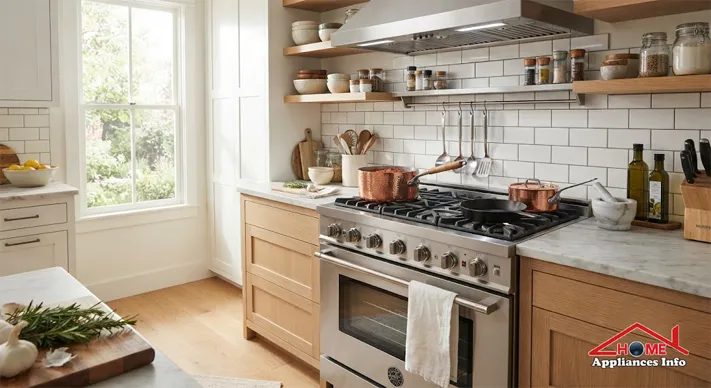
The Alta Qualita 36-inch stainless steel range usually offers six Italian Defendi-style burners, continuous cast iron grates, and a large oven cavity. It looks substantial. It gives you the visual impact many remodelers want.
Is it as refined as Monogram or Bosch? Not usually. The knobs, hinges, and oven controls may feel less premium. But for the price, it delivers a lot of range.
Where it wins
- Strong stainless steel presence
- Six-burner layout
- Budget-friendly pro styling
- Good option for remodels with cost limits
For homeowners trying to stretch renovation dollars, Forno is worth considering. Just check local service availability before buying. A lower purchase price is less attractive if repairs become difficult later.
Best for: budget remodels, rental upgrades, pro-style design on a tighter budget.
5. Thor Kitchen 36″ Professional Gas Range: Best Practical Pro-Style Pick
Thor Kitchen often competes in the value pro-style category. Its 36-inch professional gas ranges usually offer high-output burners, stainless construction, and convection ovens.
I see Thor as a practical choice for people who want the “chef’s kitchen” look but are not chasing ultra-premium brand prestige.
The cooking surface is spacious. The grates feel strong enough for large cookware. The oven capacity is useful for roasting, baking, and holiday meals.
Consider Thor if you want:
- Professional styling
- A six-burner layout
- Strong heat output
- A lower price than many luxury ranges
As with Forno, service and warranty support should be part of the buying decision.
Best for: value-focused buyers who still want a commercial-style look.
36 Inch Gas Cooktop vs Range: Which One Should You Choose?
The 36 inch gas cooktop vs range decision depends on your kitchen layout and how you like to move while cooking.
A range combines the cooktop and oven in one appliance. A cooktop separates the burners from the oven, usually paired with a wall oven.
| Feature | 36-Inch Gas Range | 36-Inch Gas Cooktop + Wall Oven |
|---|---|---|
| Appliance setup | Cooktop and oven combined | Separate cooktop and oven |
| Best for | Compact cooking zones | Custom kitchen layouts |
| Oven access | Bend down to use oven | Wall oven can sit at eye level |
| Installation | Usually simpler | Often more expensive |
| Cabinet needs | One 36-inch opening | Separate cutouts required |
| Controls | Front panel knobs | Top-mounted controls |
| Multi-cook workflow | One central zone | Split cooking zones |
In my experience, ranges are better for homeowners who want one strong anchor appliance. Cooktops with wall ovens are better for people designing a custom kitchen from scratch.
If you already have a 36-inch cabinet opening, a range is usually the cleaner path. If you are planning a full renovation, the cooktop-and-wall-oven setup may offer better ergonomics.
This is also where freestanding vs slide-in range matters. Freestanding ranges are often easier to install and have finished sides. Slide-in ranges create a more built-in look but need more precise cabinet planning.
36 Inch Gas Stove Pros and Cons
Before buying, it helps to be honest about the 36 inch gas stove pros and cons. Bigger is not always better. It depends on your kitchen and cooking style.
Pros
More burner space
You can use multiple large pans without crowding. A 12-inch cast iron skillet, stockpot, and saucepan can sit together more comfortably.
Higher heat output
Many 36-inch pro-style ranges offer burners from 18,000 to 23,000+ BTUs. That helps with boiling, wok cooking, and searing.
Better visual impact
A stainless 36-inch range immediately gives a kitchen a more premium feel.
Larger oven cavity
Many models offer 4.5 to 5.5+ cubic feet of oven space. That helps with turkey, large baking sheets, and batch cooking.
Stronger grates
Continuous cast iron grates make it easier to slide heavy pots from burner to burner.
Cons
More space required
You need a true 36-inch opening. In a small kitchen, those extra six inches may cost valuable cabinet or prep space.
Ventilation becomes more important
High-output burners create more heat, steam, grease, and combustion byproducts. Plan your kitchen appliance layout and ventilation early.
Higher price
A standard 30-inch range can cost under 1,000.Many36−inchgasrangesstartaround1,000.Many36−inchgasrangesstartaround2,000 and can climb above $8,000.
Installation may cost more
Gas line capacity, hood size, cabinet changes, and delivery access can all affect the final cost.
The National Fire Protection Association emphasizes safe cooking habits and proper attention around cooking equipment. Their guidance on home cooking safety is useful for any gas range owner.
Is a 36 Inch Stove Worth It?
So, is a 36 inch stove worth it? Yes, if you cook often, use large cookware, or are building a kitchen around performance.
I would not recommend one just for looks. A 36-inch range deserves proper ventilation, cabinet space, and enough cooking activity to justify the cost.
It is worth it if:
- You cook for groups or meal prep weekly
- You often use three or more burners at once
- You own oversized cookware
- You want a premium focal point in your kitchen
- You are already remodeling cabinets and ventilation
It may not be worth it if:
- You cook lightly
- Your kitchen is narrow
- You rarely use the oven
- You do not want to upgrade the hood
- You are working with a strict appliance budget
For many families, the best 36 inch gas range for home use is not the most expensive one. It is the one that fits the way dinner actually happens on a Tuesday night.
Ventilation: The Detail Buyers Often Miss
Ventilation can make or break the experience of owning a 36 inch gas stove.
High-BTU ranges produce more heat and cooking fumes than basic ranges. Many installers recommend a range hood in the 600 to 900+ CFM range for powerful 36-inch gas models, depending on total burner output, duct length, and kitchen layout.
Always check the range manufacturer’s installation manual. Local building codes may also affect what you can install. Some high-CFM hoods require make-up air systems.
The U.S. Department of Energy offers general guidance on kitchen appliances, and ventilation manufacturers often publish specific range hood sizing charts. For deeper planning, review range hood CFM requirements from ventilation-focused resources.
In plain terms: do not buy a pro range and pair it with a weak hood. It is like putting racing tires on a car with bad brakes.
Buying Checklist for 2026
Before you choose, measure twice and compare carefully.
Key things to verify
- Exact cutout width, depth, and height
- Gas type: natural gas or liquid propane
- Burner BTU ratings
- Simmer performance
- Oven cubic footage
- Convection oven capacity
- Broiler type
- Grate weight and layout
- Warranty coverage
- Local repair availability
- Hood size and duct path
- Electrical outlet requirements
Also think about your cooking habits. If you bake often, prioritize convection consistency. If you stir-fry, look at burner output. If you make sauces, test simmer control reviews carefully.
For smart-home shoppers, models like Samsung Smart Stove appliances may appeal because of connected features, though many pro-style 36-inch gas ranges focus more on mechanical performance than app control.
Best Use Cases: Which Range Fits Your Home?
For luxury remodels
Choose Monogram. It brings refinement, smart features, and strong cooking power.
For modern design lovers
Choose Bosch. It looks clean and performs with precision.
For family cooking
Choose KitchenAid. It balances power, baking, and approachable design.
For budget-conscious pro style
Choose Forno or Thor Kitchen. Both deliver the look and layout many homeowners want at a lower price.
For small kitchens
Think carefully. A 30-inch range or Electric Stove may be more practical if ventilation and cabinet space are limited.
FAQs About 36-Inch Gas Stoves
What is the standard oven capacity of a 36-inch gas range?
Most 36-inch gas ranges offer about 4.5 to 5.5+ cubic feet of oven space. That is enough for large roasting pans, oversized trays, and holiday cooking.
Do I need a special hood for a 36-inch gas stove?
Usually, yes. High-output burners need stronger ventilation. Check the manufacturer’s range hood CFM requirements and local code before installation.
Is a 36-inch gas stove better than a 30-inch model?
It is better if you need more burner space, higher BTU output, and larger oven capacity. If you cook lightly, a 30-inch model may be more efficient and affordable.
What should I do if my gas stove will not ignite?
Check whether the burner cap is seated correctly, the igniter is clean, and the gas supply is on. For more troubleshooting, see Gas stove won’t ignite? before calling service.
Are 36-inch gas ranges hard to install?
They can be. The appliance is heavier, the cutout must be exact, and ventilation matters. Gas connection work should be handled by a qualified professional.
Which is better: a 36-inch gas cooktop or a range?
For simple installation, choose a range. For custom ergonomics and wall-oven convenience, choose a cooktop. The 36 inch gas cooktop vs range choice depends on layout and budget.
Conclusion: Which 36 Inch Gas Stove Should You Buy?
A 36 inch gas stove is worth it when it solves a real cooking problem: crowded burners, limited oven room, slow boiling, or a kitchen design that needs a professional focal point.
If I were choosing the best all-around model, I would start with the Monogram Statement Collection. For clean industrial styling, Bosch is excellent. For value and daily family use, KitchenAid is hard to ignore. For a pro look on a tighter budget, Forno and Thor Kitchen deserve consideration.
My final advice: do not shop by BTUs alone. Look at simmer control, oven performance, grates, service support, and ventilation. The right range should make weeknight cooking easier, not just make your kitchen look impressive.
If you are still comparing fuel types, your next step may be reviewing Electric Stove options. If you already own a connected appliance, Samsung Smart Stove troubleshooting may also help you decide whether smart features matter in your next upgrade.
References
- National Fire Protection Association: home cooking safety
- U.S. Department of Energy: kitchen appliances
- Home Ventilating Institute: range hood CFM requirements

🌐 FOUNDER & DIGITAL PUBLISHER
Muhammad Ali
Founder | SEO Strategist & E-E-A-T Digital Publishing Specialist

📈 SEO Strategy
🛠️ Appliance Optimization
🛡️ E-E-A-T Standards
Muhammad Ali is a digital publisher, SEO strategist, and founder of Home Appliances Info. He specializes in home appliance optimization, structured schema networks, and advanced E-E-A-T digital publishing standards to ensure accurate, trustworthy content across the platform.