

To support our research and detailed appliance reviews, we may earn a small commission from qualifying purchases made through our links, at no extra cost to you. As an Amazon Associate, I earn from qualifying purchases.
To support our research and detailed appliance reviews, we may earn a small commission from qualifying purchases made through our links, at no extra cost to you. As an Amazon Associate, I earn from qualifying purchases.
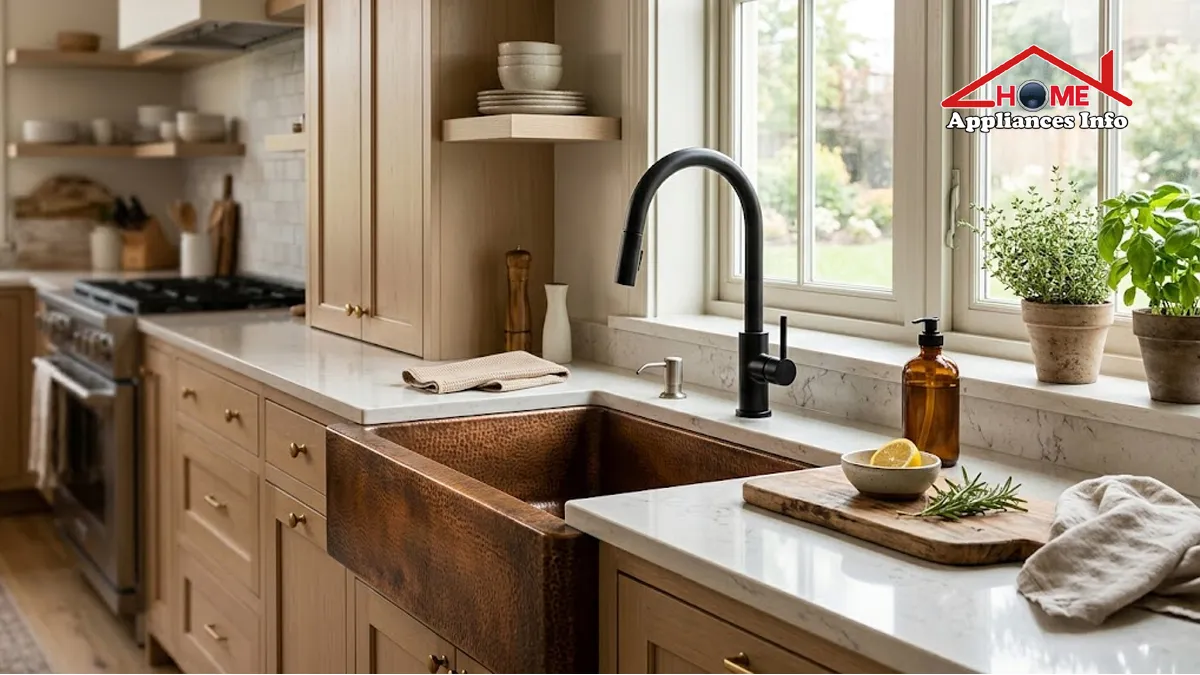
If you are considering a copper kitchen sink, you are probably looking for more than a basic place to wash dishes. You want character. Warmth. Something that feels crafted rather than mass-produced. I understand the appeal. In my experience, copper sinks tend to become the visual anchor of a kitchen, whether they are installed in a rustic farmhouse space or paired with sleek stone counters in a more modern remodel.
But beauty alone is not enough. Before buying, I always tell homeowners to look closely at durability, finish behavior, installation style, and maintenance habits. A copper sink can last for decades, but only if you choose the right one for the way you actually cook and clean.
I have seen buyers fall in love with the look of unlacquered raw copper, then get surprised when the finish changes after a few weeks of use. I have also seen families choose the wrong gauge and regret it later. This guide breaks it all down in plain English so you can buy with confidence, avoid common mistakes, and understand exactly how to clean and maintain a copper kitchen sink without stress.
If you are also comparing layouts, style pairings, or surrounding fixtures, articles like Corner Kitchen Sink Ideas can help you think beyond the basin itself.
1. Why a copper kitchen sink stands out
A copper sink is not just a trend piece. It is a living material. That matters.
Unlike painted surfaces or coated metals, copper changes over time. The color deepens. Highlights shift. Areas that get touched often may brighten, while low-contact spots darken into a rich brown or bronze tone. That evolving surface is called a patina, and for many homeowners, it is the whole point of choosing copper.
In my experience, this is where expectations matter most. If you want a perfectly static finish, copper may not be the best fit. But if you appreciate materials that age with use, a living finish copper sink can be deeply rewarding.
Here is why many buyers choose it:
- Warm, distinctive appearance
- Naturally evolving patina
- Strong visual fit for farmhouse, Craftsman, rustic, and transitional kitchens
- Noticeable antibacterial properties of copper
- Better sound dampening than very thin stainless models
Most studies agree that copper has natural antimicrobial behavior, which is one reason it has been studied in healthcare and high-touch environments. That does not replace cleaning, but it does add practical value in a working kitchen.
For style inspiration, copper often pairs beautifully with apron front apron farmhouse sink designs, especially in kitchens with wood cabinetry, soapstone, butcher block, granite, or aged brass fixtures.
2. Do copper kitchen sinks dent or rust?
This is one of the first questions I hear: do copper kitchen sinks dent or rust?
The answer is simple.
Copper does not rust
Rust is iron oxide. Copper contains no iron. So a copper sink will not rust the way cast iron or steel can. Instead, it reacts with air, moisture, and acidic substances to form a patina. That surface change is normal. In fact, it helps protect the metal underneath.
If you notice darker spots, amber tones, brown shading, or even occasional greenish oxidation in rare conditions, that is not rust. It is part of copper’s natural aging process.
For general reference on copper’s material behavior, the Copper Development Association remains one of the most trusted industry sources.
Denting depends on copper sink gauge thickness
This part is more nuanced. Copper is softer than stainless steel. So yes, it can dent if it is too thin or if it takes a hard hit from heavy cookware.
What I have noticed over time is that complaints about denting usually trace back to low-quality, lightweight sinks.
Use this rule:
- Lower gauge number = thicker copper
- Higher gauge number = thinner copper
For most households, I recommend:
- 14-gauge for heavy daily use
- 16-gauge for a strong balance of durability and cost
- Avoid 18-gauge or thinner if you cook often or use heavy pots
A quality sink made from thick, high-purity copper is far more resilient than many buyers expect.
3. Hammered copper kitchen sink pros and cons
When clients ask me what finish is most forgiving, I usually point them toward hammered copper. The texture is not just decorative. It changes how the sink looks, ages, and hides wear.
Let’s walk through the real hammered copper kitchen sink pros and cons.
Pros of a hammered finish
1. It hides scratches and water spots better
This is the big one. A hammered texture breaks up reflections and disguises everyday marks. In a busy kitchen, that matters.
2. It supports a rich, blended patina
On smooth copper, patina changes can look dramatic. On hammered copper, those changes feel softer and more organic.
3. It reduces visible dings
If a minor ding does happen, the hand-worked surface helps it blend in.
4. It often feels quieter
Thicker copper plus surface texture can soften the sharp, echoing sound that some metal sinks produce.
Cons of a hammered finish
1. It usually costs more
Hand-hammered sinks require more labor and craftsmanship. Prices often start around the mid-range and climb quickly.
2. Deep texture can trap residue
This is not a major issue on quality designs, but overly deep hammer marks may catch soap film or food particles if not rinsed well.
3. It leans more rustic in appearance
That is a plus for some kitchens and a drawback for others. If your style is ultra-minimal, a smoother design may fit better.
Quick comparison table
| Feature | Hammered Copper Sink | Smooth/Polished Copper Sink |
|---|---|---|
| Scratch visibility | Low | Higher |
| Water spot visibility | Low to moderate | High |
| Patina appearance | Blended and textured | More dramatic and noticeable |
| Maintenance feel | More forgiving | More hands-on |
| Style fit | Rustic, farmhouse, Craftsman | Modern, formal, sleek |
| Price | Often higher | Varies widely |
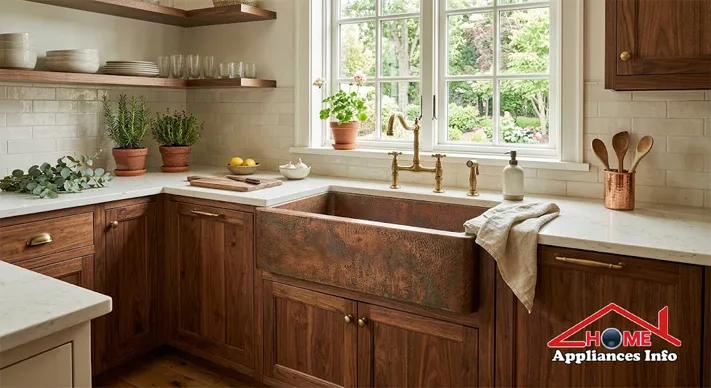
4. How to choose the best undermount copper kitchen sink
If you want clean countertop lines, the best undermount copper kitchen sink can be an excellent investment. I often recommend undermount models to homeowners who prefer easy crumb cleanup and a seamless stone-to-sink transition.
That said, undermount installation requires more planning than a drop-in sink.
What to look for
Flat, sturdy mounting rim
A true undermount sink needs a flat lip that seals tightly against the underside of the counter.
Strong support below
Copper sinks, especially 14-gauge models, can be heavy. Add water and cookware, and the load increases. Your installer should include solid bracing under the cabinet.
Countertop compatibility
Undermount copper works especially well with stone surfaces. I have seen great results with granite and quartz countertop integration, where the warm copper contrasts beautifully with cool gray or white slabs.
Basin configuration
Choose based on how you cook:
- Single bowl: Best for sheet pans, stock pots, and oversized cookware
- Double bowl: Better for multitasking, hand-washing, and food prep separation
Purity and construction
Look for 99% pure copper or lead-free virgin copper when possible. Quality material affects both appearance and long-term performance.
If your kitchen workflow includes frequent drain issues or disposal use, it is also smart to think ahead about maintenance. Practical guides like How to Unclog a Kitchen Sink can complement your sink decision, especially if you are planning a full remodel.
5. How to clean and maintain a copper kitchen sink
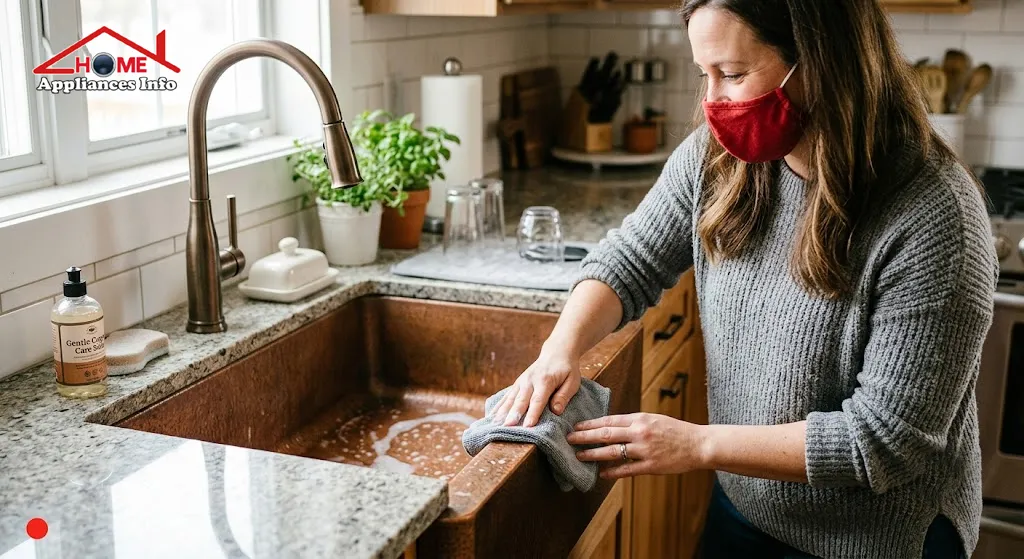
This is where many buyers get nervous. The truth is, how to clean and maintain a copper kitchen sink is not complicated. It just requires a gentler routine than some other materials.
I tell people to think of copper like leather or wood. It is durable, but it responds best to care, not aggression.
Daily routine
Here is the simple method I recommend:
- Rinse the sink after use
- Wash lightly with gentle dish soap and microfiber cloth
- Wipe it dry at the end of the day
That small habit helps prevent mineral spots and soap buildup.
Monthly protection
To slow uneven oxidation, you can apply:
- Copper wax
- Beeswax
- A manufacturer-approved protective treatment
This is especially helpful if you want more control over a living finish copper surface.
What to avoid
Never use:
- Bleach
- Ammonia
- Harsh drain chemicals
- Steel wool
- Abrasive scouring pads
These products can strip the finish and leave the surface looking blotchy.
What happens if bright spots appear?
This is common. If lemon juice, vinegar, tomato sauce, or another acidic food sits on the surface, it can remove some of the darker patina and reveal brighter copper underneath.
In my experience, the worst thing you can do is panic and over-scrub it. Most of the time, the finish gradually re-darkens with normal use.
That natural evening-out process is one reason some homeowners become interested in copper sink patina restoration. Usually, restoration is not about fixing damage. It is about deciding whether to let the sink age naturally or guide the finish more intentionally.
For practical cleaning science, the American Cleaning Institute offers reliable household care guidance, and the EPA is useful for checking safer product practices.
6. Real-life buying mistakes I see most often
Over the years, I have seen a few patterns repeat. These mistakes are avoidable.
Buying based on looks alone
A dramatic showroom sink may be thin, over-polished, or poorly suited to daily cooking.
Ignoring gauge
This is the biggest quality filter. If the listing hides the gauge, I treat that as a warning sign.
Expecting a static finish
Copper changes. If you hate variation, choose another material.
Using the wrong cleaners
One harsh product can undo the finish you liked in the first place.
Forgetting surrounding design
A sink does not exist in isolation. Faucet finish, cabinet style, and countertop tone all affect the final look. If you are dealing with a full kitchen refresh, adjacent maintenance topics like Remove Heavy Oil Stains Fast can also help protect nearby surfaces and fabrics during renovation or heavy cooking seasons.
7. Buyer checklist before you purchase
Before you commit, I suggest running through this quick list:
- Is it 14-gauge or 16-gauge copper?
- Is the copper high purity or lead-free virgin copper?
- Do you want hammered or smooth?
- Are you comfortable with a changing patina?
- Are you choosing undermount, drop-in, or farmhouse?
- Does it fit your cabinet width and plumbing layout?
- Is the drain opening standard 3.5 inches?
- Will the finish coordinate with your faucet and hardware?
This is also the point where style-focused homeowners often compare sink shapes and placement. Resources like Corner Kitchen Sink Ideas can be surprisingly useful if you are still deciding on kitchen flow.
FAQs
1. Do copper kitchen sinks dent or rust?
Copper sinks do not rust because copper contains no iron. Denting depends mostly on thickness. A 14- or 16-gauge sink is much more resistant to damage than thinner models.
2. What is the best undermount copper kitchen sink for busy kitchens?
The best undermount copper kitchen sink for heavy use is usually a 14- or 16-gauge, high-purity model with solid under-counter support and a basin size that matches your cookware.
3. How do I handle patina changes or bright spots?
Usually, you wait. In most cases, the surface will darken again naturally. If needed, mild copper sink patina restoration methods can help rebalance the finish.
4. How to clean and maintain a copper kitchen sink without damaging it?
Use warm water, gentle dish soap and microfiber cloth, then dry the surface. Avoid bleach, acids, abrasive scrubbers, and harsh drain chemicals.
5. Are hammered copper kitchen sink pros and cons worth considering?
Absolutely. Hammered copper hides wear well and supports a beautiful patina, but it may cost more and can lean rustic in style.
6. Can copper work in modern kitchens too?
Yes. While copper is common in farmhouse spaces, I have seen it look stunning in modern kitchens when paired with flat-panel cabinets, matte black fixtures, and clean stone counters.
Conclusion
A copper kitchen sink is not the right choice for everyone, but for the right homeowner, it offers something few materials can match. Depth. Warmth. Personality. A sense that the kitchen is lived in, not staged.
In my experience, the best results come from matching the sink to your habits. If you want lower visible wear, choose hammered. If you want long-term strength, prioritize copper sink gauge thickness. If you love materials that tell a story over time, an unlacquered raw copper sink with a natural patina may feel exactly right.
And if you go forward, remember this: success is less about polishing and more about consistency. Learn how to clean and maintain a copper kitchen sink with a soft routine, set realistic expectations for the finish, and buy quality from the start.
If you are still comparing layouts, cleanup concerns, or related kitchen care topics, it is worth exploring How to Unclog a Kitchen Sink, Remove Heavy Oil Stains Fast, and Corner Kitchen Sink Ideas as part of your broader decision-making process.
A well-chosen copper sink can become one of the most memorable features in your home. Not because it stays unchanged. But because it changes beautifully with you.
References

🌐 FOUNDER & DIGITAL PUBLISHER
Muhammad Ali
Founder | SEO Strategist & E-E-A-T Digital Publishing Specialist

📈 SEO Strategy
🛠️ Appliance Optimization
🛡️ E-E-A-T Standards
Muhammad Ali is a digital publisher, SEO strategist, and founder of Home Appliances Info. He specializes in home appliance optimization, structured schema networks, and advanced E-E-A-T digital publishing standards to ensure accurate, trustworthy content across the platform.