


To support our research and detailed appliance reviews, we may earn a small commission from qualifying purchases made through our links, at no extra cost to you. As an Amazon Associate, I earn from qualifying purchases.
To support our research and detailed appliance reviews, we may earn a small commission from qualifying purchases made through our links, at no extra cost to you. As an Amazon Associate, I earn from qualifying purchases.
If you have ever cooked bacon in a small kitchen or seared steak under weak ventilation, you already know why choosing the Best Under-Cabinet Range Hood matters. A good hood does more than pull smoke away. It protects cabinets, reduces grease buildup, improves indoor air quality, and makes the kitchen feel calmer while you cook.
In my experience testing and comparing kitchen ventilation setups, the biggest mistake buyers make is focusing only on looks. A sleek stainless hood is nice, but performance comes from the right balance of CFM, noise level, ducting style, filter type, and installation fit.
For 2026, the strongest under-cabinet models are not always the most expensive. Some are quiet and balanced. Some are built for wok cooking and high-heat searing. Others are simple ductless units made for apartments where exterior venting is not possible.
If you are upgrading your kitchen alongside other Smart Kitchen Appliances, this guide will help you choose confidently.
Quick Take: Best Under-Cabinet Range Hood Picks for 2026
The best under-cabinet range hoods in 2026 balance quiet operation, high CFM suction, and flexible ducted or ductless installation.
Here are the models I would shortlist first:
| Model | Best For | Noise | CFM | Type | Price Range |
|---|---|---|---|---|---|
| Broan-NuTone BCSQ130SS | Best overall and quiet performance | Under 5 sones | 300 | Convertible | Mid-range |
| Hauslane Chef Series PS18 | High suction cooking power | Moderate | 860 | Ducted | Premium |
| Broan-NuTone 412401 | Best ductless option | Quiet | N/A | Ductless | Budget |
| Kobe Brillia Premium | Stainless steel performance | Under 5 sones | 750 | Ducted | Premium |
| Broan-NuTone F4030SF | Budget convertible choice | Quiet | 230 | Convertible | Budget |
The Best Under-Cabinet Range Hood for you depends less on the “top rated” label and more on how you cook. A family that boils pasta and reheats meals does not need the same hood as someone who stir-fries three nights a week.
1. Ducted vs. Ductless: The First Decision
This is the most important choice.
A ducted range hood vents smoke, steam, odors, and grease particles outside your home. A ductless hood pulls air through filters and recirculates it back into the kitchen.
Ducted range hoods
Ducted models are usually stronger and better for heavy cooking. If you fry, grill indoors, cook with spices, or use high heat, ducted ventilation is the better long-term choice.
They work especially well when paired with:
- A clear exterior exhaust path
- Proper duct size
- Short duct runs
- Smooth metal ducting
- Correct top vs rear venting alignment
In my experience, ducted hoods feel more “finished.” You notice fewer lingering odors after dinner, and the walls near the stove stay cleaner over time.
The trade-off is installation. A ducted hood may need a contractor, especially if your kitchen does not already have exterior venting. High-CFM models can also require make-up air depending on local building codes.
Ductless range hoods
Ductless models are easier to install. They are common in apartments, condos, rentals, and older homes where cutting through walls or ceilings is not realistic.
Instead of pushing air outdoors, they use grease filters and recirculating charcoal filters to trap odors. If you want to understand how charcoal filtration is commonly used in residential range hoods, Broan-NuTone’s guidance on recirculating charcoal filters is a useful reference.
The best ductless range hood under cabinet is ideal when you cannot add ductwork. Just remember: ductless hoods reduce odors, but they do not remove moisture and heat as effectively as ducted models.
My practical rule
Choose ducted if you own the home, cook often, or use high heat.
Choose ductless if you rent, have no exterior vent route, or cook lightly.
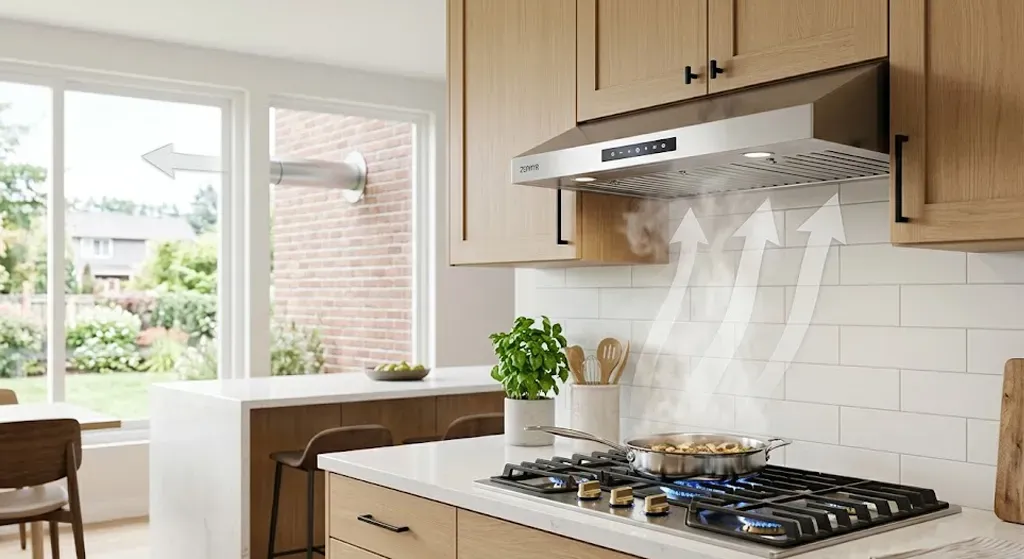
2. CFM: How Much Suction Do You Really Need?
CFM stands for cubic feet per minute. It measures how much air the hood can move. This is also called cfm airflow capacity.
A light-duty electric cooktop may only need 200 to 400 CFM. A larger gas range or serious home cooking setup may need 600 to 900 CFM. For intense wok cooking, indoor grilling, or frequent searing, a high cfm under cabinet hood vent in the 700 to 1200 CFM range makes more sense.
As a general guide:
| Cooking Style | Suggested CFM |
|---|---|
| Light cooking, boiling, reheating | 200–300 CFM |
| Everyday family cooking | 300–500 CFM |
| Gas range with frequent frying | 500–700 CFM |
| Wok cooking, searing, high heat | 700–1200 CFM |
ENERGY STAR offers helpful efficiency context around cfm airflow capacity, especially if you want ventilation that performs well without wasting energy.
One note from experience: more CFM is not always better. A 900 CFM hood in a tiny kitchen can feel loud and aggressive if you only simmer soup. It may also pull conditioned air out of the house quickly. Buy for your real cooking habits, not your dream cooking habits.
3. Noise Level: Why Sones Matter More Than You Think
Range hood noise is measured in sones. A lower sone rating means quieter operation. Most studies and appliance standards agree that sones are easier for homeowners to understand than decibels because they reflect perceived loudness.
A quiet kitchen matters. If your kitchen opens into a living room, a loud hood can ruin conversation. I have used hoods where the highest setting sounded like a bathroom fan trying to become a leaf blower. You end up turning it off, which defeats the purpose.
For open kitchens, I recommend looking for the quietest under cabinet range hood you can find within your CFM needs.
Here is a simple sone guide:
| Sone Rating | What It Feels Like |
|---|---|
| 1–2 sones | Very quiet |
| 3–5 sones | Comfortable for most kitchens |
| 6–8 sones | Noticeable and loud |
| 9+ sones | Best used briefly |
The Home Ventilating Institute is a trusted source for understanding the sone noise level rating used in ventilation products.
In real kitchens, variable speeds matter. A variable speed exhaust fan lets you run the hood low while simmering and high only when smoke appears. That is better than living with one loud setting.
4. Filters: Mesh, Baffle, and Charcoal Explained Simply
Filters affect cleaning, airflow, and long-term performance.
Aluminum mesh filters
These are common in budget and mid-range hoods. They trap grease well enough for everyday cooking but may need frequent washing.
Stainless steel baffle filters
These are heavier and more durable. They are common in premium models like the Hauslane Chef Series PS18 and Kobe Brillia. I prefer dishwasher safe baffle filters because they are easier to maintain and feel sturdier in the hand.
Charcoal filters
Charcoal filters are used in ductless or convertible hoods. They absorb odors but must be replaced regularly. You usually cannot wash and reuse them.
If you cook oily foods often, filter access matters. A hood that is annoying to clean will slowly lose performance because grease buildup blocks airflow.
This is the same principle behind many Energy-Efficient Kitchen Upgrades: maintenance affects performance just as much as product specs.
5. Material and Finish: Why Stainless Steel Still Wins
A good hood lives in one of the harshest spots in the kitchen. It faces heat, steam, oil, and cleaning sprays.
That is why stainless steel remains the best all-around material. A stainless steel finish resists stains, fits modern kitchens, and usually wipes clean with mild soap and a microfiber cloth.
If you want the best stainless steel cabinet range hood, look closely at:
- Gauge and build quality
- Fingerprint resistance
- Seamless or smooth edges
- Filter fit
- Control panel durability
- LED cooktop lighting placement
Models like the Kobe Brillia Premium and Broan-NuTone BCSQ130SS stand out because they combine a clean stainless look with practical kitchen performance.
I also recommend checking the underside. Many buyers admire the front panel but forget they will be staring at the filters and lights every time they cook.
6. Lighting and Controls: Small Features You Use Every Day
Range hood lighting is not a luxury. It changes how confidently you cook.
Good led cooktop lighting helps you see browning, boiling, and smoke before it becomes a problem. I prefer warm or neutral LED lighting over harsh blue-white lights. Food looks more natural under it.
Controls also matter.
Common options include:
- Rocker switches
- Push buttons
- Touch controls
- Digital displays
- Delay shut-off timers
- Auto-clean reminders
Touch controls look sleek, but physical buttons can be easier to use with wet hands. If you are building a kitchen around Smart Kitchen Appliances, you may like modern touch panels. If you value simplicity, a durable switch is perfectly fine.
The best feature is the one you will actually use.
7. Installation Fit: Measure Before You Fall in Love
Most under-cabinet range hoods come in 24-inch, 30-inch, 36-inch, and sometimes 42-inch widths. The hood should be at least as wide as your cooktop. Wider is better if space allows.
For mounting height, many manufacturers recommend around 18 to 30 inches above the cooking surface, depending on the hood and range type. Always follow the product manual and local code.
Also check vent direction.
Top vs rear venting
Some hoods vent upward through a cabinet and ceiling. Others vent through the rear wall. Convertible models may allow both. This top vs rear venting choice can determine whether installation is simple or frustrating.
Before buying, measure:
- Cabinet width
- Cabinet depth
- Distance above cooktop
- Duct opening location
- Outlet location
- Wall stud placement
- Existing vent size
I once helped compare two similar 30-inch hoods for a narrow galley kitchen. The more expensive model looked better, but its rear vent did not match the existing wall opening. The cheaper convertible unit installed cleaner and performed better because it fit the space.
That is a boring detail until it saves you a weekend of drywall repair.
8. Best Models by Use Case
Best Overall: Broan-NuTone BCSQ130SS
The Broan-NuTone BCSQ130SS is my pick for the most balanced everyday option. It has a clean Glacier design, three speeds, effective capture, and a quiet profile under 5 sones.
It is a strong fit for families who cook daily but do not need restaurant-style suction. For many homes, this may be the Best Under-Cabinet Range Hood because it hits the sweet spot: quiet, practical, attractive, and not wildly expensive.
Best High-CFM Power: Hauslane Chef Series PS18
The Hauslane Chef Series PS18 is built for serious cooking. With 860 CFM, dual motors, six-speed touch control, and dishwasher-safe baffle filters, it is a real performer.
Choose it if you sear, fry, or cook with intense aromatics. It is a premium ducted option, so installation matters. But once installed correctly, it can move smoke quickly.
Best Ductless: Broan-NuTone 412401
The Broan-NuTone 412401 is a classic non-ducted hood for apartments and kitchens without exterior venting. It is simple, budget-friendly, and easy to install.
It will not compete with a ducted high-CFM unit, but for light cooking, it does the job. If you need the best ductless range hood under cabinet, this one deserves a close look.
Best Stainless Steel Premium Pick: Kobe Brillia
The Kobe Brillia Premium line offers 750 CFM, ducted performance, and a refined stainless steel design. It works well in modern kitchens where looks and airflow both matter.
It is a smart match for homeowners planning broader upgrades, such as an Induction Cooktop Buying Guide project or a full ventilation refresh.
Best Budget Convertible: Broan-NuTone F4030SF
The Broan-NuTone F4030SF is a reliable choice if you want an affordable ducted under cabinet range hood that can also work ductless with the right setup.
At around 230 CFM, it is not made for heavy frying. But for basic cooking, rental upgrades, or modest kitchens, it offers dependable value.
9. Trade-Offs and Risks Buyers Should Know
Every hood has compromises.
High-CFM models remove smoke quickly, but they can be louder and more expensive to install. Some may require make-up air. Ductless hoods are easy to mount, but they are less effective for moisture, heat, and heavy grease.
Budget units can be perfectly reliable, but they may lack:
- Advanced fan speeds
- Premium lighting
- Low-sone engineering
- Heavy-duty baffle filters
- Fingerprint-resistant stainless steel
- Smart controls
Most experts agree on one consensus point: ducted ventilation is more effective than ductless ventilation when exterior venting is possible. But the best choice is still the one that fits your home.
This is similar to buying comfort products like those covered in a Far Infrared Heater Buying Guide. The “best” model depends on room size, usage, installation limits, and personal comfort.
10. How I Would Choose One for My Own Kitchen
Here is the process I use:
- Decide ducted or ductless first.
- Match CFM to cooking habits.
- Keep noise under 5 sones if possible.
- Choose stainless steel for durability.
- Prioritize easy-clean filters.
- Confirm top vs rear venting.
- Check lighting before buying.
- Read the installation manual before ordering.
If I cooked lightly in an apartment, I would choose the Broan-NuTone 412401.
If I cooked daily in a family kitchen, I would start with the Broan-NuTone BCSQ130SS.
If I cooked with a wok, cast iron, or high-output gas burners, I would choose the Hauslane PS18 or a similar high-CFM ducted hood.
For design-forward kitchens, I would compare Kobe Brillia models against other stainless premium hoods.
FAQ: Under-Cabinet Range Hood Buying Questions
What is the Best Under-Cabinet Range Hood for most homes?
For many everyday kitchens, the Best Under-Cabinet Range Hood is the Broan-NuTone BCSQ130SS. It offers a strong balance of quiet operation, 300 CFM airflow, convertible installation, and stainless steel styling.
Is ducted better than ductless?
Yes, ducted is usually better for performance. It vents smoke, moisture, and odors outside. Ductless hoods are easier to install but rely on charcoal filters and recirculate air back into the room.
How many CFM do I need for a gas stove?
Most gas ranges need at least 300 to 600 CFM for normal cooking. If you frequently sear, fry, or use high heat, consider 700 CFM or more.
Are ductless range hoods worth it?
Yes, if you cannot install ductwork. A ductless model is better than no hood at all. Just replace charcoal filters regularly and avoid expecting it to perform like a ducted unit.
What is a quiet sone rating?
Under 5 sones is comfortable for most kitchens. Under 2 sones is very quiet. If your kitchen opens into a living area, prioritize low sones and multiple fan speeds.
Can I install an under-cabinet range hood myself?
Some ductless and basic convertible models are DIY-friendly. Ducted installations can be more complex, especially if you need new venting. When wiring, cutting walls, or modifying ducts, hire a qualified professional.
References
- ENERGY STAR: cfm airflow capacity
- Home Ventilating Institute: sone noise level rating
- Broan-NuTone: recirculating charcoal filters
Conclusion: Choose the Hood That Matches Your Kitchen Life
The right range hood should make cooking feel easier, cleaner, and more enjoyable. It should match your space, your habits, and your tolerance for noise.
If you want the most balanced pick, start with the Broan-NuTone BCSQ130SS. If you need serious suction, look at the Hauslane PS18. If your kitchen cannot vent outdoors, the Broan-NuTone 412401 is a practical ductless choice.
The Best Under-Cabinet Range Hood is not always the flashiest model. It is the one that clears smoke, fits your cabinet, stays reasonably quiet, and keeps working year after year.
As you plan your upgrade, pair ventilation with related improvements like Smart Kitchen Appliances, Small Kitchen Storage Ideas, and Far Infrared Heater Buying Guide decisions for a more comfortable, efficient home.

🌐 FOUNDER & DIGITAL PUBLISHER
Muhammad Ali
Founder | SEO Strategist & E-E-A-T Digital Publishing Specialist

📈 SEO Strategy
🛠️ Appliance Optimization
🛡️ E-E-A-T Standards
Muhammad Ali is a digital publisher, SEO strategist, and founder of Home Appliances Info. He specializes in home appliance optimization, structured schema networks, and advanced E-E-A-T digital publishing standards to ensure accurate, trustworthy content across the platform.
2 Comments
Pingback: Best Glass Bowl Set 2026: Top Picks, Reviews & Safety Guide
Pingback: Best Smart Pet Camera with Treat Dispenser: July 2026 Picks