


To support our research and detailed appliance reviews, we may earn a small commission from qualifying purchases made through our links, at no extra cost to you. As an Amazon Associate, I earn from qualifying purchases.
To support our research and detailed appliance reviews, we may earn a small commission from qualifying purchases made through our links, at no extra cost to you. As an Amazon Associate, I earn from qualifying purchases.
If you’ve ever had eggs weld themselves to the pan right when you tried to fold them, you already know why finding the best omelette pan matters. I’ve tested enough skillets to say this with confidence: omelettes are less about chef-level skill and more about using the right tool. A pan with the wrong shape, hot spots, or a tired surface can turn a simple breakfast into a frustrating mess.
In our testing, we looked for what actually helps in real kitchens. Not just lab specs. We wanted easy release, even heating, comfortable handling, and a shape that makes a French style omelette feel possible instead of intimidating. We also paid close attention to induction compatibility, coating durability, and how each pan handled repeated use.
If you’re also researching the Best Frying Pan for everyday cooking, that’s a useful comparison point. But for eggs, especially delicate ones, a dedicated omelette pan often performs better because of its flared edges and sloped walls.
The Best Omelette Pans of 2026, Tested and Reviewed
Here are our top picks after hands-on evaluation, side-by-side comparisons, and repeat egg tests.
1. Tramontina Professional Aluminum Nonstick Fry Pan — Best Overall
This was the pan I kept reaching for. It’s light, fast, and forgiving. For most home cooks, this is the best non stick omelette pan because it makes delicate eggs feel easy.
Why it stood out:
- Excellent egg release with minimal butter
- Lightweight enough for one-handed folding
- Sloped sides help guide the omelette onto a plate
- Usually affordable for the performance
What to know:
- Many aluminum restaurant-style pans are not induction compatible unless they have a magnetic base
- Like any non stick omelette pan, it won’t last forever
This is a smart pick for beginners and busy cooks who want reliable results without overthinking technique.
2. All-Clad Essentials Hard-Anodized Nonstick — Best Premium Non-Stick
If you want something more substantial, this hard-anodized aluminum model is a strong step up. I noticed better heat consistency than in thinner pans, especially when cooking 3-egg omelettes.
Best for:
- Cooks who want a sturdier feel
- People who make eggs several times a week
- Fans of premium build quality
The hard-anodized aluminum body adds durability and improves heat spread. The flared edges and sloped walls also make it easier to roll rather than flip. That matters if you like a softer, French style omelette.
3. Caraway Fry Pan — Best Ceramic Option
Ceramic pans get a lot of attention, and for good reason. Caraway offers sleek design, smooth release when new, and broad appeal for cooks comparing PTFE vs ceramic coatings.
What I liked:
- Attractive design
- Smooth cooking surface
- Works well for low-to-medium heat egg cooking
- Available in induction compatible versions
What to watch:
- Ceramic performance can fade faster if overheated
- Hand-washing helps preserve the surface
If you prefer a modern ceramic pan and cook eggs gently, this is a strong contender for the best omelette pan in the ceramic category.
What Makes a Skillet a True Omelette Pan?
Not every skillet deserves that label. In my experience, three design details separate a decent egg pan from a great one.
Sloped sides matter more than you think
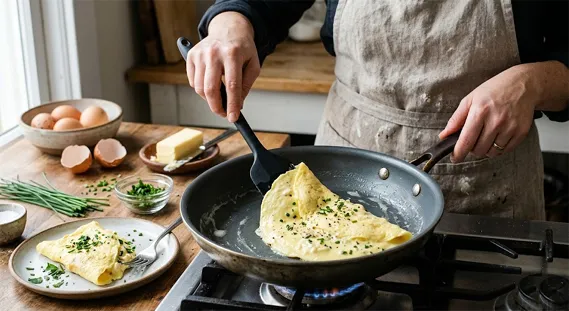
A classic sauté pan often has straighter walls. That’s fine for searing. Not ideal for eggs. A proper omelette pan has flared edges and sloped walls, so a silicone spatula can slide cleanly under the curds.
That shape does two jobs:
- Helps you loosen the omelette without tearing it
- Lets you roll or slide it onto a plate smoothly
For a 2-to-3-egg omelette, I usually like a pan with an 8- to 10-inch top diameter and a 6.5- to 8-inch cooking base.
Thermal responsiveness beats brute heat
Eggs are delicate. They don’t need screaming-hot metal. They need control.
The best pans:
- Heat evenly
- Respond quickly when you lower the burner
- Avoid hot spots that brown one side too fast
This is where a stainless steel omelette pan can surprise people. It’s trickier to master than nonstick, but the temperature control can be outstanding once you get the oil and timing right.
Handle comfort is not a minor feature
When I test omelette pans, I always pay attention to the handle. A riveted stay-cool handle gives you better confidence when lifting, tilting, or flicking the pan. That motion should feel fluid, not awkward.
Choosing the Right Material for Your Egg Cooking Style
The right pan depends on how you cook, how much maintenance you tolerate, and whether you want convenience or longevity.
Non Stick Omelette Pan: The easiest path
For most readers, a non stick omelette pan is still the best place to start.
Why it works:
- Eggs release easily
- Less oil or butter needed
- Lower learning curve
- Ideal for soft curds and folded omelettes
The downside is non-stick coating degradation. Even modern PFOA-free coatings wear down over time. That’s normal. The trick is to protect the pan by using silicone spatula and soft utensils, avoiding high heat, and keeping it as an egg-only pan when possible.
That “egg-only” rule is real. I’ve seen nonstick pans stay slick much longer when they’re not used for high-heat burgers, charred vegetables, or metal utensils.
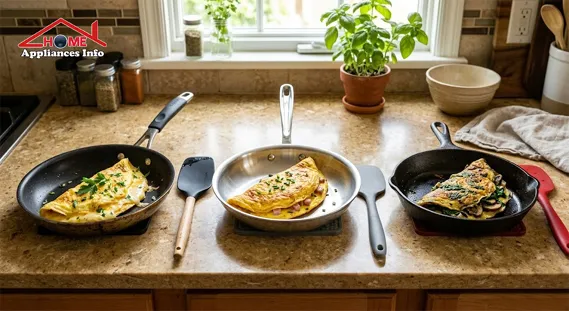
Stainless Steel Omelette Pan: The professional route
8-Inch Stainless Steel Pan Check Price on Amazon
A stainless steel omelette pan is not the easiest option, but it can be deeply rewarding. Professional kitchens often prefer stainless steel because it reacts quickly to burner adjustments and lasts for years.
I’ve had the best results when I:
- Preheated the pan properly
- Added enough fat to coat the surface
- Used room-temperature eggs
- Kept the heat moderate, not aggressive
If you want to sharpen your technique, stainless steel teaches you precision. The stainless steel cookware safety and care guidance from NSF is also helpful for general maintenance standards.
A top pick here is Made In’s stainless skillet line. It’s responsive, sturdy, and often works well on an induction compatible cooktop.
Cast Iron Omelette Pan: The lifetime choice
A cast iron omelette pan can produce beautiful eggs, but only if you respect the material. Cast iron rewards patience. It punishes shortcuts.
Why cooks love it:
- Incredible durability
- Strong heat retention
- Naturally slick surface when well seasoned
Why some people struggle:
- Heavy to lift
- Slow to cool down
- Needs seasoning upkeep
- Requires more fat than nonstick
In our tests, a seasoned Lodge pan performed better over time than on day one. That’s the appeal. Cast iron gets better when cared for. The cast iron cookware basics from Lodge explain seasoning clearly.
Carbon steel deserves a mention too. It sits between stainless and cast iron. Lighter than cast iron, but still capable of building a natural nonstick surface.
In-Depth Reviews: The 6 Best Omelette Pans on the Market
4. Made In Stainless Steel Frying Pan — Best Stainless Steel Pick
This is my top recommendation if you want a serious stainless steel omelette pan. It heats evenly, reacts quickly, and feels balanced in the hand.
Best for:
- Experienced cooks
- Induction users
- Anyone who wants one pan that can outlast trends
It’s not as effortless as nonstick. But once you learn the rhythm, it’s excellent.
5. Lodge Cast Iron Skillet — Best Cast Iron Value
Lodge remains one of the easiest recommendations in cookware. It’s affordable, widely available, and built to last.
What I noticed:
- Great browning control once fully preheated
- Better omelette release after repeated seasoning cycles
- Too heavy for some users to do a wrist roll comfortably
For traditionalists, this is the cast iron omelette pan to beat.
6. OXO Obsidian Carbon Steel Pan — Best for Long-Term Versatility
Carbon steel is the sleeper pick. If you want the longevity of cast iron but less weight, OXO Obsidian is worth a look.
Why it’s compelling:
- Develops a natural slick finish
- More nimble than cast iron
- Handles higher heat better than coated pans
It’s not the ideal beginner pan. But for cooks who like mastering technique, it offers serious value.
How We Tested the Pans
We tested each pan with repeated 2-egg and 3-egg omelettes using gas and induction where applicable. We evaluated:
- Release with butter only
- Release with oil only
- Evenness of cooking
- Ease of folding and sliding
- Handle comfort
- Cleanup time
- Performance after repeated cycles
I also looked for “retirement” potential. A fading nonstick pan may stop being your egg specialist, but it can still become a general sauté pan instead of going straight to the trash.
Quick comparison table
| Pan | Material | Best For | Induction Compatible | Main Drawback |
|---|---|---|---|---|
| Tramontina Professional | Aluminum nonstick | Overall value | Usually no, unless specific base | Finite coating lifespan |
| All-Clad Essentials | Hard-anodized aluminum nonstick | Premium everyday use | Some models | Higher price |
| Caraway Fry Pan | Ceramic nonstick | Stylish low-heat egg cooking | Yes, many models | Surface can fade with overheating |
| Made In Frying Pan | Stainless steel | Precision cooking | Yes | Learning curve |
| Lodge Skillet | Cast iron | Long-term durability | Yes | Heavy |
| OXO Obsidian | Carbon steel | Versatility and seasoning fans | Yes | Needs maintenance |
If you enjoy specialty cookware, you might also appreciate practical kitchen reads like Pizza Pan Secrets or appliance guides such as How to Use Comfee Rice Cooker. They sound unrelated, but they share the same lesson: the right tool changes the result.
Expert Tips: How to Maintain Your Pan’s Slick Finish
This is where many pans live or die.
For nonstick and ceramic
- Use low to medium heat
- Avoid aerosol sprays that can leave residue
- Wash gently by hand
- Use silicone spatula and soft utensils
- Store carefully to prevent scratches
For current safety context, modern coatings should be PFOA-free. The EPA guidance on PFOA helps explain the broader regulatory phaseout.
For stainless steel
- Preheat before adding fat
- Dry thoroughly after washing
- Don’t panic over fond or browning; technique matters
For cast iron and carbon steel
- Dry immediately
- Apply a thin layer of oil after cleaning
- Re-season when food starts sticking more often
One more honest tip: skip gimmicky double-sided omelette gadgets. In my experience, they trap steam, create awkward folds, and make cleanup worse. A classic pan always wins.
Frequently Asked Questions
What size omelette pan is best?
For most people, 8 to 10 inches is ideal. That gives enough room for a 2-to-3-egg omelette without spreading the eggs too thin.
Is a stainless steel omelette pan better than nonstick?
Not for beginners. A stainless steel omelette pan offers great control and longevity, but a nonstick pan is easier for clean release.
Can a cast iron omelette pan really be nonstick?
Yes, when well seasoned. A cast iron omelette pan can become impressively slick, though it usually needs more fat and better heat control than coated pans.
What is the difference between PTFE vs ceramic coatings?
PTFE-based nonstick usually offers the easiest release and longer slickness early on. Ceramic appeals to shoppers seeking an alternative surface, but it may lose performance faster if overheated.
How do I make my nonstick pan last longer?
Use it mainly for eggs, avoid high heat, and stick to silicone spatula and soft utensils. That reduces non-stick coating degradation over time.
Should I buy an omelette pan if I already own the Best Frying Pan?
If you cook eggs often, yes. A dedicated omelette pan usually has more suitable sloped sides, lighter handling, and better release for delicate folds.
Final Verdict
The best omelette pan for most home cooks in 2026 is the Tramontina Professional Aluminum Nonstick Fry Pan. It’s simple, effective, and forgiving. If you want premium nonstick, go All-Clad. If you want pro-level control, choose Made In stainless steel. If you value durability above all, Lodge and OXO Obsidian are excellent long-game choices.
My advice is simple. Match the pan to your habits, not your aspirations. If you make eggs three mornings a week, convenience matters. If you love technique, stainless or carbon steel may be worth the effort. And if you want your cookware to last, treat your egg pan like a specialist, not a workhorse.
If this guide helped, you may also want to compare it with Best Frying Pan, revisit Pizza Pan Secrets, or explore How to Use Comfee Rice Cooker for other kitchen upgrades.
References
- U.S. Environmental Protection Agency: https://www.epa.gov/pfas/basic-information-pfas
- Lodge Cast Iron Care Guide: https://www.lodgecastiron.com/discover/cleaning-and-care/cast-iron/all-about-seasoning
- NSF cookware guidance: https://www.nsf.org/consumer-resources/articles/stainless-steel-cookware

🌐 FOUNDER & DIGITAL PUBLISHER
Muhammad Ali
Founder | SEO Strategist & E-E-A-T Digital Publishing Specialist

📈 SEO Strategy
🛠️ Appliance Optimization
🛡️ E-E-A-T Standards
Muhammad Ali is a digital publisher, SEO strategist, and founder of Home Appliances Info. He specializes in home appliance optimization, structured schema networks, and advanced E-E-A-T digital publishing standards to ensure accurate, trustworthy content across the platform.
2 Comments
Pingback: Best Swivel Peeler vs Y Peeler: Which Peeler Is Best for your kitchen? - Home Appliances Info
Pingback: Best Vacuum Sealer for Glass Jars: Top 5 Picks 2026