


To support our research and detailed appliance reviews, we may earn a small commission from qualifying purchases made through our links, at no extra cost to you. As an Amazon Associate, I earn from qualifying purchases.
To support our research and detailed appliance reviews, we may earn a small commission from qualifying purchases made through our links, at no extra cost to you. As an Amazon Associate, I earn from qualifying purchases.
If you’ve ever stood at the counter wondering about the best swivel peeler vs y peeler choice for your kitchen, you’re not alone. I’ve tested both over years of weeknight cooking, holiday prep, and bulk vegetable peeling, and I’ve learned one simple truth: the right peeler changes how fast, safe, and enjoyable prep feels. A bad one drags. A good one glides. And when you’re peeling potatoes, carrots, apples, or zucchini, that difference matters more than most people expect.
In my experience, this isn’t just about preference. It’s about blade orientation, control, comfort, and what you cook most often. A swivel peeler is familiar and beginner-friendly. A Y peeler often feels faster, sharper, and more precise once you get used to it. If you’re building a practical kitchen toolkit alongside essentials like Best Omelette Pans, Kitchen Gloves, and Kitchen Scissors, choosing the right peeler is a small decision that pays off every week.
Below, I’ll break down the real differences, where each model shines, and how to decide which one deserves drawer space in your kitchen.
1. What’s the Difference Between a Swivel Peeler and a Y Peeler?
At a glance, both tools do the same job. They remove thin outer layers from fruits and vegetables. But the design changes how they feel in the hand.
Swivel peeler
A swivel peeler has a blade mounted parallel to the handle. The blade moves, or swivels, to follow the contour of the produce. This makes it especially useful for straight peeling on long vegetables like carrots, cucumbers, and zucchini.
Y peeler
A Y peeler has a blade mounted perpendicular to the handle, creating a slingshot or “Y” shape. This design gives more leverage and often more control, especially on round produce such as potatoes and apples.
Here’s the fast version:
- Swivel peeler = familiar, simple, smooth on long vegetables
- Y peeler = efficient, precise, excellent for curves and tougher skins
For many cooks, the best swivel peeler vs y peeler answer comes down to what you peel most often.
2. Side-by-Side Comparison Table
| Feature | Swivel Peeler | Y Peeler |
|---|---|---|
| Blade Orientation | Parallel to handle | Perpendicular to handle |
| Best Use | Carrots, cucumbers, zucchini | Potatoes, apples, squash |
| Motion Style | Straight peeling strokes | Pulling or pushing with leverage |
| Precision | Moderate | High |
| Handles Curves Well | Good | Excellent |
| Removes Thin Slices | Fairly well | Very well |
| Ergonomics | Comfortable for beginners | Better leverage; often naturally ambidextrous |
| Left-Hand Friendly | Depends on blade design | Usually yes |
| Learning Curve | Very easy | Slightly higher, but quick to learn |
| Common Materials | Stainless steel or carbon steel blade | Stainless steel or carbon steel blade |
| Best For | Simple everyday prep | Speed, control, tougher skins |
One important ergonomic note: in my testing, Y peelers are often easier for both right- and left-handed users because the blade sits horizontally. Many swivel peelers work well too, but not all are equally ambidextrous.
3. Why Blade Orientation Changes Everything
This is the detail most shoppers overlook. Yet blade orientation affects speed, safety, and fatigue.
With a swivel peeler, your hand usually follows the produce in a familiar, downward line. That makes it intuitive. It’s one reason home cooks often start there.
With a Y peeler, the blade sits across the top. That creates a stronger sense of leverage. I noticed this especially when peeling a full bag of russet potatoes. My wrist worked less. The peeler moved around curves more naturally. And I had better access to potato eyes.
That’s why the debate over swivel peeler vs y peeler for potatoes usually leans in favor of the Y design. Potatoes are round, irregular, and often have rough patches. A Y peeler tends to adapt better.
4. Which Peeler Feels Better in the Hand?
This is where the search for an ergonomic kitchen peeler gets serious.
A peeler can be sharp and still feel terrible after ten minutes of prep. Comfort matters. So does grip.
Swivel peelers often feel better if:
- You’re new to peeling vegetables
- You prefer a traditional knife-like handle
- You peel long, straight produce
- You want a less aggressive cutting feel
Y peelers often feel better if:
- You peel lots of potatoes or apples
- You want more power with less wrist strain
- You’re left-handed
- You care about speed and thin, clean removal
I’ve found that soft, non-slip handles are worth paying for. During marathon prep sessions, especially around holidays, a well-designed grip makes a bigger difference than branding alone.
If hand strain is already an issue for you, prioritize an ergonomic kitchen peeler with a padded or textured handle.
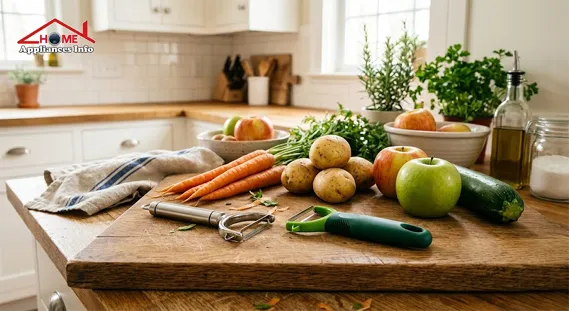
5. Swivel Peeler vs Y Peeler for Potatoes
Let’s get specific, because this is where opinions get strong.
When people ask me about swivel peeler vs y peeler for potatoes, I usually give a direct answer: if potatoes are your main target, buy the Y peeler first.
Why?
- It glides better around curved surfaces
- It often removes thinner strips
- It handles rough skins with more authority
- It gives easier access around potato eyes
- It tends to be faster in large batches
Professional cooks often share this chef preference too. In restaurant kitchens, speed and consistency matter. A Y peeler helps with both.
That said, if you only peel the occasional Yukon Gold and want a simple tool with a gentler learning curve, a swivel peeler is still a solid choice.
For food prep guidance and safe kitchen habits, I recommend reviewing food safety from the U.S. Food & Drug Administration. Clean tools matter as much as sharp tools.
6. How to Use a Y Peeler Without Fighting It
A lot of people try a Y peeler once, feel awkward, and go back to their old swivel model. I get it. The motion is slightly different. But once it clicks, it clicks fast.
Here’s how to use a y peeler effectively:
- Hold the produce firmly on a cutting board or in your non-dominant hand.
- Grip the peeler near the center of the handle.
- Apply light pressure. Don’t force it.
- Peel away from your body in smooth strokes.
- Rotate the produce instead of over-twisting your wrist.
- Use the side tip, if included, to remove blemishes or potato eyes.
In my experience, the biggest mistake is pressing too hard. A sharp blade should do the work. If it doesn’t, the issue is usually dullness, not technique.
If you’re practicing how to use a y peeler, start with a potato or apple. Their shape helps you feel how the blade rides the curve.
7. What About Blade Sharpness and Material?
Not all peelers are created equal. Even within the same style, quality varies wildly.
When shopping, I focus on:
- Blade sharpness
- Rust resistance
- Handle grip
- Ease of cleaning
- Durability over time
For most home cooks, the best stainless steel vegetable peeler is one with a hardened stainless steel blade, a comfortable grip, and a design that stays sharp after repeated use. Stainless steel is popular for a reason. It resists corrosion better than many cheaper materials and is generally easier to maintain.
Brands like OXO Good Grips are widely recognized for comfortable peeler designs, though premium options also come from brands such as Kuhn Rikon and Victorinox. If you want consumer testing insights, America’s Test Kitchen frequently evaluates kitchen tools with a practical performance lens.
A quick correction worth noting for accuracy: OXO peelers are better described as using premium hardened stainless steel rather than “Japanese steel.” That distinction matters if you value product transparency.
8. Which Peeler Is Best for Different Foods?
Here’s how I break it down at home.
Best uses for a swivel peeler
- Carrots
- Cucumbers
- Zucchini
- Asparagus stems
- Delicate produce with smoother skin
The swivel blade follows long shapes nicely. For repetitive, straight motions, it feels natural.
Best uses for a Y peeler
- Potatoes
- Apples
- Pears
- Butternut squash necks
- Tough-skinned vegetables
This is why the best swivel peeler vs y peeler debate rarely has one absolute winner. The answer changes with the ingredient.
I keep both because they solve different problems. It’s similar to why I keep both Kitchen Scissors and chef’s knives. One tool doesn’t replace every other tool. It complements them.
9. Real-World Testing: What I Noticed at Home
I’ve compared these peelers in ordinary cooking situations, not lab conditions. That matters, because real kitchens are messy, rushed, and full of imperfect produce.
Test 1: Five-pound bag of potatoes
The Y peeler won. It was faster. My hands felt less tired. I wasted less flesh.
Test 2: Long carrots for soup prep
The swivel peeler felt more natural. It tracked straight lines easily.
Test 3: Apples for a tart
Again, the Y peeler came out ahead. Better control on curves. Cleaner strips. Less snagging.
Test 4: Beginner user comfort
The swivel peeler was easier to understand immediately. No adjustment period.
That’s the clearest honest takeaway I can offer: one is easier at first, the other often becomes more versatile with practice.
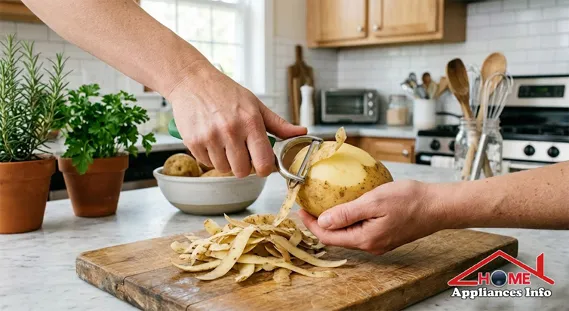
10. What Professionals and Home Cooks Usually Prefer
From chef interviews, cooking schools, and years of reading serious kitchen forums, a pattern appears.
- Professional cooks often prefer Y peelers for speed
- Home cooks often like swivel peelers for familiarity
- Experienced cooks frequently own both
- Left-handed users often lean toward Y peelers
- Minimalists usually choose based on their most common produce
This broader chef preference also lines up with what organizations and educational culinary sources emphasize: tools should match task, comfort, and frequency of use.
If you’re also refining the rest of your prep station, pairing the right peeler with Kitchen Gloves can help if you handle large volumes of cold produce or want better grip during repetitive tasks.
11. Should You Buy One or Both?
If your budget allows it, buy both. That’s my honest answer.
A swivel peeler handles simple daily jobs well. A Y peeler adds control and speed where it counts. Together, they cover almost every peeling task efficiently.
But if you only want one:
Choose a swivel peeler if:
- You’re a beginner
- You mostly peel carrots, cucumbers, and zucchini
- You prefer classic handle design
- You want the easiest learning curve
Choose a Y peeler if:
- You peel potatoes often
- You want better leverage
- You value precision and thin slices
- You want an ambidextrous design
- You’re looking for the stronger all-around performance pick
For many people, the best swivel peeler vs y peeler answer is simple: the Y peeler wins on versatility, while the swivel peeler wins on ease.
FAQs
1. Is a Y peeler better than a swivel peeler?
Often, yes. A Y peeler usually offers better leverage and precision, especially on round produce. But a swivel peeler can feel easier for beginners.
2. What is the best stainless steel vegetable peeler?
The best stainless steel vegetable peeler is one with a sharp hardened stainless steel blade, non-slip handle, and easy-to-clean design. OXO, Kuhn Rikon, and Victorinox are popular choices.
3. How do I learn how to use a Y peeler?
Start with potatoes or apples. Hold the produce firmly, use light pressure, and peel away from your body in smooth strokes. That’s the simplest way to master how to use a y peeler.
4. Which is better in swivel peeler vs y peeler for potatoes?
In most cases, the Y peeler. It moves around curves better and helps remove potato eyes more cleanly.
5. What should I look for in an ergonomic kitchen peeler?
Look for a cushioned grip, balanced weight, sharp blade, and ambidextrous handling. A true ergonomic kitchen peeler reduces wrist strain during long prep sessions.
6. Do I really need both peelers?
Not strictly. But if you cook often, owning both is practical. It’s the same logic behind owning Best Omelette Pans for eggs and Kitchen Scissors for quick prep tasks.
Final Verdict
After years of testing both styles, my conclusion is clear. If you want the simplest tool for straight peeling and long vegetables, a swivel peeler is dependable and easy to love. If you want more control, better performance on curves, and a stronger option for potatoes, apples, and tougher skins, a Y peeler is the better buy.
So what’s the best swivel peeler vs y peeler choice? For most home cooks, the Y peeler edges ahead as the more versatile single purchase. But the smartest kitchen setup often includes both. One for comfort. One for precision. Together, they make peeling vegetables faster, cleaner, and less frustrating.
If you’re upgrading your prep tools, start with the produce you peel most. That one habit will tell you exactly which peeler belongs in your drawer.
References
- food safety — U.S. Food & Drug Administration
- America’s Test Kitchen — kitchen tool testing and reviews
- knife skills — The Culinary Institute of America

🌐 FOUNDER & DIGITAL PUBLISHER
Muhammad Ali
Founder | SEO Strategist & E-E-A-T Digital Publishing Specialist

📈 SEO Strategy
🛠️ Appliance Optimization
🛡️ E-E-A-T Standards
Muhammad Ali is a digital publisher, SEO strategist, and founder of Home Appliances Info. He specializes in home appliance optimization, structured schema networks, and advanced E-E-A-T digital publishing standards to ensure accurate, trustworthy content across the platform.