

To support our research and detailed appliance reviews, we may earn a small commission from qualifying purchases made through our links, at no extra cost to you. As an Amazon Associate, I earn from qualifying purchases.
To support our research and detailed appliance reviews, we may earn a small commission from qualifying purchases made through our links, at no extra cost to you. As an Amazon Associate, I earn from qualifying purchases.
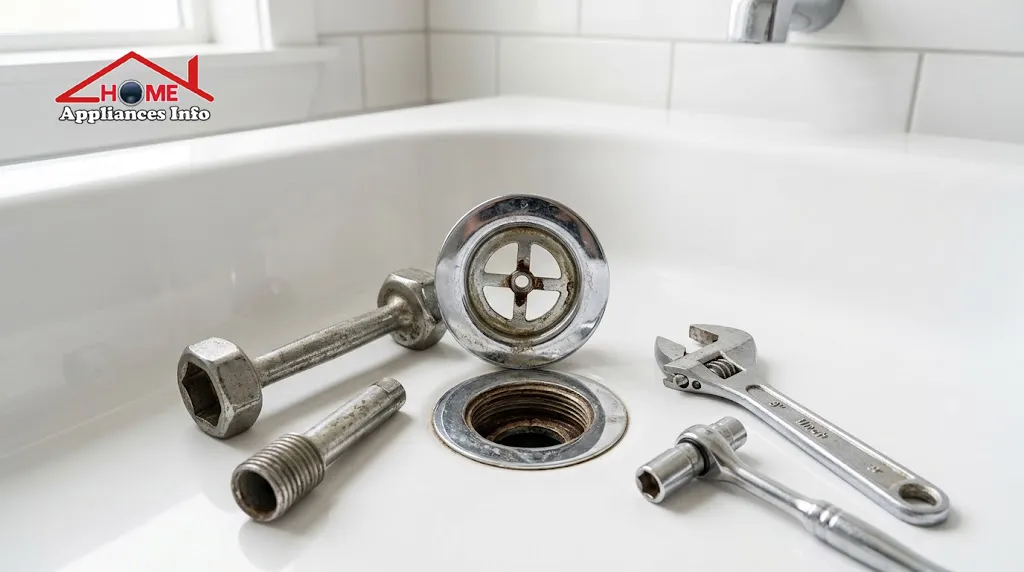
Removing a stubborn bathtub drain can turn a simple bathroom repair into a frustrating job. Years of corrosion, hardened sealant, mineral deposits, and damaged crossbars can make an ordinary pair of pliers almost useless. The right bathtub drain removal tool gives you a much more controlled way to loosen the drain flange without improvising with screwdrivers or other tools.
The important thing is to identify the type and condition of the drain before choosing a wrench. A conventional dumbbell-style wrench works by engaging the drain’s internal crossbars. If those crossbars are broken or badly corroded, an internal extractor uses a different gripping method. Current manufacturer specifications from Superior Tool and RectorSeal confirm that specialized extractors are specifically designed for this kind of problem.
For this guide, the five products below were evaluated using current manufacturer information, retailer specifications, and available customer-review evidence. I am not claiming personal hands-on testing of these tools.
What Is a Bathtub Drain Removal Tool?
A bathtub drain removal tool is a specialized wrench or extractor used to remove the threaded drain flange from a bathtub.
You may also see the same general category described as a:
- Tub drain removal tool
- Bathtub drain wrench
- Tub drain wrench
- Bathtub drain removal wrench
- Drain flange removal tool
- Tub drain extractor
The traditional design is often called a dumbbell wrench because its shape resembles a small dumbbell. It has stepped ends that fit different drain openings and engage the crossbars inside the drain.
Once the wrench is seated, a suitable wrench, screwdriver, or ratchet provides leverage to turn the drain counterclockwise.
But there is an important limitation: a traditional wrench needs something inside the drain to grip. If corrosion has destroyed the crossbars, continuing to force the wrench can damage what remains.
That is when an internal extractor becomes useful.
Top 5 Bathtub Drain Removal Tools
Rather than treating these products as a universal 1-to-5 ranking, this list covers five current options with different strengths. Your drain condition should determine which one makes sense.
| Tool | Design | Most suitable for | Important consideration |
|---|---|---|---|
| Husky 16PL0128 | Double-ended dumbbell wrench | Standard tub and shower drains | Needs a usable engagement point |
| Kobalt 58715 | Dual-sided wrench | Most conventional bath/shower drains | Lowe’s availability can vary |
| Superior Tool 5255 | Internal extractor | Broken or corroded 1½-inch crosshairs | Requires correct drain size |
| RectorSeal Golden Extractor 97258 | Universal extractor | Broken-crossbar drain removal | Uses a 3/8-inch-drive ratchet |
| EZ-FLO 45089 | Dumbbell wrench | Standard drains and corroded crossbars | Fit should be checked before purchase |
1. Husky Double Ended Tub Drain Wrench 16PL0128
The Husky 16PL0128 is a conventional double-ended tub drain wrench designed for removing and installing most tub and shower drains. Home Depot currently lists aluminum die-cast construction and says the tool can be used with an adjustable wrench or heavy-duty screwdriver.
Its main advantage is simplicity. You do not need a complicated extraction mechanism if the drain has intact crossbars that the wrench can engage securely.
This makes it a sensible choice for:
- Standard bathtub drains
- DIY drain replacement
- Intact internal crossbars
- Occasional plumbing work
- Homeowners who want a straightforward drain wrench
The limitation is equally straightforward: it is not a specialized solution for a drain whose crossbars have completely disappeared.
Best use: conventional drains with sound internal engagement points.
2. Kobalt 58715 Dual-Sided Tub Drain Wrench
The Kobalt 58715 is another traditional dual-sided drain wrench. Lowe’s describes it as a tool for installing and removing most bath and shower drains and closet spuds. It requires a wrench or screwdriver for operation.
Current Lowe’s information shows a 4.6/5 customer rating from more than 240 reviews, although availability has varied between listings. Customer feedback includes reports of the tool helping with stubborn drains, while some users have noted that fit depends on the particular drain.
That last point matters more than a review score. A drain wrench can be well made and still be the wrong tool for a particular flange.
Best use: conventional crossbar drains where you want a dual-sided wrench.
Potential drawback: availability and compatibility should be checked before buying.
3. Superior Tool 5255 Tub Drain Extractor
If you are dealing with rusted bathtub drain removal, the Superior Tool 5255 deserves special attention.
Unlike a dumbbell wrench, this tub drain extractor is designed for stubborn 1½-inch tub drains with broken or corroded crosshairs. Superior Tool says its tapered helical-knurl teeth bite into the drain so the extractor can grip the drain body instead of relying on the damaged crossbars.
The 5255 accepts a ½-inch-drive ratchet or can be operated with a 1¾-inch wrench or adjustable wrench. The manufacturer also lists hardened steel construction, zinc plating, and a limited lifetime warranty.
This makes it particularly relevant if you are searching for the best tub drain extractor tool for rusted drains.
Best use:
- Broken crossbars
- Severely corroded crossbars
- Missing crosshairs
- Stubborn 1½-inch tub drains
One caution: verify the drain size and follow the manufacturer’s instructions. An extractor that does not fit correctly should not be forced.
4. RectorSeal Golden Extractor 97258
The RectorSeal Golden Extractor 97258 takes another approach to difficult drain removal. RectorSeal describes it as a universal tub drain extraction tool that can be operated with a standard 3/8-inch-drive ratchet, including situations where the cross arms are broken. It is made from heat-tempered steel and also includes a built-in bolt and screw remover.
That additional functionality may be useful if you occasionally handle other plumbing repairs.
Its main attraction for this particular job, however, is the extraction design. When the original crossbar cannot provide reliable leverage, an extractor can give you another way to transfer torque to the drain.
Best use:
- Broken-crossbar drains
- Difficult tub drain removal
- DIY plumbing repairs
- Users who already own a 3/8-inch-drive ratchet
As with any extractor, proper positioning matters. More leverage is not automatically better if the tool is not properly seated.
5. EZ-FLO 45089 Sturdy Dumbbell Wrench
The EZ-FLO 45089 is a traditional dumbbell-style wrench intended for installing and removing tub drains. EZ-FLO’s catalog identifies model 45089 as a dumbbell wrench for tub-drain installation and removal.
Current retailer information describes it as a high-impact metal tool with a smooth exterior intended to avoid scratching the tub surface during use. It is designed around standard bathtub drain applications and is also marketed for drains with corroded crossbars.
Customer-review evidence is mixed in an important way: some users report that it handled stubborn drains successfully, while others reported fit problems on particular drains. That is a useful reminder that compatibility matters more than the product description alone.
Best use: standard drains where the crossbar remains usable.
Dumbbell Tub Drain Wrench Review: Is This Design Worth Using?
A dumbbell tub drain wrench remains useful because it is simple and directly engages the drain’s internal structure.
Think of the crossbar as the handle built into the drain. The wrench fits around or against that structure, and your external wrench provides the additional leverage needed to turn the flange.
That is preferable to improvising with pliers because the force is applied through a tool designed for the drain.
The main weakness appears when the crossbar is already compromised.
If the metal is heavily rusted, thin, bent, or cracked, increasing torque can break it. Once that happens, a conventional drain wrench may no longer have anything reliable to grab.
So the question is not simply, “Which dumbbell wrench is strongest?”
A better question is:
Does my drain still have a strong enough crossbar for a dumbbell wrench?
If yes, a conventional wrench can be entirely appropriate. If no, look at an extractor instead.
How to Choose the Right Tub Drain Removal Tool
Before buying anything, shine a flashlight into the drain and inspect it.
If the crossbars are intact
A double-ended or dual-sided drain wrench is usually the appropriate category.
Look at options such as the Husky 16PL0128, Kobalt 58715, or EZ-FLO 45089.
If the crossbars are rusty but still substantial
A conventional wrench may work, but be careful about applying excessive force. If the crossbar starts bending or deforming, stop before it breaks.
An extractor may be the better next step.
If the crossbars are broken or missing
Do not keep trying to make a dumbbell wrench work.
Choose an internal bathtub drain extraction tool designed to grip the drain body. Superior Tool specifically identifies its 5255 for broken or corroded crosshairs.
For more general bathroom maintenance and DIY repair topics, your site’s How-To & Maintenance Tips category is also a relevant internal resource.
How to Use a Bathtub Drain Removal Tool
The exact procedure can vary according to the stopper and drain design, but the general process is similar.
1. Remove the stopper
Remove the bathtub stopper so you can see the drain opening clearly.
Different stopper mechanisms have different removal methods, so avoid forcing a stopper that appears to be attached to a linkage or retaining mechanism.
2. Inspect the drain
Look for the internal crossbars.
Determine whether they are:
- Strong and intact
- Rusted but present
- Partially broken
- Completely missing
This inspection should determine whether you use a conventional wrench or an extractor.
3. Clean the opening
Remove hair, soap residue, loose corrosion and other debris around the drain.
The tool needs to seat properly. Debris between the tool and drain can reduce engagement.
If the issue is actually a blockage rather than a drain flange that needs replacement, don’t confuse the two jobs. Your guide to unclogging a kitchen sink covers the broader mechanical approach to dealing with household drain blockages.
4. Protect the bathtub
Place a protective cloth around the working area and be particularly careful with acrylic, fiberglass and porcelain surfaces.
A wrench slipping onto the tub can cause considerably more damage than the drain problem itself.
5. Seat the wrench securely
For a conventional drain, insert the correctly sized end of the drain wrench and make sure it engages the crossbars properly.
Do not begin applying heavy torque until the tool is seated.
6. Turn counterclockwise
Most bathtub drain flanges are loosened by turning counterclockwise.
Apply steady pressure rather than repeatedly jerking the wrench.
If the drain refuses to move, reassess the situation before adding substantially more force.
7. Stop if the crossbar starts failing
If the crossbar bends, cracks or begins breaking away, stop.
This is exactly the situation where an internal extractor can be more appropriate.
OSHA’s hand-tool standard also emphasizes avoiding unsafe tools and warns against using wrenches when damaged jaws can cause slippage.
How to Remove a Tub Drain Without Crossbars
If you are searching for how to remove tub drain without crossbars, the key point is that a normal dumbbell wrench has lost its gripping point.
You need a tool that can grip the inside of the drain instead.
The Superior Tool 5255 is specifically designed for 1½-inch tub drains with broken or corroded crosshairs. Its tapered helical-knurl teeth grip the drain body, allowing torque to be applied without relying on the original crossbar.
A typical process is:
- Remove the stopper.
- Clean the inside of the drain.
- Select an extractor compatible with the drain.
- Position it centrally according to the manufacturer’s instructions.
- Seat the extractor securely.
- Attach the specified ratchet or wrench.
- Turn counterclockwise with controlled pressure.
- Once the flange breaks free, continue turning until it can be removed.
Do not automatically reach for a hammer and the longest lever available. Excessive force can damage the drain assembly or surrounding plumbing, and a slipping tool can damage the tub finish.
Best Tub Drain Extractor Tool for Rusted Drains: What Matters?
For a severely rusted drain, there is no single feature that guarantees success.
The most important consideration is where the tool can safely obtain its grip.
If the crossbars are still strong, a dumbbell wrench may be enough.
If the crossbars are badly corroded or gone, an internal extractor is usually the more logical tool category. Superior Tool explicitly designs the 5255 for this scenario, while RectorSeal describes its Golden Extractor as capable of removing tub drains even when the cross arms are broken.
Before purchasing, check:
- Drain diameter compatibility
- Crossbar condition
- Extractor gripping method
- Required ratchet or wrench size
- Available working space
- Tool construction
- Manufacturer instructions
The most expensive tool is not automatically the right tool. Fit and drain condition come first.
Common Mistakes to Avoid
Using pliers as the main drain wrench
Pliers may work in unusual situations, but they are not a substitute for a tool designed to engage the drain.
Applying maximum torque immediately
A stuck drain is not necessarily a drain that needs brute force. Corrosion may be holding the threads together, or the crossbar may already be weakened.
Ignoring a damaged crossbar
Once the crossbar begins to deform, continuing to apply force can turn a manageable extraction into a much harder repair.
Buying without checking compatibility
A tool can have excellent reviews and still fail to fit your particular drain.
Striking the tub with the wrench
Protect the tub surface and keep control of the tool throughout the job.
Bathtub Drain Wrench vs. Internal Extractor
| Feature | Dumbbell Drain Wrench | Internal Tub Drain Extractor |
|---|---|---|
| Intact crossbars | Excellent fit | Usually unnecessary |
| Partially corroded crossbars | May work | Can be useful |
| Broken crossbars | Limited | Designed for this situation |
| Missing crossbars | Generally unsuitable | Appropriate category |
| Standard drain removal | Simple | More specialized |
| Working principle | Engages internal crossbars | Grips inside of drain |
| Typical drive method | Wrench or screwdriver | Ratchet or wrench, depending on model |
| Main advantage | Simple and inexpensive design | Provides another gripping method when crossbars fail |
FAQs
Can I use a regular wrench to remove a bathtub drain?
Usually, a regular adjustable wrench alone is not designed to engage the drain flange properly. A specialized tub drain wrench provides an internal engagement point, while some extractors accept a standard ratchet or wrench.
What is the easiest bathtub drain removal tool for a normal drain?
If the drain has intact crossbars, a double-ended or dual-sided dumbbell-style wrench is generally the appropriate type. The correct fit matters more than choosing a particular brand.
Can I remove a bathtub drain when the crossbar is broken?
Yes. A specialized internal extractor can be used on some broken-crossbar drains. The Superior Tool 5255, for example, is specifically designed for 1½-inch tub drains with broken or corroded crosshairs.
Should I use penetrating oil on a stuck tub drain?
A suitable penetrating lubricant may help with corrosion, but use it carefully and follow the product’s directions. It should not replace correct tool selection or justify excessive force.
Why does my tub drain wrench keep slipping?
The tool may be the wrong size, improperly seated, or the drain’s crossbars may be too damaged to provide a reliable grip. Stop and inspect the drain rather than repeatedly increasing torque.
When should I call a plumber?
Consider professional help if the drain will not release after appropriate extraction methods, the drain shoe or surrounding plumbing begins moving, you see leakage, or accessing the connection would require opening the wall or ceiling.
Final Takeaway
The right bathtub drain removal tool depends on what is actually inside your drain.
For a conventional drain with solid crossbars, a dumbbell-style tool such as the Husky 16PL0128, Kobalt 58715, or EZ-FLO 45089 can provide the controlled engagement needed to remove the flange. For a drain with severely corroded, broken, or missing crossbars, an internal extractor changes the approach. The Superior Tool 5255 and RectorSeal Golden Extractor 97258 are purpose-built examples of that category.
The safest approach is to inspect first, choose the tool based on the drain’s condition, seat it securely, and increase force gradually. If the crossbar starts failing, don’t keep forcing a conventional wrench simply because it was the first tool you bought.
A few minutes spent identifying the drain can save a great deal of frustration—and potentially prevent damage to the bathtub, drain assembly, or surrounding plumbing.
References
- Superior Tool — Tub Drain Extractor, Model 5255: manufacturer specifications, compatible drive sizes, intended use for broken or corroded tub-drain crosshairs, and construction details. Superior Tool 5255 Tub Drain Extractor
- RectorSeal — Golden Extractor Tub Drain Tool, SKU 97258: manufacturer information covering the extraction function, 3/8-inch-drive ratchet compatibility, broken-crossbar applications, and heat-tempered steel construction. RectorSeal Golden Extractor 97258
- The Home Depot — Husky Double Ended Tub Drain Wrench 16PL0128: current product specifications covering its intended tub/shower drain applications, construction, and operating method. Husky 16PL0128 Tub Drain Wrench

🌐 FOUNDER & DIGITAL PUBLISHER
Muhammad Ali
Founder | SEO Strategist & E-E-A-T Digital Publishing Specialist

📈 SEO Strategy
🛠️ Appliance Optimization
🛡️ E-E-A-T Standards
Muhammad Ali is a digital publisher, SEO strategist, and founder of Home Appliances Info. He specializes in home appliance optimization, structured schema networks, and advanced E-E-A-T digital publishing standards to ensure accurate, trustworthy content across the platform.